
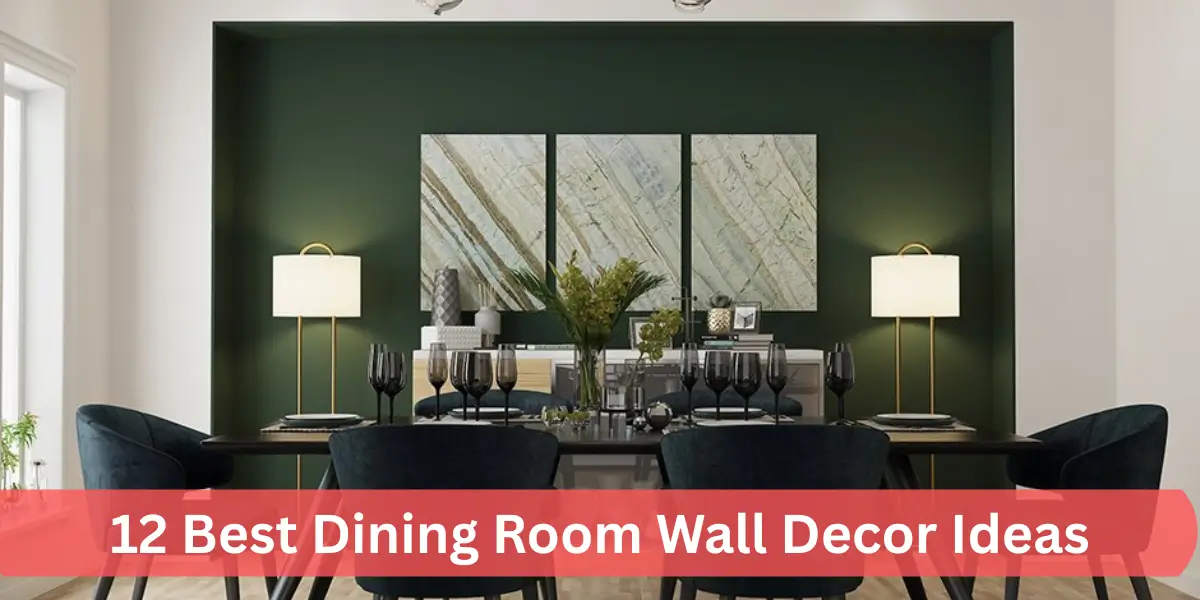

Dining room wall decor ideas can completely change how the space feels, even without major furniture updates. From my experience, walls play a powerful role in setting the tone of the dining area, whether the goal is warmth, elegance, or a modern edge.
The right wall décor adds personality, balance, and visual interest while supporting the overall design of the room.
In this guide, I’ll share practical and design-focused wall decor ideas that I’ve seen work beautifully in real homes, helping you create a dining space that feels intentional, inviting, and thoughtfully styled.
1. Statement Wall Art as a Dining Focal Point
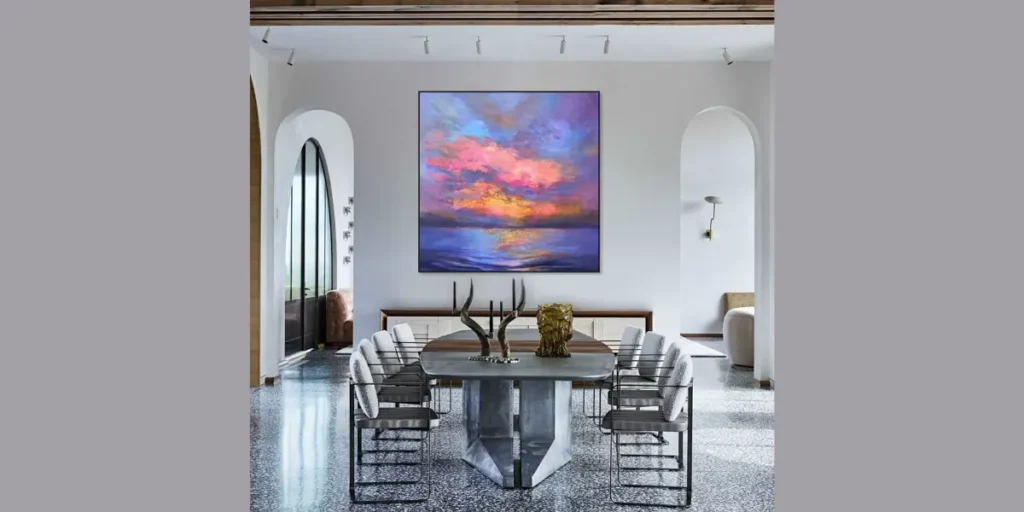
When I design dining room walls, I often start with statement wall art. A large artwork instantly anchors the space and gives the dining room a clear visual identity. It prevents the walls from feeling empty or unfinished.
I usually recommend choosing art that contrasts slightly with the wall color. This creates depth and keeps the space visually engaging without overwhelming the room. Abstract or modern pieces work especially well.
Placement matters just as much as the art itself. I always center the artwork with the dining table to maintain balance. When done correctly, statement art elevates the entire dining experience.
2. Decorative Mirrors to Enhance Space
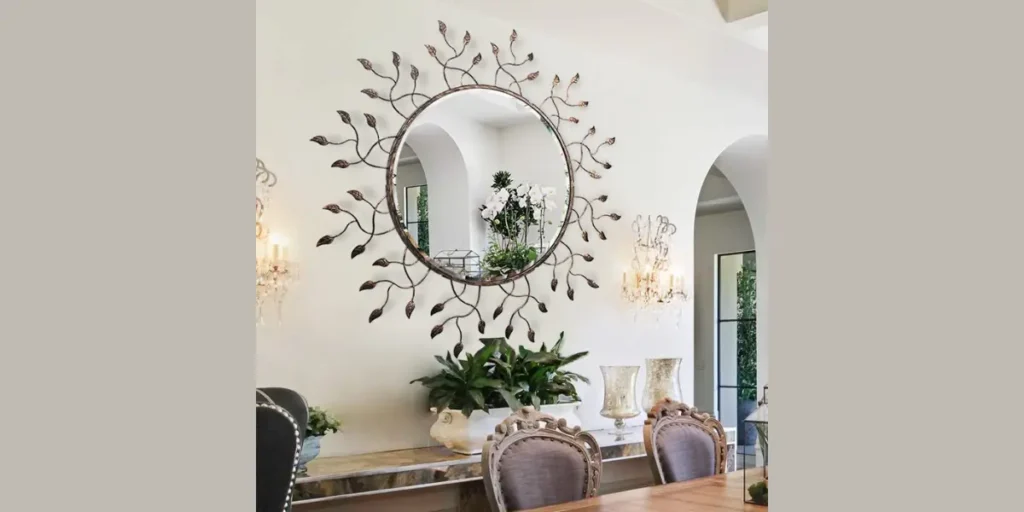
Decorative mirrors are one of my go-to solutions for dining rooms that feel small or dark. They reflect light and visually expand the space without structural changes.
I often choose round or softly shaped mirrors to offset the straight lines of dining tables and chairs. Framed mirrors add character while keeping the look refined.
Positioning is key. I place mirrors where they reflect natural light or a chandelier. This technique brightens the room and adds depth, making the dining area feel open and welcoming.
3. Gallery Wall for a Curated Look
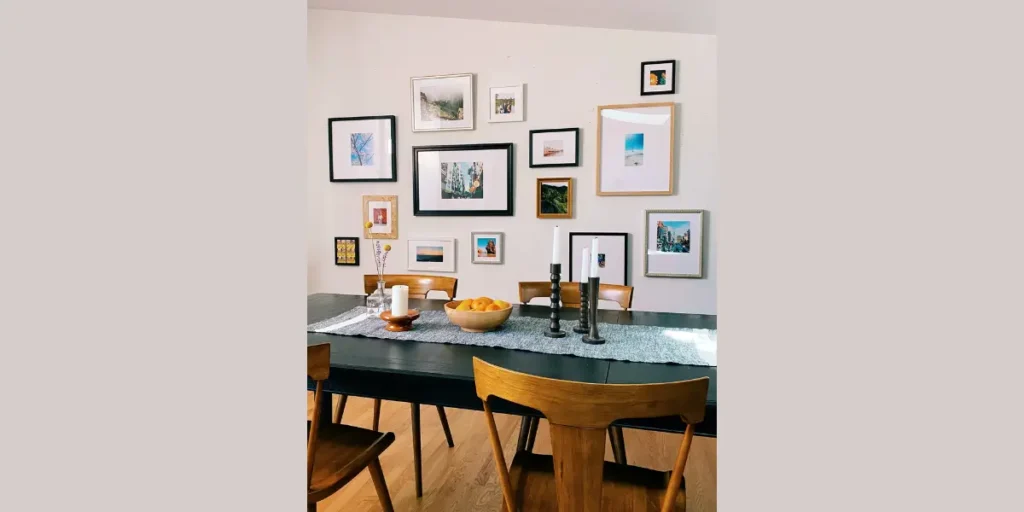
Gallery walls allow me to personalize dining rooms while maintaining structure. I treat them as a visual story rather than random frame placement.
I keep consistency through frame color or spacing so the wall doesn’t feel chaotic. Mixing artwork, photography, and subtle illustrations creates interest without clutter.
Before hanging anything, I always plan the layout. This ensures balance and flow. A well-designed gallery wall adds warmth and personality while still feeling intentional.
4. Accent Wall with Paint or Wallpaper
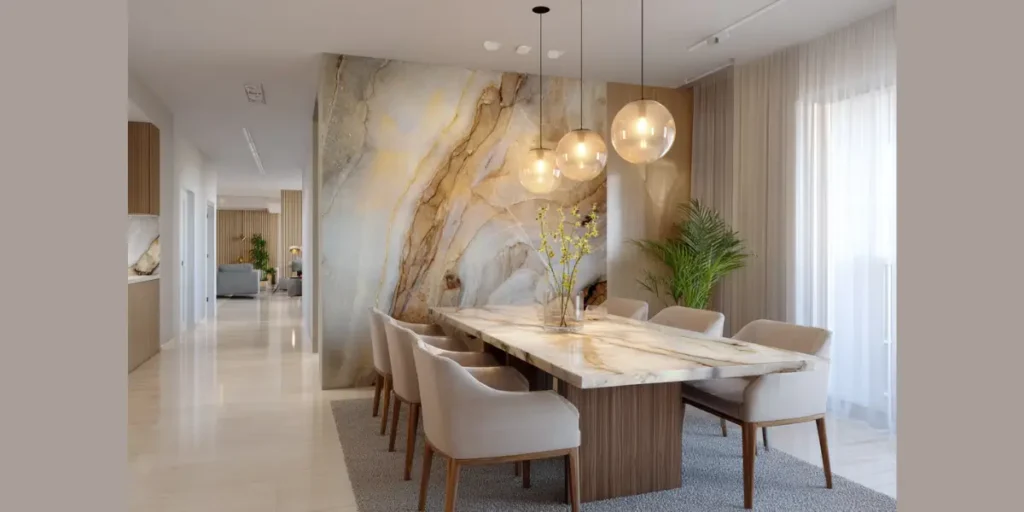
An accent wall works well when the dining room needs visual depth. I usually highlight one wall to avoid overwhelming the space.
Bold paint colors or textured wallpaper create a strong impact while keeping the rest of the room calm. This approach keeps the décor balanced.
I pair accent walls with neutral furniture so the wall remains the focal point. When styled carefully, an accent wall adds character without feeling overpowering.
5. Floating Shelves with Styled Decor
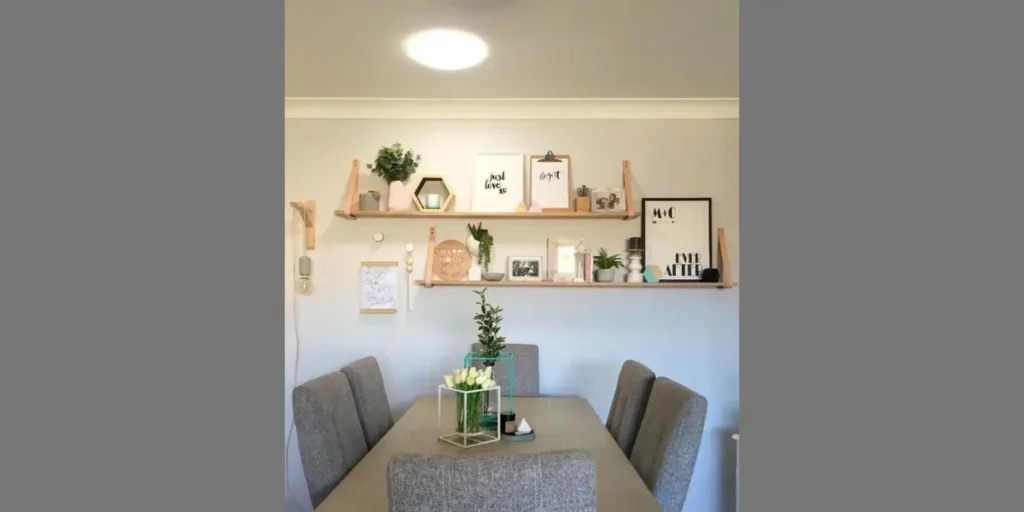
Floating shelves combine decoration with function. I use them to display curated pieces rather than filling walls with art alone.
I keep shelf styling minimal by balancing décor with empty space. Plants, small artwork, and ceramics work well without clutter.
The key is restraint. When shelves feel light and intentional, they add dimension to dining room walls while remaining practical and visually clean.
6. Metal Wall Art for Modern Texture
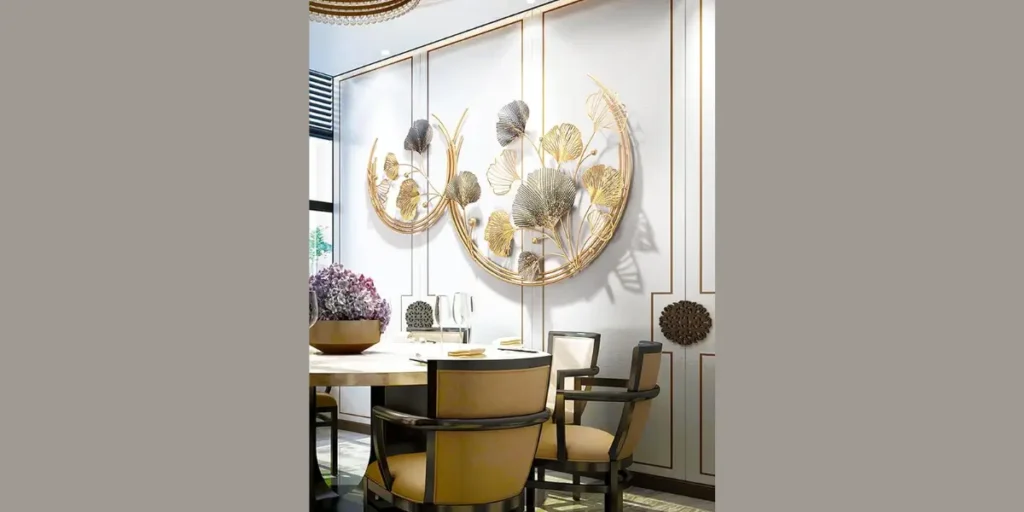
Metal wall art introduces texture without relying on color. I often use it in modern or contemporary dining rooms.
Geometric or abstract metal designs add depth while keeping the wall visually light. Matte finishes work best to avoid glare.
I avoid overcrowding metal art. One well-sized piece usually delivers more impact than multiple smaller ones, keeping the dining room refined and modern.
7. Decorative Wall Plates for Character
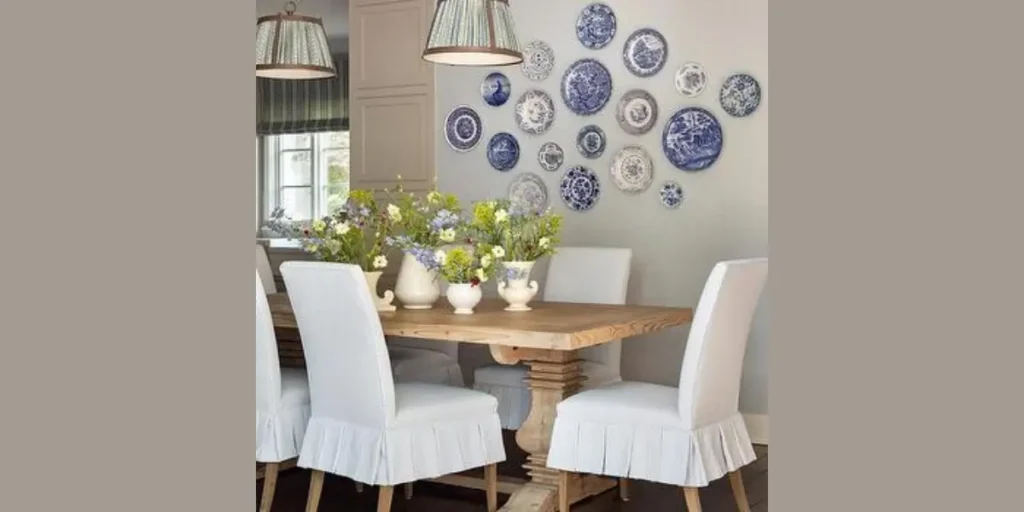
Wall plates bring charm and tradition into dining spaces. I use them when I want a collected, timeless look.
I arrange plates thoughtfully, mixing sizes while keeping consistent spacing. This creates rhythm rather than randomness.
Wall plates work especially well in farmhouse or classic dining rooms. When arranged properly, they add warmth and personality without overwhelming the wall.
8. Typography and Quote Wall Decor
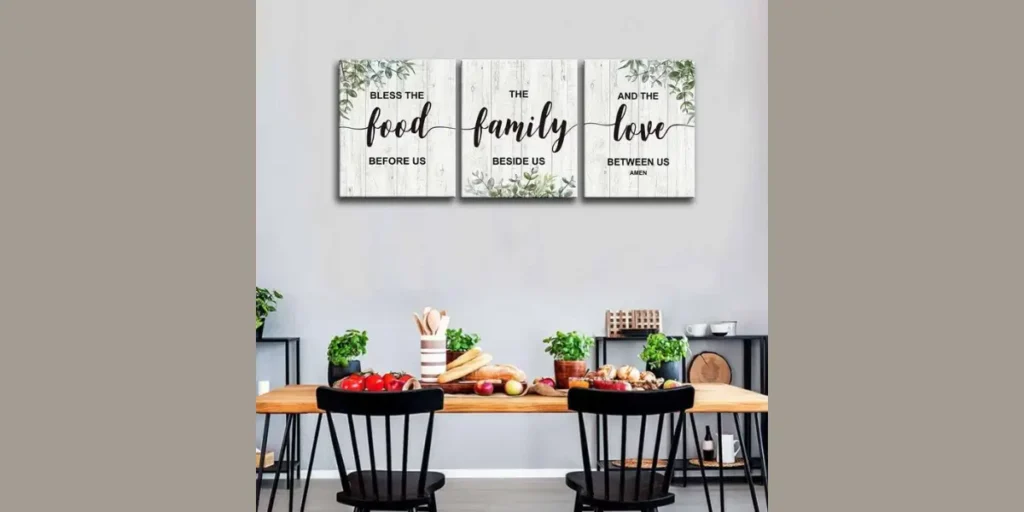
Typography wall décor adds meaning to dining rooms. I choose quotes related to food, family, or gathering to keep them relevant.
Simple fonts and clean layouts prevent the wall from feeling busy. I avoid overly decorative lettering that distracts from the space.
When placed thoughtfully, typography becomes a subtle design feature. It adds warmth and personality without overpowering other décor elements.
9. Large Decorative Wall Clock
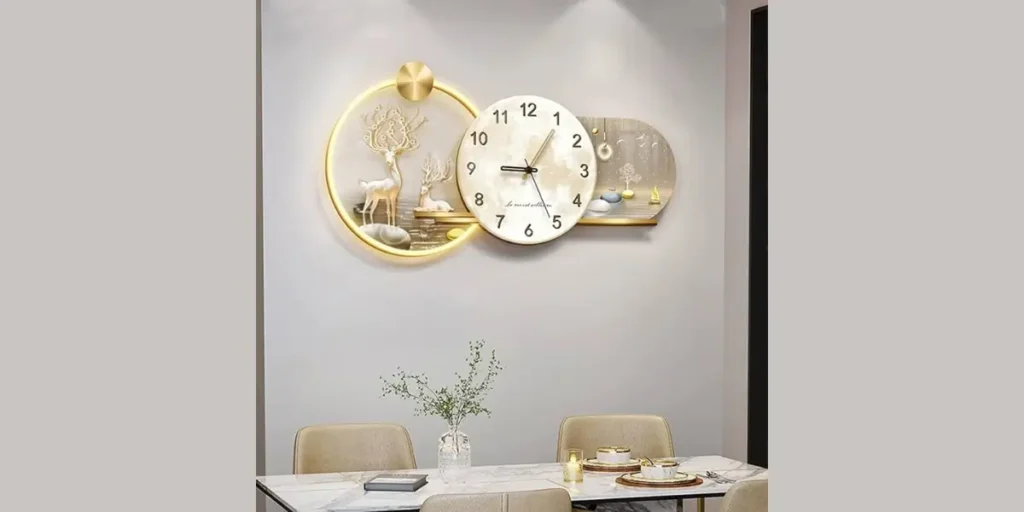
A decorative wall clock works as both décor and function. I often use it when a wall feels too bare for artwork.
Oversized clocks create balance and structure, especially in modern or industrial dining rooms. They anchor the wall visually.
Placement is important. When centered correctly, a wall clock fills space naturally and prevents the dining room from feeling incomplete.
10. Nature-Inspired Wall Decor
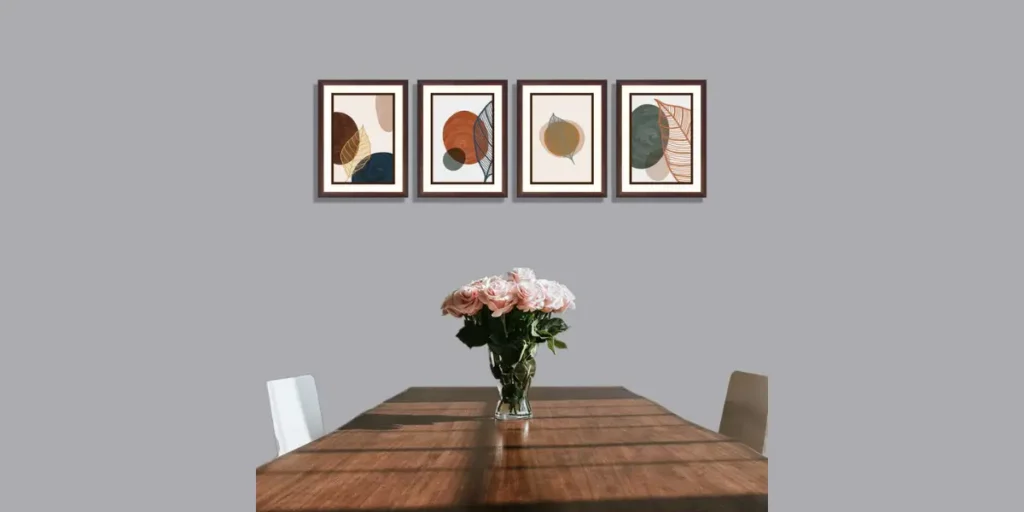
Nature-inspired wall décor brings calm into dining spaces. I often use botanical prints or organic textures to soften the room.
These elements pair well with natural light and neutral palettes. They make the dining room feel relaxed and refreshing.
I keep nature décor subtle. A few well-placed pieces create serenity without turning the space into a theme-based design.
11. Wood Panels or Slat Walls
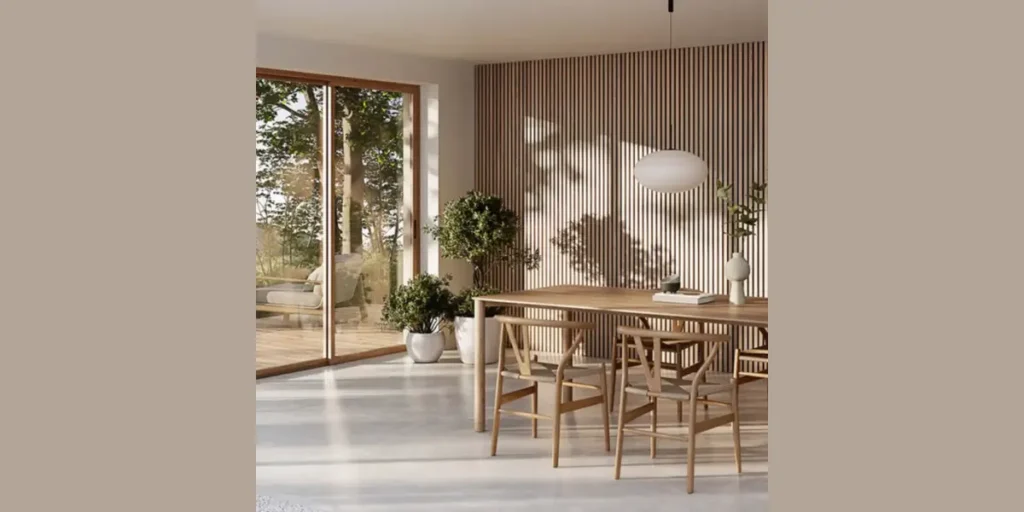
Wood panels or slat walls add architectural interest to dining rooms. I use them to introduce texture rather than color.
Vertical slats can visually increase ceiling height, while horizontal panels add warmth and structure.
When paired with simple furniture, wood wall treatments feel modern and sophisticated. They elevate dining rooms without needing additional wall décor.
12. Minimalist Wall Decor for Clean Spaces
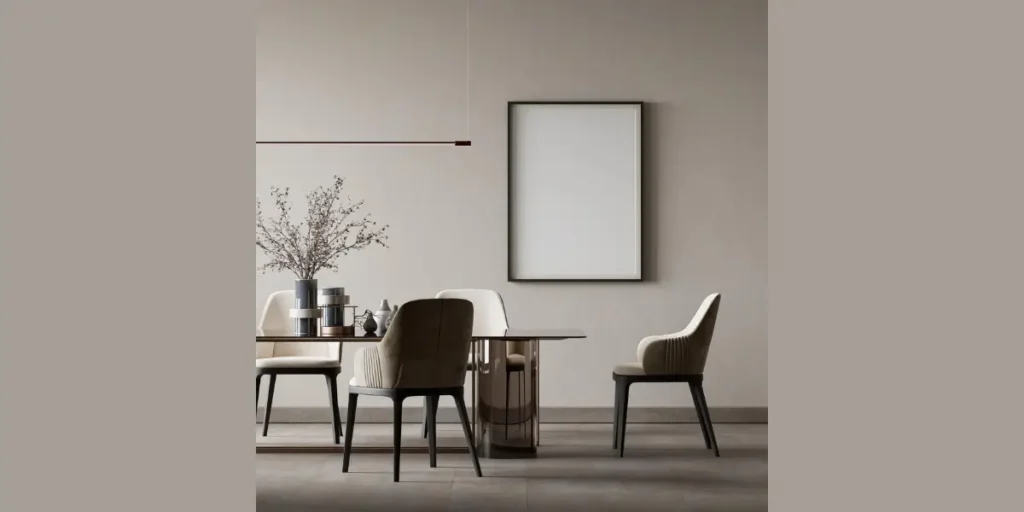
Minimalist wall décor works best when simplicity is the goal. I focus on a few impactful elements rather than filling the wall.
Negative space plays a major role here. It allows the dining room to feel calm and uncluttered.
High-quality materials and thoughtful placement make minimalist décor feel intentional. The result is a dining room that looks refined, balanced, and timeless.
How to Decorate Dining Room Walls Without Overcrowding
When I decorate dining room walls, I always start by deciding what the wall truly needs. Not every wall requires heavy décor. Sometimes, one strong element creates more impact than several smaller pieces competing for attention.
I focus on scale and spacing. Choosing décor that fits the wall proportionally helps maintain balance and visual comfort. Leaving intentional empty space allows the room to breathe and feel more refined.
I also consider how wall décor interacts with furniture and lighting. When these elements work together, the dining room feels cohesive, calm, and thoughtfully designed rather than visually busy.
FAQs
From my experience, wall art, mirrors, and minimalist shelves work best in dining rooms. These options add visual interest while keeping the space functional and easy to style over time.
I usually hang wall décor at eye level, roughly 57–60 inches from the floor to the center of the piece. This height feels natural and keeps the décor visually connected to the dining table.
Yes, mixing styles works well when there is a unifying element like color or material. I always keep one consistent feature to maintain harmony and avoid visual clutter.
Wall décor doesn’t need to match exactly, but it should complement the furniture. I focus on coordinating tones and textures so the room feels balanced and intentional.
Conclusion
Dining room wall décor has the power to shape the atmosphere of the entire space. From my experience, the most successful dining rooms don’t rely on filling every wall, but on choosing the right elements and placing them with intention.
Whether it’s statement art, mirrors, textured panels, or minimalist accents, thoughtful wall décor creates balance and personality without overwhelming the room.
When scale, spacing, and cohesion are handled carefully, the dining area feels inviting and complete.
Well-designed wall décor enhances everyday meals and makes the dining room a place people naturally enjoy gathering in.