
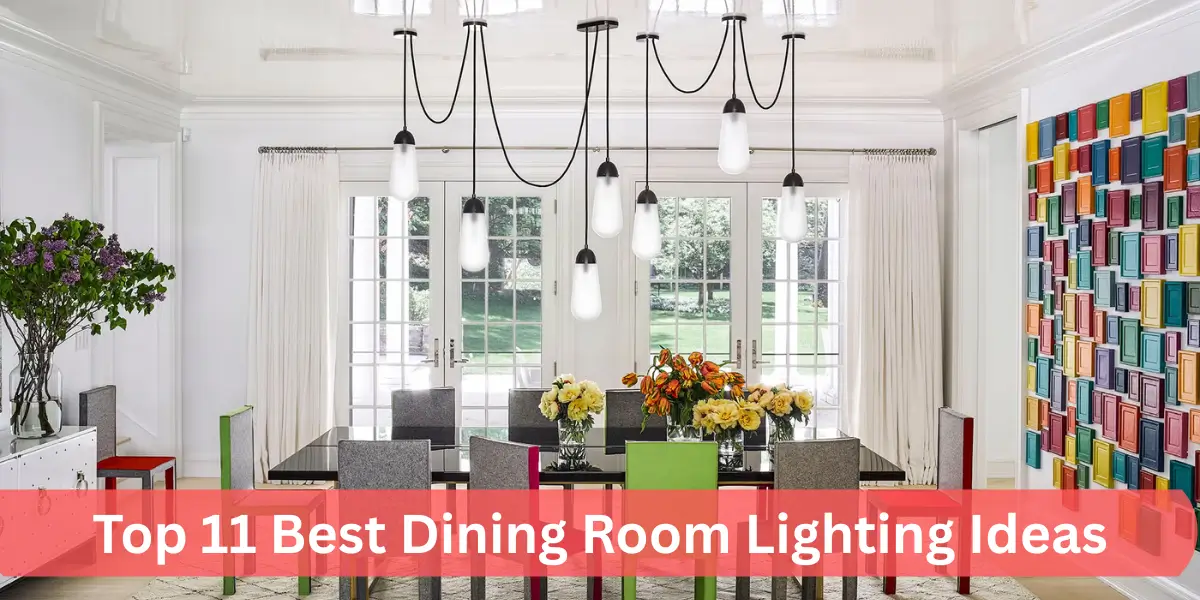

Dining room lighting ideas can dramatically change how the space feels and functions throughout the day. Lighting is often the most overlooked element in dining room design, yet it has the biggest impact on comfort and atmosphere.
The right lighting improves visibility for everyday meals while creating warmth for gatherings and special occasions. In this article, I’ll share practical and well-planned lighting ideas that balance style with function.
Each idea focuses on placement, brightness, and mood, helping you create a dining room that feels welcoming, visually balanced, and easy to enjoy.
1. Statement Chandelier Over the Dining Table
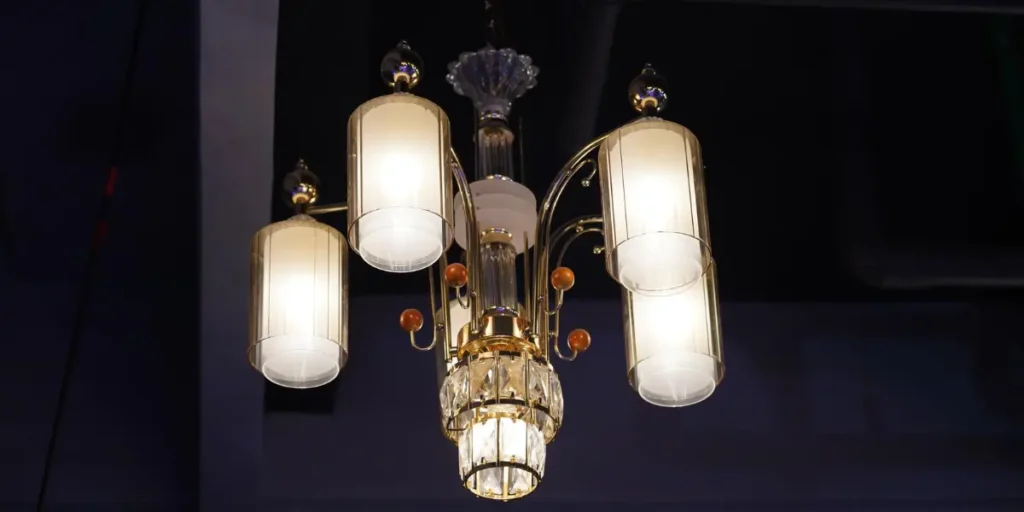
When I want to give a dining room instant character, I start with a statement chandelier. It naturally draws the eye and anchors the dining table as the focal point of the space. A well-chosen chandelier adds elegance without needing additional décor.
I always pay attention to scale. The chandelier should feel proportional to the table and ceiling height so it enhances the room rather than overwhelming it. Proper sizing keeps the space visually balanced.
Beyond style, chandeliers create atmosphere. With warm bulbs and thoughtful placement, the dining room feels inviting and suitable for both everyday meals and special occasions.
2. Pendant Lighting for a Modern Look
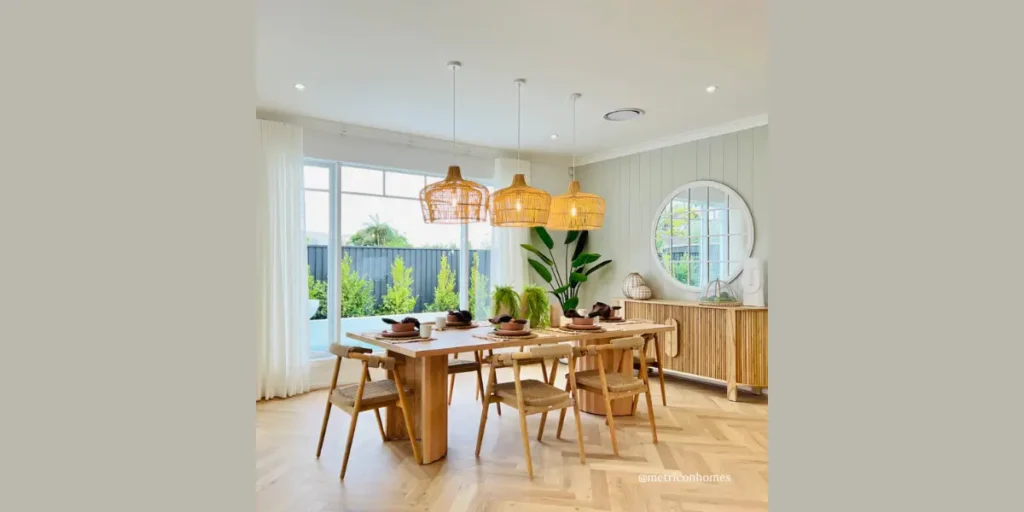
Pendant lighting works beautifully in modern dining rooms where clean lines matter. I use pendants to define the dining area while keeping the overall design light and uncluttered.
Single large pendants or a row of smaller ones both work well depending on table size. I focus on even spacing to ensure balanced illumination across the table.
Pendant lights offer flexibility. They feel stylish yet practical, making them ideal for homes that want a contemporary look without sacrificing comfort or usability.
3. Linear Suspension Lighting for Long Tables
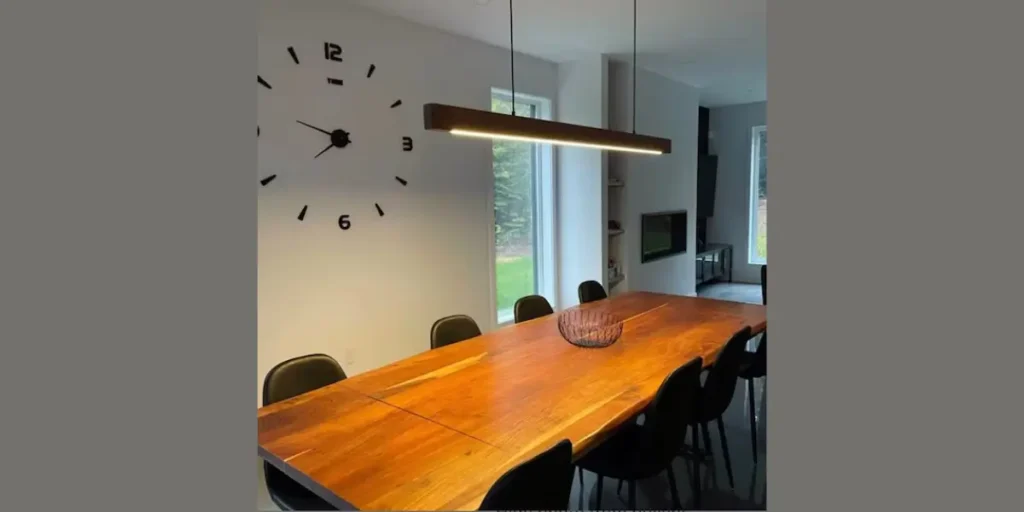
For long dining tables, I often recommend linear suspension lights. They provide even light distribution and maintain a sleek, modern profile.
This type of lighting aligns naturally with rectangular tables, creating visual harmony. I choose designs with soft diffused light to avoid harsh shadows during meals.
Linear fixtures work especially well in open-concept homes. They define the dining area clearly while blending seamlessly with modern interiors.
4. Layered Lighting for a Balanced Dining Room
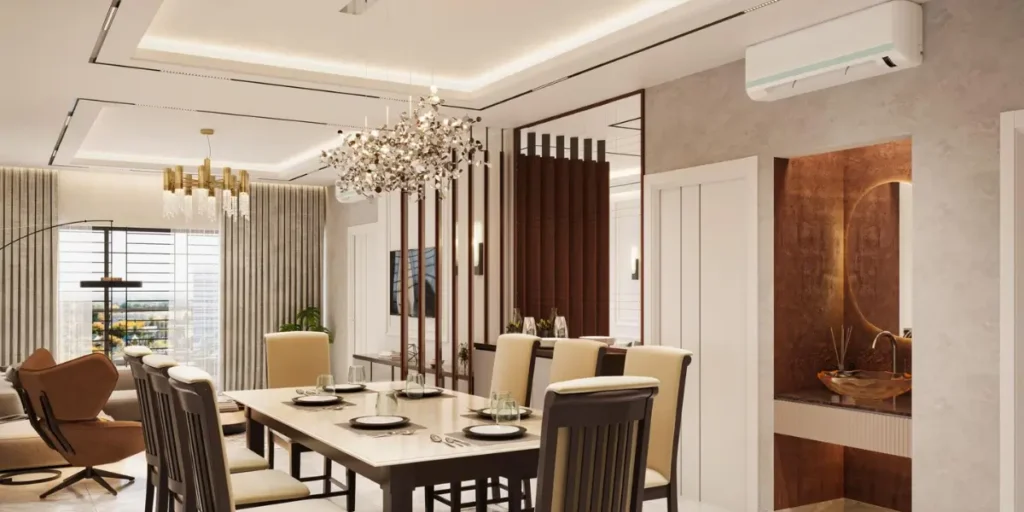
Layered lighting is one of the most effective ways to improve a dining room. I combine overhead lighting with ambient and accent lights to create depth.
This approach allows flexibility. Bright light works for daily dining, while softer layers create mood for evenings and gatherings.
Layered lighting prevents the space from feeling flat. When done correctly, the dining room feels comfortable, adaptable, and visually refined throughout the day.
5. Wall Sconces for Soft Ambient Light
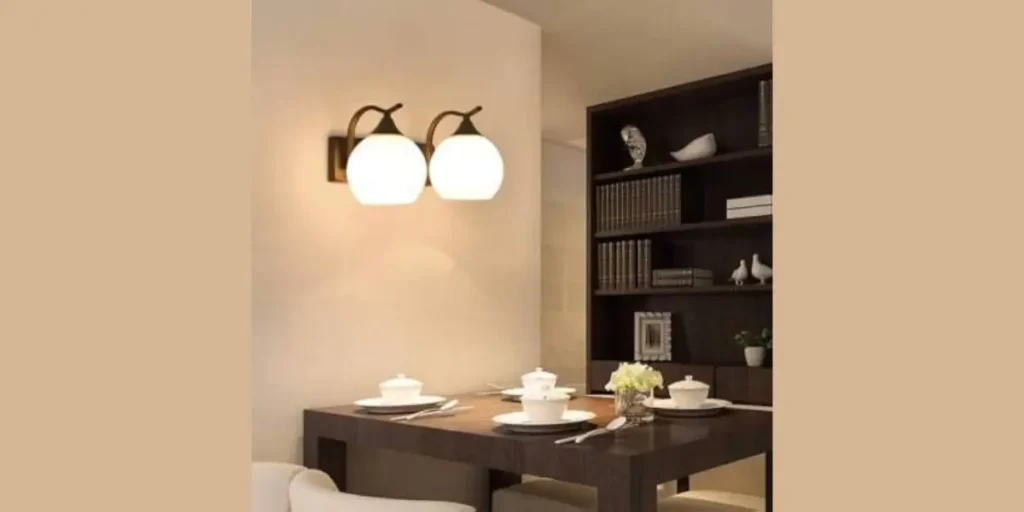
Wall sconces add warmth without overpowering the space. I often use them to soften the dining room’s overall lighting.
Placed strategically, sconces complement overhead fixtures and reduce harsh contrasts. They also add visual interest to walls without extra décor.
Sconces work especially well in formal dining rooms. They create a cozy, intimate atmosphere that encourages relaxed and enjoyable dining experiences.
6. Recessed Ceiling Lights for Clean Design
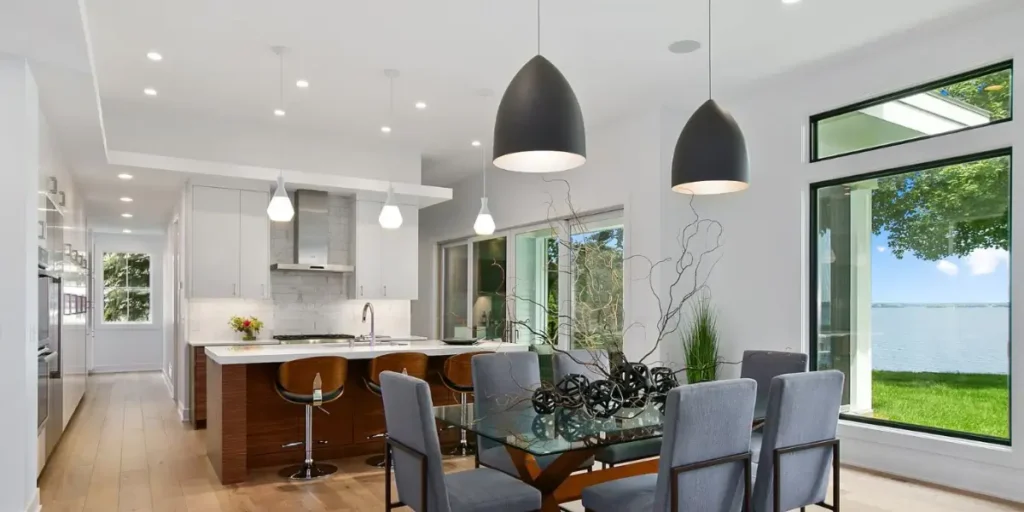
When clients prefer a minimal look, I turn to recessed ceiling lights. They keep the ceiling clean and modern while providing consistent illumination.
I use recessed lights to support main fixtures rather than replace them. Proper spacing ensures even lighting without dark corners.
This lighting option works well in contemporary dining rooms. It delivers function without drawing attention away from furniture or décor.
7. Dimmer-Controlled Dining Room Lighting
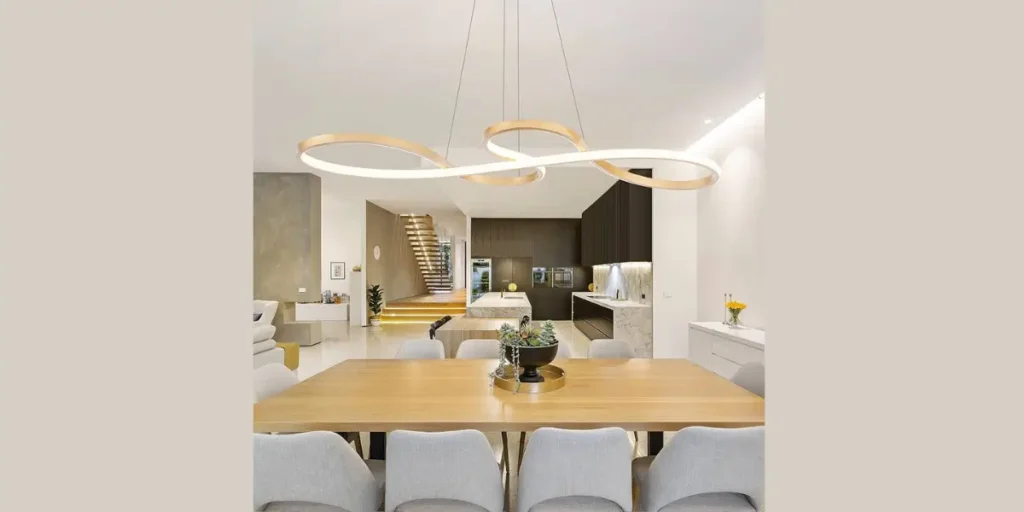
Dimmers completely change how a dining room feels. I always recommend them because they allow instant control over brightness.
Bright settings work for everyday meals and tasks, while dimmed lighting enhances mood for dinners and gatherings. This flexibility improves comfort significantly.
Dimmers also support energy efficiency. They make dining room lighting more adaptable, practical, and enjoyable at all times.
8. Candle-Style Lighting Fixtures
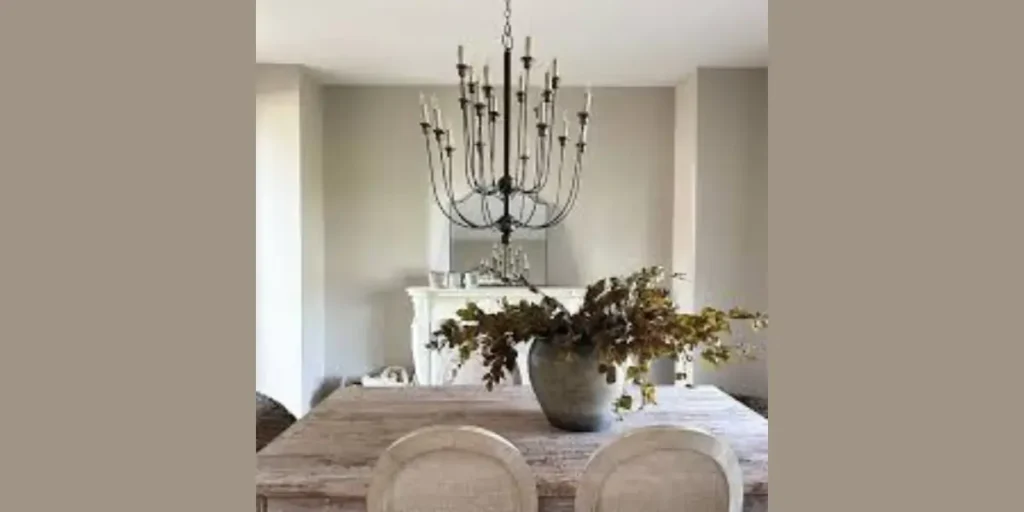
Candle-style fixtures bring timeless charm to dining rooms. I use them when I want warmth and a classic feel.
These fixtures suit traditional, farmhouse, and transitional interiors. Their soft glow creates an inviting and relaxed dining atmosphere.
When paired with modern bulbs, candle-style lights feel updated rather than dated. They balance elegance with comfort beautifully.
9. Industrial-Style Dining Room Lighting
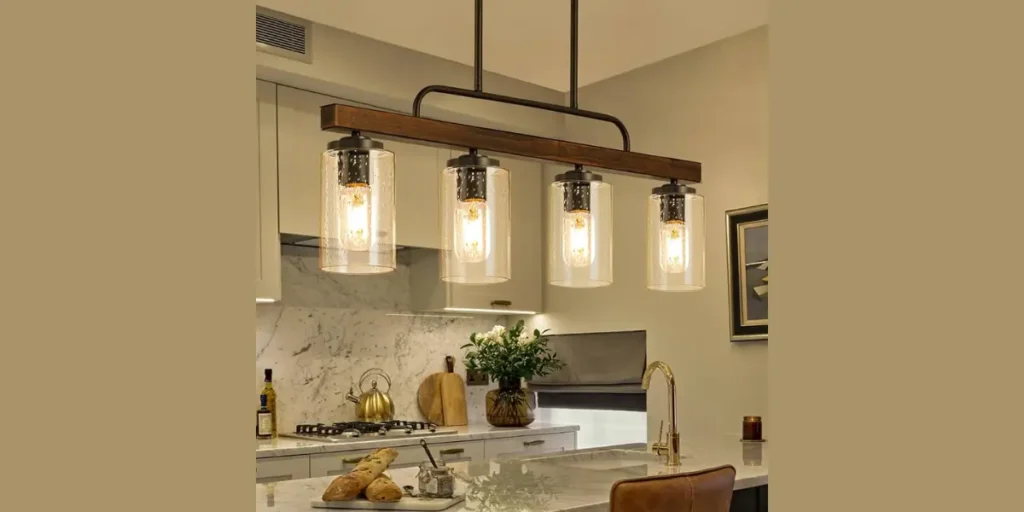
Industrial lighting adds bold character to dining spaces. I often use metal finishes and exposed bulbs for a strong visual statement.
This style works well in urban and modern homes. It brings texture and contrast without needing heavy decoration.
I balance industrial fixtures with warm lighting. This keeps the dining room from feeling cold while maintaining its edgy appeal.
10. Nature-Inspired Lighting Designs
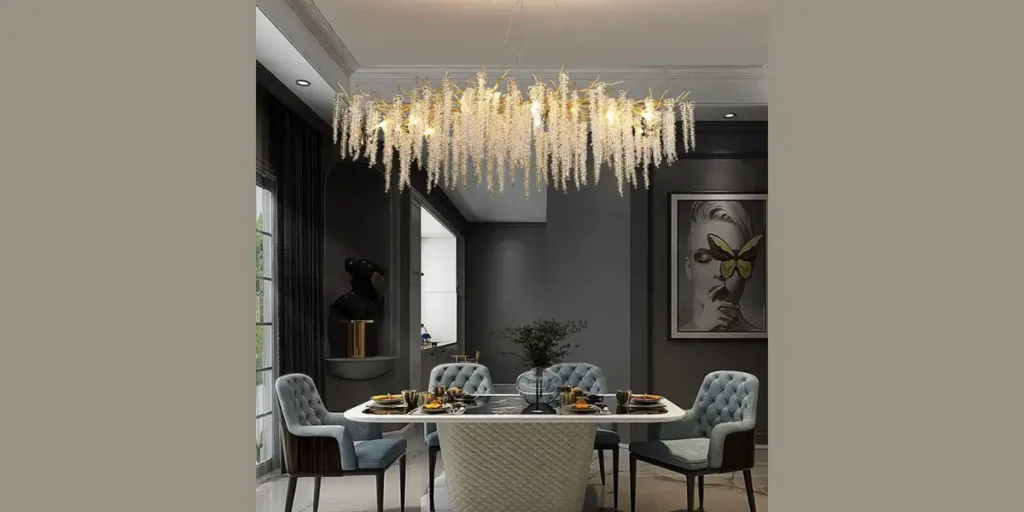
Nature-inspired lighting creates a calm dining environment. I use fixtures made from wood, rattan, or organic shapes.
These lights soften the space and pair well with neutral palettes and natural décor. They encourage relaxed dining experiences.
Nature-inspired lighting works especially well in casual homes. It brings warmth and a sense of balance to the dining room.
11. LED Strip and Accent Lighting
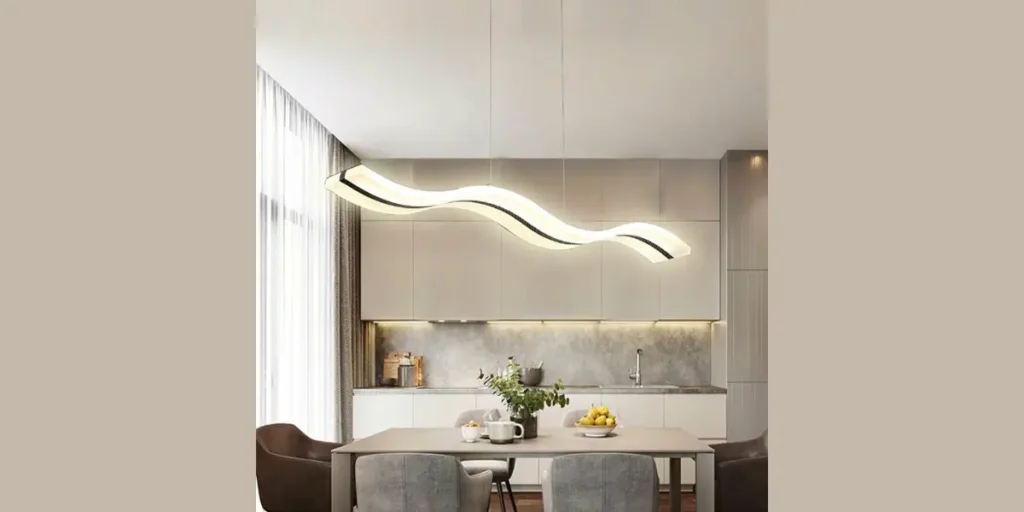
LED strip lighting adds subtle depth to dining rooms. I often install it along ceilings, shelves, or architectural features.
This type of lighting supports the main fixture without competing for attention. It enhances the room’s structure quietly.
When used carefully, LED accents make the dining room feel layered and modern. They elevate the space without overpowering the design.
How to Layer Dining Room Lighting for the Perfect Ambience
When I layer dining room lighting, I start by identifying the main light source, usually over the dining table. This provides focused illumination and sets the visual anchor for the space.
Next, I add ambient and accent lighting to soften the room. Wall sconces, recessed lights, or LED strips help balance brightness and eliminate harsh shadows.
Layered lighting gives flexibility. It allows the dining room to shift easily from bright and functional during the day to warm and intimate in the evening.
FAQs
From my experience, a combination of overhead lighting and ambient sources works best. A chandelier or pendant over the table paired with softer accent lights creates balance and comfort.
I usually hang dining lights about 30 to 36 inches above the table surface. This height provides proper illumination while keeping the fixture visually connected to the table.
Yes, mixing styles works when there is a unifying element like finish or color. I always ensure the fixtures complement each other rather than compete visually.
I highly recommend dimmers because they allow you to control mood and brightness easily. Dimmers make dining rooms more versatile and comfortable for different occasions.
Conclusion
Dining room lighting plays a defining role in how the space looks, feels, and functions every day.
From my experience, the most successful dining rooms use lighting intentionally, not just to illuminate the table, but to shape mood and comfort.
Whether it’s a statement chandelier, layered lighting, or subtle LED accents, each choice should support how the space is actually used.
When lighting is well planned, the dining room feels welcoming, balanced, and adaptable for both daily meals and special gatherings.
Thoughtful lighting design doesn’t just enhance style, it transforms the entire dining experience.