
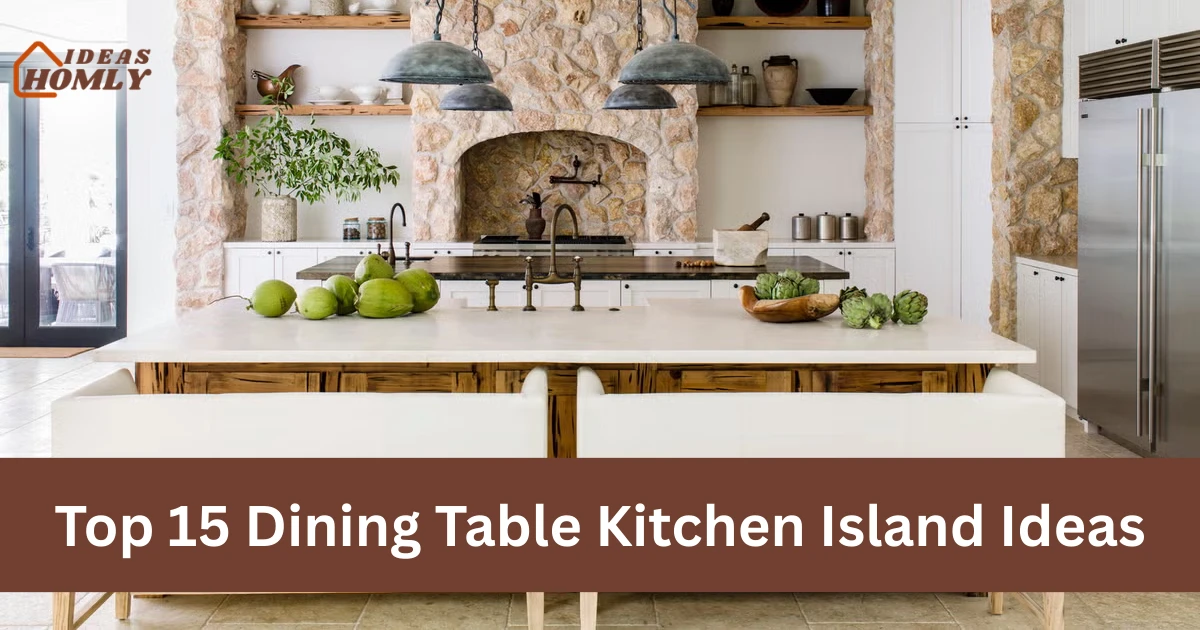

Top 15 dining table kitchen island ideas help you combine cooking space and dining space in one smart layout. If you want a kitchen that feels social, practical, and space-efficient, this design works beautifully.
I personally love dining table kitchen island setups because they turn the kitchen into the heart of the home. You cook, serve, eat, and talk in the same space without running back and forth.
If you are planning a remodel or upgrading your layout, this guide will give you practical, real-life ideas that actually work in everyday homes.
Why a Dining Table Kitchen Island Is a Smart Choice
A dining table kitchen island creates one central hub for cooking, serving, and dining. Instead of placing a separate dining table across the room, you combine both functions in one structured design.
In open-concept kitchens, this layout improves flow and makes the space look organized. I have noticed that families naturally gather around an island dining table more than a formal dining table.
When you plan it correctly with proper spacing and height, it increases seating capacity without overcrowding your kitchen.
1. Modern Kitchen Island with Attached Dining Table Extension
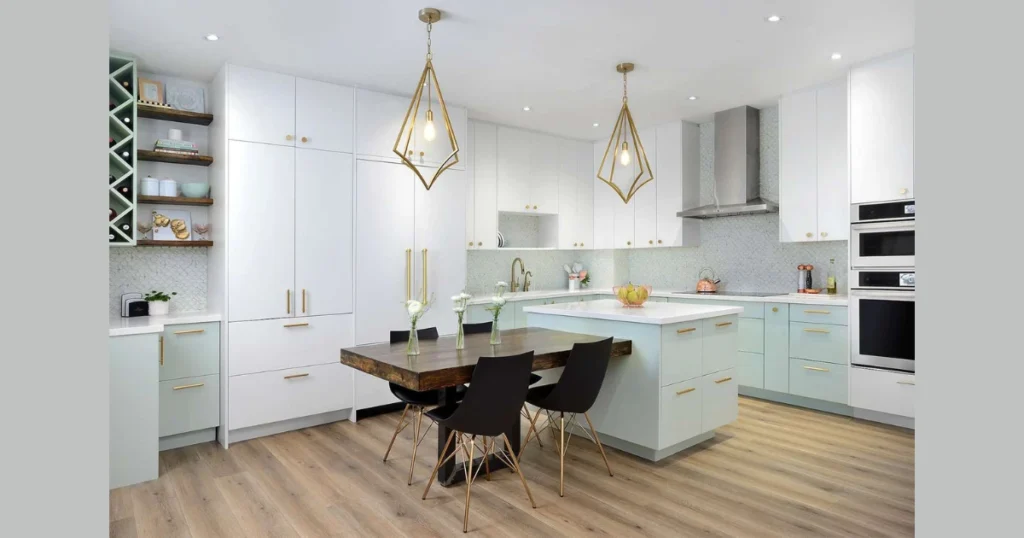
A modern kitchen island with an attached dining table extension offers a clean and seamless look. This design connects a dining surface directly to the island, either in the same material or a contrasting one.
I prefer quartz or granite for the island countertop and warm wood for the dining extension. The mix of materials adds depth without making the kitchen feel heavy.
This setup works best in medium to large kitchens where you can maintain at least 36 to 42 inches of walking space around the island.
2. L-Shaped Kitchen Island with Built-In Dining Table
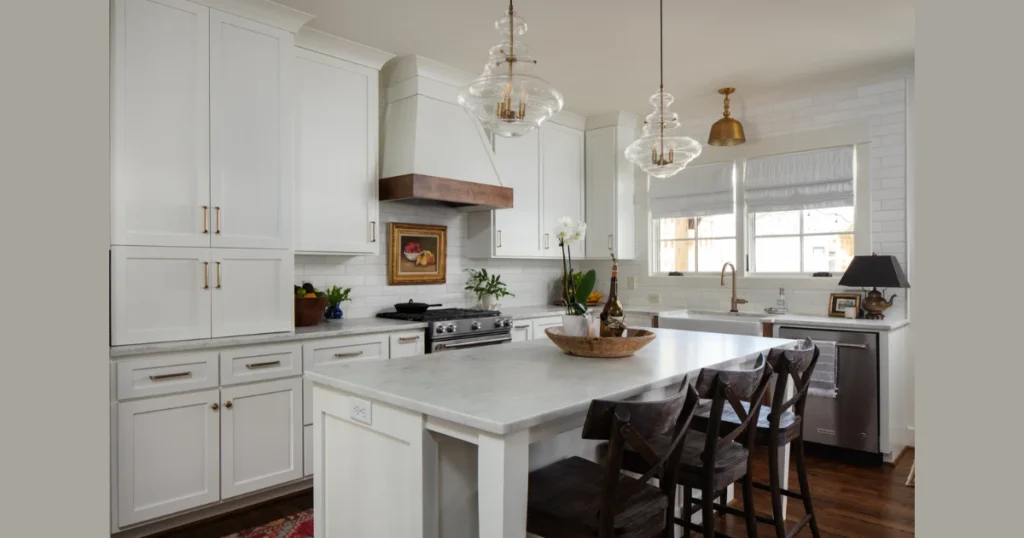
An L-shaped kitchen island with dining table maximizes corner space efficiently. The shorter side functions as the dining area, while the longer side handles prep and storage.
This design works especially well in open kitchens where you want a subtle separation between cooking and dining. I recommend this layout for families who need four to six seats.
Choose a durable surface like quartz or solid wood because the dining side will see daily use.
3. Waterfall Edge Island with Integrated Dining Table
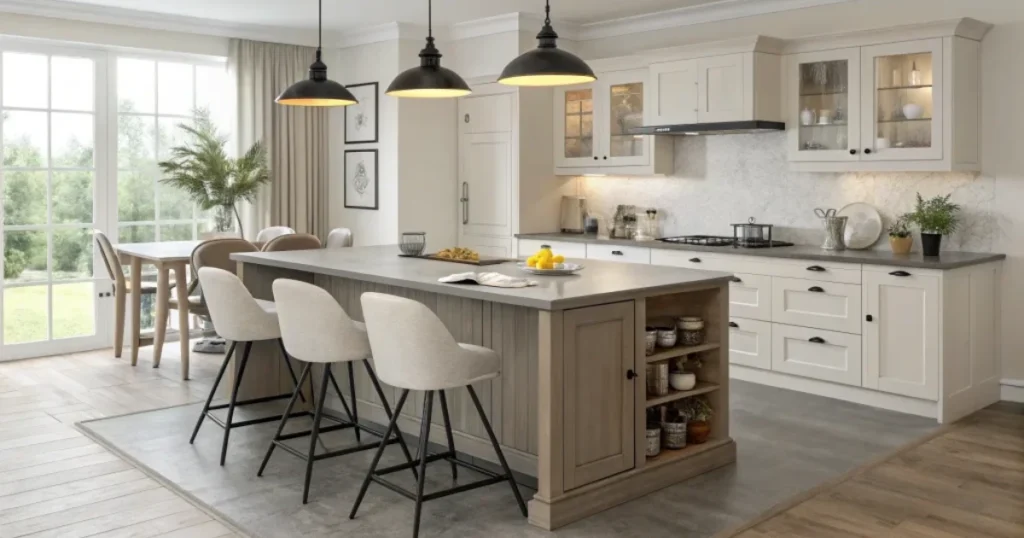
A waterfall edge kitchen island with an integrated dining table gives a sleek and high-end feel. The countertop flows down the sides, creating a bold visual anchor in the kitchen.
When you extend one side into a dining section, the entire structure feels intentional and structured. I find this idea perfect for modern and minimalist kitchens.
Keep the seating simple with backless stools or slim chairs to maintain a clean appearance.
4. Small Kitchen Island with Drop-Leaf Dining Table
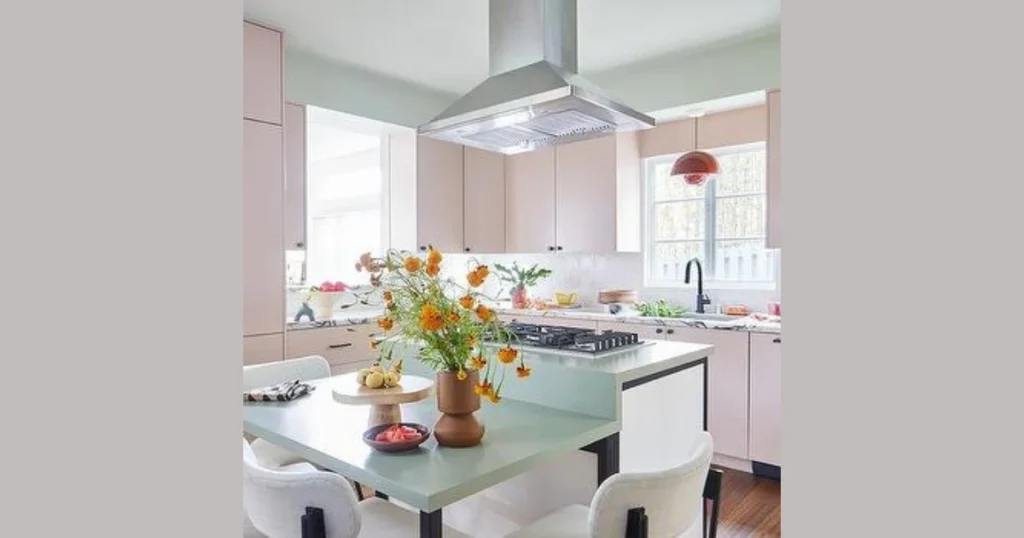
A small kitchen island with a drop-leaf dining table works perfectly in compact spaces. The foldable section stays down when not in use and opens when you need extra seating.
This idea suits apartments and small homes where every inch matters. I often suggest this design for couples or small families who entertain occasionally.
Use lightweight but sturdy hinges and solid wood to ensure durability over time.
5. Rustic Farmhouse Island with Wooden Dining Table
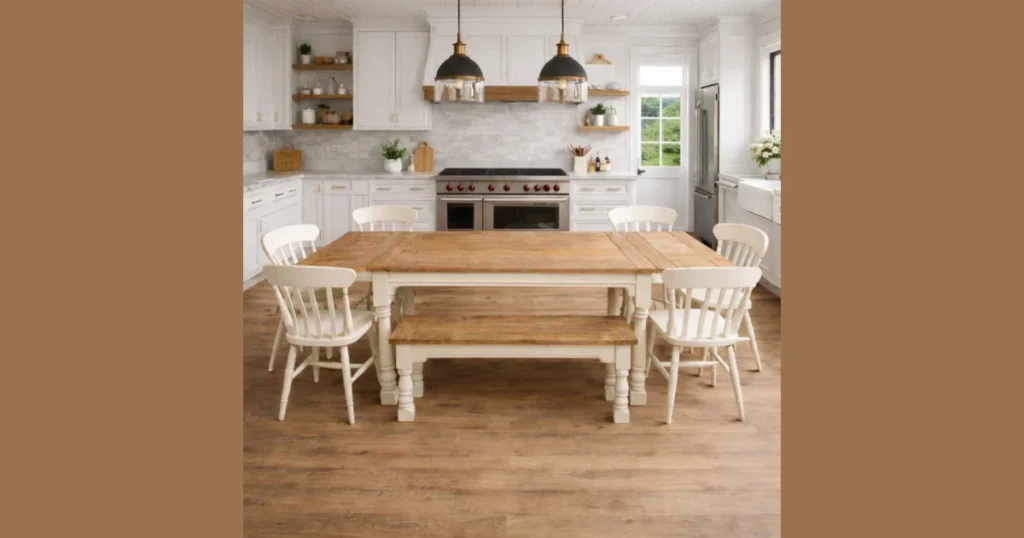
A farmhouse kitchen island with a wooden dining table adds warmth and character. This design often uses reclaimed wood or distressed finishes for a cozy look.
I personally love how a chunky wooden dining extension softens modern cabinets. It creates a welcoming atmosphere that feels comfortable rather than formal.
Pair it with classic wooden chairs or cross-back seating to complete the farmhouse style.
6. Double-Level Kitchen Island with Dining Section
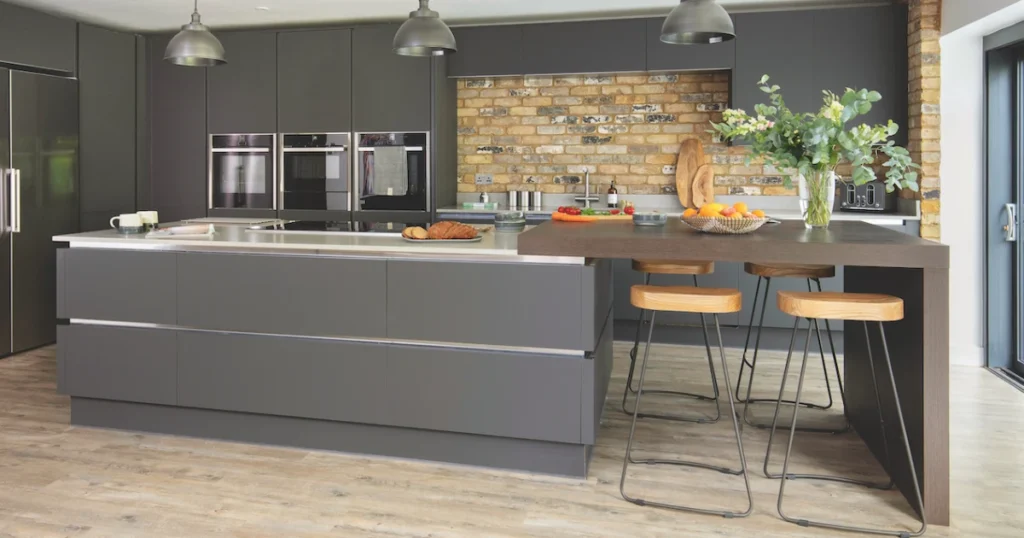
A double-level kitchen island separates prep space and dining space through height difference. The higher counter hides mess while the lower section functions as a proper dining table.
This layout works well if you cook often and want to keep preparation clutter out of sight. I find it especially useful in busy family kitchens.
Maintain clear height distinction, typically 36 inches for prep and 30 inches for dining.
7. Kitchen Island with Pull-Out Dining Table
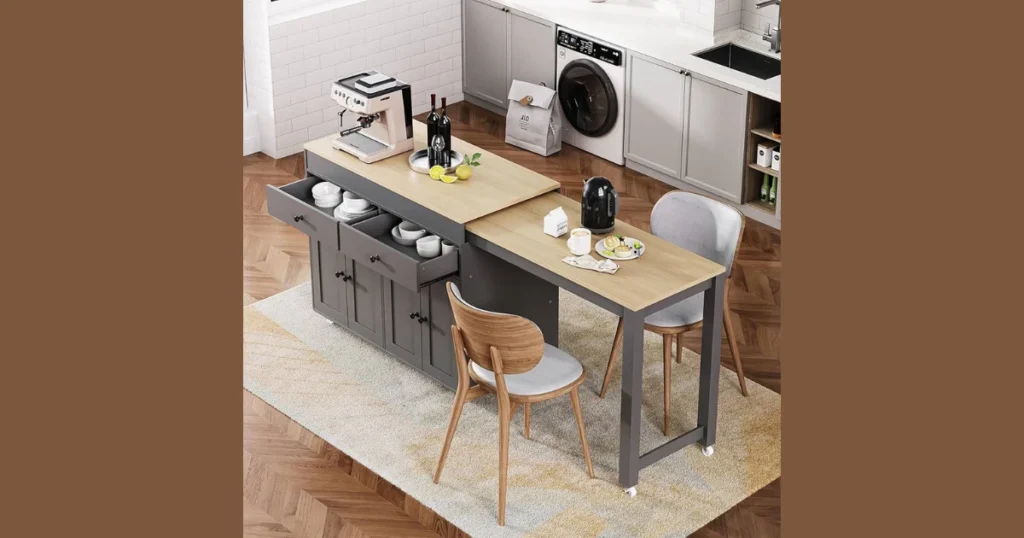
A kitchen island with a pull-out dining table offers hidden flexibility. The dining surface slides out when needed and disappears when you want more floor space.
This idea is great for small kitchens where a fixed table feels bulky. I have seen this design work beautifully in studio apartments.
Choose strong sliding hardware to ensure smooth movement and long-term use.
8. Marble Kitchen Island with Elegant Dining Extension
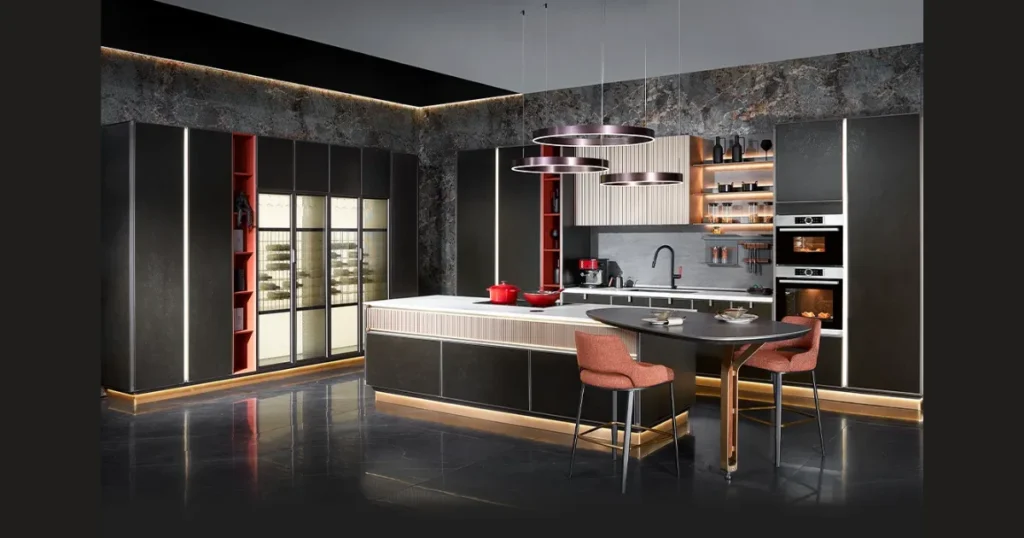
A marble kitchen island with a dining extension creates a refined and timeless appearance. Marble instantly elevates the overall design.
If you want a luxurious yet practical look, extend the marble surface to create seating for four to six people. I suggest sealing marble properly to prevent stains.
Neutral chairs in beige or soft gray balance the richness of the stone.
9. Industrial Style Island with Metal Frame Dining Table
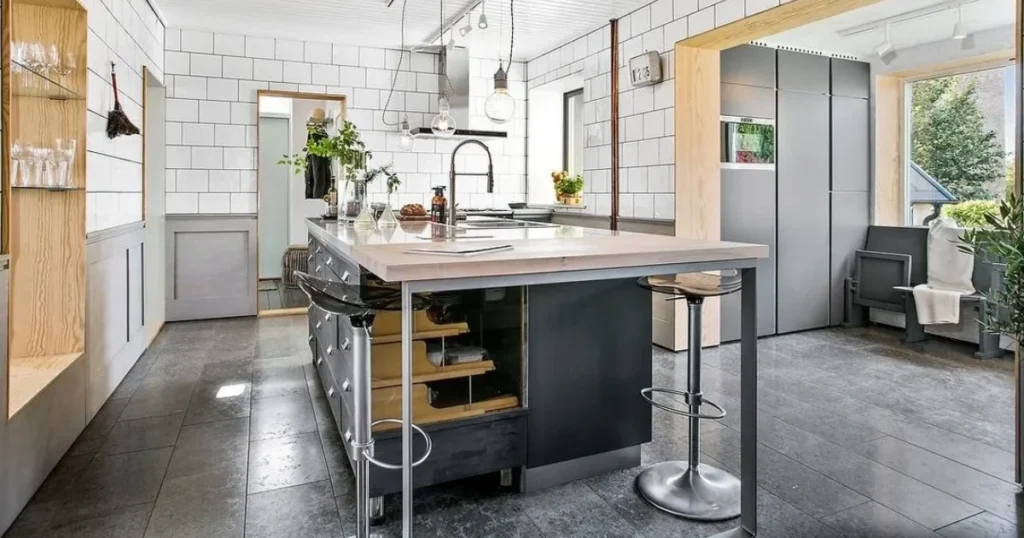
An industrial kitchen island with a metal-framed dining table brings a bold urban feel. Steel legs combined with wood tops create strong contrast.
This design works well in loft-style or modern apartments. I personally like pairing it with exposed brick or matte black lighting.
Make sure the metal frame remains sturdy and powder-coated to avoid rust over time.
10. Kitchen Island with Built-In Bench Seating Dining Table
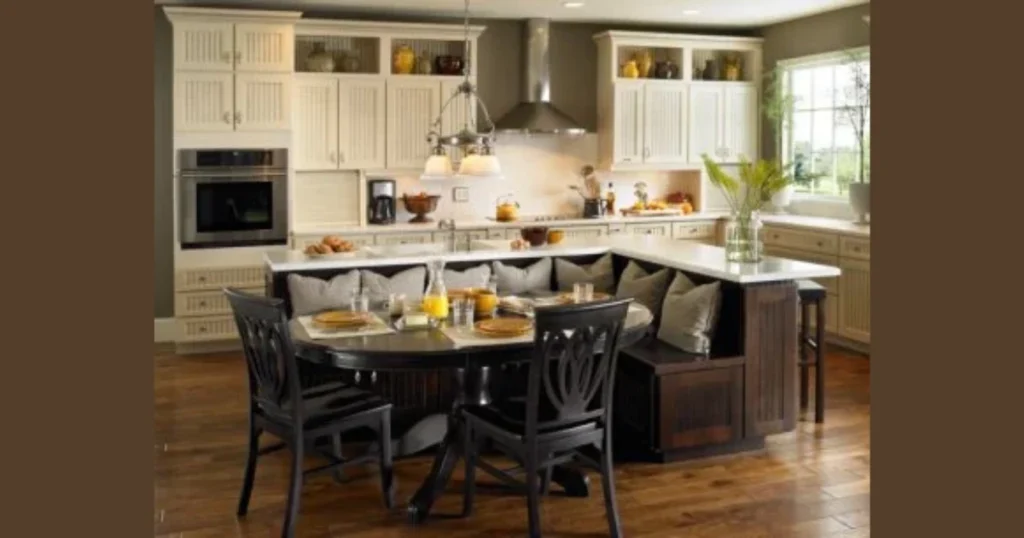
A kitchen island with built-in bench seating creates a cozy and space-efficient dining area. Instead of placing separate chairs, you attach a bench along one side of the dining extension.
I recommend this setup for families with kids because benches fit more people comfortably. It also reduces visual clutter and makes the kitchen look organized.
Add storage drawers under the bench to increase functionality without taking extra space.
11. Round Dining Table Attached to Kitchen Island
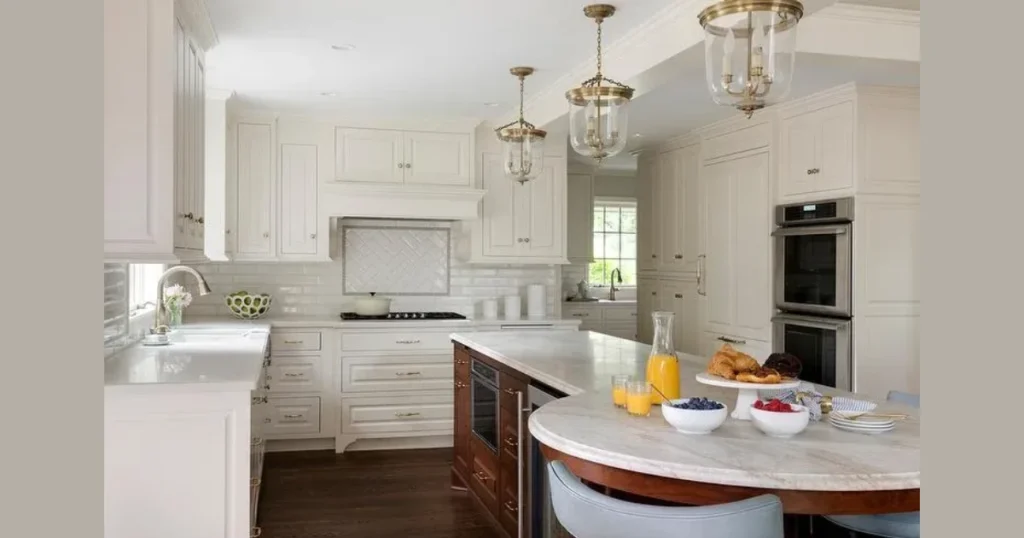
A round dining table connected to a kitchen island softens sharp kitchen lines. The circular shape improves movement and works well in smaller open layouts.
I personally prefer round dining extensions when the kitchen feels boxy. It makes the space feel relaxed and more inviting.
Choose a pedestal base for better legroom and easier seating arrangement.
12. Scandinavian Style Kitchen Island with Light Wood Dining Table
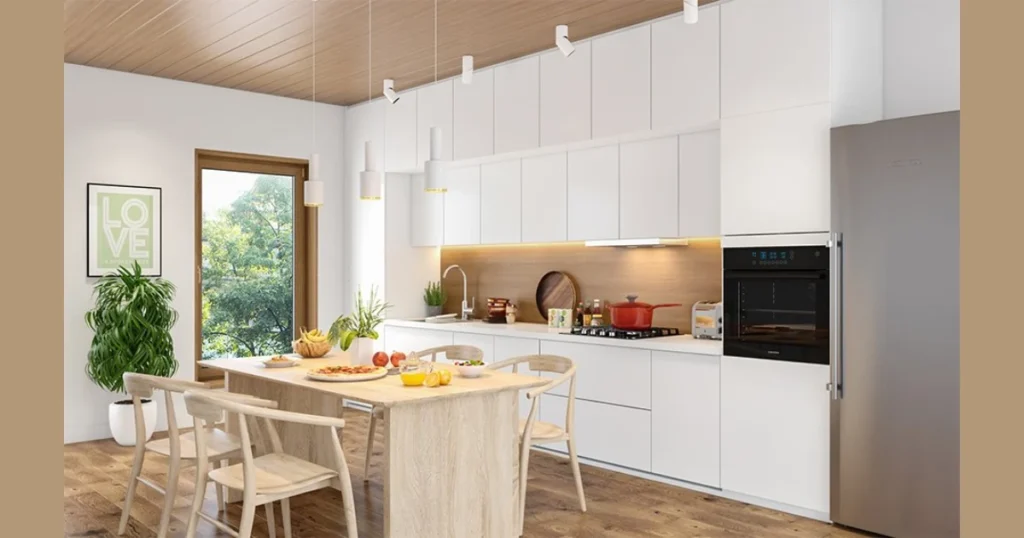
A Scandinavian kitchen island with a light wood dining table keeps the space bright and simple. Clean lines, soft colors, and natural materials define this look.
I often suggest oak or birch wood for the dining surface because it adds warmth without overwhelming the kitchen. Light tones reflect natural light and make small kitchens feel bigger.
Pair it with white cabinetry and minimal décor for a calm, functional kitchen layout.
13. Extended Breakfast Bar Island with Dining Table Seating
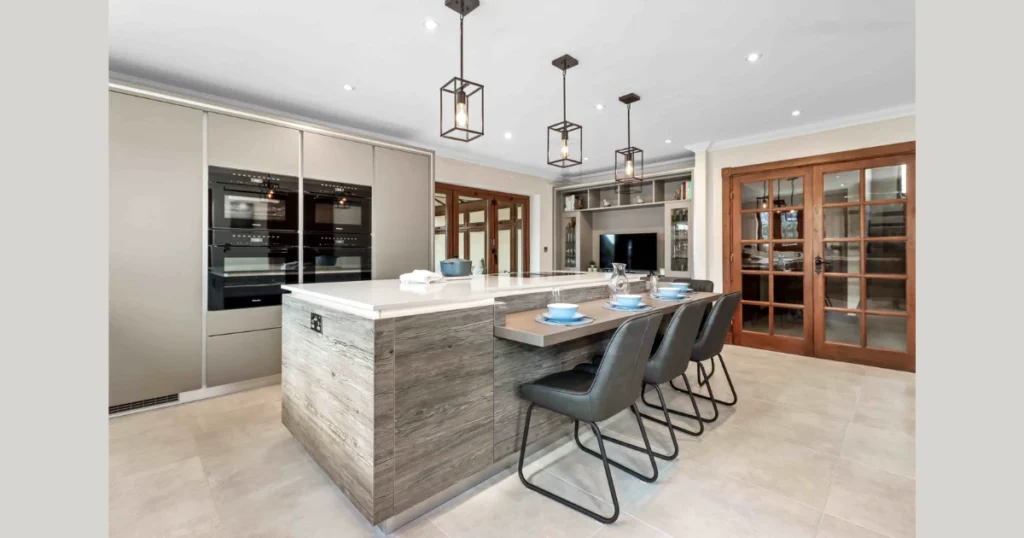
An extended breakfast bar island provides casual yet practical dining space. The countertop extends outward to create a comfortable overhang for stools.
This design works well if you prefer informal dining instead of a traditional table setup. I like it for busy households where quick meals are common.
Make sure the overhang measures at least 12 to 15 inches for comfortable seating.
14. Glass-Top Dining Extension on Kitchen Island
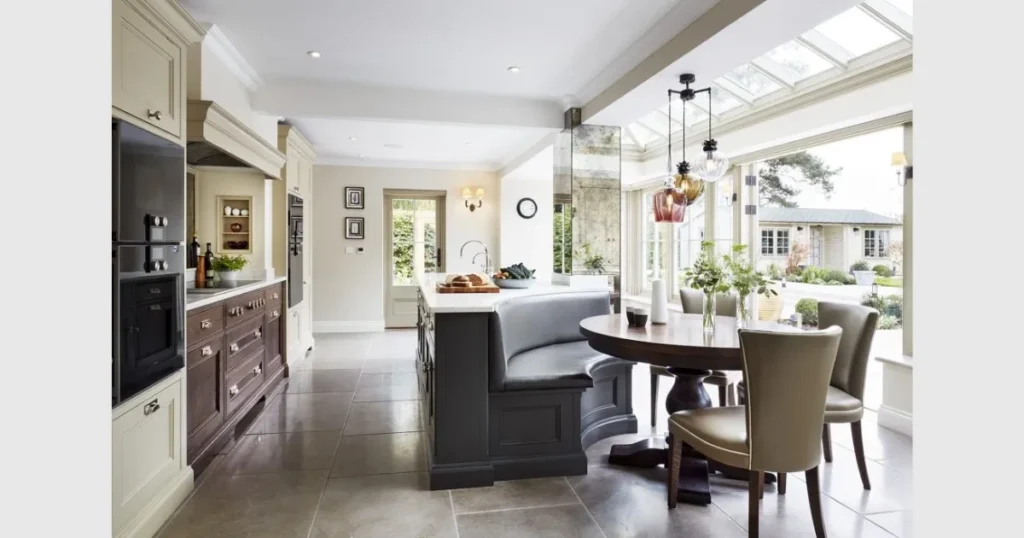
A glass-top dining extension adds a modern and airy touch to your kitchen island. The transparent surface keeps the space visually light.
I suggest tempered glass for durability and safety. It works best in contemporary kitchens where you want a sleek finish.
Use metal or wooden support underneath to maintain structural strength.
15. Multi-Functional Kitchen Island with Storage and Dining Table
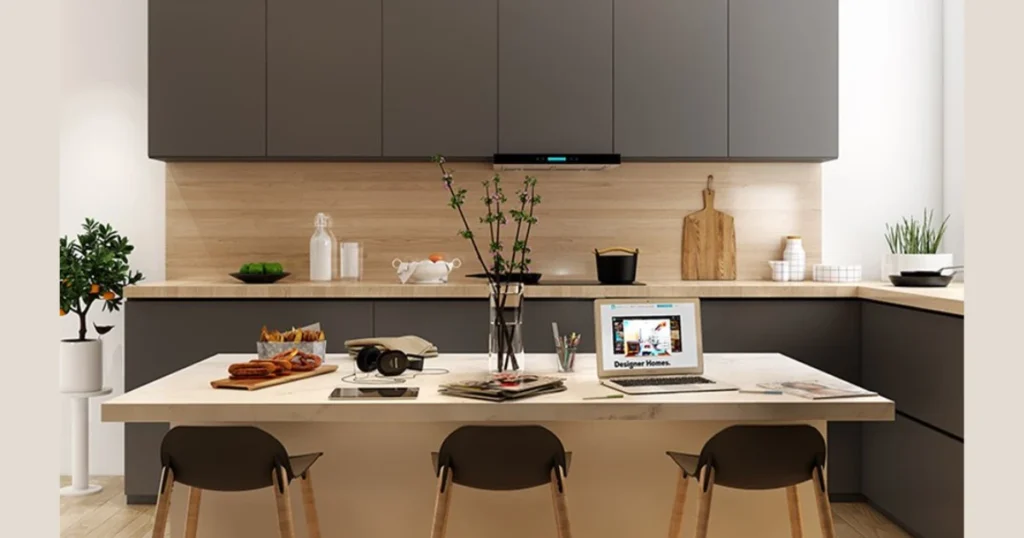
A multi-functional kitchen island with storage and dining table offers maximum usability. This design combines drawers, cabinets, and a proper dining extension in one structure.
I strongly recommend this layout for medium and large kitchens because it handles storage, prep, and dining without extra furniture. It keeps everything in one organized hub.
Plan the storage wisely by including deep drawers for cookware and shelves for daily essentials.
Practical Size Guide for Dining Table Kitchen Island Layout
Correct measurements determine whether your dining table kitchen island feels comfortable or cramped. Many homeowners ignore spacing and regret it later.
I always measure clearance first before choosing any design. Proper spacing improves both safety and comfort in the kitchen.
Recommended Dimensions Table
| Feature | Recommended Measurement |
|---|---|
| Walkway clearance | 36 to 42 inches |
| Dining table height | 28 to 30 inches |
| Standard island height | 36 inches |
| Counter stool height | 24 to 26 inches |
| Overhang for seating | 12 to 15 inches |
| Seating space per person | 24 inches width |
These measurements help you avoid overcrowding and ensure comfortable seating. Even a beautiful design fails if spacing feels tight.
Material Comparison for Kitchen Island with Dining Table
Material choice affects durability, maintenance, and overall style. Each surface has strengths depending on your usage.
I prefer selecting materials based on daily habits rather than trends. If you cook often, choose something durable and easy to clean.
Quick Comparison Table
| Material | Best For | Maintenance Level |
|---|---|---|
| Quartz | Busy kitchens | Low |
| Granite | Natural stone lovers | Medium |
| Solid wood | Warm, farmhouse look | Medium |
| Marble | Elegant kitchens | High |
| Laminate | Budget-friendly setups | Low |
Choose material according to lifestyle, not just appearance. A stylish surface that stains easily may frustrate you later.
Smart Tips Before Choosing a Dining Table Kitchen Island
A well-planned dining table kitchen island improves comfort, storage, and daily workflow. Before you finalize any design, you need to think beyond appearance.
I always tell readers that layout matters more than style. A beautiful island feels useless if people bump into each other while cooking.
Let me share practical tips that help you avoid common mistakes.
1. Measure Your Kitchen First
Accurate measurements prevent expensive redesigns later. Always check wall-to-wall width, walkway clearance, and appliance distance before deciding on size.
I suggest marking the island outline on the floor with tape. This small step helps you visualize real movement space.
2. Match Height with Seating Type
Correct height ensures comfortable dining and posture. Standard islands measure 36 inches, while dining sections usually sit at 30 inches.
If you plan a single-level design, choose counter-height stools with proper back support. Comfort matters more than style during long dinners.
3. Plan Storage Based on Real Needs
Storage should match your cooking habits, not trends. If you use heavy cookware, add deep drawers instead of open shelves.
I personally prefer soft-close drawers because they reduce noise and last longer. Small details improve daily kitchen experience.
4. Choose Materials That Fit Your Lifestyle
Material selection affects long-term maintenance. Quartz works best for busy households because it resists stains and scratches.
If you love natural texture, wood adds warmth but needs care. Choose what fits your routine, not what looks good in photos.
5. Think About Lighting
Good lighting enhances both cooking and dining zones. Pendant lights above the island improve visibility and create visual balance.
I prefer warm white lighting for dining sections because it feels inviting. Avoid harsh lighting that makes meals feel uncomfortable.
Common Mistakes to Avoid in Kitchen Island Dining Table Designs
Avoiding common mistakes saves money and frustration. Many homeowners rush design decisions and regret them later.
Let’s quickly go through problems I often see in real homes.
- Placing the island too close to cabinets
- Ignoring seating clearance
- Choosing heavy materials in small kitchens
- Skipping electrical outlet planning
- Overcrowding the island with too many stools
Simple planning prevents these issues completely. Take time before installation because changes later cost more.
How to Choose the Best Dining Table Kitchen Island for Your Home
The best dining table kitchen island depends on your space, budget, and lifestyle. There is no single perfect design for everyone.
If you live in a small apartment, choose a drop-leaf or pull-out dining extension. Compact designs maximize function without clutter.
For larger kitchens, I prefer multi-functional islands with storage and seating for six or more. They become the true center of the home.
Always balance aesthetics, comfort, and movement space before making a final decision.
Conclusion
Dining table kitchen island ideas offer practical solutions for modern homes. They combine cooking, dining, storage, and social space in one smart layout.
Throughout this guide, I shared 15 real and practical designs that suit different kitchen sizes and styles. From farmhouse wood extensions to modern waterfall edges, each idea serves a purpose.
If you plan carefully, measure properly, and choose materials wisely, your kitchen island dining table can become the most used space in your home.
Many readers check the conclusion first, so here is the key takeaway. Choose a design that matches your space, supports daily habits, and keeps movement comfortable. A thoughtful choice today saves years of frustration later.
FAQs
The ideal size depends on your kitchen layout. Most islands measure 6 to 8 feet long with 36 to 42 inches of clearance around them.
Yes, you can use drop-leaf or pull-out designs. These options save space while still providing seating when needed.
Quartz works best for low maintenance and durability. Solid wood suits warm interiors but requires regular care.
Most designs seat four to six people comfortably. Allow 24 inches of width per person for proper spacing.
Two-level islands hide cooking mess and separate prep from dining. Single-level islands look cleaner and more modern. Choose based on your needs.
An overhang of 12 to 15 inches provides enough legroom for counter seating.