


The kitchen floor works harder than almost any other surface in the home. It deals with spills, constant movement, and daily cooking activity, so choosing the right tile matters more than most people think.
I’ve noticed that the floor often sets the tone for the entire kitchen design, whether the space feels modern, cozy, or luxurious. While exploring different materials and layouts.
I found that thoughtful kitchen floor tile ideas can dramatically improve both style and durability. The right flooring choice can truly transform how the kitchen looks and functions every day.
Stylish Kitchen Floor Tile Ideas That Instantly Upgrade Your Kitchen
The kitchen floor plays a bigger role in design than most people expect. When I evaluate a kitchen layout, the flooring often determines whether the space feels warm, modern, or elegant. Good floor tiles also handle heavy traffic and frequent spills without losing their appearance.
Different tile styles can completely change the personality of a kitchen. Some create a timeless look, while others introduce bold patterns or natural textures. Choosing the right flooring can elevate the entire kitchen design while still keeping the space practical for everyday use.
1. Classic Ceramic Floor Tiles
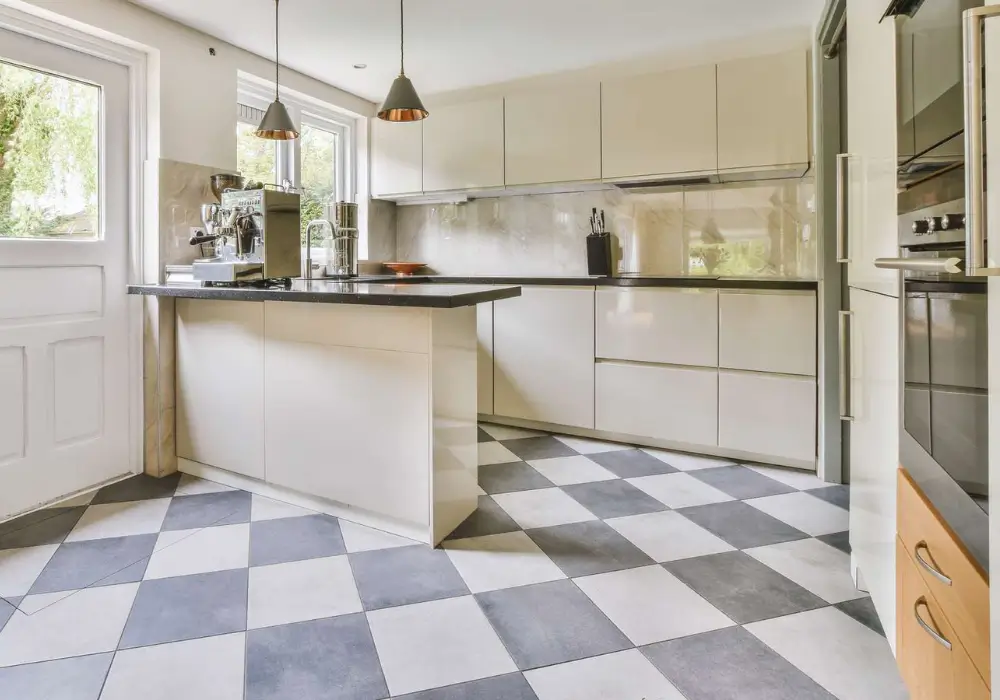
Ceramic tiles remain one of the most dependable flooring options for kitchens. I often recommend them because they combine durability, affordability, and versatility in one material. Many homeowners choose ceramic tiles when they want something practical that still looks clean and attractive.
These tiles come in a wide variety of colors, finishes, and patterns. From neutral tones like beige and soft gray to textured surfaces that mimic natural stone, ceramic tiles easily match many kitchen styles. Their adaptability makes them suitable for both modern and traditional interiors.
Another advantage is maintenance. Ceramic tiles resist stains and moisture very well, which makes cleaning simple after cooking spills or everyday messes. With proper installation, ceramic flooring can remain strong and visually appealing for many years.
2. Wood-Look Porcelain Tiles
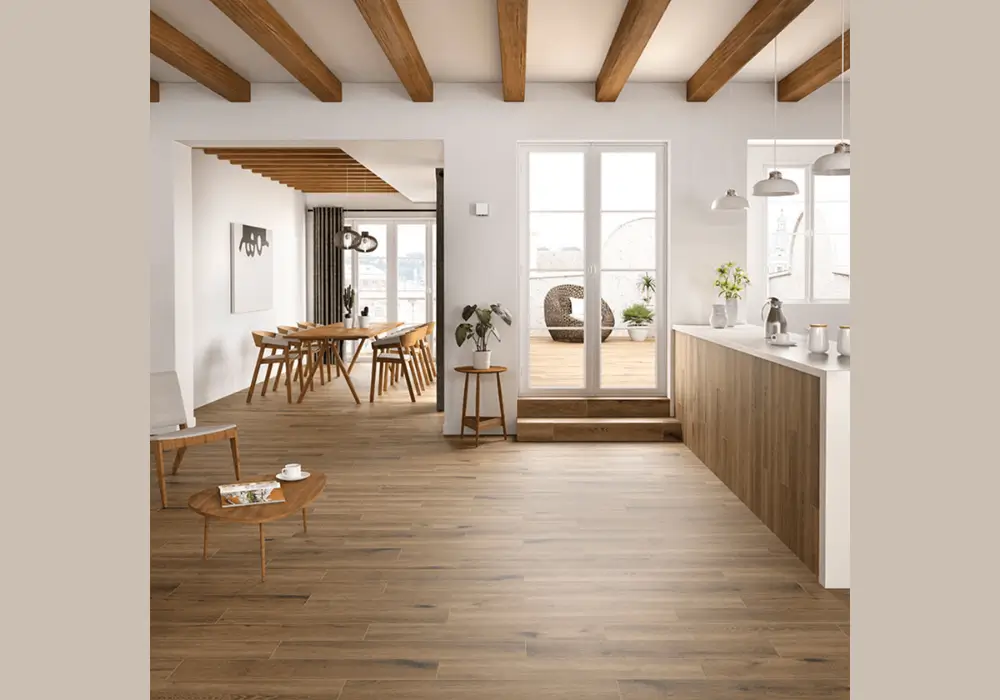
Wood-look porcelain tiles offer the beauty of natural wood without the maintenance challenges that real hardwood flooring requires. I often suggest them for kitchens because they create warmth while still handling moisture and heavy use.
Modern manufacturing techniques allow these tiles to replicate realistic wood grain patterns. Many designs resemble oak, walnut, or maple, giving the kitchen a cozy and welcoming atmosphere while maintaining the durability of porcelain.
Another reason I like these tiles is their resilience. Porcelain is extremely dense and resistant to scratches, stains, and water damage. This combination of natural style and durability makes wood-look tiles a practical choice for busy kitchens.
3. Marble Floor Tiles
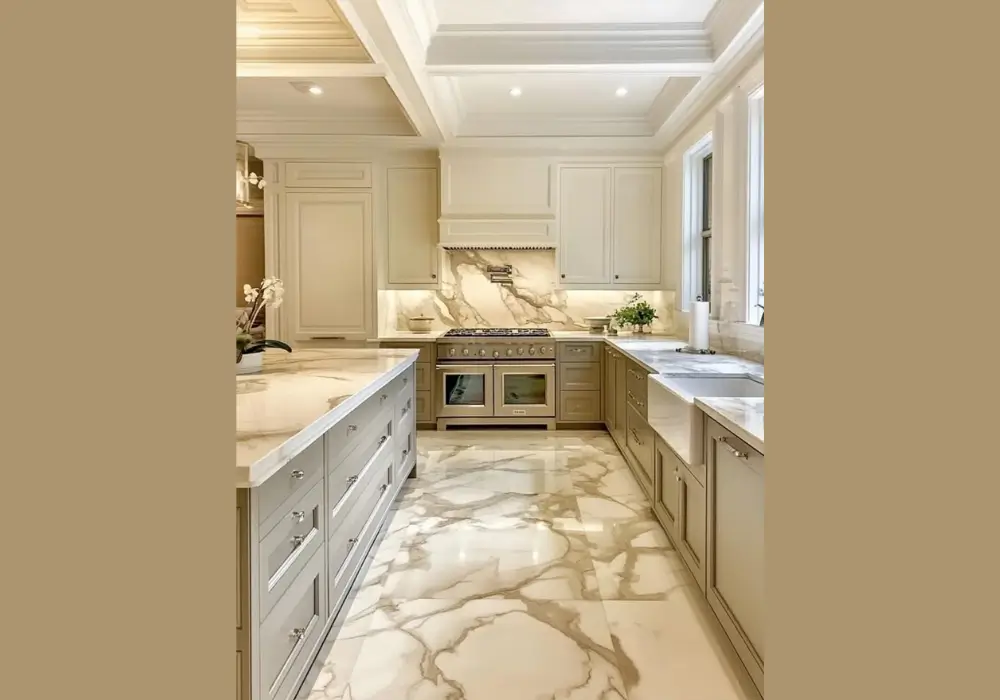
Marble tiles bring a refined elegance that instantly elevates the appearance of a kitchen. Whenever I walk into a kitchen with marble flooring, the space immediately feels more luxurious and polished. The natural veining patterns create subtle movement across the floor.
Each marble tile features unique patterns formed by natural stone. These organic variations add character and prevent the flooring from looking repetitive. Many designers use white or light gray marble to brighten the kitchen.
Marble also reflects light beautifully, which can make the kitchen appear more spacious. Although it requires occasional sealing and maintenance, many homeowners appreciate the timeless sophistication that marble flooring adds to the space.
4. Hexagon Floor Tiles
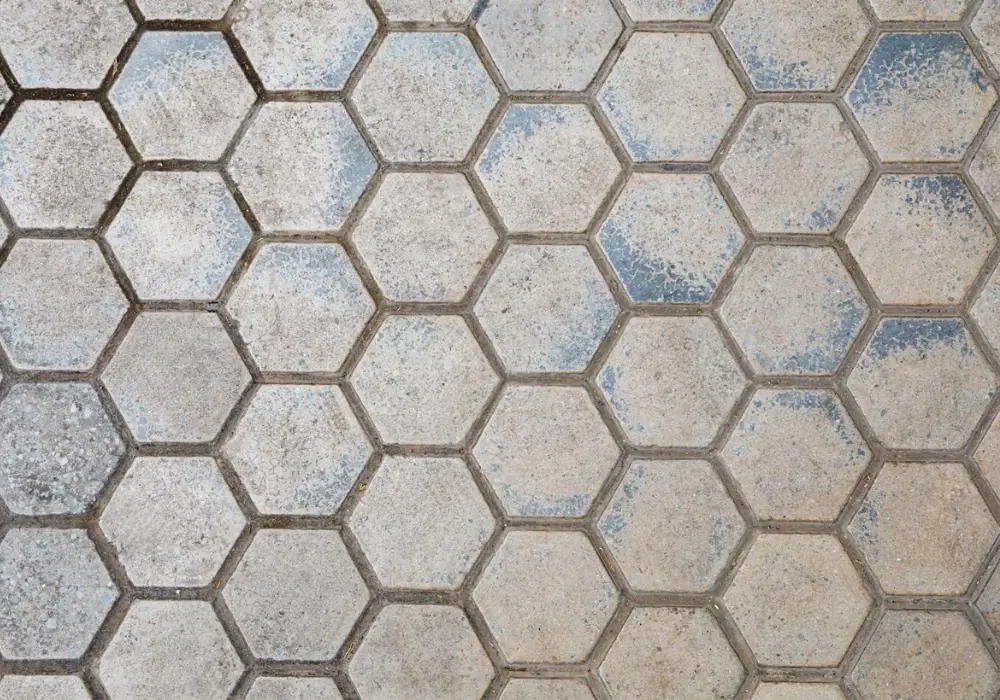
Hexagon tiles introduce a geometric element that feels modern and stylish. I often see them used in contemporary kitchens where homeowners want flooring that stands out without being overly decorative.
The honeycomb-like shape creates a repeating pattern that adds visual interest to the floor. Neutral colors such as white, charcoal, or light gray allow the pattern itself to become the highlight of the design.
Hexagon tiles also work well in both small and large kitchens. Their geometric structure creates texture while still maintaining a balanced and organized appearance across the entire floor.
5. Checkerboard Tile Flooring
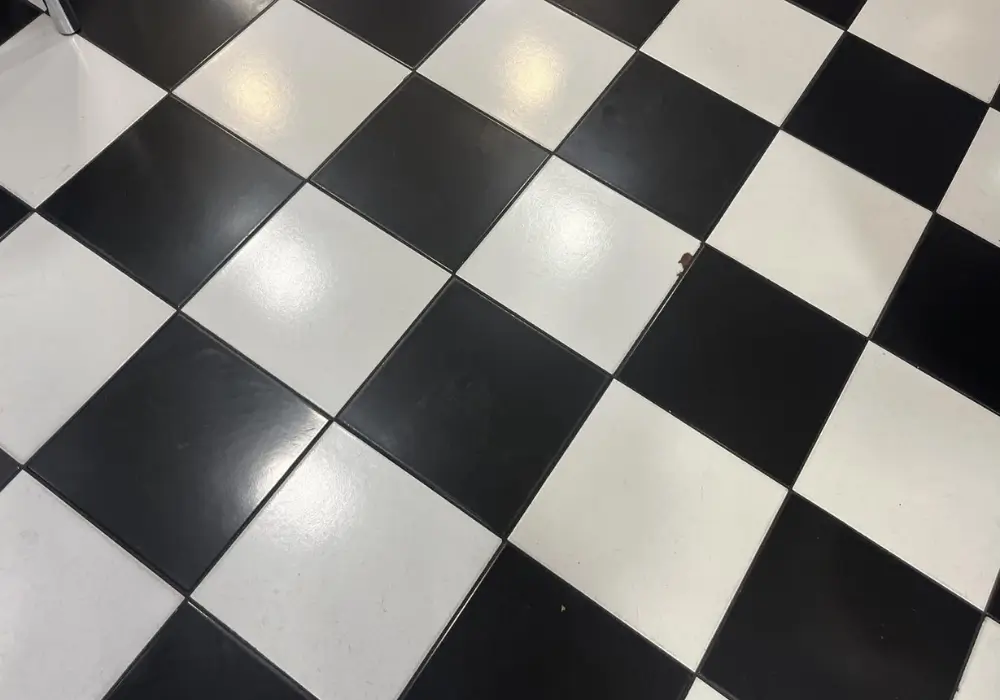
Checkerboard flooring creates a bold and recognizable design that never goes completely out of style. I like using this pattern when a kitchen needs a bit of personality and visual contrast.
The classic black and white combination remains the most popular version. This color pairing introduces a vintage charm while still feeling fresh in modern interiors. Some kitchens also use softer color combinations like gray and cream.
Checkerboard tiles also make the floor feel more dynamic. The alternating pattern naturally draws attention and can help define the kitchen as a central gathering space in the home.
6. Terrazzo Floor Tiles
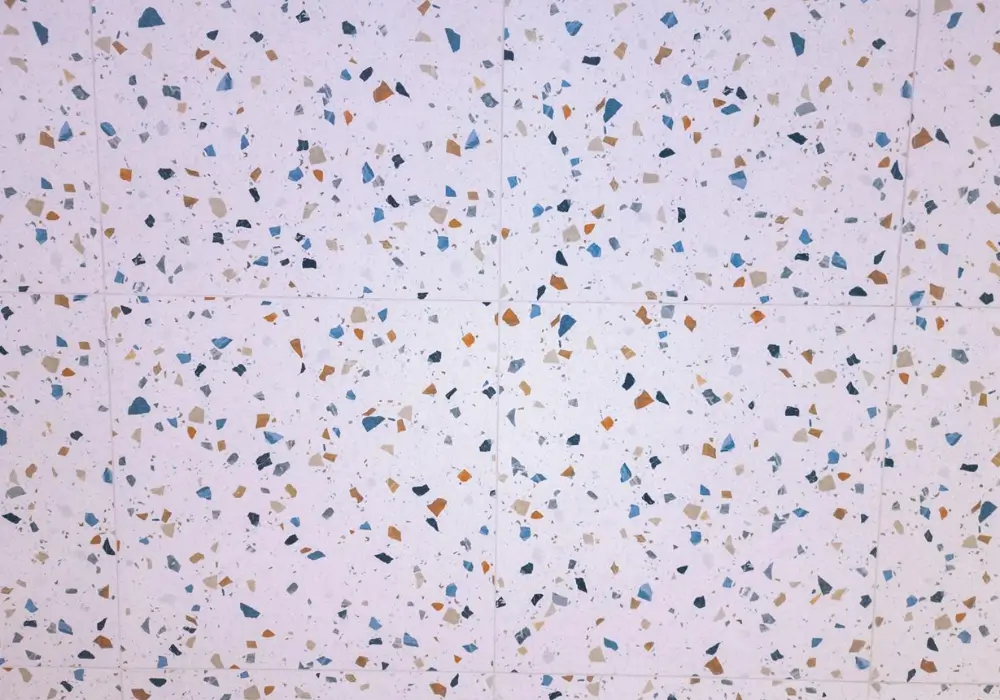
Terrazzo flooring has returned as a popular choice in modern kitchens. I find this material fascinating because it combines durability with a playful visual texture created by small stone chips embedded in the surface.
The scattered fragments of marble, quartz, or glass produce a speckled appearance that feels lively yet balanced. Terrazzo works particularly well in kitchens that embrace contemporary or mid-century inspired design.
In addition to its visual appeal, terrazzo flooring is extremely durable. It handles heavy foot traffic very well and resists wear over time, making it a practical long-term flooring solution.
7. Patterned Cement Tiles
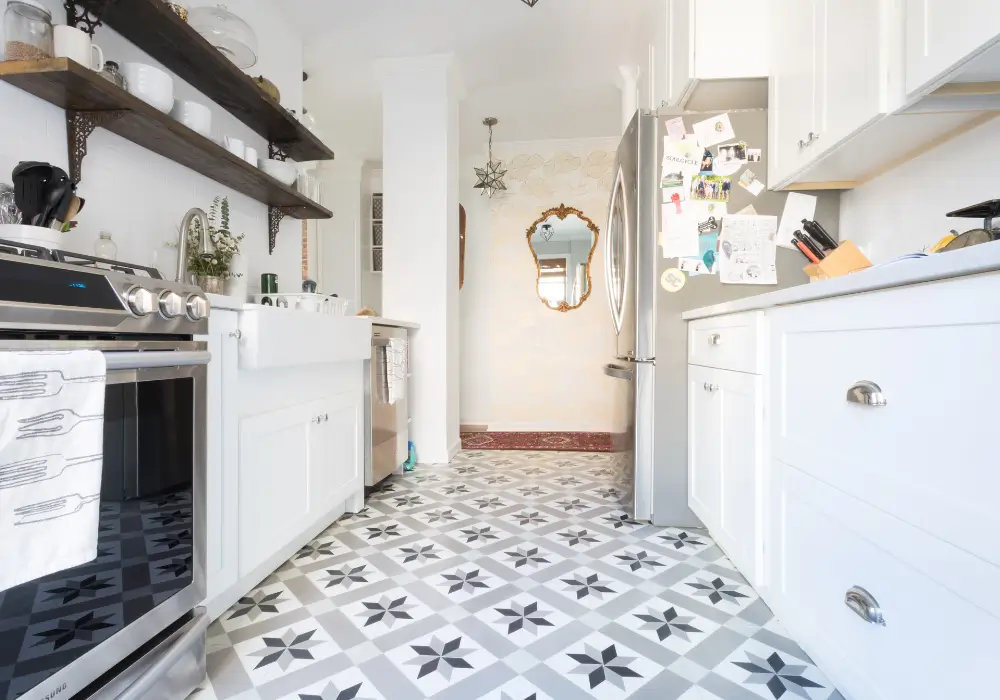
Patterned cement tiles create a dramatic focal point on the kitchen floor. Whenever I want to add artistic character to a space, I consider these tiles because their decorative patterns instantly attract attention.
Many cement tile designs feature geometric shapes or Mediterranean-inspired motifs. These intricate patterns introduce energy and personality while still maintaining a structured layout.
When paired with simple cabinetry and neutral walls, patterned cement tiles can become the star of the kitchen design. Proper sealing also ensures they remain durable and resistant to everyday kitchen wear.
8. Large Format Floor Tiles
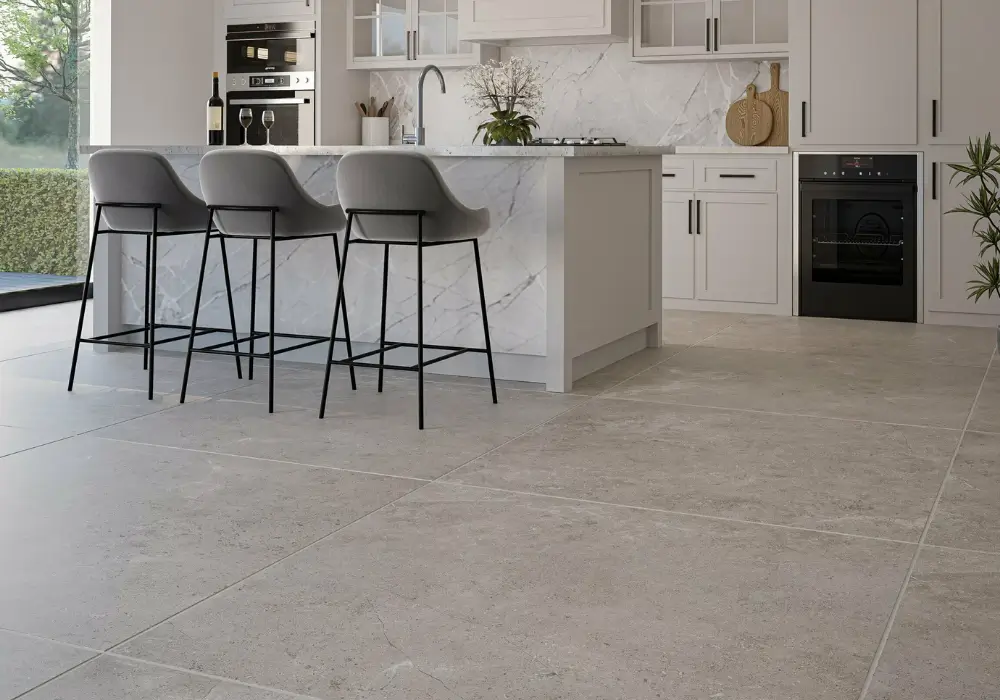
Large format tiles create a clean and spacious feeling in the kitchen. I often use them in modern interiors where minimalism and simplicity play an important role in the overall design.
Because these tiles cover more surface area, they reduce the number of grout lines on the floor. This creates a smoother and more seamless appearance that visually expands the space.
Another benefit is easier maintenance. Fewer grout lines mean fewer areas where dirt can accumulate. For homeowners who prefer a sleek and practical kitchen floor, large tiles provide an excellent solution.
9. Slate Stone Tiles
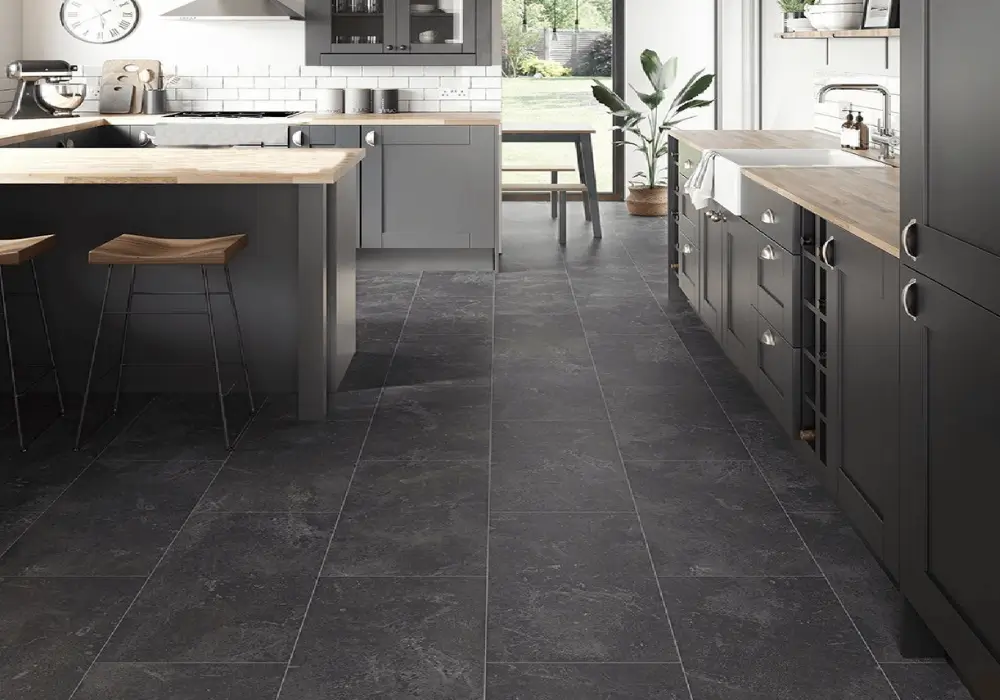
Slate tiles introduce natural texture and earthy tones that add depth to kitchen flooring. I appreciate slate because it brings an organic quality that many manufactured materials cannot replicate.
The surface often features subtle variations in color, ranging from deep charcoal to soft gray or even hints of rust. These natural tones blend beautifully with wooden cabinets and stone countertops.
Slate also offers a slightly textured surface that improves traction. This quality can make it a safer flooring choice in kitchens where spills occasionally occur.
10. Matte Finish Porcelain Tiles
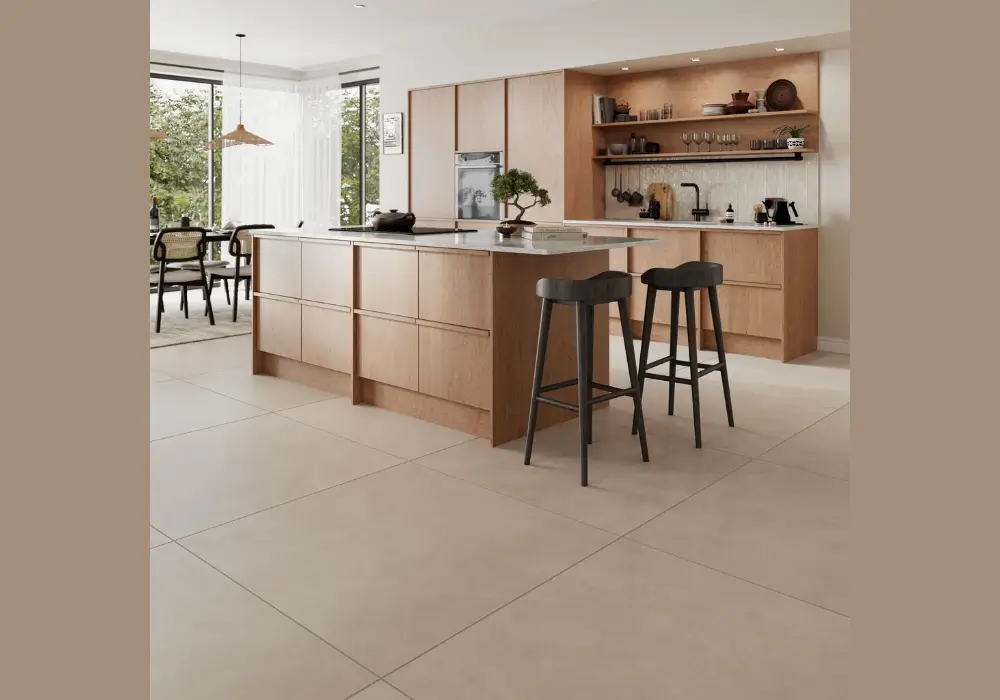
Matte porcelain tiles provide a subtle and sophisticated flooring option for kitchens. I often recommend them when homeowners want something modern without excessive shine or reflection.
The matte finish softens the appearance of the floor and creates a calm, understated aesthetic. Neutral shades such as light gray, sand, or soft taupe help the kitchen feel balanced and timeless.
Another practical advantage is maintenance. Matte tiles tend to hide footprints and smudges better than glossy surfaces. This makes them particularly suitable for busy kitchens where the floor sees constant activity.
11. Mosaic Floor Tiles
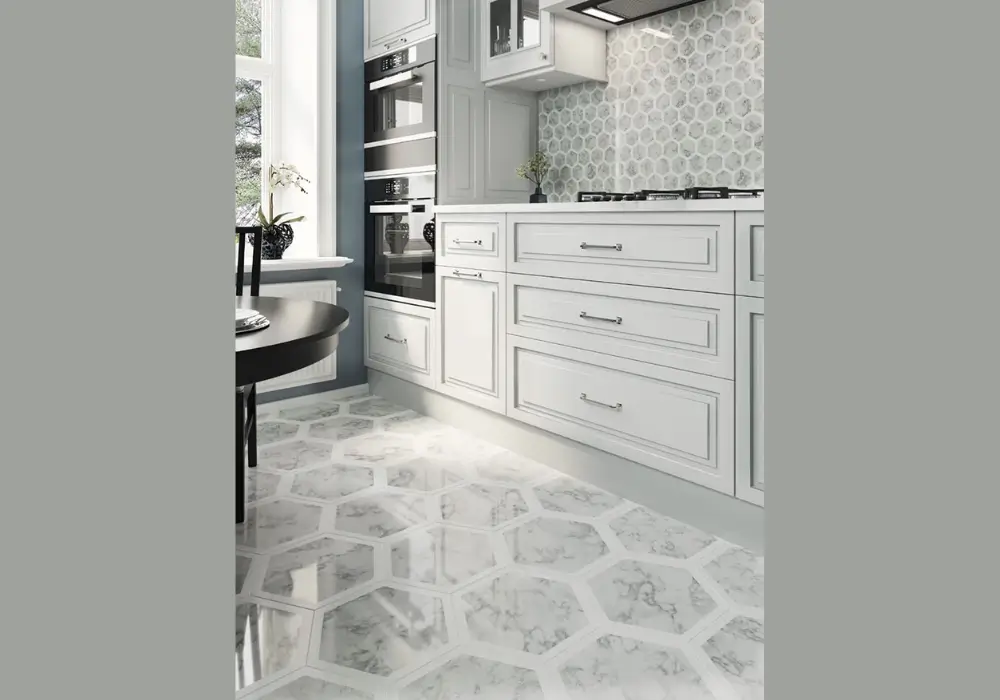
Mosaic floor tiles allow a kitchen floor to become more than just a functional surface. I often recommend mosaic designs when a kitchen needs extra character and texture. Because these tiles use many small pieces, they can create intricate patterns that feel artistic and visually engaging.
Many mosaic floors combine ceramic, stone, or glass pieces in carefully arranged layouts. Some designs focus on subtle color variations, while others create bold geometric patterns that instantly attract attention. This flexibility makes mosaic tiles suitable for both modern and traditional kitchens.
Another benefit of mosaic flooring is its grip. The many grout lines between small tiles help improve traction, which can be helpful in a space where water or spills occasionally reach the floor.
12. Concrete Look Tiles
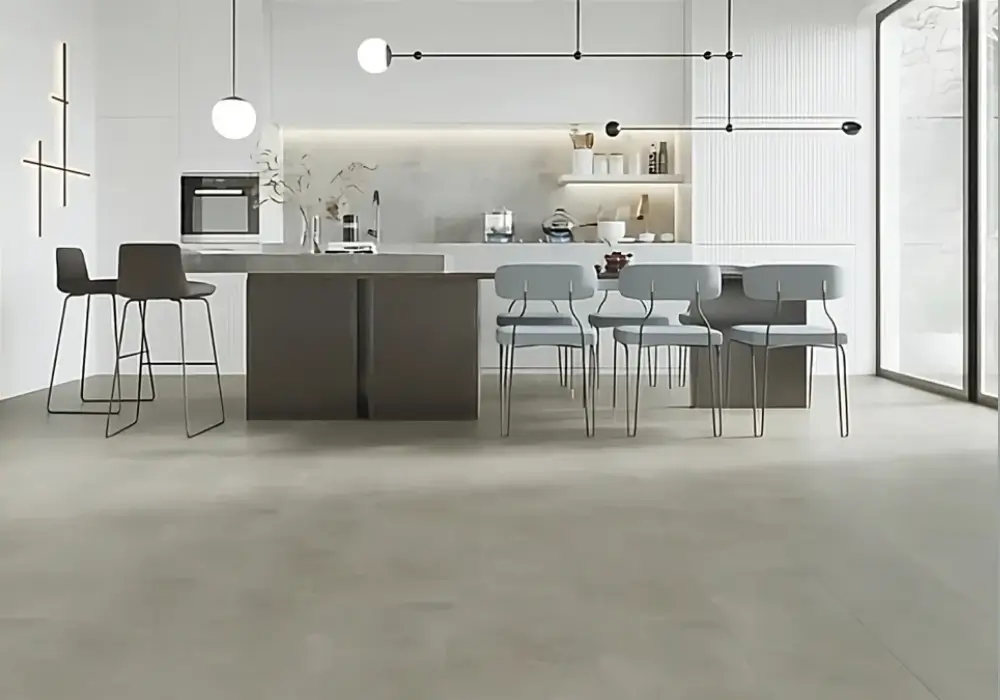
Concrete-look tiles have become a favorite in contemporary kitchen design. I often see them used in minimalist homes where clean lines and neutral colors dominate the interior style. These tiles replicate the appearance of poured concrete without the complications of real concrete flooring.
Their smooth gray tones create a calm and modern atmosphere that works well with wood cabinets, matte black fixtures, or stainless steel appliances. This balance between industrial style and warmth makes concrete-look tiles surprisingly versatile.
Porcelain versions of these tiles are also highly durable. They resist stains, scratches, and moisture, making them well suited for kitchens that experience constant daily use.
13. Brick Style Floor Tiles
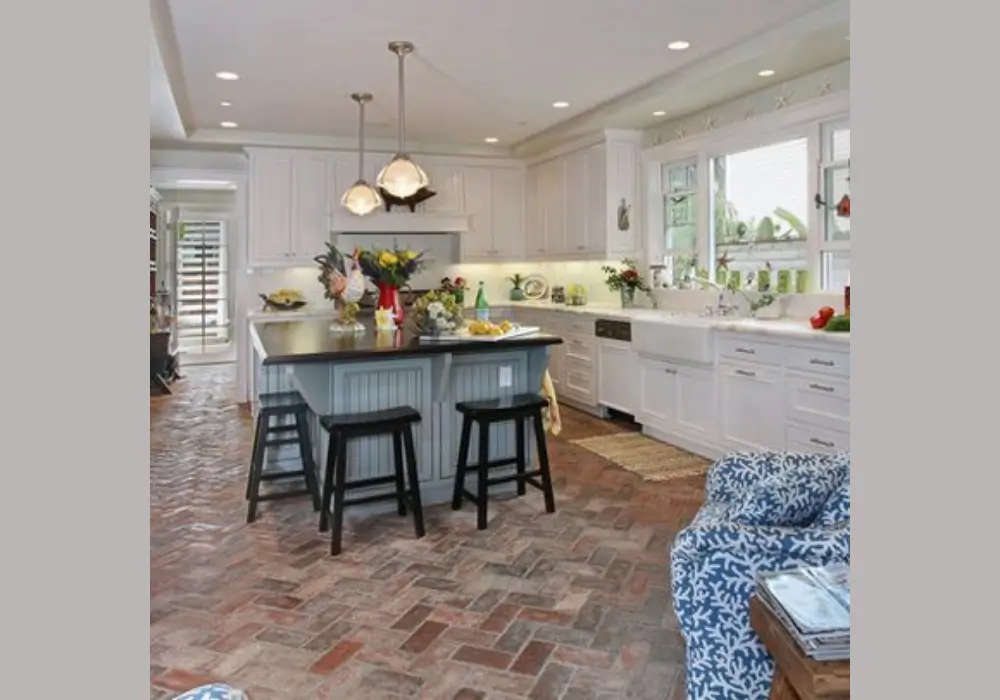
Brick-style tiles bring a sense of warmth and rustic charm to kitchen flooring. Whenever I want to create a cozy and welcoming kitchen environment, this style often becomes a strong option. The rectangular shapes resemble traditional brick layouts found in classic homes.
These tiles usually come in warm earthy tones like terracotta, clay red, or weathered brown. Such colors naturally complement wooden cabinets, farmhouse sinks, and vintage-inspired fixtures. The result is a kitchen that feels comfortable and inviting.
Beyond appearance, brick-style tiles are also practical. Their textured surface can provide good traction, and their durable material handles daily kitchen traffic very well.
14. Herringbone Tile Flooring
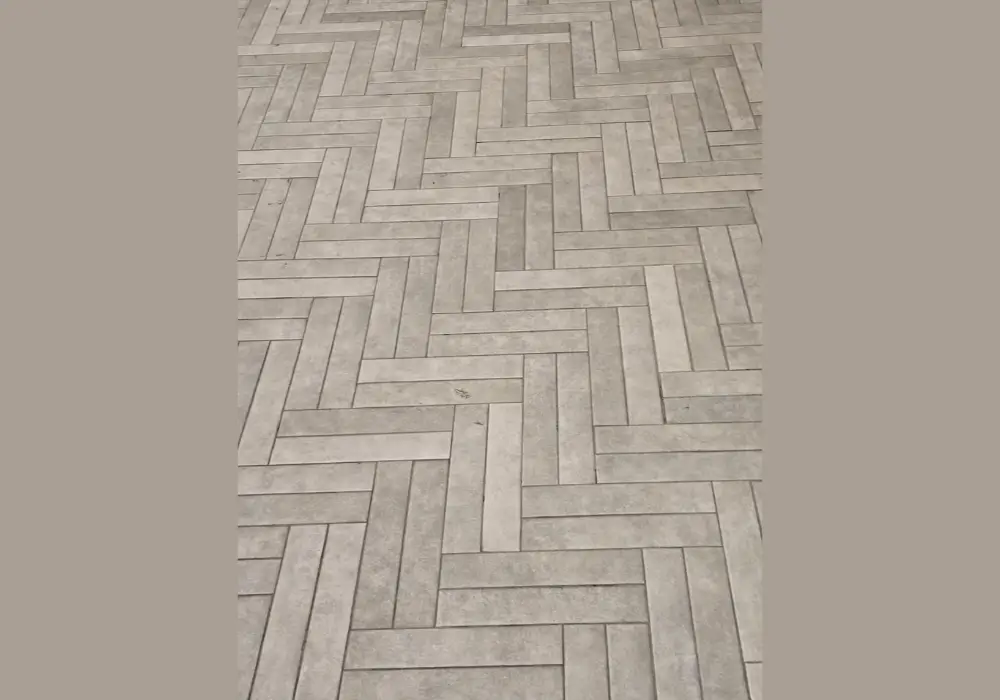
Herringbone flooring introduces movement and sophistication through its distinctive zigzag layout. I often suggest this pattern when a kitchen needs visual interest without relying on bold colors or heavy textures. The angled arrangement naturally draws the eye across the floor.
This layout works particularly well with wood-look porcelain planks or slim rectangular tiles. The pattern adds depth and structure, making the floor feel more dynamic while still maintaining a balanced design.
Another reason I appreciate herringbone flooring is its timeless appeal. Although it feels modern, the pattern has existed in architecture for centuries, which helps it remain stylish across changing design trends.
15. Polished Granite Tiles
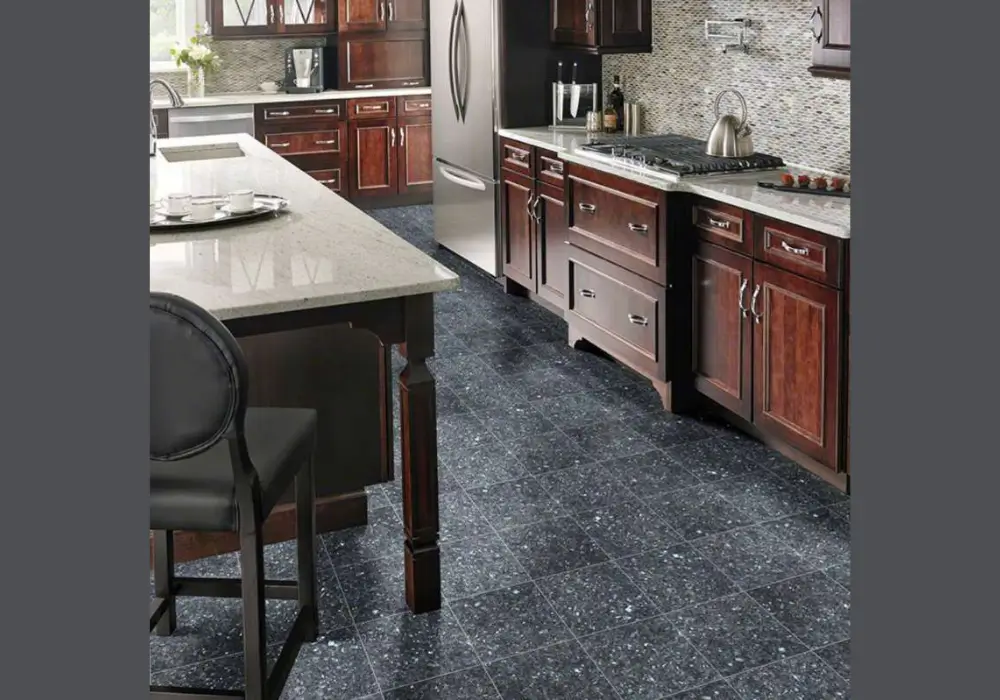
Granite tiles provide one of the most durable flooring solutions available for kitchens. I often recommend them for homeowners who want a surface that combines strength with an elegant appearance. Granite naturally resists scratches, heat, and heavy wear.
The polished finish reflects light beautifully, which can help brighten the kitchen. Dark granite floors, especially in black or charcoal shades, create a luxurious contrast with light cabinets and countertops.
Granite flooring also maintains its appearance for many years when properly sealed and maintained. For kitchens that require both durability and a high-end look, polished granite tiles remain an impressive flooring option.
How to Choose the Best Kitchen Floor Tiles
Choosing the right kitchen floor tile requires more than simply selecting a design that looks attractive.
When I evaluate flooring options, I always focus on durability first because the kitchen experiences constant foot traffic, spills, and heavy activity. Tiles made from porcelain, ceramic, or natural stone usually perform well in busy kitchens because they resist wear and moisture.
Safety is another factor I always consider. Kitchens frequently deal with water and cooking oils, so slip-resistant tiles provide better traction and help prevent accidents. Matte finishes or slightly textured surfaces usually perform better than extremely polished tiles in this situation.
Color coordination also plays a key role in a balanced kitchen design. I prefer selecting floor tiles that complement cabinets, countertops, and wall colors rather than competing with them. Neutral shades often create harmony, while patterned or bold tiles work best when the rest of the kitchen remains simple.
Tile size can also influence how spacious a kitchen feels. Larger tiles create fewer grout lines and make the floor appear cleaner and more open. Smaller tiles, however, can introduce texture and detail, especially when used in decorative layouts.
Maintenance should never be ignored when selecting kitchen flooring. Some natural stone tiles require sealing and extra care, while porcelain or ceramic tiles remain easy to clean.
Choosing a tile that fits your lifestyle ensures the kitchen stays both beautiful and practical over time.
Conclusion
Kitchen flooring quietly shapes the entire atmosphere of the space. When I look at well-designed kitchens, the floor often ties everything together—from cabinets and countertops to lighting and décor.
The right tile not only improves durability but also adds character and balance to the room.
Whether you prefer timeless ceramic tiles, warm wood-look flooring, or bold patterned designs, thoughtful tile choices can elevate the kitchen’s overall appearance.
By focusing on durability, safety, and style, you can create a kitchen floor that looks beautiful and performs well for everyday cooking and family life.
FAQs
Porcelain tiles are often considered one of the best options for kitchen floors because they are dense, durable, and highly resistant to moisture. They handle heavy foot traffic well and require minimal maintenance. Ceramic tiles are also a reliable option for many homes.
Porcelain tiles are usually more durable because they are fired at higher temperatures and have a denser structure. This makes them more resistant to moisture and scratches. Ceramic tiles are still a good option, but porcelain often performs better in high-traffic kitchens.
Neutral shades such as gray, beige, and soft white remain popular choices for kitchen floors. These colors blend easily with different cabinet styles and help create a balanced appearance. Darker tiles can also work well, especially when paired with lighter cabinets.
Large tiles can actually make a small kitchen feel more spacious. Because they reduce the number of grout lines, the floor appears more continuous and less cluttered. This visual effect often helps create a cleaner and more open appearance.