


A kitchen is one of the most active spaces in any home, yet the floor often feels cold and overlooked. I have noticed that even a small rug can completely change how welcoming a kitchen feels.
The right texture, pattern, or color can add warmth while also protecting the floor from daily wear. Many homeowners today explore different kitchen rug ideas to bring comfort and personality into their cooking space.
In this guide, I will share practical and stylish rug options that can make your kitchen feel more inviting without complicating your design.
Creative Kitchen Rug Ideas to Upgrade Your Space
A well-chosen rug can quietly transform the way a kitchen feels. I often notice that a simple change on the floor can make the whole space warmer and more balanced.
Different kitchens need different rug styles. Some homes benefit from durable runners, while others look better with patterned rugs that add character and color.
Below are practical kitchen rug ideas I recommend when someone wants to improve comfort, protect the floor, and elevate everyday kitchen design.
1. Vintage Persian Kitchen Rug
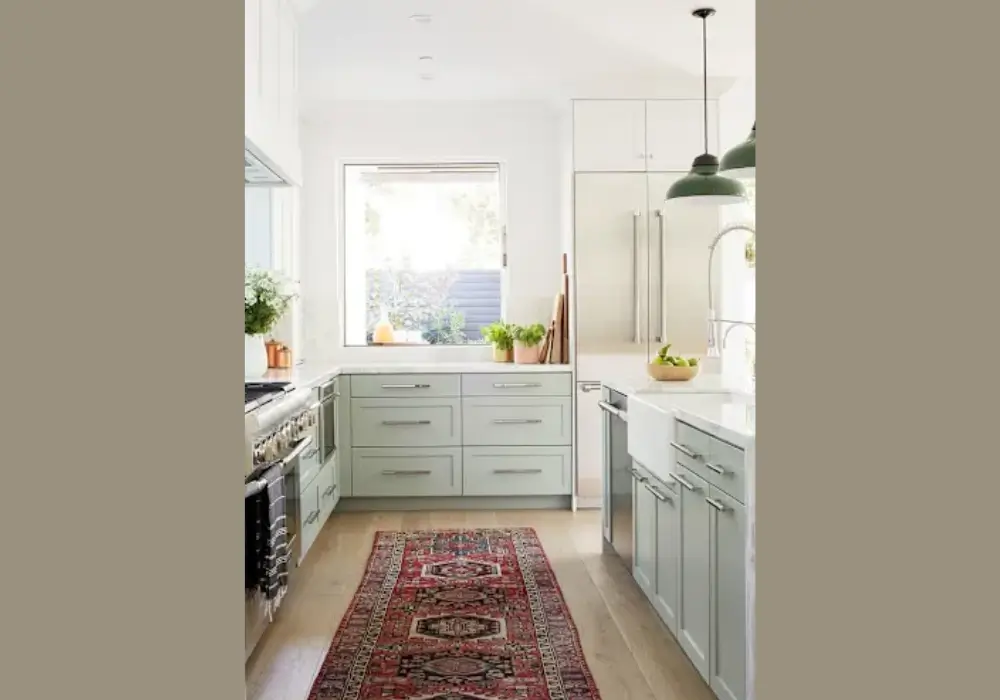
A vintage Persian rug instantly gives a kitchen a layered and timeless character. I often recommend this style when a kitchen feels a little plain or too modern. The rich patterns and traditional colors add personality without requiring major design changes.
These rugs usually feature deep reds, blues, and detailed motifs that hide stains surprisingly well. Because kitchens experience spills and constant movement, a patterned rug like this helps keep the floor looking clean even during busy cooking days.
I like placing a Persian rug along a kitchen walkway or beneath an island. The rug creates contrast against neutral cabinets and wooden floors while making the kitchen feel warmer and more inviting.
2. Washable Kitchen Runner Rug
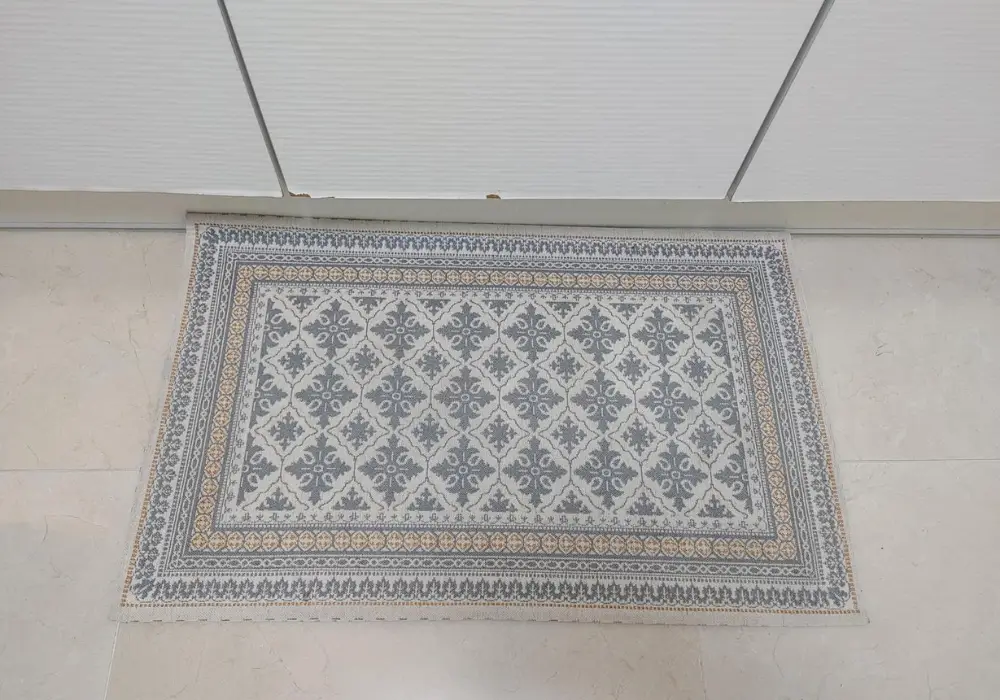
A washable runner is one of the most practical rugs you can add to a kitchen. I often suggest it for families who cook frequently and want something stylish without worrying about constant cleaning.
These runners are designed to handle spills, crumbs, and heavy foot traffic. When the rug becomes dirty, you can simply place it in the washing machine instead of scrubbing it by hand.
A runner works especially well in long kitchens where cabinets face each other. It protects the floor, softens the walking area, and visually guides the eye through the kitchen layout.
3. Farmhouse Style Kitchen Rug
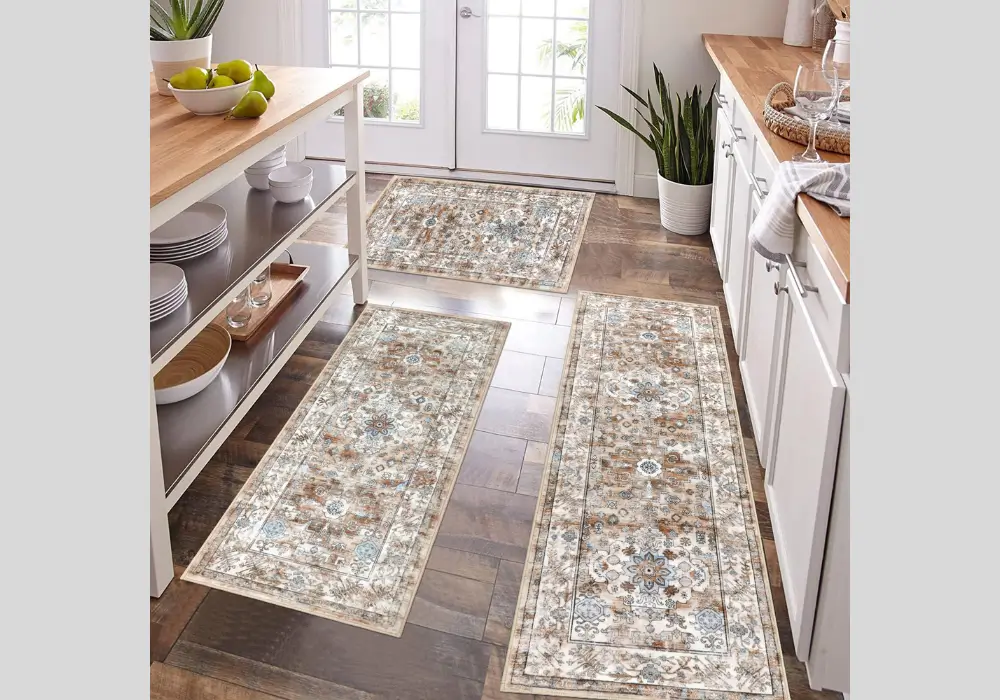
A farmhouse rug creates a relaxed and welcoming atmosphere in the kitchen. I like using this style in homes where natural wood, open shelves, and neutral colors dominate the design.
Most farmhouse rugs feature soft tones such as beige, cream, or faded gray. Simple stripes or subtle patterns give the rug character without overpowering the rest of the kitchen.
Placing a farmhouse rug near the sink or under a prep area adds warmth underfoot. The rug also balances rustic elements like wooden countertops and vintage-style hardware.
4. Boho Kitchen Rug
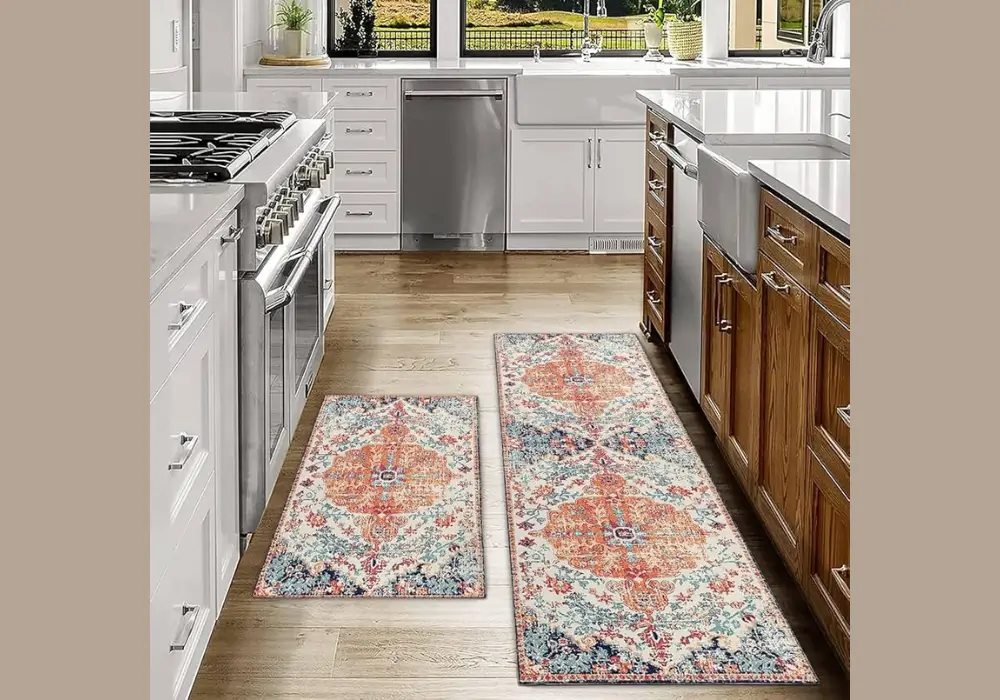
A boho kitchen rug adds energy and personality to a cooking space. I usually recommend this style when someone wants the kitchen to feel more creative and expressive.
Boho rugs often include bold colors, tribal patterns, or textured tassels. These details introduce movement and visual interest, especially in kitchens with simple cabinets or minimal decoration.
I like placing a boho rug in the center of an open kitchen or near a breakfast area. The vibrant design naturally becomes a focal point while keeping the space relaxed and inviting.
5. Neutral Minimalist Kitchen Rug
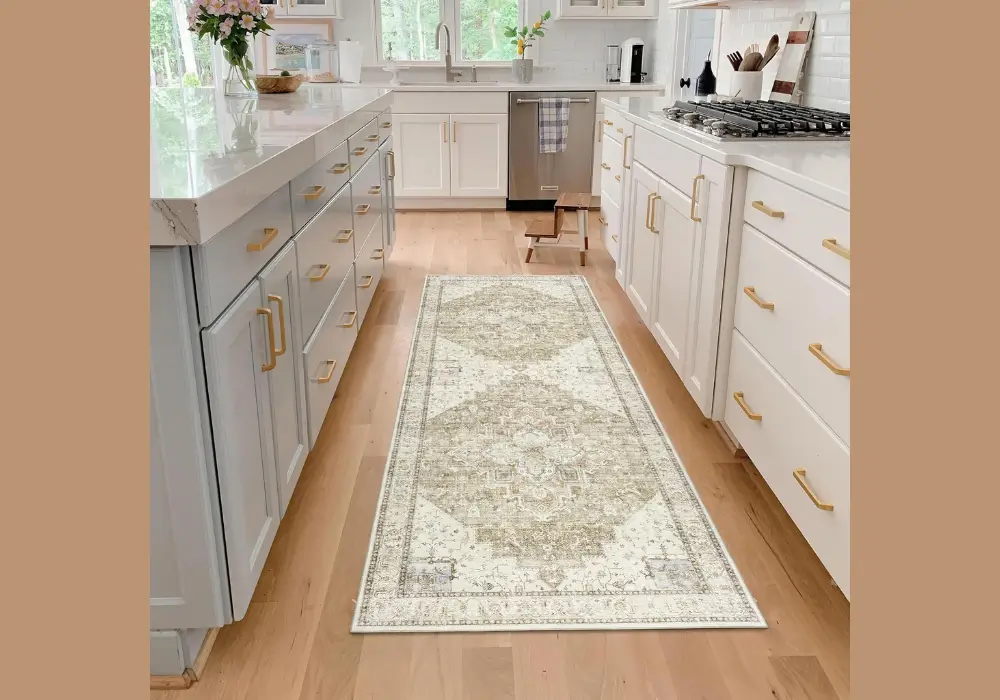
Some kitchens benefit more from calm and subtle design choices. In those cases, I often recommend a neutral minimalist rug that blends smoothly with the surrounding space.
These rugs usually come in soft shades like beige, ivory, or light gray. Instead of bold patterns, they focus on texture and simple weaving details that create a quiet visual effect.
A minimalist rug works beautifully in modern or Scandinavian kitchens. It keeps the environment clean and balanced while still providing comfort underfoot during everyday cooking tasks.
6. Moroccan Pattern Kitchen Rug
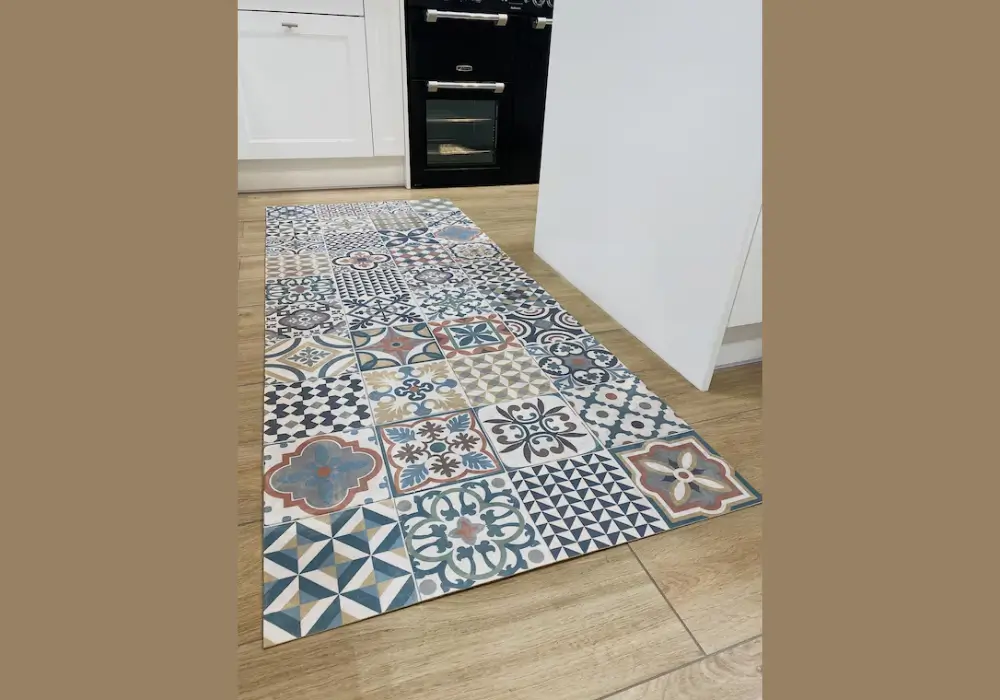
Moroccan rugs bring strong geometric patterns that instantly energize a kitchen floor. I find this style perfect when a space needs a bold design element without adding clutter.
Most Moroccan rugs feature repeating diamond or lattice shapes. Black and white versions look particularly striking in kitchens with light cabinets and simple countertops.
Placing a Moroccan runner near the sink or stove creates a clear design anchor. The pattern attracts attention while still maintaining a clean and organized appearance.
7. Anti-Fatigue Kitchen Mat Rug
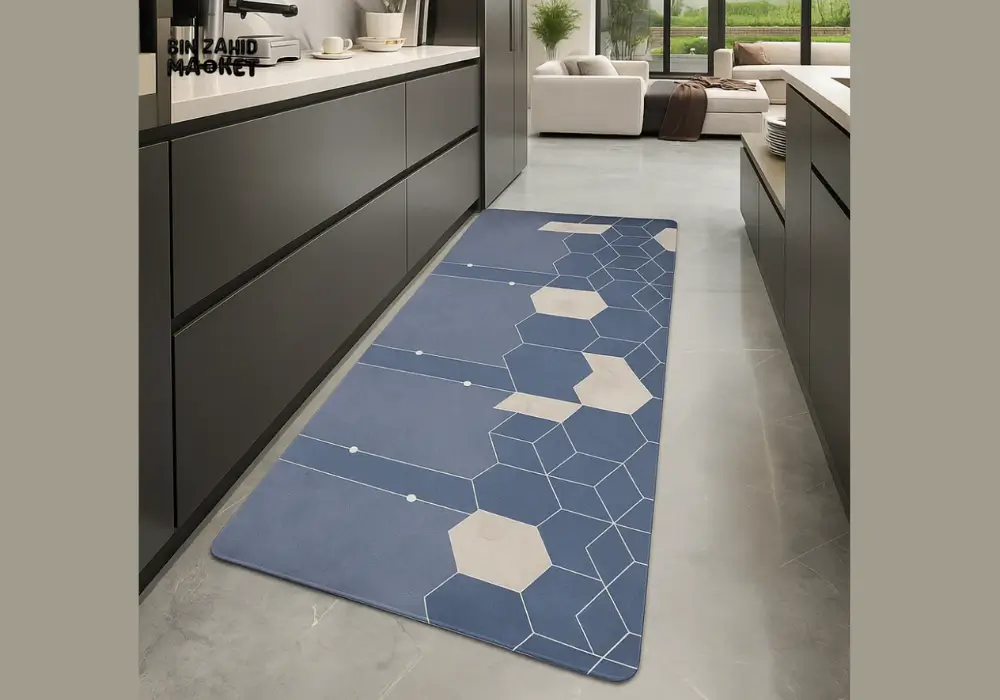
Cooking often requires standing for long periods, which can strain the feet and back. That is why I frequently suggest anti-fatigue rugs for people who spend a lot of time preparing meals.
These rugs include thick cushioning that supports the body while standing. The soft structure reduces pressure on joints and makes everyday kitchen work much more comfortable.
I usually place this rug directly in front of the sink or stove. It improves comfort immediately and blends well with modern kitchens that prioritize both function and style.
8. Layered Kitchen Rug Look
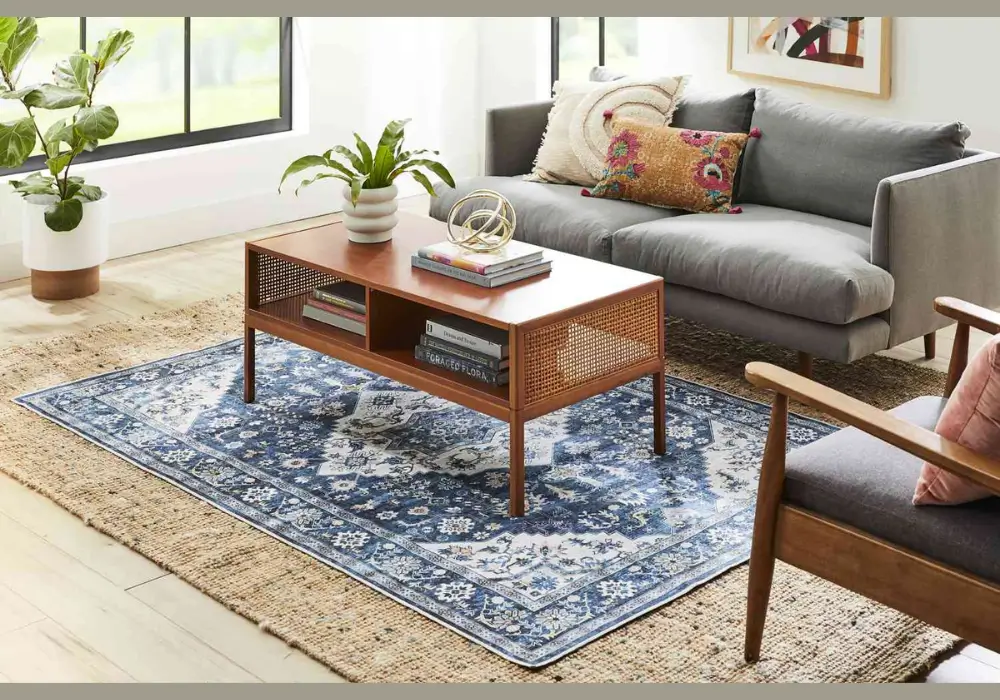
Layering rugs in a kitchen can create a surprisingly stylish effect. I like using this technique when a space feels flat and needs extra depth.
The idea is simple. Place a large neutral rug on the floor and then add a smaller patterned rug on top. This combination builds texture and makes the floor visually interesting.
I often use this look near a kitchen island or breakfast corner. The layered design softens the space while giving the kitchen a curated and intentional appearance.
9. Jute Natural Fiber Kitchen Rug
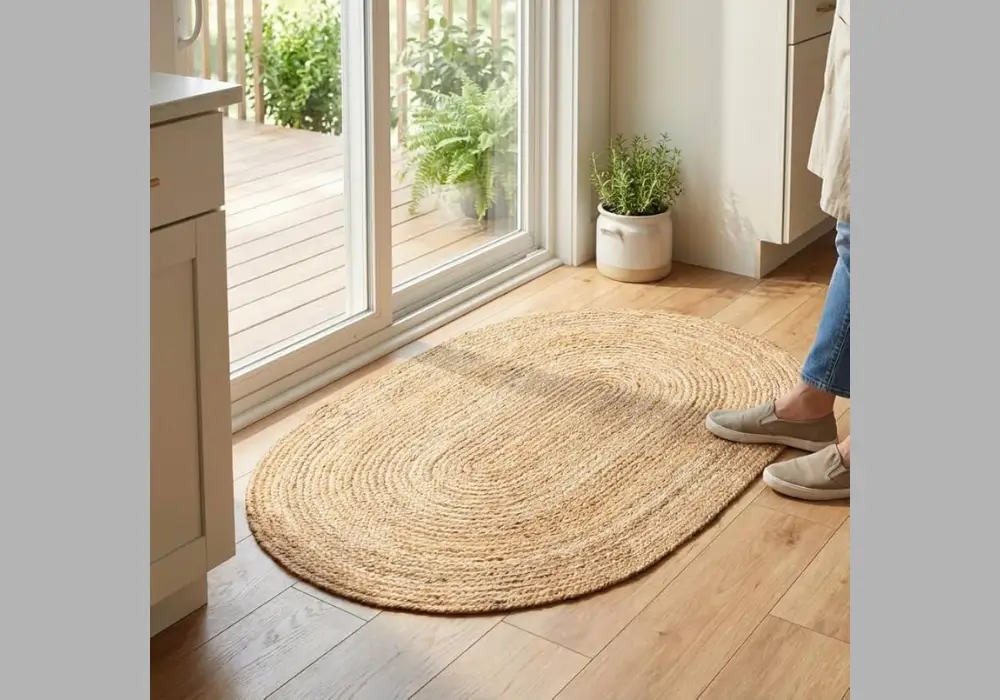
A jute rug introduces natural texture that instantly warms up a kitchen. I often recommend this option when someone wants an organic and earthy design element.
Jute fibers create a woven surface that feels durable and relaxed. The natural tan color works well with wood cabinets, stone counters, and neutral kitchen palettes.
Placing a jute rug in an open kitchen helps balance modern appliances with natural materials. The rug adds subtle texture while keeping the space calm and grounded.
10. Checkered Kitchen Rug
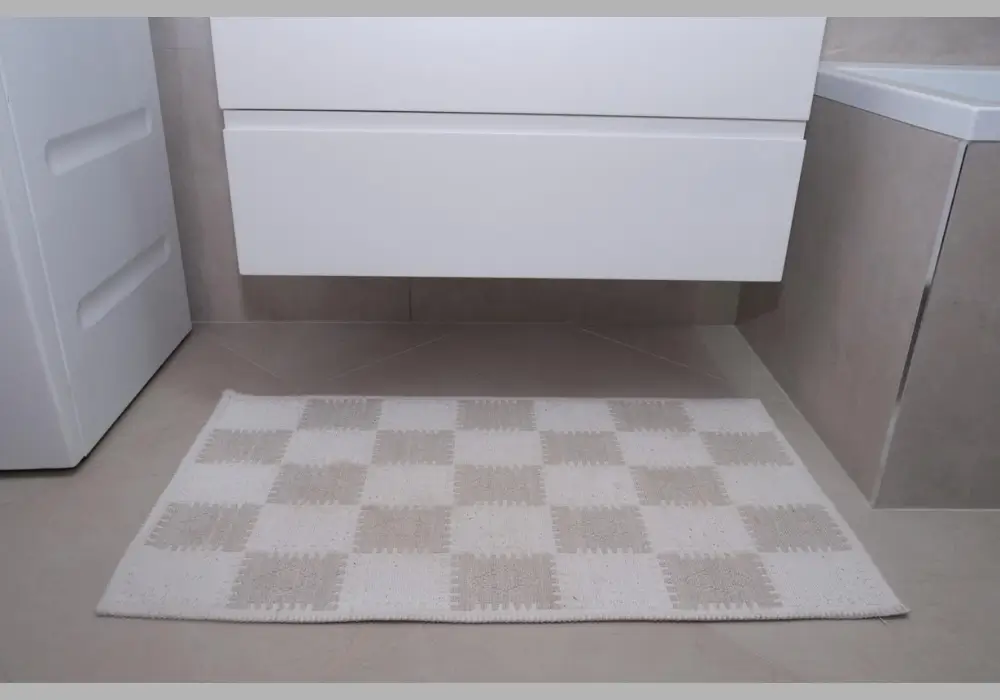
A checkered rug brings a playful yet classic feel to a kitchen floor. I often use this style when a space needs a bold but simple pattern.
Black and white checkered rugs work especially well in modern kitchens. The strong contrast creates visual structure and makes the floor stand out without overwhelming the room.
I usually place this rug in a central walkway or cooking zone. The pattern energizes the space while still matching many different kitchen color palettes.
11. Striped Kitchen Runner Rug
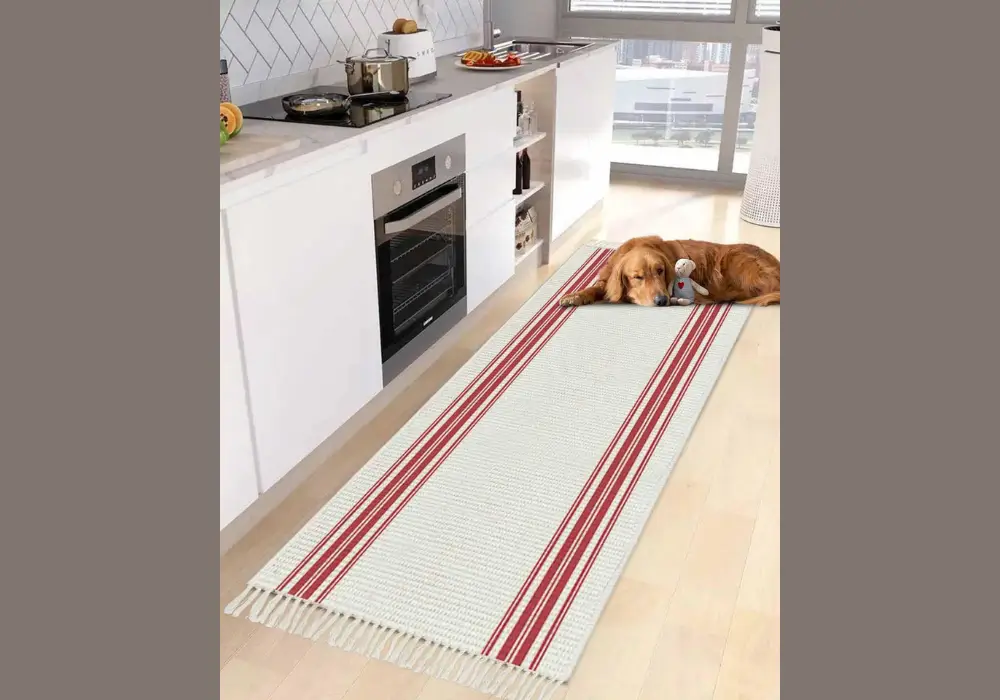
A striped runner rug can subtly improve the visual flow of a kitchen. I often recommend this style for narrow kitchens where the layout feels a little tight or crowded.
The stripes naturally guide the eye from one end of the kitchen to the other. This simple pattern can make a small kitchen appear longer and more organized.
Soft neutral stripes create a calm look, while bold stripes add energy. I usually place this rug between cabinets or along a long kitchen walkway.
12. Colorful Statement Kitchen Rug
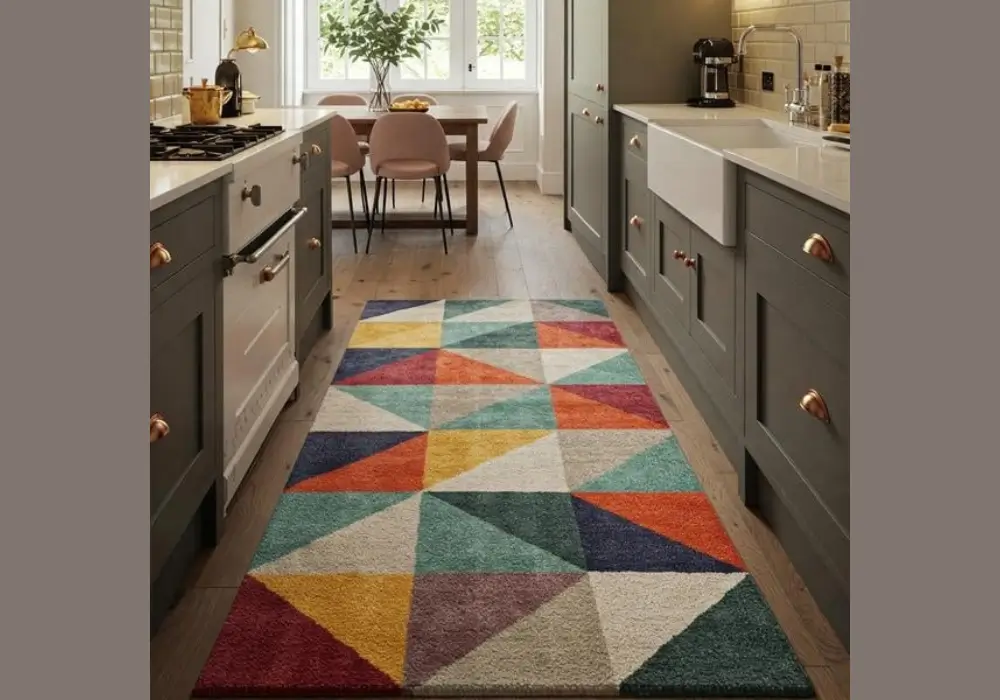
Sometimes a kitchen needs a single bold element to bring the entire design together. I often use a colorful rug when the cabinets and walls look too neutral or plain.
Bright colors such as deep blue, rust, or multicolor patterns immediately draw attention. The rug becomes the visual centerpiece without requiring major design changes.
I like placing a colorful rug near a kitchen island or prep area. The vibrant tones make the space feel lively while still keeping the kitchen functional.
13. Coastal Style Kitchen Rug
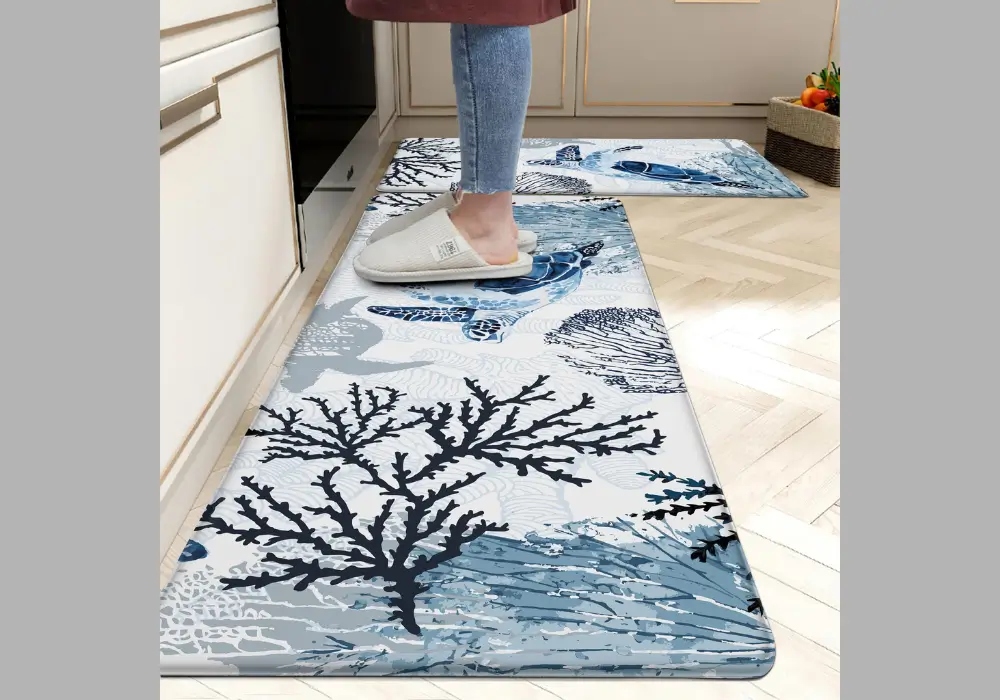
A coastal rug creates a light and refreshing atmosphere in the kitchen. I usually recommend this idea for homes that already feature white cabinets and natural wood tones.
These rugs often include soft blues, sandy beige shades, or gentle stripes. The colors remind people of the beach and make the kitchen feel relaxed and airy.
Placing a coastal rug near a breakfast nook or open kitchen space helps maintain a bright and comfortable environment while adding subtle visual interest.
14. Vintage Distressed Kitchen Rug
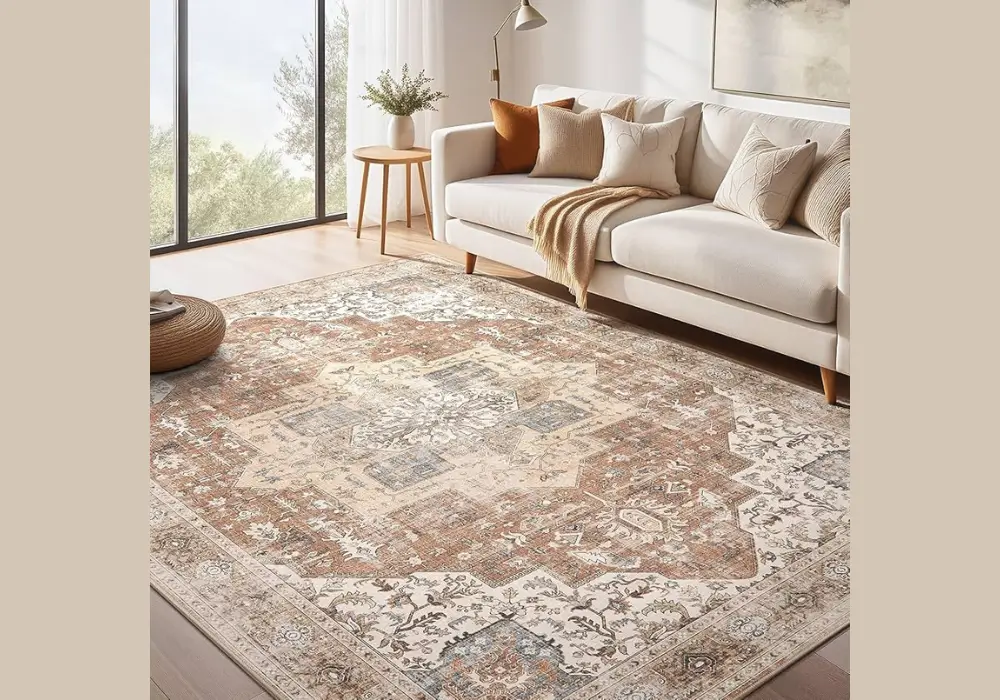
A distressed rug gives the kitchen a slightly aged and charming look. I like using this style when a space needs character but should still feel calm and balanced.
The faded patterns create a worn appearance that hides everyday stains and signs of use. This makes the rug both practical and visually appealing.
I often place distressed rugs along kitchen walkways or under islands. The soft vintage look blends well with farmhouse, traditional, or transitional kitchens.
15. Round Kitchen Rug
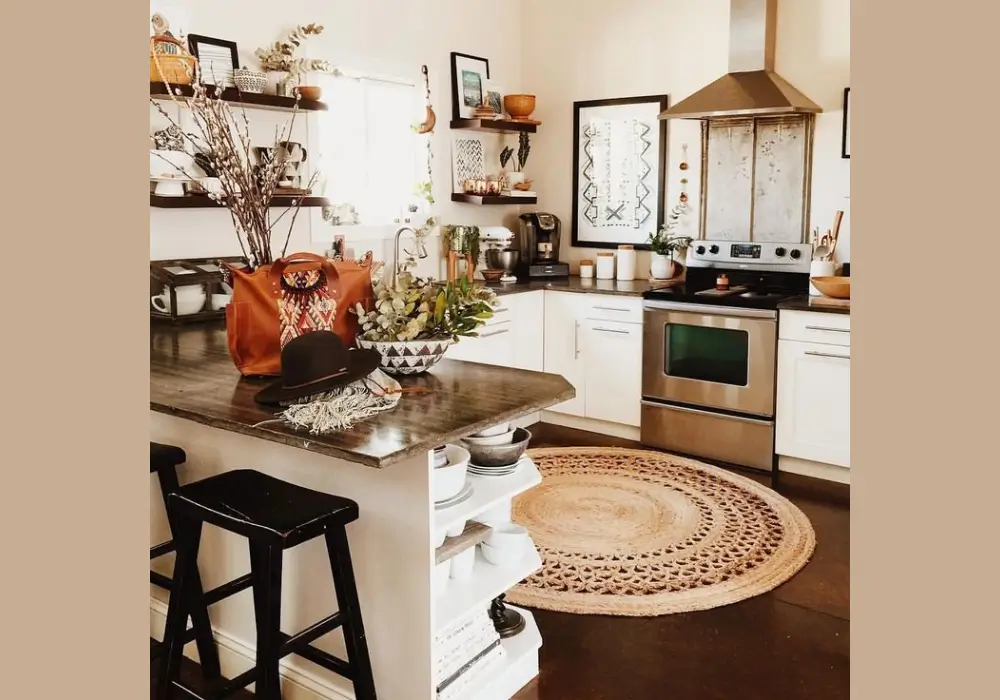
Most kitchens use rectangular rugs, but a round rug can create a refreshing change. I sometimes recommend this shape when the kitchen layout feels too straight or rigid.
A round rug softens the overall design and adds balance to the space. It works especially well in kitchens with small dining corners or breakfast tables.
I like placing a round rug in the center of an open kitchen or under a small table. The shape creates a gentle focal point and makes the kitchen feel more welcoming.
How to Choose the Right Rug for Your Kitchen
Choosing the right rug for a kitchen requires more than just picking a beautiful pattern. I usually focus on durability, comfort, and how well the rug fits the kitchen layout.
A well-selected rug should handle daily movement, resist stains, and complement the kitchen’s colors. Small details like size, material, and placement make a big difference.
Consider the Kitchen Layout
Kitchen layout plays an important role when selecting a rug. A long runner usually works best in galley kitchens or narrow spaces.
In larger kitchens with an island, I prefer placing a rug along the main walking area. This keeps the space balanced and visually organized.
Choose Durable and Washable Materials
Kitchens experience frequent spills and crumbs, so I always recommend durable materials. Cotton, polyester blends, and washable rugs work very well in busy homes.
A washable rug saves time and effort because you can clean it quickly. It also keeps the kitchen looking fresh without constant maintenance.
Focus on Safety and Comfort
Safety matters just as much as style in the kitchen. Rugs with non-slip backing help prevent sliding on smooth floors.
If you cook often, a slightly cushioned rug or anti-fatigue mat can reduce pressure on your feet. This small addition can make everyday cooking much more comfortable.
Match the Rug with Kitchen Colors
A rug should feel like part of the kitchen rather than a separate decoration. I usually match rug tones with cabinet colors, countertops, or backsplash tiles.
Neutral rugs blend easily into modern kitchens, while patterned rugs add personality to simple spaces. The goal is to keep the kitchen visually balanced.
Popular Kitchen Rug Types and Best Placement
| Rug Type | Best Placement | Key Benefit |
|---|---|---|
| Runner Rug | Between cabinets | Ideal for narrow kitchens |
| Anti-Fatigue Mat | Near sink or stove | Extra comfort while standing |
| Round Rug | Breakfast corner | Soft visual focal point |
| Jute Rug | Open kitchen floor | Natural texture |
| Persian Rug | Under kitchen island | Classic decorative touch |
Conclusion
A well-chosen rug can quietly transform the way a kitchen looks and feels. From practical runners to bold patterned pieces, the right option adds warmth, comfort, and personality to a space that people use every day.
I always suggest focusing on durability, easy maintenance, and how the rug fits the kitchen layout. Small design choices like texture, color, and placement can make the room feel more welcoming without requiring a full renovation.
By exploring different kitchen rug ideas, you can easily add style while protecting the floor and making daily cooking tasks more comfortable.
FAQs
In my experience, durable and washable rugs work best in kitchens. Materials like cotton blends or synthetic fibers handle spills and heavy foot traffic well. Patterned rugs also help hide small stains, which keeps the kitchen looking clean throughout the day.
Yes, washable rugs are extremely helpful in busy kitchens. Spills, crumbs, and cooking messes happen regularly, so a rug that can go into the washing machine saves a lot of effort. It also helps maintain hygiene in the kitchen area.
I usually place rugs in areas where people stand the most, such as near the sink, stove, or food preparation area. Runner rugs also work well between cabinets in long kitchens. Proper placement improves both comfort and design balance.
Kitchen rugs are safe when they include a non-slip backing or when you use a rug pad underneath. This prevents the rug from sliding on tile or wooden floors. Choosing the right size also reduces the risk of tripping.