


Kitchen windows bring natural light into the heart of the home, but they also need the right treatment to balance privacy and style. I often notice that a simple change in window coverings can make the kitchen feel more polished and comfortable.
The right choice can soften sunlight, highlight the window area, and complement the overall design of the kitchen. From simple shades to decorative curtains, thoughtful options can transform how the window looks and functions.
In this guide, I will share practical kitchen window treatment ideas that help improve light control while enhancing the character of the space.
Stylish Kitchen Window Treatment Ideas for Better Light Control
Kitchen windows need treatments that balance light, privacy, and decoration. I often see that the right window covering can instantly improve the appearance of the entire kitchen.
When chosen carefully, window treatments soften sunlight, add texture, and make the kitchen feel more comfortable and complete.
1. Roman Shades for Kitchen Windows
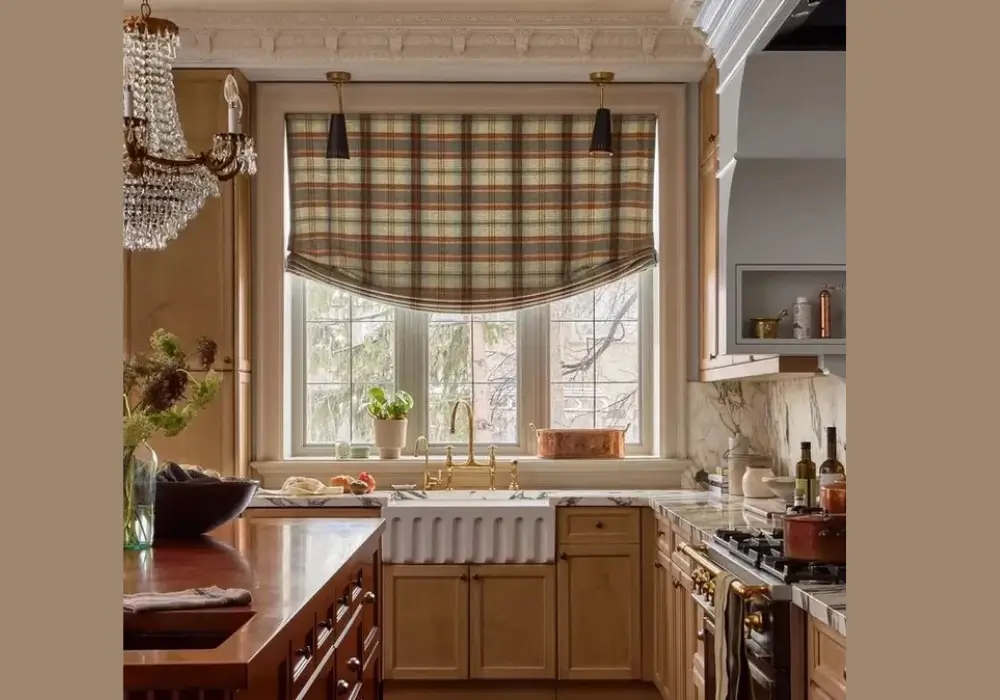
Roman shades remain one of the most practical and attractive window treatments for kitchens. I often recommend them because they combine clean design with useful light control. The fabric folds neatly when raised, which creates a tidy appearance.
Many homeowners choose neutral fabrics so the shades blend naturally with cabinets and countertops. Soft linen or cotton textures work especially well in bright kitchens.
Another reason I like Roman shades is their versatility. They fit both modern and traditional kitchens and provide privacy without making the window area look heavy.
2. Classic Cafe Curtains
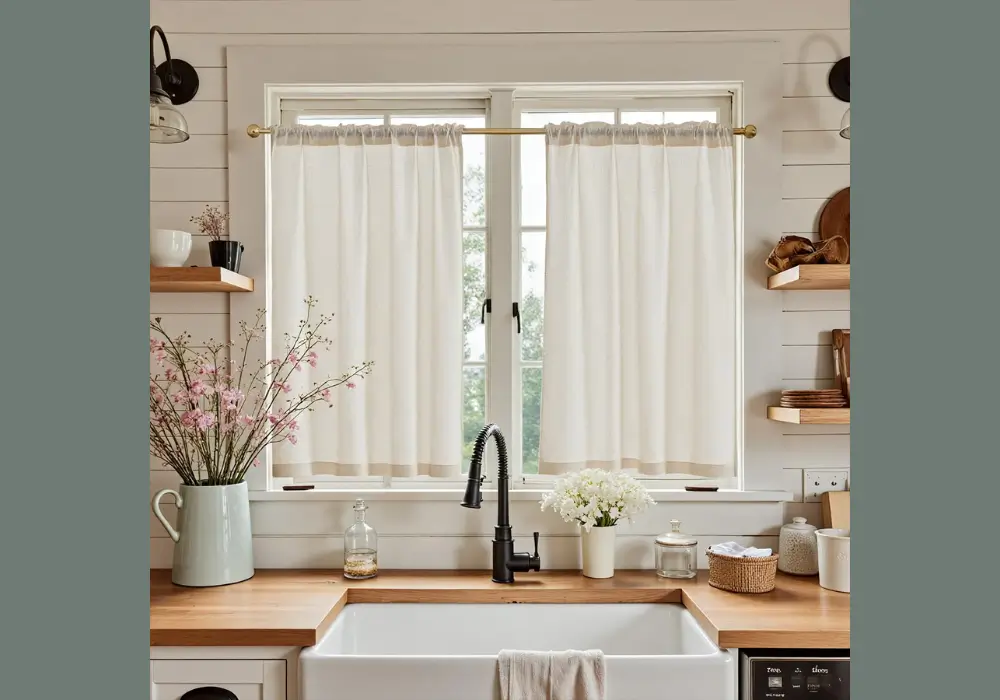
Cafe curtains cover the lower half of a kitchen window while leaving the top section open. I often suggest this style for kitchens that need privacy but still want plenty of natural light.
This treatment works beautifully above the sink or in small windows facing neighboring homes. The open top section allows sunlight to brighten the room throughout the day.
In many kitchens I have seen, cafe curtains add a charming and relaxed look. They are especially popular in farmhouse and cottage-style interiors.
3. Wooden Kitchen Blinds
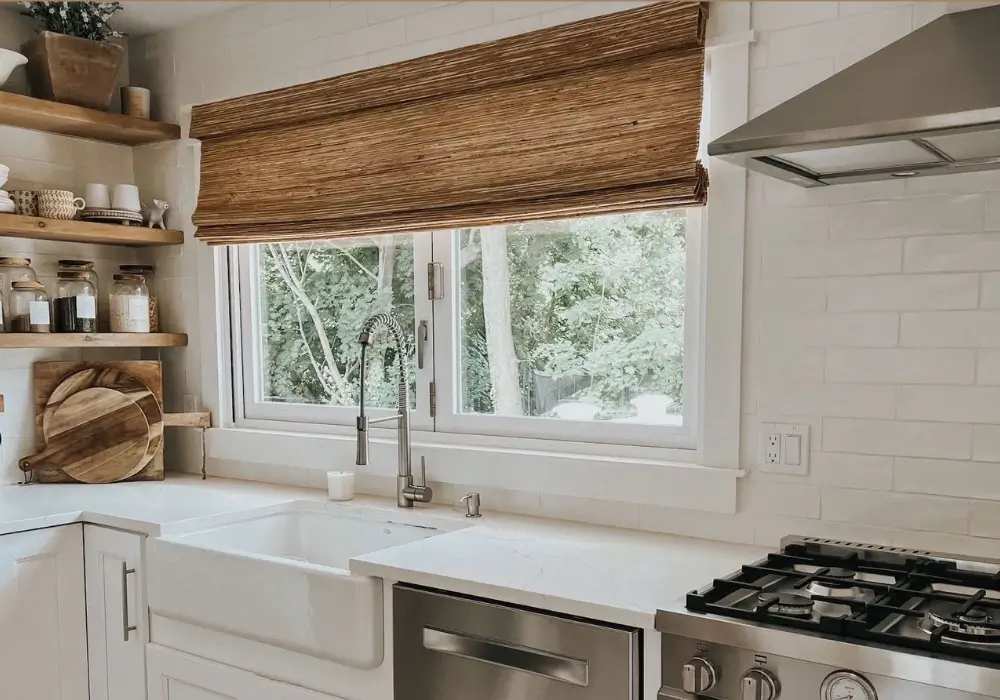
Wooden blinds add natural warmth and texture to kitchen windows. I often recommend them for kitchens that already feature wooden cabinets or natural materials.
The adjustable slats allow homeowners to control the amount of light entering the room. By tilting the blinds slightly, you can maintain privacy while still allowing soft daylight inside.
Another advantage is durability. Good-quality wooden or faux wood blinds can withstand the heat and moisture that kitchens often produce.
4. Roller Shades
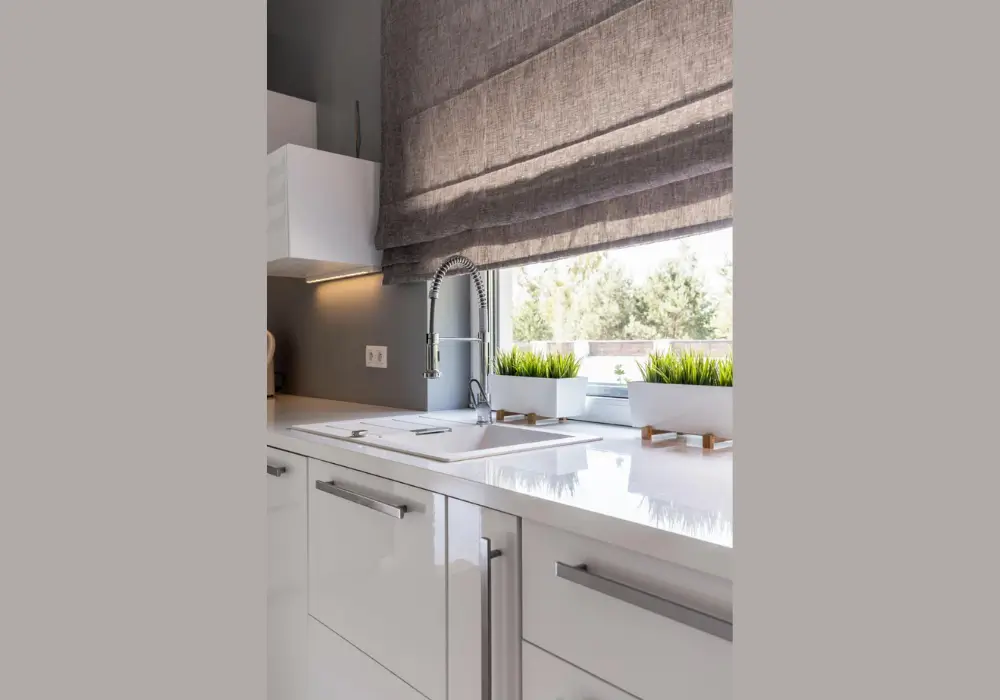
Roller shades provide a simple and clean window treatment. I often suggest them for modern kitchens where homeowners prefer minimal decoration and smooth lines.
When raised, the shade rolls neatly into a small tube at the top of the window. This keeps the window area open and allows maximum natural light to enter.
Roller shades also come in many materials and patterns. Some fabrics filter sunlight gently while others provide full privacy when lowered.
5. Sheer Kitchen Curtains
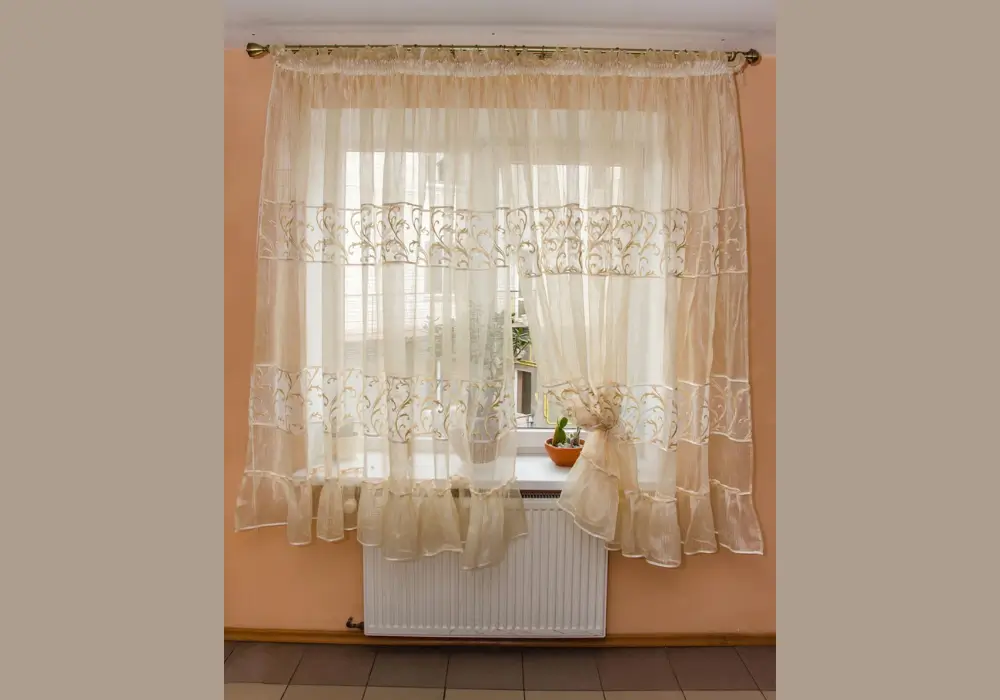
Sheer curtains create a soft and airy appearance around the kitchen window. I often recommend them when homeowners want to keep the kitchen bright but still add a decorative touch.
The lightweight fabric allows sunlight to pass through while slightly diffusing the brightness. This creates a gentle glow inside the kitchen.
Sheer curtains also move naturally with airflow. In many kitchens I have seen, this small detail makes the space feel more relaxed and inviting.
6. Bamboo Shades
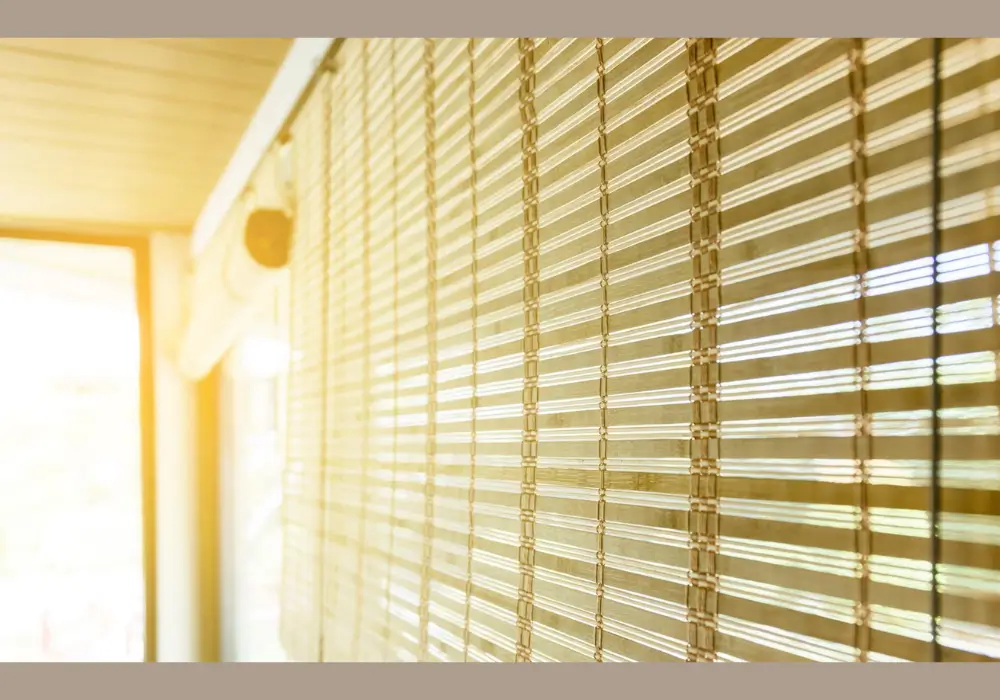
Bamboo shades introduce natural texture and warmth into the kitchen. I often suggest them for homeowners who enjoy earthy materials and relaxed design styles.
The woven bamboo surface filters sunlight gently rather than blocking it completely. This creates a warm and comfortable atmosphere inside the kitchen.
Another reason bamboo shades work well is their durability. The natural fibers handle daily use well and add a unique visual element to the window area.
7. Valance Window Treatment
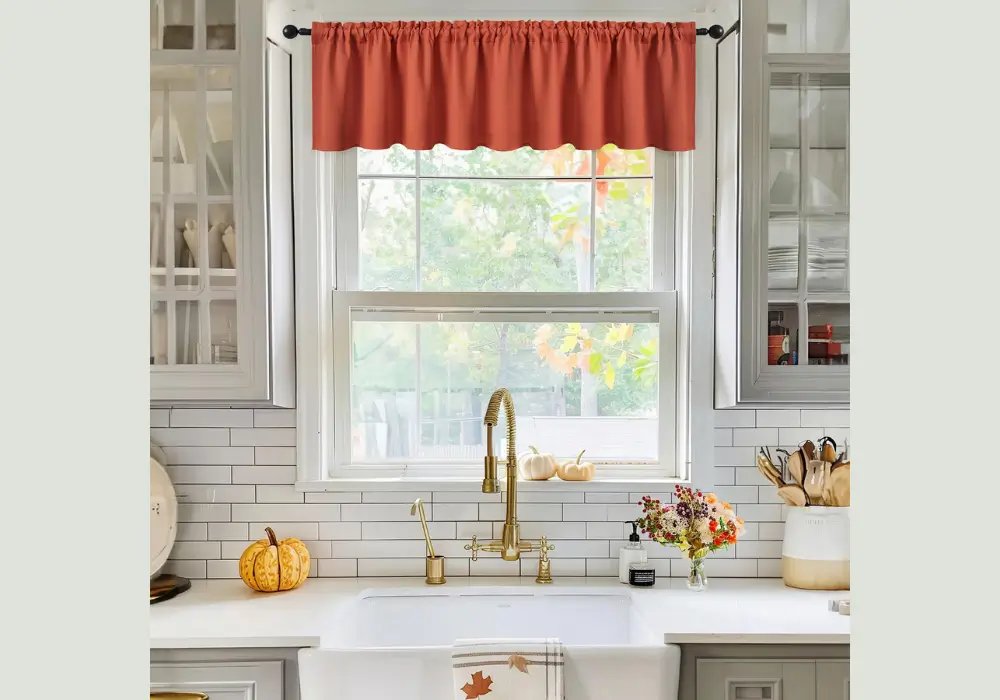
A valance is a short decorative fabric panel placed at the top of the window. I often recommend it when homeowners want a decorative touch without covering the entire window.
Valances add softness and color while leaving most of the glass uncovered. This keeps the kitchen bright and open.
Many kitchens combine valances with blinds or shades. The valance hides the hardware and gives the window a more finished appearance.
8. Black Frame Window with Minimal Shades
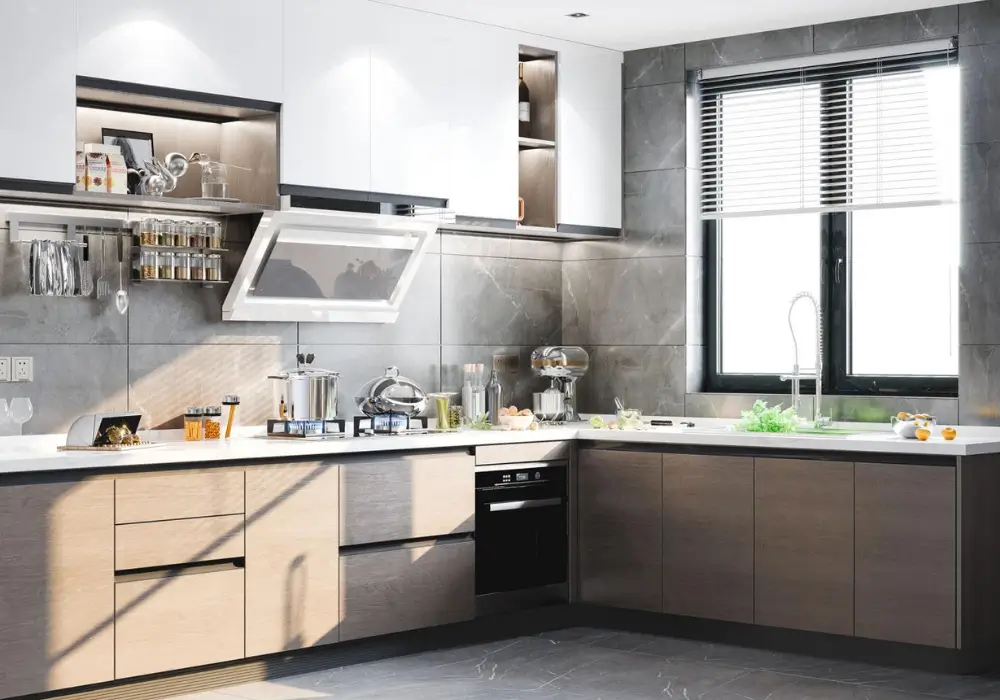
Modern kitchens often highlight black frame windows with very simple shades. I usually suggest this approach when homeowners want the window design to stand out.
Minimal roller shades or light fabrics maintain the clean lines of the window frame. This keeps the design sleek and uncluttered.
The contrast between black frames and light interiors creates a modern look. In many kitchens, this style becomes a subtle design feature.
9. Patterned Kitchen Curtains
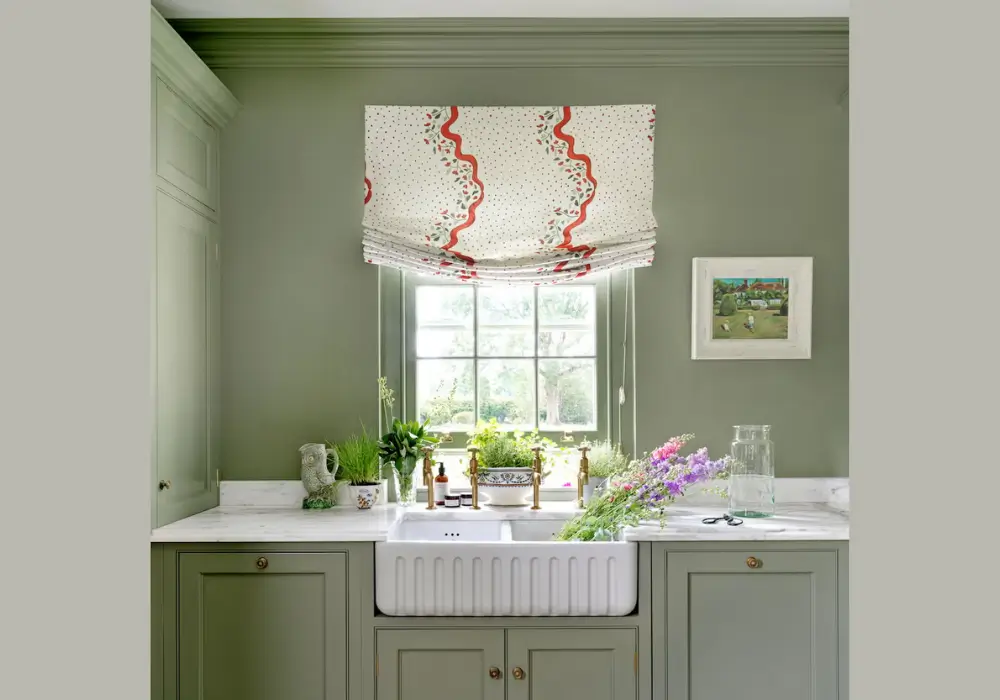
Patterned curtains add personality and color to kitchen windows. I often recommend them for kitchens with neutral cabinets or simple wall colors.
Floral prints, geometric patterns, or soft stripes can bring life into the room. The pattern helps the window become a decorative element rather than just a functional feature.
When chosen carefully, patterned curtains connect with other kitchen details such as rugs, dishware, or accessories.
10. Frosted Window Film
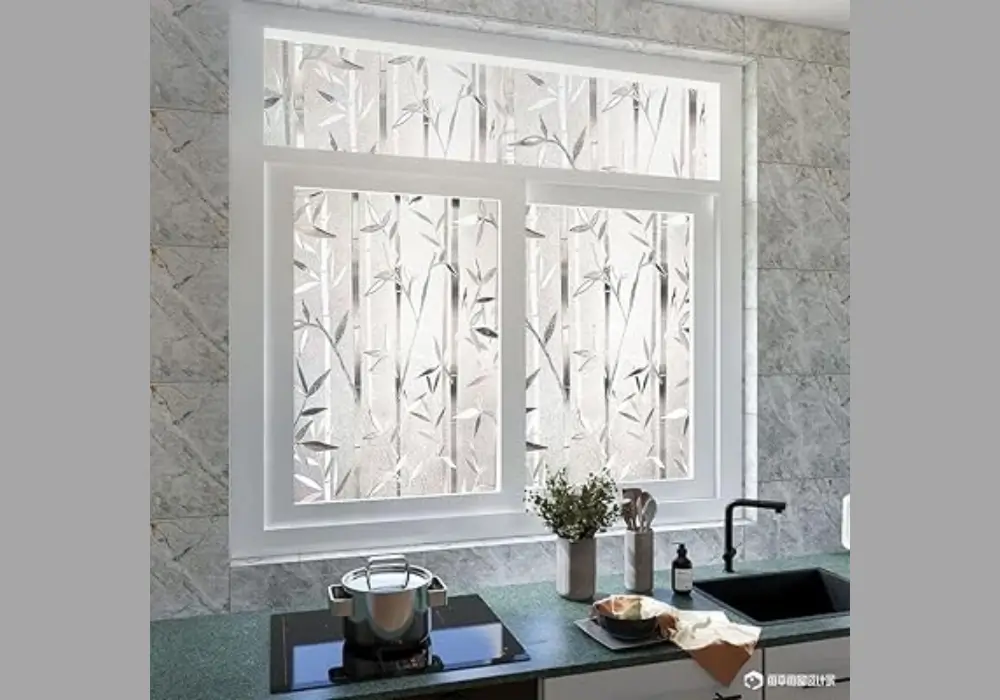
Frosted window film offers a practical alternative to traditional curtains. I often suggest it for kitchens where privacy is important but fabric treatments may feel too heavy.
The frosted surface allows sunlight to enter while blurring the outside view. This keeps the kitchen bright without exposing the interior.
Another advantage is maintenance. Window film requires little cleaning and stays in place without additional hardware or curtain rods.
11. Tie-Up Kitchen Curtains
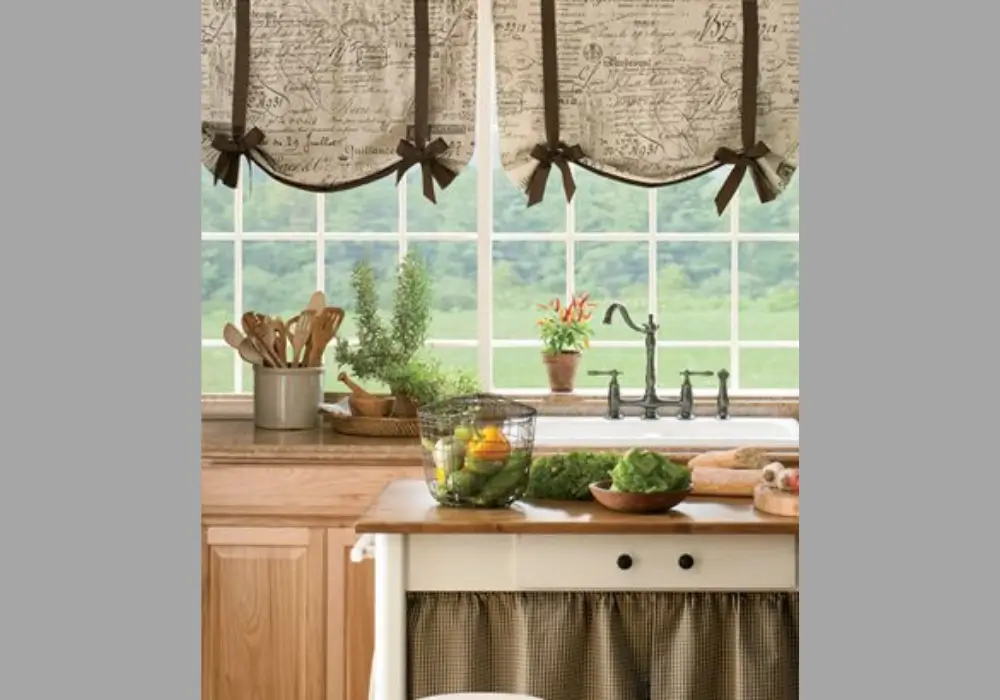
Tie-up curtains create a soft and relaxed look that works well in many kitchens. I often recommend this style for homeowners who want a decorative window treatment without covering the entire window.
The curtain fabric gathers upward and ties with ribbons or fabric straps. This design allows sunlight to enter while still adding texture and visual interest to the window.
In many kitchens I have seen, tie-up curtains add a charming touch, especially in cottage or farmhouse interiors. The gentle folds of fabric create a warm and welcoming atmosphere.
12. Layered Window Treatments
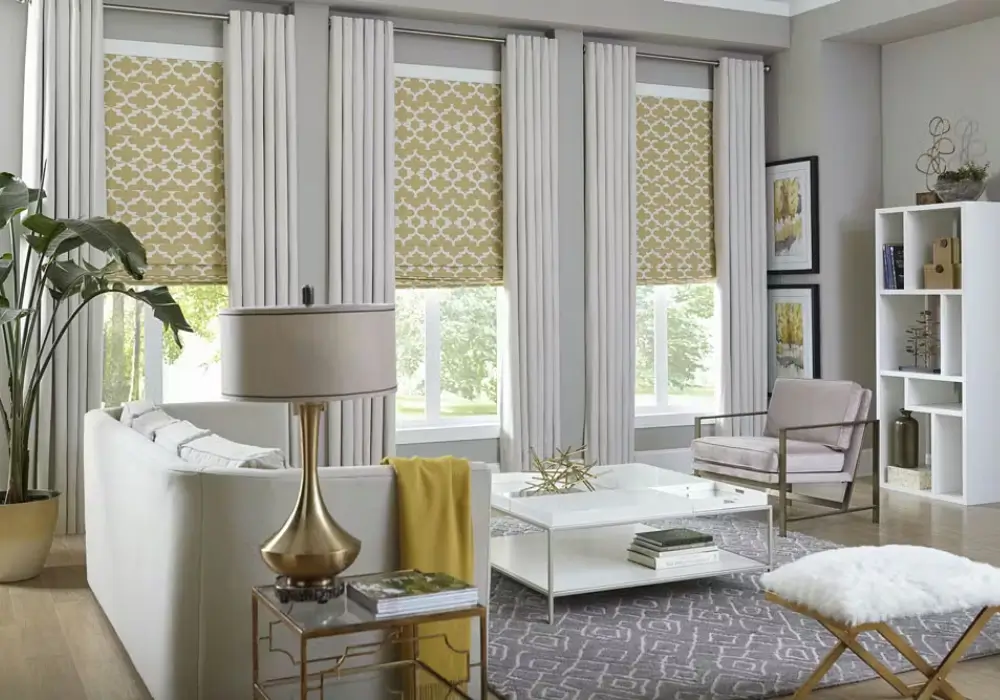
Layered window treatments combine two elements such as curtains with blinds or shades. I often suggest this option when homeowners want more flexibility in controlling light and privacy.
The inner layer, usually blinds or shades, manages sunlight and privacy. The outer curtains add softness and decorative detail to the window.
This approach works particularly well for larger kitchen windows. Layering treatments allows the kitchen to feel both functional and visually balanced.
13. No Curtain Minimal Window Style
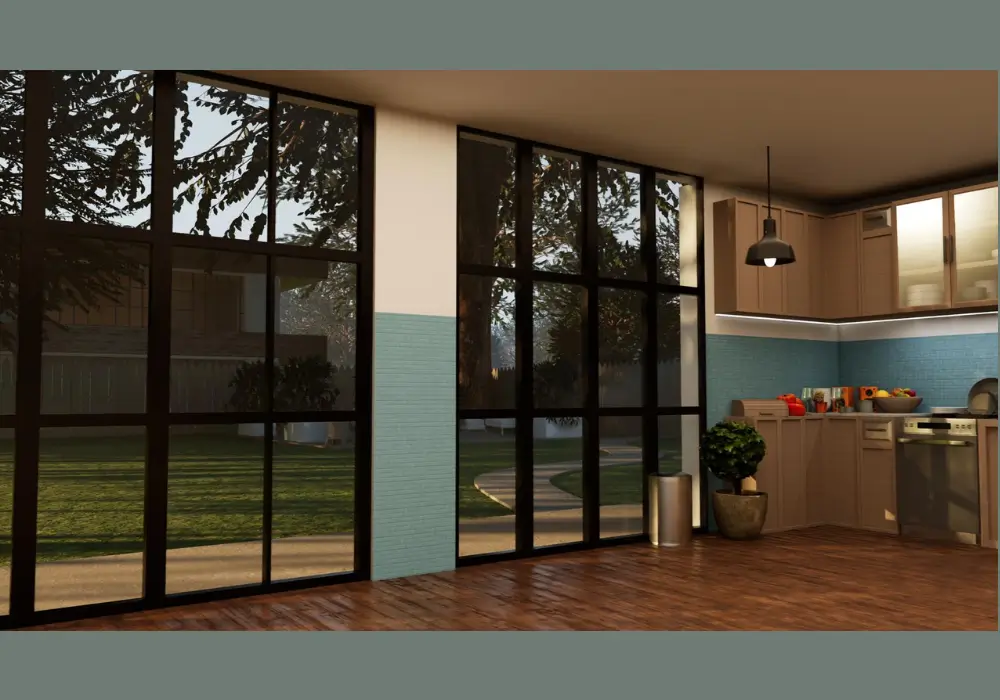
Some kitchens benefit from leaving windows completely uncovered. I often recommend this approach when the kitchen receives beautiful natural light or has an attractive outdoor view.
Without curtains or blinds, the window becomes a natural focal point. The open design allows maximum sunlight to enter the room.
Minimal window styling also works well in modern kitchens. When cabinets, countertops, and lighting are carefully designed, an uncovered window keeps the space feeling clean and uncluttered.
Practical Tips for Choosing Kitchen Window Treatments
Choosing the right kitchen window treatment requires balancing light, privacy, and design. I often suggest starting by observing how sunlight enters the kitchen throughout the day. Some windows receive strong direct light, while others only need a light covering for privacy.
Another important step is selecting materials that work well in a kitchen environment. Kitchens experience heat, moisture, and frequent cleaning, so window treatments should remain durable and easy to maintain.
Consider Light and Privacy Needs
Every kitchen has different lighting conditions. I usually recommend treatments that allow flexible light control, such as blinds or adjustable shades. This helps maintain brightness while still providing privacy when needed.
Match Window Treatments with Kitchen Style
Window coverings should complement the overall design of the kitchen. For example, modern kitchens often use simple roller shades, while farmhouse kitchens look great with cafe curtains or bamboo shades.
Choose Materials Suitable for Kitchen Conditions
Kitchens produce heat and moisture, which means delicate fabrics may not always be practical. I often recommend durable materials such as faux wood blinds, bamboo shades, or washable fabrics.
Use Colors and Patterns Carefully
Color and pattern can enhance the kitchen design when used thoughtfully. Neutral tones often create a calm look, while subtle patterns can add personality without overwhelming the space.
Keep Maintenance and Cleaning in Mind
Kitchen window treatments should be easy to clean because cooking can create grease and dust. Materials that wipe clean quickly usually work best for busy kitchens.
Kitchen Window Treatment Comparison
| Window Treatment | Best For | Key Benefit |
|---|---|---|
| Roman Shades | Decorative kitchens | Elegant folds and good light control |
| Cafe Curtains | Small windows | Provides privacy while letting in light |
| Wooden Blinds | Natural style kitchens | Adjustable light and warm texture |
| Roller Shades | Modern kitchens | Clean and minimal appearance |
| Bamboo Shades | Rustic or coastal kitchens | Natural texture and filtered light |
| Frosted Window Film | Privacy areas | Allows light while blocking views |
Conclusion
The right window treatment can quietly transform the entire kitchen. I often notice that when homeowners choose a style that balances light, privacy, and design, the window area becomes a natural highlight of the room.
Whether it is a simple roller shade, soft Roman shade, or classic cafe curtain, each option can improve comfort while adding character to the space. The key is selecting treatments that match the kitchen’s style and handle everyday conditions like heat and moisture.
With thoughtful choices, kitchen windows can remain bright, practical, and visually appealing at the same time.
FAQs
The best option depends on the kitchen layout and lighting conditions. I often recommend Roman shades, roller shades, or wooden blinds because they offer good light control and are easy to maintain. These options also match a wide range of kitchen styles.
Yes, curtains can work well when the fabric is lightweight and washable. Cafe curtains or sheer curtains are especially popular because they allow natural light to enter while still adding decoration. Many homeowners choose them for a softer and more welcoming look.
In smaller kitchens, I usually recommend simple treatments such as roller shades or light cafe curtains. These options keep the window area open and prevent the space from feeling crowded. Light colors also help reflect sunlight and make the room appear larger.
Both options can work well depending on the design preference. Blinds offer precise control of light because the slats can tilt. Shades provide a cleaner and softer appearance, which many homeowners prefer in modern kitchens.