


Mud room laundry ideas are a smart solution for homes that need both function and efficiency in one space. From my experience, combining a mud room with a laundry area can completely change how smoothly daily tasks flow.
This setup keeps dirt, wet clothes, and household mess contained near the entry instead of spreading through the home. I’ve noticed that when these two spaces work together, chores feel less overwhelming and more organized.
The key is designing with real habits in mind, not just appearance. With thoughtful layout, proper storage, and clear zones, a mud room laundry can feel practical, clean, and intentionally designed while saving valuable space in busy homes.
1. Mud Room Laundry with Built-In Folding Station
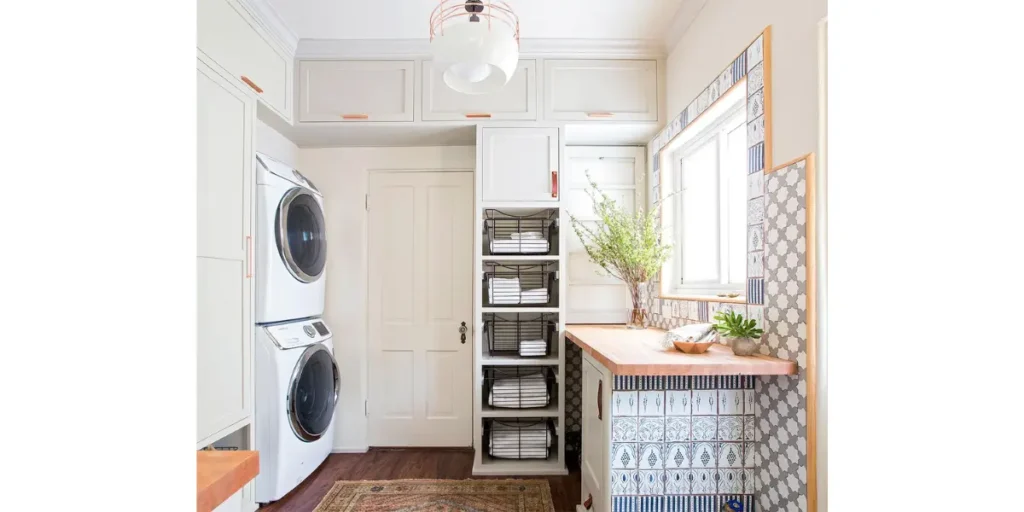
From my experience, a built-in folding station is one of the most practical upgrades in a mud room laundry. It creates a clear workspace that keeps laundry tasks contained and organized.
Placing the counter above front-loading machines uses space efficiently and prevents the room from feeling cramped or cluttered.
I’ve noticed that having a dedicated folding surface reduces piles from spreading into other areas. It also makes it easier to sort clothes immediately after drying, which saves time and effort. A smooth, durable surface works best for daily use.
The biggest advantage is workflow. When washing, drying, and folding happen in one continuous zone, routines feel faster and more manageable, especially in busy households.
2. Mud Room Laundry with Tall Utility Cabinets
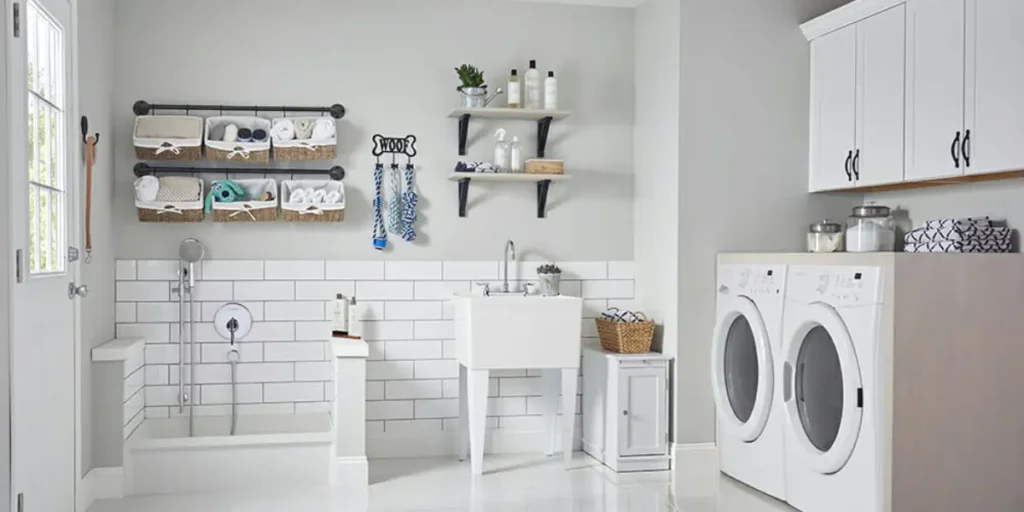
Tall utility cabinets are essential when combining a mud room and laundry in one space. From my experience, vertical storage keeps supplies organized without sacrificing floor space.
These cabinets are perfect for detergents, cleaning tools, and outdoor gear that would otherwise create visual clutter.
I usually recommend separating laundry items from muddy gear inside the cabinets. This keeps everything hygienic and easy to access. Closed storage also helps the space feel calm and polished, even when it’s heavily used.
When designed well, tall cabinets provide long-term storage that adapts as needs change. They bring order to the space and support both laundry tasks and daily entry routines.
3. Mud Room Laundry with Sink and Cleaning Zone

Adding a sink creates a highly functional cleaning zone in a mud room laundry. From my experience, this feature quickly becomes indispensable for hand-washing clothes, rinsing muddy shoes, or cleaning pet items. It keeps mess away from the main living areas.
I’ve noticed that placing the sink between the laundry machines and the entry area creates a natural transition. It separates wet tasks from clean ones, which improves hygiene and organization. A deep, durable sink works best for daily use.
This setup adds flexibility to the space. With a dedicated cleaning zone, the mud room laundry becomes more than a chore area—it becomes a practical hub that supports everyday life efficiently.
4. Mud Room Laundry with Open Hanging Dry Area
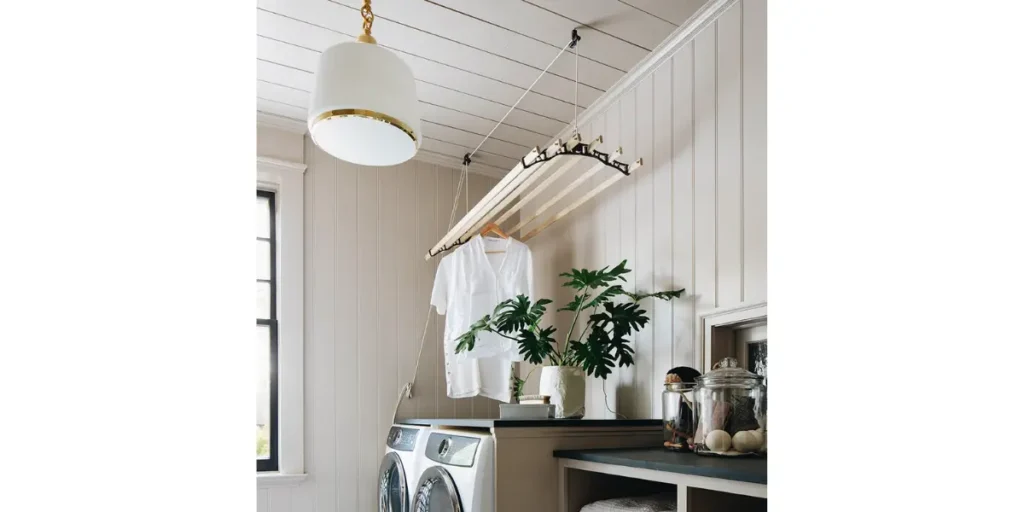
From my experience, an open hanging dry area is incredibly useful in a combined mud room laundry. It provides a clear place for damp coats, towels, or delicate clothing that shouldn’t go straight into the dryer.
Installing wall-mounted rods or ceiling racks keeps wet items off the floor and allows air to circulate properly.
I’ve noticed this setup works especially well during rainy or winter seasons. Clothes can air-dry naturally without cluttering the room or spreading moisture into the rest of the house. Keeping this area near the entry helps contain the mess.
The biggest benefit is efficiency. When drying space is built in, laundry routines feel smoother and more controlled, making the room easier to manage every day.
5. Compact Mud Room Laundry with Sliding Doors
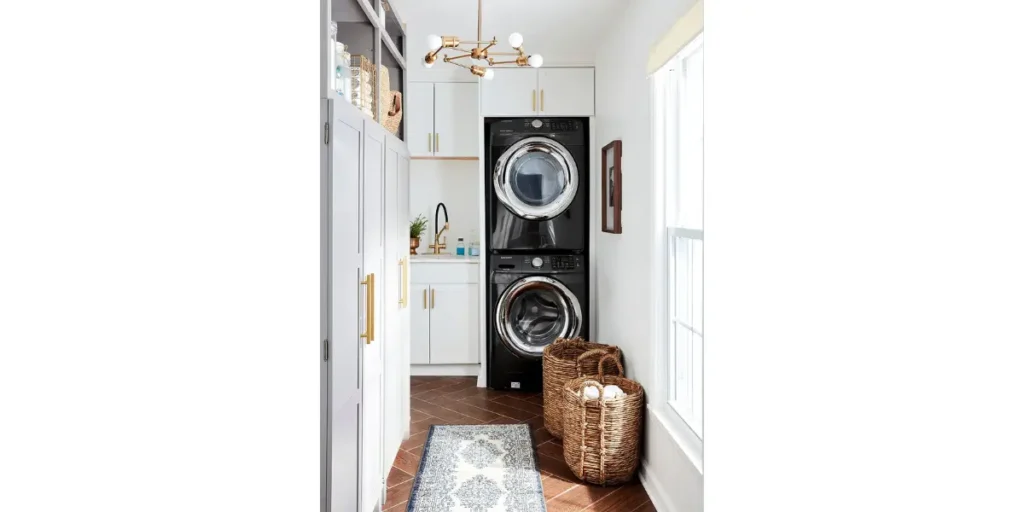
In smaller homes, sliding doors are one of the smartest solutions I’ve used for a mud room laundry. They allow the laundry area to be hidden when not in use, keeping the entry visually calm and uncluttered. Sliding doors also save space compared to traditional swing doors.
I’ve found that closing off the laundry zone instantly makes the room feel more organized, especially when guests arrive. Frosted or paneled doors work well because they soften the look without fully sealing off light or airflow.
This idea is all about flexibility. When laundry tasks are done, the space transforms back into a clean entry, making small layouts feel more intentional and functional.
How to Design a Mud Room Laundry That Stays Efficient and Clutter Free
From my experience, the success of a mud room laundry depends on clear planning rather than extra features. I always focus on separating wet, dirty tasks from clean ones to avoid chaos.
Creating defined zones for washing, drying, folding, and storage keeps the space functional even during busy days. I’ve noticed that when everything has a logical place, daily routines feel smoother and less stressful.
A well-designed mud room laundry should support movement, storage, and airflow without feeling crowded. When layout and storage work together, the space stays efficient, clean, and easy to maintain long-term.
FAQs
Is it practical to combine a mud room and laundry space?
Yes, it is very practical when designed thoughtfully. From my experience, this combination helps contain dirt, wet clothes, and mess near the entry. It reduces cleanup throughout the house and improves workflow. With proper zoning, the space stays organized and efficient.
How do I keep a mud room laundry from feeling cluttered?
I focus on closed storage, vertical cabinets, and hidden zones for supplies. Keeping surfaces clear and storing items immediately after use helps a lot. I’ve noticed clutter reduces naturally when storage is easy to access. Simple systems work best long term.
What storage works best in a mud room laundry combo?
A mix of tall cabinets, drawers, and wall-mounted storage works best. I recommend closed storage for detergents and open areas for daily essentials. This balance keeps the room functional without looking messy. Storage should match daily habits.
Conclusion
A well-designed mud room laundry can make everyday routines feel simpler and more organized. From my experience, combining these two spaces works best when the layout supports real habits rather than ideal ones.
When storage, workflow, and cleaning zones are clearly defined, clutter stays contained and tasks feel easier to manage.
I’ve noticed that small details, like folding stations or drying areas, can greatly improve efficiency without adding complexity.
This type of space doesn’t need to be large to be effective. With thoughtful planning and practical design choices, a mud room laundry can become a reliable, hardworking area that keeps the rest of the home cleaner, calmer, and better organized every day.