
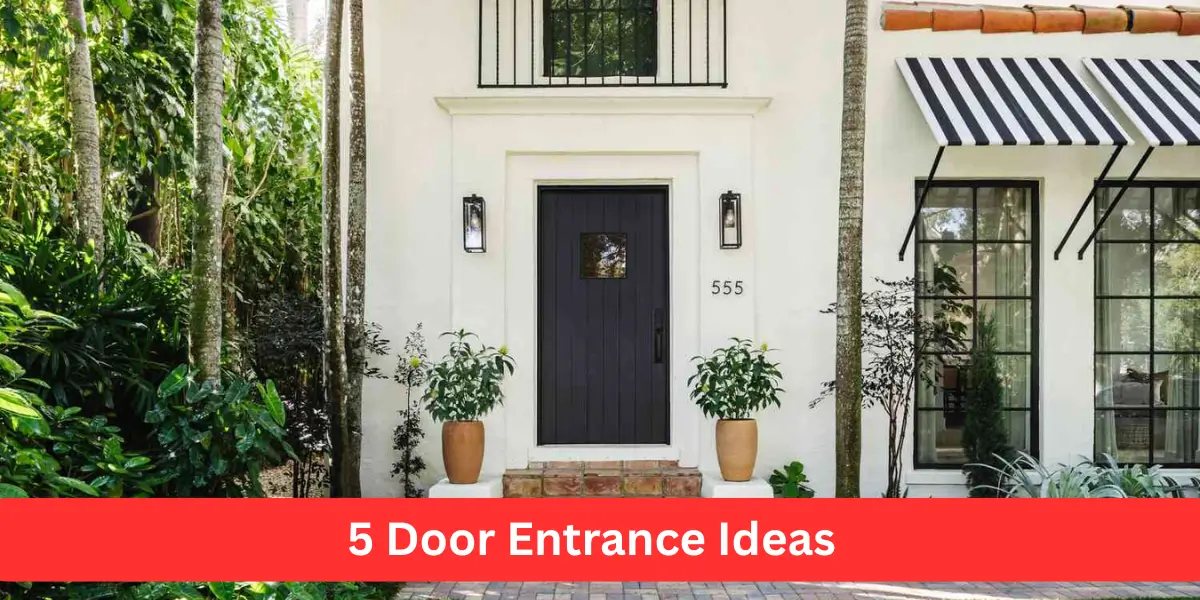

Door entrance ideas are often overlooked, yet from my experience, they play a major role in how a home is perceived the moment someone arrives. The entrance is the transition between outside and inside, and its design quietly sets expectations.
I’ve noticed that even simple homes feel more inviting when the entrance is thoughtfully planned. Elements like proportion, lighting, greenery, and symmetry work together to create comfort and clarity.
A well-designed entrance doesn’t need to be expensive or dramatic, it needs to feel intentional. When door entrances balance function with style, they enhance daily routines and make every arrival feel welcoming rather than ordinary.
1. Statement Front Door with Framed Entryway
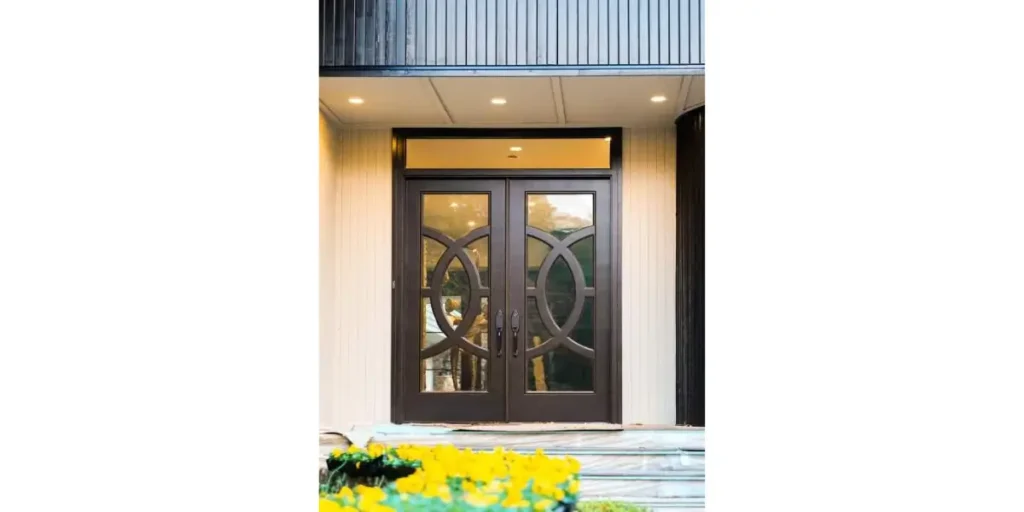
From my experience, a framed entryway instantly gives the front door importance. When a door is visually framed with stone, wood cladding, or a contrasting paint color, it feels intentional rather than placed.
This technique draws the eye naturally toward the entrance and creates a clear focal point.
I’ve noticed that framing works especially well on simple exteriors. It adds depth without changing the structure of the home. Even a flat façade can feel architectural when the door is highlighted properly.
What makes this idea effective is balance. The frame should enhance the door, not overpower it. When proportions are right, the entrance feels confident, welcoming, and visually strong from the street.
2. Minimalist Door Entrance with Clean Lines
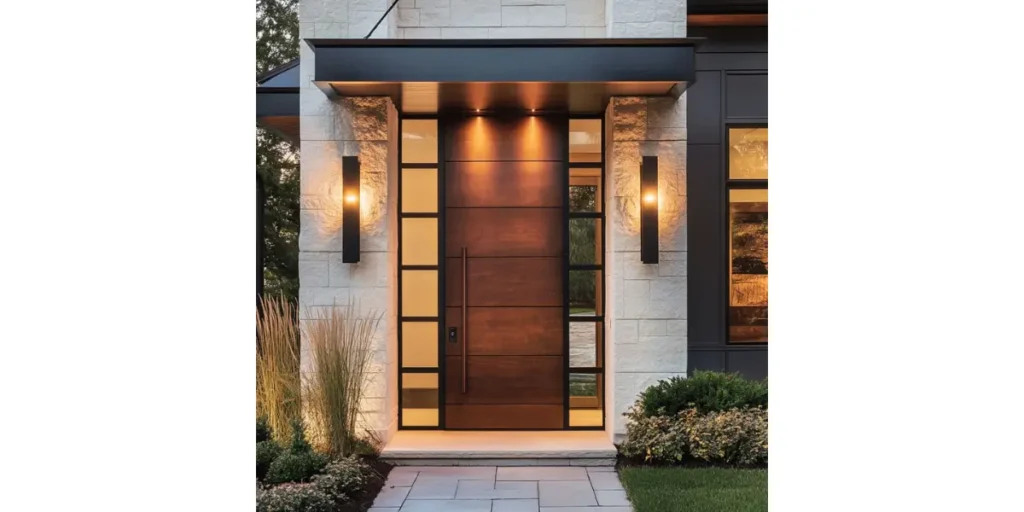
A minimalist entrance focuses on simplicity, and from my experience, this approach never feels outdated. Clean lines, smooth finishes, and neutral colors allow the entrance to feel calm and uncluttered. There’s no unnecessary decoration competing for attention.
I often recommend this style for modern homes or anyone who prefers subtle elegance. When walls, door, and hardware align in tone and design, the entrance feels cohesive. The simplicity actually highlights quality materials and craftsmanship.
What I like most is how this design improves the daily experience. A clean entrance feels organized and peaceful. It sets a calm tone before you even step inside, which is something many people underestimate.
3. Welcoming Door Entrance with Greenery

Adding greenery is one of the easiest ways to soften a door entrance. From my experience, plants instantly make an entrance feel alive and approachable. Planters, small trees, or vertical greenery help balance hard surfaces like concrete and brick.
I’ve noticed that greenery works well with almost any door style. Whether the entrance is modern or traditional, plants bring warmth and texture. Even simple planters placed thoughtfully can change the entire mood.
The key is moderation and maintenance. Choosing low-maintenance plants keeps the entrance looking fresh year-round. When greenery is healthy and well placed, the entrance feels cared for and naturally inviting.
4. Covered Door Entrance with Layered Lighting
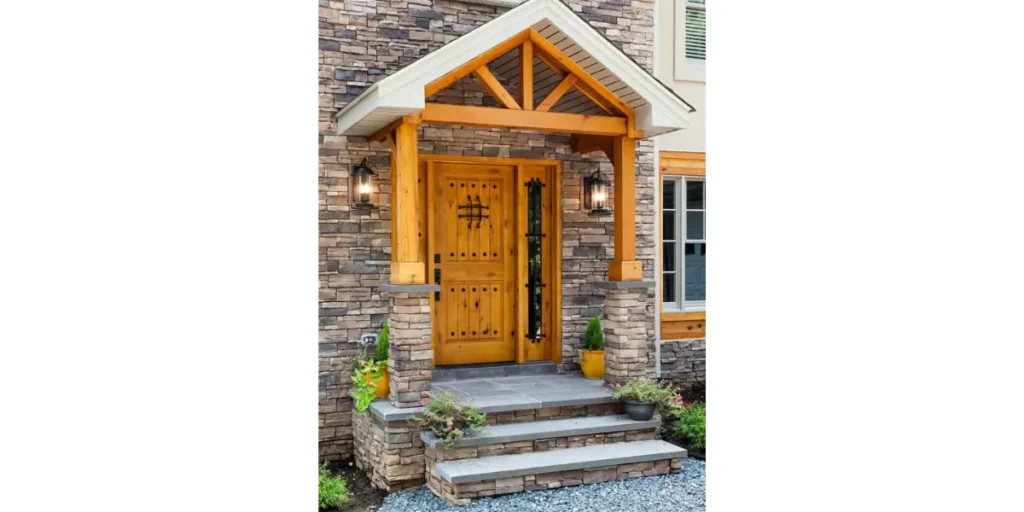
A covered entrance adds both comfort and character. From my experience, even a small canopy or porch roof makes the door feel protected and intentional. It also improves usability during rain, heat, or harsh sunlight.
Lighting plays a major role here. I always suggest layered lighting, wall lights combined with a softer ambient glow. This improves safety while also creating a welcoming atmosphere in the evening.
What stands out most is how this entrance feels at night. When light is warm and well-positioned, the doorway feels safe and inviting. It transforms the entrance into a functional and atmospheric space, not just a pass-through.
5. Symmetrical Door Entrance with Balanced Details
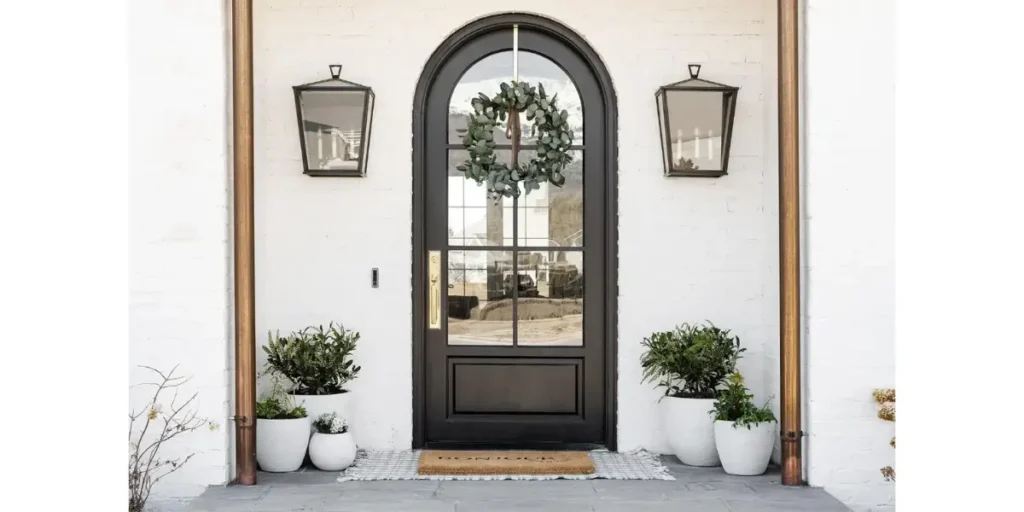
Symmetry brings a sense of order, and I’ve seen it work beautifully for entrances. Matching lights, planters, or wall features on both sides of the door instantly create balance. This approach feels classic and visually pleasing.
From my experience, symmetry works best when details are simple. Overdoing decorative elements can feel rigid instead of elegant. Clean repetition is what creates harmony, not excess.
What I appreciate about this idea is its reliability. A symmetrical entrance rarely feels wrong. It creates a sense of stability and intention, making the home feel well planned and thoughtfully designed at first glance.
How Door Entrance Design Influences Mood, Safety, and Daily Routine
From my experience, a well-designed door entrance affects more than just appearance. It shapes how welcoming a home feels every single day.
I’ve noticed that entrances with clear lighting, balanced layout, and thoughtful details reduce daily stress and improve safety.
When the entrance is easy to navigate and visually calm, coming home feels smoother and more comfortable.
This is why entrance design should support real-life use, not just curb appeal. A good entrance quietly improves both function and emotional comfort.
FAQs
What makes a door entrance look inviting rather than plain?
An inviting entrance usually combines lighting, proportion, and a clear focal point. I’ve found that even simple elements like warm lights or greenery make a big difference. Clean spacing around the door also helps. The goal is clarity, not decoration overload.
Are door entrance upgrades expensive to implement?
Not necessarily. In my experience, small changes like lighting, planters, or paint can have a strong impact. You don’t need structural changes to see improvement. Thoughtful placement often matters more than budget.
How can I improve my door entrance in a small home?
Small homes benefit from simplicity. I recommend keeping the entrance uncluttered with good lighting and one or two key features. Vertical elements like tall planters work well. This keeps the entrance open and balanced.
Conclusion
A well-designed door entrance does far more than mark the entry to a home, it sets the tone for every arrival and departure. From my experience, entrances that feel balanced, well-lit, and thoughtfully styled create a sense of ease before stepping inside.
I’ve learned that effective entrance design doesn’t rely on bold features alone but on how each element works together.
Whether through clean lines, natural textures, or subtle symmetry, small decisions shape the overall experience. When an entrance supports both function and visual comfort, it becomes a quiet strength of the home.
Investing attention in the door entrance ultimately improves daily routines and leaves a lasting impression that feels natural, welcoming, and intentionally designed.