
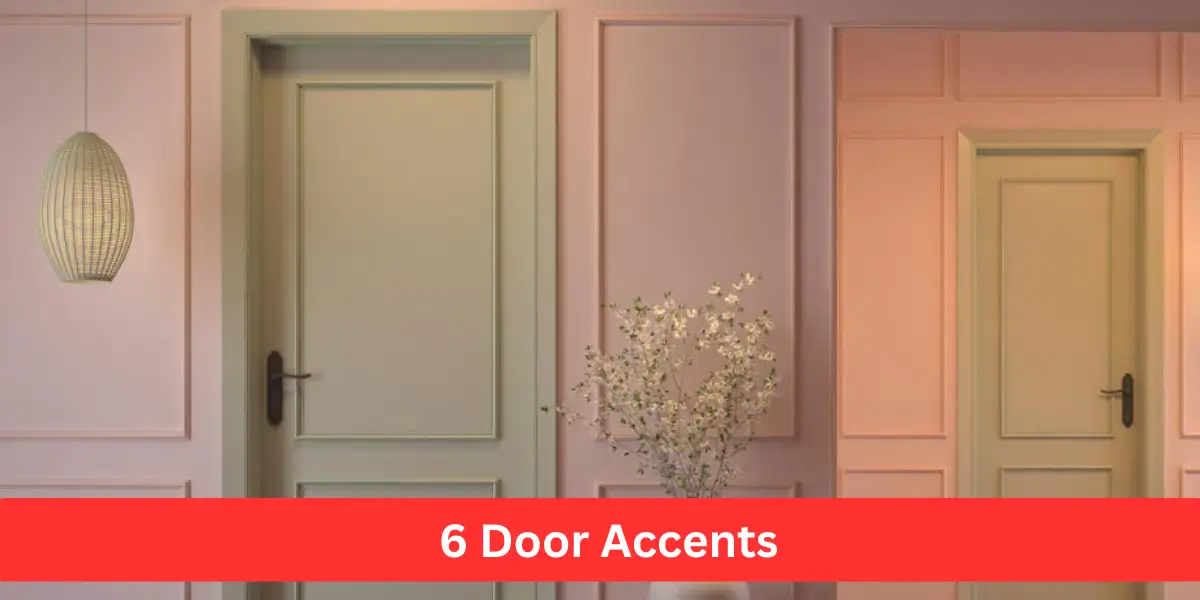

Door accents are one of the simplest yet most effective ways to refresh a space without replacing the entire door. From my experience, small accent details can completely change how a door is perceived, turning it from a plain surface into a design feature.
I’ve noticed that when accents are chosen thoughtfully, they add depth, personality, and visual balance to a room. Whether through texture, hardware, or subtle color contrast, door accents allow for creative expression with minimal effort.
When done right, these details enhance the overall design while maintaining functionality, making them a smart choice for modern and classic interiors alike.
1. Decorative Door Molding and Trim Accents
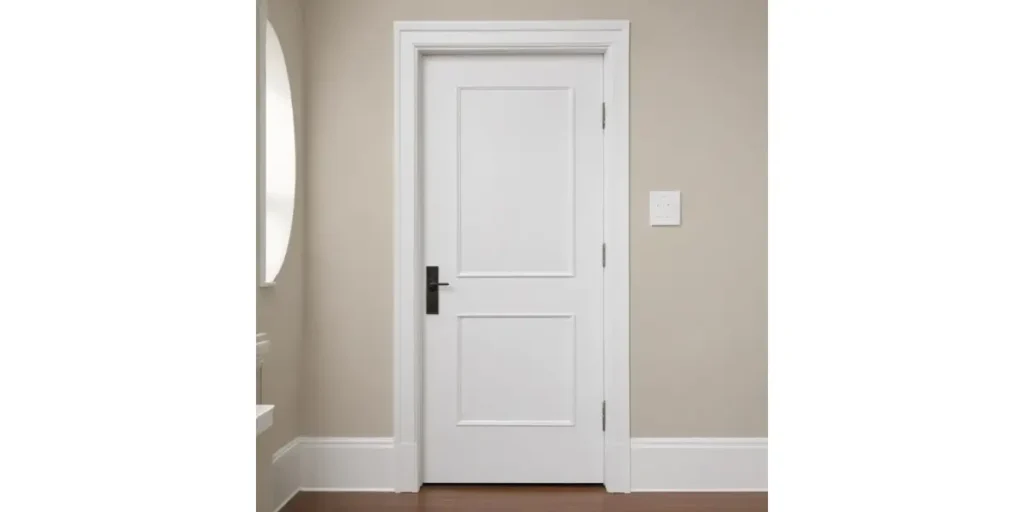
From my experience, adding molding or trim is one of the most effective ways to upgrade a plain door.
Simple rectangular or linear trims create depth and make the door look custom-built rather than standard. I’ve noticed this works especially well in homes where walls and doors feel visually flat.
I usually recommend keeping the trim design clean and symmetrical. Overly detailed molding can feel heavy, while simple shapes maintain elegance. Painted in the same color as the door, the trim adds texture without overwhelming the space.
What makes this accent powerful is its subtlety. It doesn’t scream for attention, yet it quietly elevates the door and gives the entire room a more finished, intentional look.
2. Statement Door Hardware as a Design Accent
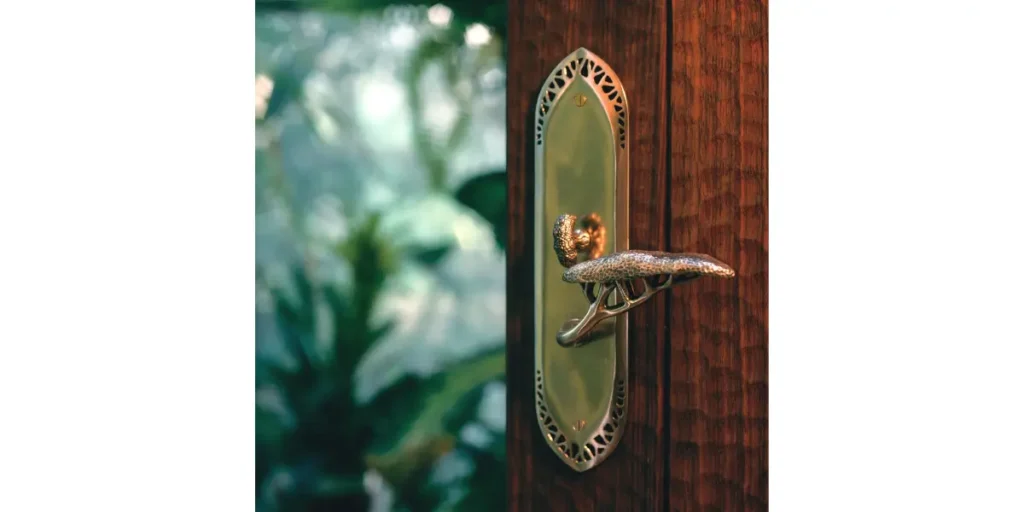
Door hardware is often underestimated, but from my experience, it can completely change a door’s personality.
Oversized handles, unique shapes, or contrasting finishes instantly draw the eye. Even a simple door feels upgraded when the hardware is intentional.
I’ve noticed that statement hardware works best when the door itself stays simple. This balance prevents the design from feeling busy. Matte black, brushed brass, or sculptural handles are especially effective as accents.
The biggest advantage is flexibility. Hardware is easy to replace, which makes this a low-risk design move. With the right choice, the door feels refined and thoughtfully styled without major effort.
3. Color-Blocked Door Accent Designs
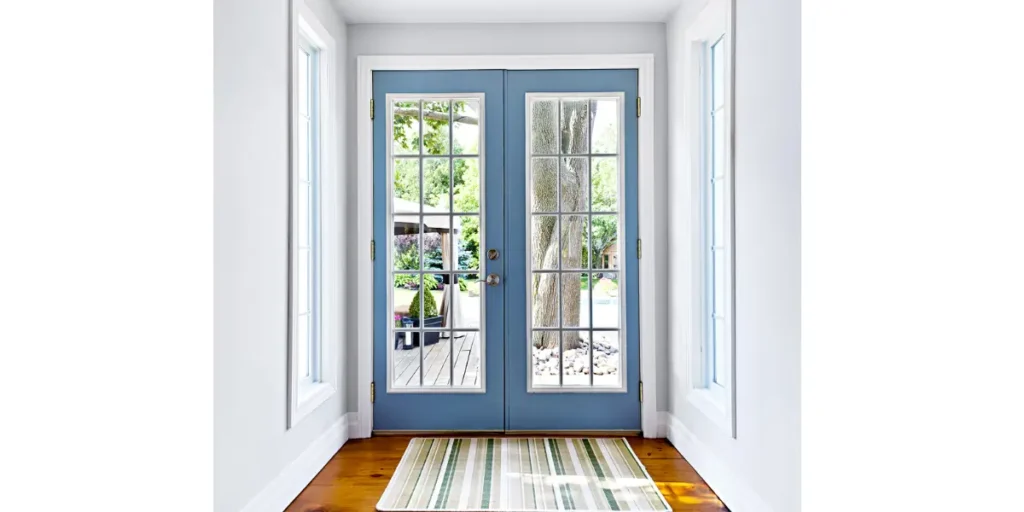
Color blocking is a modern way to add interest to doors without heavy decoration. From my experience, using two complementary tones can highlight panels or sections of the door beautifully. It’s a creative approach that still feels controlled.
I usually suggest muted or related colors rather than strong contrasts. This keeps the look sophisticated instead of playful. Vertical or lower-half color blocking works particularly well in modern interiors.
What I like about this idea is its adaptability. Paint is easy to update, and the accent can evolve over time. It’s a simple way to bring personality and modern character to a space.
4. Metallic Door Accents and Fine Inlays
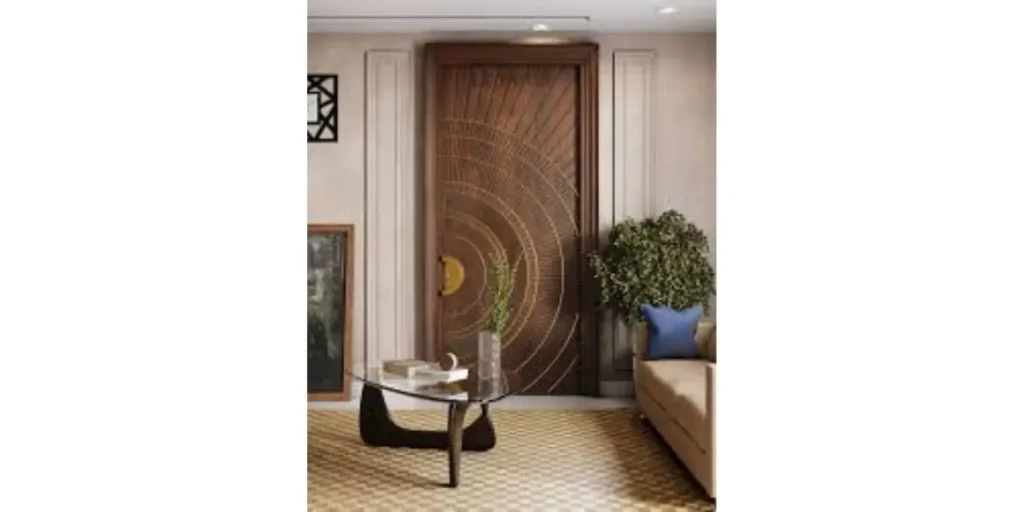
Metallic accents add a sense of refinement when used sparingly. From my experience, thin brass or steel inlays elevate a door without making it feel flashy. These details catch light subtly and add quiet luxury.
I’ve noticed this works best with flat or minimal doors. Fine metallic lines or borders enhance the door’s geometry and give it a high-end feel. Too much metal, however, can overpower the design.
What makes metallic accents special is their precision. When placed thoughtfully, they give the door an architectural quality that feels modern, elegant, and carefully designed.
5. Textured Door Accents Using Materials
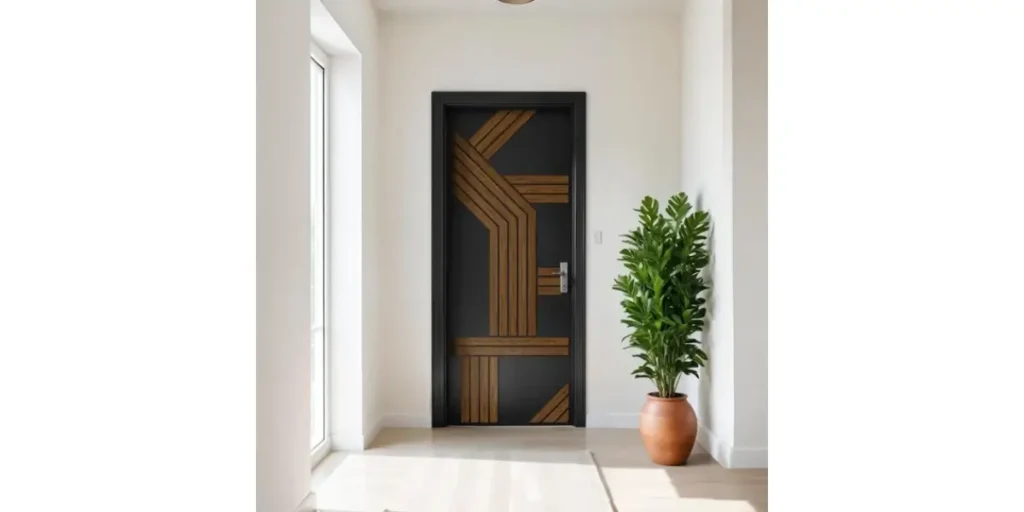
Texture can transform a door into a focal point. From my experience, adding wood panels, fluted surfaces, or layered finishes brings depth to otherwise flat doors. This approach works well when you want the door to stand out subtly.
I’ve noticed textured accents feel most effective when limited to one material. Mixing too many textures can feel heavy. Wood, in particular, adds warmth while keeping the design grounded.
The result is a door that feels tactile and visually rich. Textured accents make a space feel more considered and give the door a presence beyond basic functionality.
6. Glass or Mirror Door Accent Panels
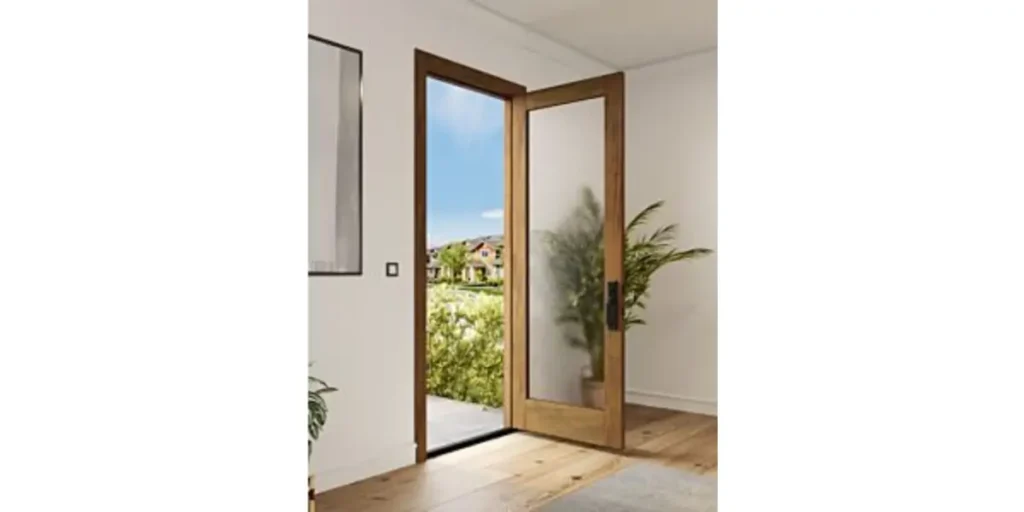
Glass or mirror inserts are both decorative and practical. From my experience, they help reflect light and make rooms feel more open. Frosted or patterned glass maintains privacy while still acting as an accent.
I usually recommend this idea for smaller rooms or darker areas. Even a narrow glass panel can make a noticeable difference. Mirror accents also add depth and brightness without adding clutter.
What I appreciate most is the balance they create. These accents enhance light and space while keeping the door functional, making them ideal for modern and compact interiors.
How Door Accents Transform Spaces Without Major Renovation
From my experience, door accents offer one of the easiest ways to refresh a space without structural changes. Instead of replacing doors, accents allow you to work with what you already have.
I’ve noticed that even small additions like trim, texture, or hardware can shift the entire feel of a room. These details help doors blend better with the overall interior design.
When applied thoughtfully, door accents provide flexibility, creativity, and visual interest while keeping the space functional and budget-friendly.
FAQs
Are door accents suitable for rental homes?
Yes, many door accent ideas work well in rental spaces. I usually suggest removable options like hardware changes or temporary paint accents. These upgrades can often be reversed without damage. This makes them practical for short-term living.
Can door accents be removed or updated easily?
Most door accents are easy to update. From my experience, paint, trim, or hardware can be changed with minimal effort. This flexibility allows the design to evolve over time. It’s ideal for people who like refreshing their space.
Which door accent works best in small rooms?
Glass inserts, mirrors, and light color accents work best in small spaces. I’ve noticed they help reflect light and make rooms feel larger. Avoid heavy textures in tight areas. Balance is key to maintaining openness.
Conclusion
Door accents prove that meaningful design changes don’t always require major renovations. From my experience, these small details have the power to transform how a door and the surrounding space feel.
When chosen thoughtfully, accents add depth, character, and cohesion without compromising function. I’ve noticed that doors enhanced with subtle trim, texture, or hardware often feel more intentional and refined.
The key is balance, accents should complement the door, not overpower it. By focusing on quality materials and simple design choices, door accents become lasting elements that quietly elevate interiors while remaining flexible and easy to update over time.