
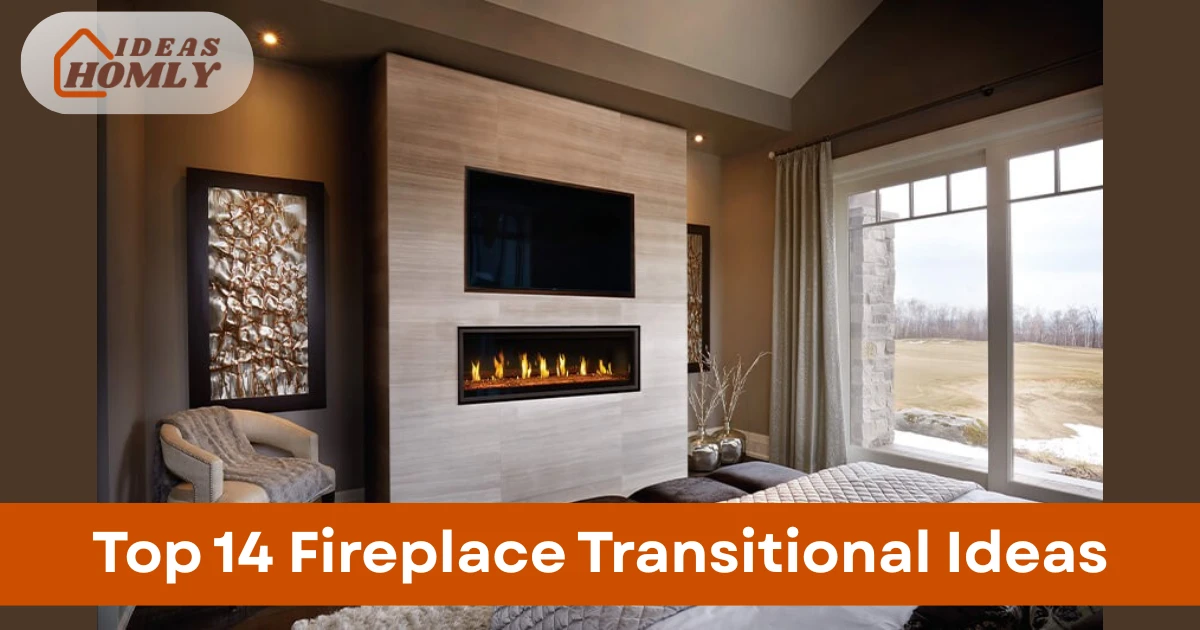

I know the struggle of trying to make a living room feel modern without losing that cozy classic charm. Transitional design is the perfect middle ground because it blends the best of both worlds without feeling forced.
I spent time researching how real homeowners are mixing styles to create a fireplace that looks timeless and fresh. These ideas focus on clean lines and soft textures to give you a professional look that fits any house.
Creating a Cohesive Look with Transitional Fireplace Elements
You should aim for a design that feels intentional by choosing materials that bridge the gap between old and new. I find that using a neutral color palette is the easiest way to make different styles work together smoothly.
Transitional spaces rely on a mix of textures like smooth stone and rough wood to add visual interest. This approach keeps your room from looking too flat or too busy while maintaining a sophisticated atmosphere.
I recommend focusing on symmetry to ground the room and provide a sense of order that everyone appreciates. A balanced layout makes your fireplace feel like a permanent part of the architecture rather than a quick update.
Your goal is to create a focal point that stays relevant even as home decor trends change over time. I believe that sticking to high quality materials ensures your investment adds real value to your property for years.
1. Simplified White Wood Mantels with Clean Lines
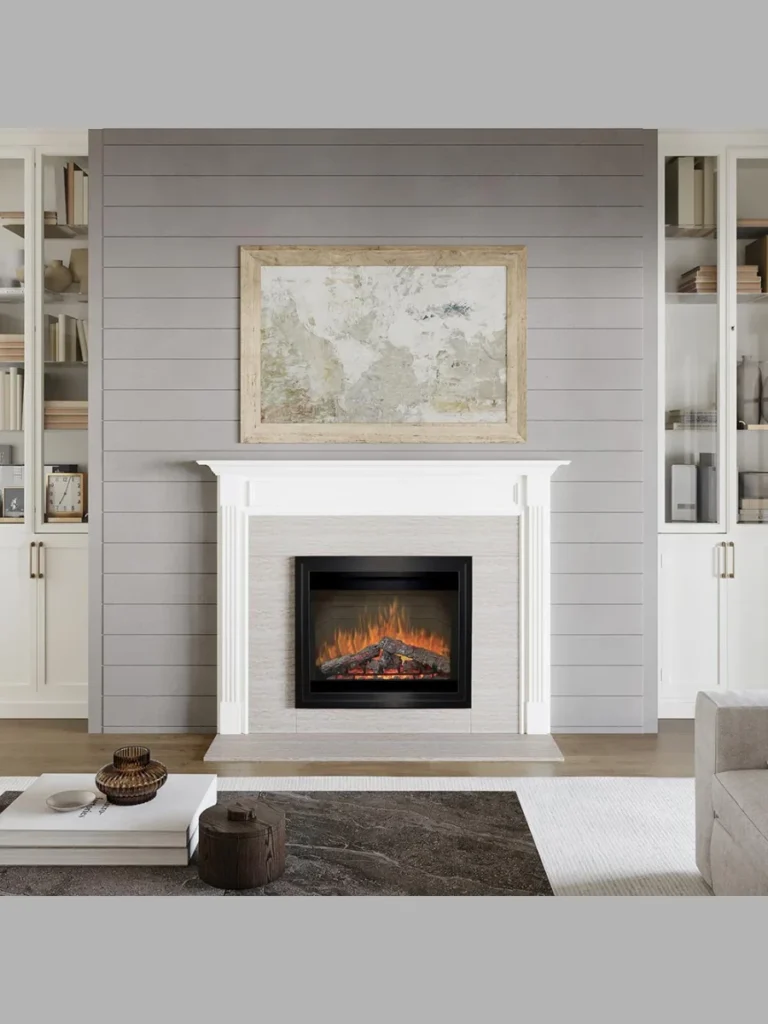
I love how a white wood mantel provides a crisp frame that works against almost any wall color. You get the traditional warmth of wood without the heavy and dated carvings found in older homes.
The straight edges of a simplified mantel reflect a modern aesthetic while the material feels familiar and inviting. I think this balance is why white mantels remain a top choice for transitional living rooms today.

SEI Furniture - Hebbington Tiled Fireplace - Transitional Design, White Marble Top - Ideal for Living Room, Family Room (FC1080759)
SEI Furniture - Hebbington Tiled Fireplace - Transitional Design, White Marble Top - Ideal for…
You can easily pair this with a marble or tile surround to add a layer of luxury. The white paint keeps the wood looking light and airy so the room never feels small or cramped.
I suggest keeping the top of the mantel uncluttered to emphasize the beautiful and simple architectural lines. This keeps the focus on the craftsmanship of the fireplace rather than on small decorative items or trinkets.
2. Honed Marble Surrounds for a Soft Texture
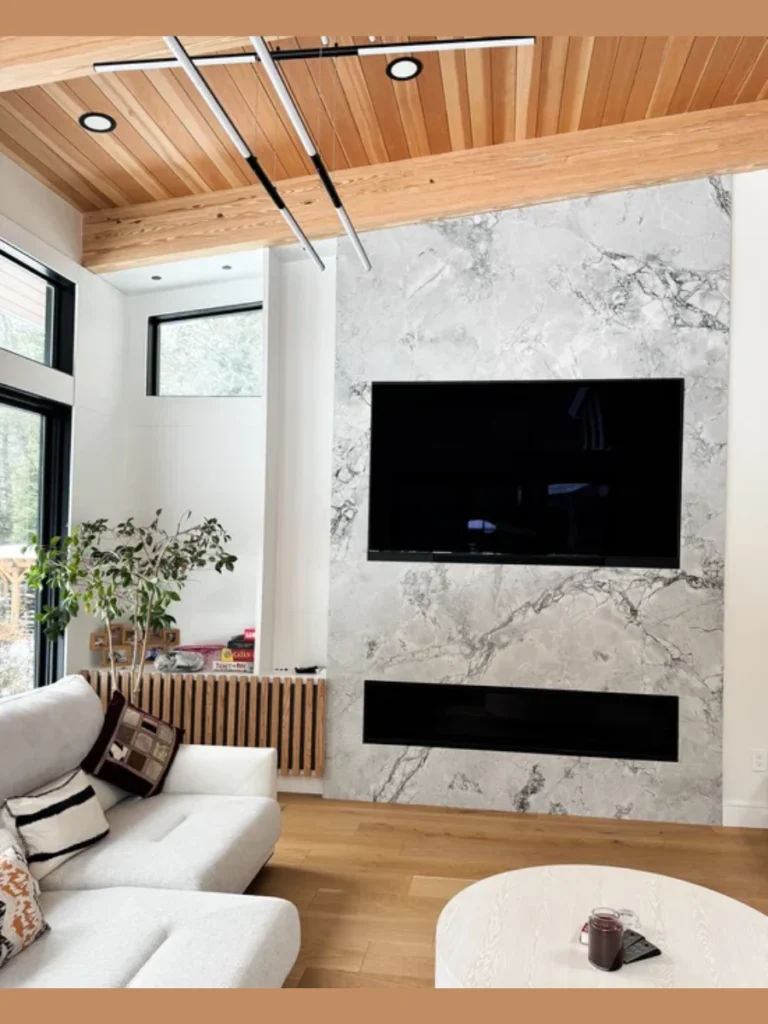
Honed marble offers a matte finish that looks much more contemporary than the shiny polished stone of the past. I find that this softer look hides smudges and dust much better than high-gloss surfaces do.
The natural grey veining in the stone adds just enough detail to be interesting without being overwhelming. It provides a sophisticated background that works well with both metal and wood furniture pieces in the room.
I prefer using large slabs of marble rather than small tiles to keep the surface looking seamless. This choice reduces the number of grout lines which helps maintain a clean and modern visual flow.
This material feels incredibly cold and hard to the touch but looks warm and inviting to the eye. I believe it is the perfect material for a fireplace that needs to look both expensive and approachable.
3. Floor to Ceiling Stacked Stone with Neutral Tones
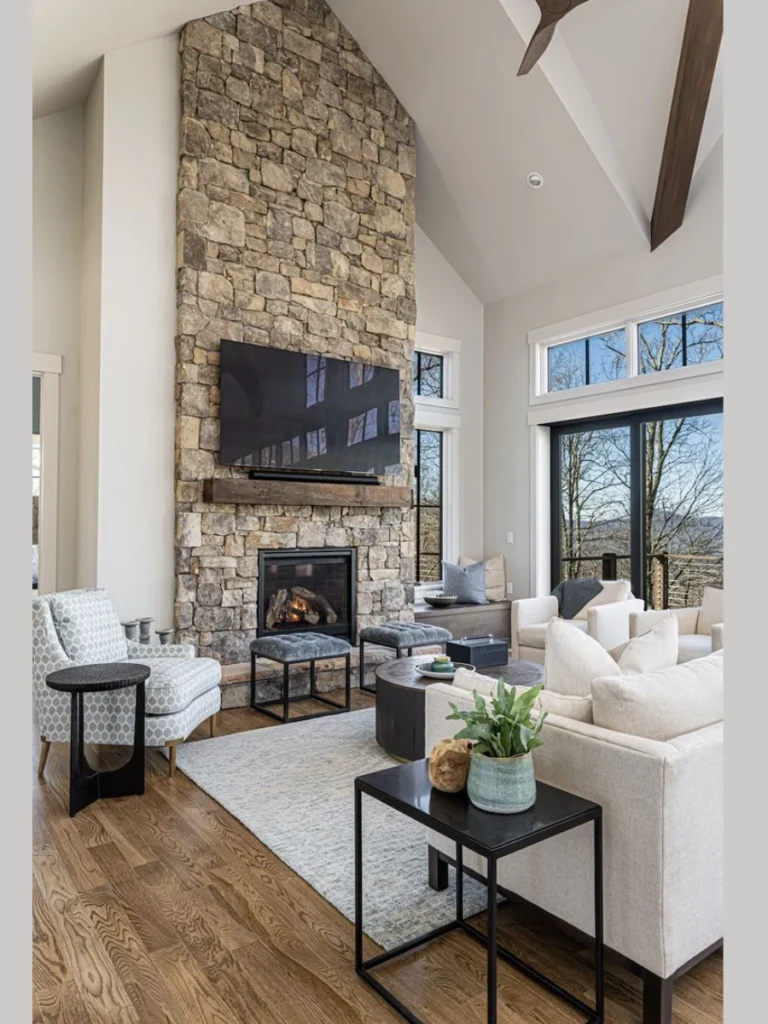
Extending your stone work all the way to the ceiling creates a dramatic sense of height in your home. I like using light beige or soft grey stones to keep the large surface from feeling too heavy.
The horizontal lines of stacked stone provide a nice rhythm that draws the eye upward toward your ceiling. This technique makes even a standard room feel like a grand space with a lot of character.
You should avoid stones with too much orange or red to keep the look firmly in the transitional category. Neutral tones are much easier to match with your existing sofas and curtains throughout the seasons.
I find that adding a simple floating mantel in the middle breaks up the stone perfectly for visual relief. It gives you a place to display a few favorite photos without distracting from the stone work.
4. Black Metal Frames for a Sharp Contrast
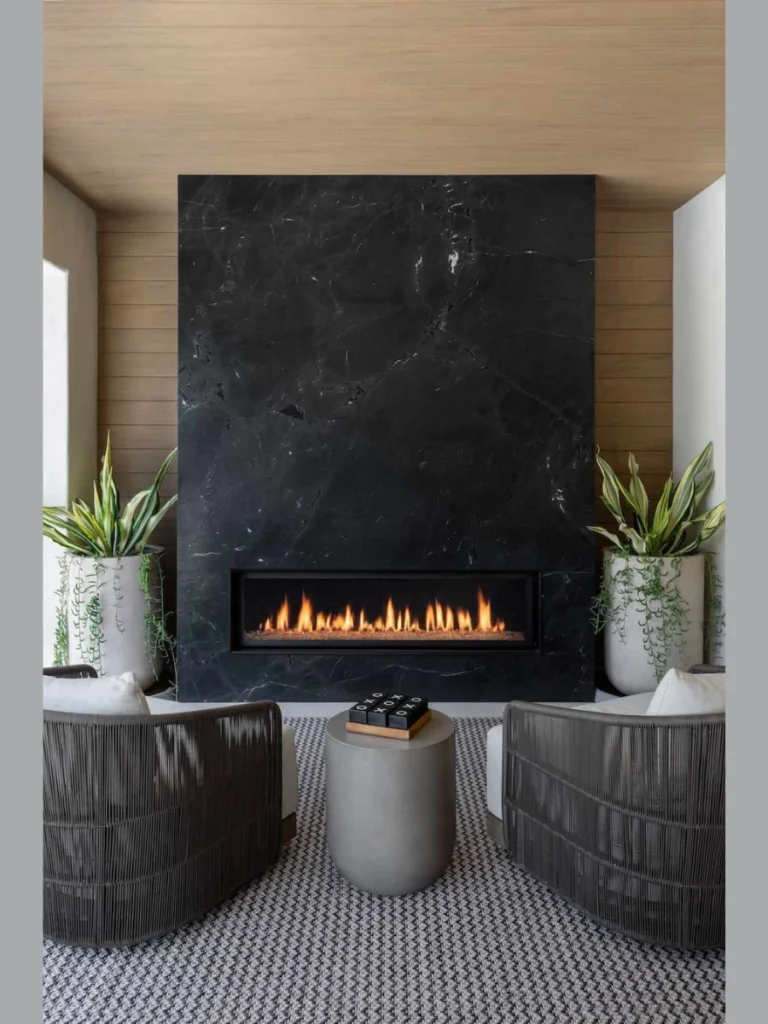
Adding a black metal frame around your firebox creates a bold border that pops against lighter surround materials. I enjoy how the dark metal grounds the design and adds a touch of industrial flair.

SEI Furniture - Hebbington Tiled Marble Electric Fireplace with Touch Screen - Transitional Design, White Marble Top - Ideal for Living Room, Bedroom (FR1080759)
SEI Furniture - Hebbington Tiled Marble Electric Fireplace with Touch Screen - Transitional Design, White…
This element works particularly well if you have other black accents like window frames or light fixtures nearby. It creates a cohesive story that moves the eye around the room in a very natural way.
I recommend a matte black finish because it looks more modern and hides heat marks better than shiny metal. This small detail ensures your fireplace looks professional and well maintained even after many years of use.
The thin profile of the metal keeps the focus on the flames rather than on the hardware itself. I think this is a brilliant way to add a modern touch to a very traditional hearth setup.
5. Recessed Built-In Shelving with Symmetrical Layouts
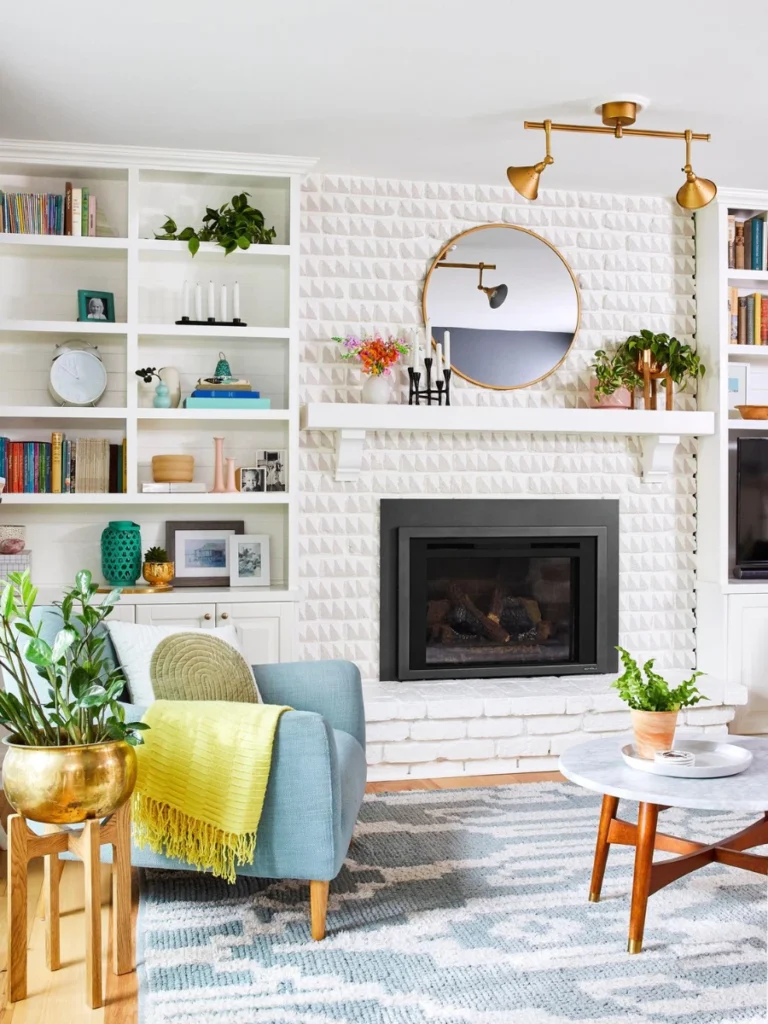
Building shelves into the walls on either side of your fireplace adds a ton of functional storage. I find that symmetrical shelving creates a sense of calm and balance that is key to transitional style.
You can use the lower cabinets to hide messy wires and electronics while displaying books on the upper shelves. This keeps your living area looking organized and tidy while still feeling lived in and cozy.
I like painting the back of the shelves a slightly darker shade to give the display more depth. It makes your decorative items stand out more and adds a custom look to your standard built-in units.
Lighting the shelves with small LED puck lights adds a beautiful glow to the room during the evening hours. This extra layer of light makes the entire fireplace wall feel like a high-end custom installation.
6. Large Format Porcelain Tiles for a Seamless Look
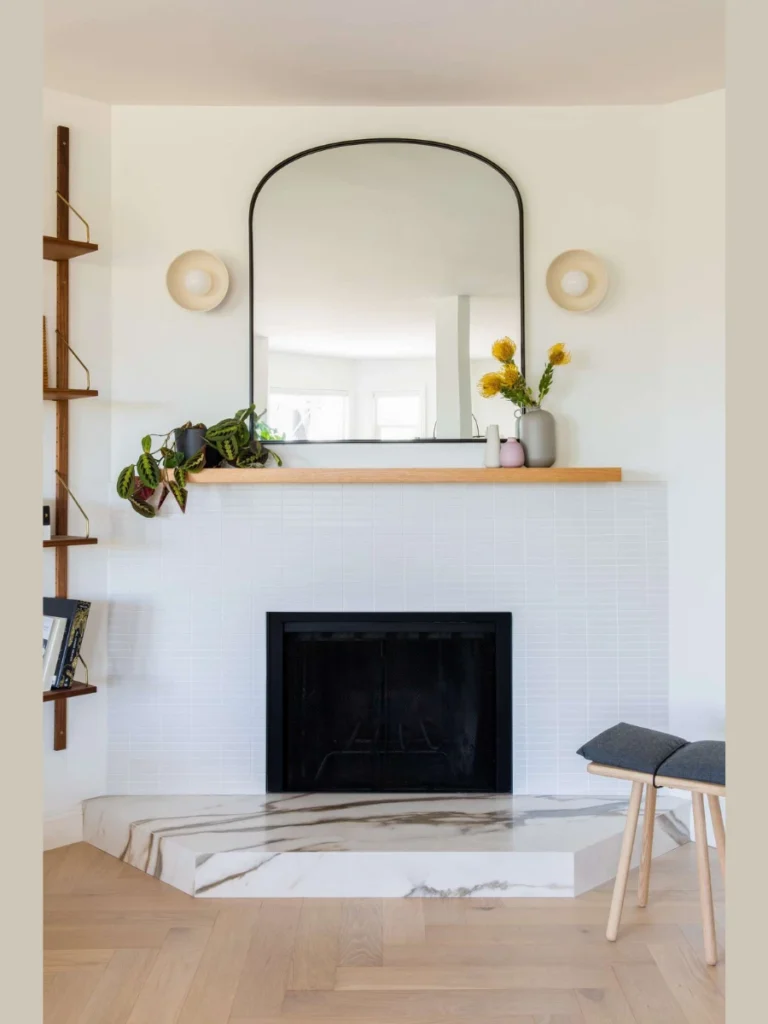
Large porcelain tiles can mimic the look of expensive natural stone at a much more affordable price point. I love using sizes like twenty-four by forty-eight inches to minimize the appearance of messy grout lines.
These tiles come in many different finishes but a soft satin or matte look works best for transitional homes. It provides a clean and uniform appearance that looks very intentional and modern without being too cold.
I find that porcelain is much easier to maintain than real stone because it does not require regular sealing. This makes it a great choice for busy families who want a beautiful home without extra chores.
You can choose a tile with a subtle cement or limestone texture to add a bit of grit to the room. It bridges the gap between a raw industrial loft and a polished suburban living room perfectly.
7. Arched Firebox Openings for a Graceful Silhouette
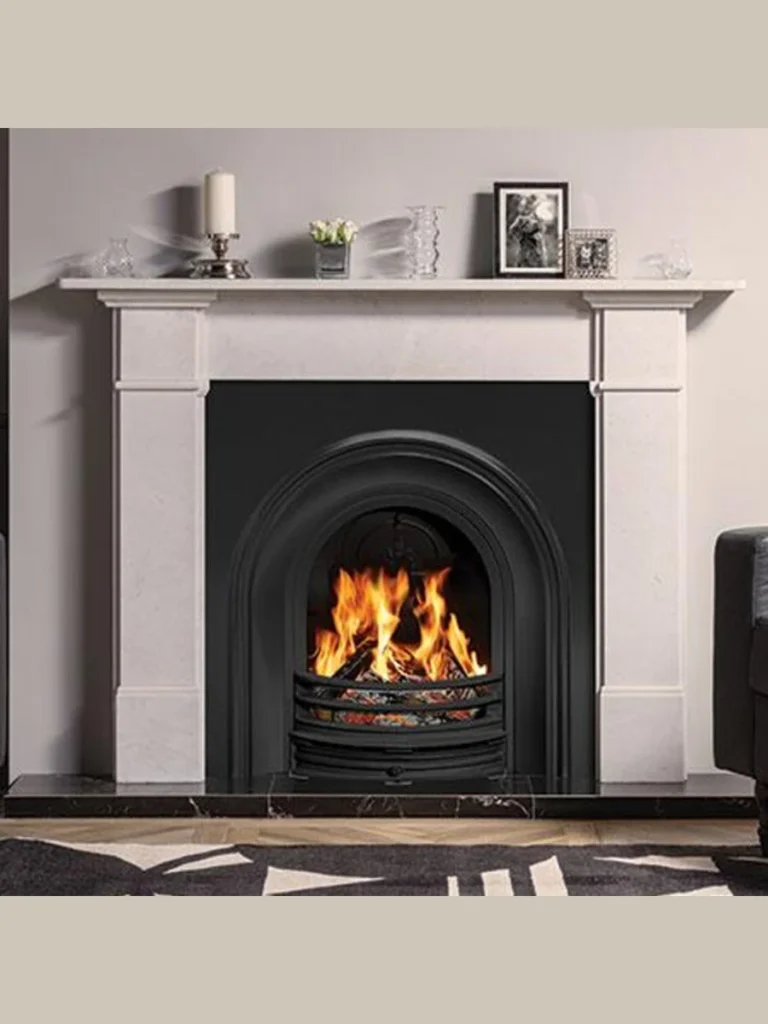
I think an arched opening adds a gentle curve that softens the sharp angles of a modern room. This shape feels historic and elegant while the clean finish keeps it firmly in the present day.
You can use smooth plaster or a thin stone veneer to wrap the arch for a seamless look. It creates a beautiful frame for the fire that feels like a piece of classic architecture.
I find that this design works best without a mantel to let the unique shape stand out. It provides a quiet sophistication that does not need extra decorations to grab your attention.
Matching the arch with other doorways in your home creates a very high-end and custom feeling. I love how this simple geometric change makes a standard wall look much more expensive.
8. Mixed Material Mantels Using Wood and Stone
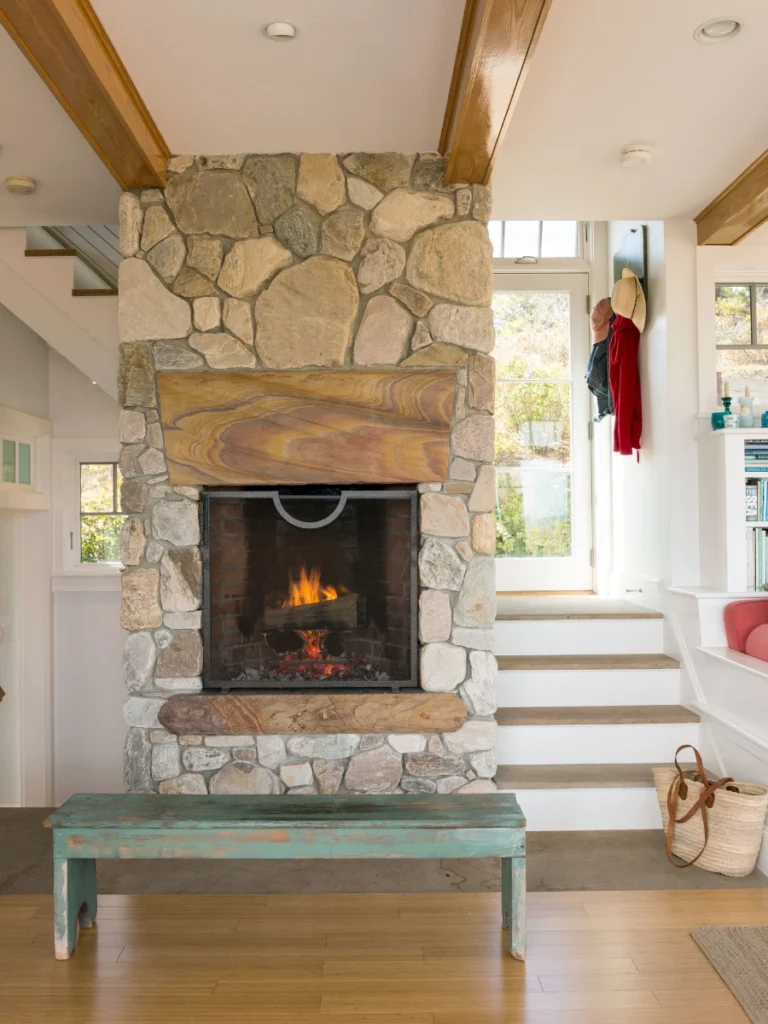
Combining a cool stone surround with a warm wood mantel creates a perfect textural balance for your home. I enjoy how the different temperatures of these materials interact to make the room feel complete.
You should choose a wood grain that matches your flooring to help the fireplace blend into the space. This creates a cohesive story where the fireplace feels like a natural part of the building.
I prefer a light oak or walnut mantel paired with a soft white or grey stone base. This contrast ensures that the fireplace remains a focal point without overwhelming your other furniture.
This setup allows you to enjoy the durability of stone near the heat and the warmth of wood higher up. I believe this is the most practical way to achieve a professional transitional look.
9. Herringbone Interior Brick for Subtle Pattern
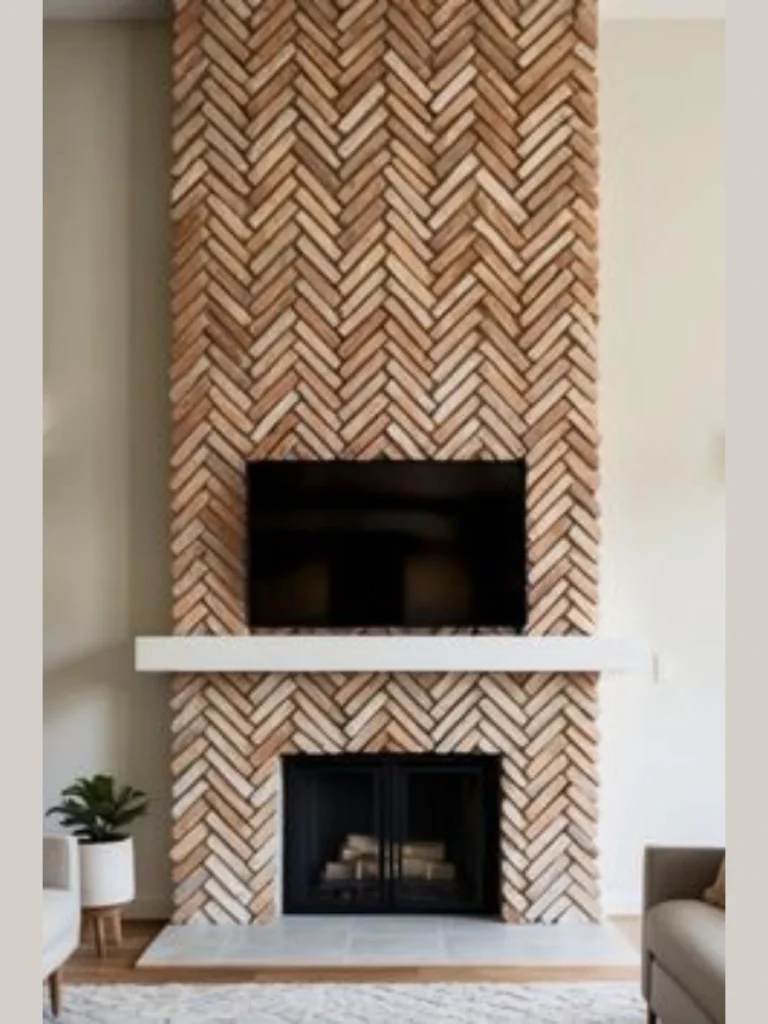
The inside of your fireplace is a great place to add a hidden layer of high-end design. I love using a herringbone pattern because it looks incredibly detailed and intentional to guests.
You can use light-colored firebricks to keep the interior looking bright even when a fire is not lit. This small detail shows that you care about the craftsmanship of every part of your home.
I find that a dark grey grout makes the pattern pop while hiding any future soot or ash stains. It keeps the fireplace looking clean and well-maintained for a very long time.
This pattern adds a touch of traditional masonry work to an otherwise modern and simple fireplace surround. It is a subtle way to honor the past while embracing a clean and updated aesthetic.
10. Shiplap Accents with a Transitional Twist
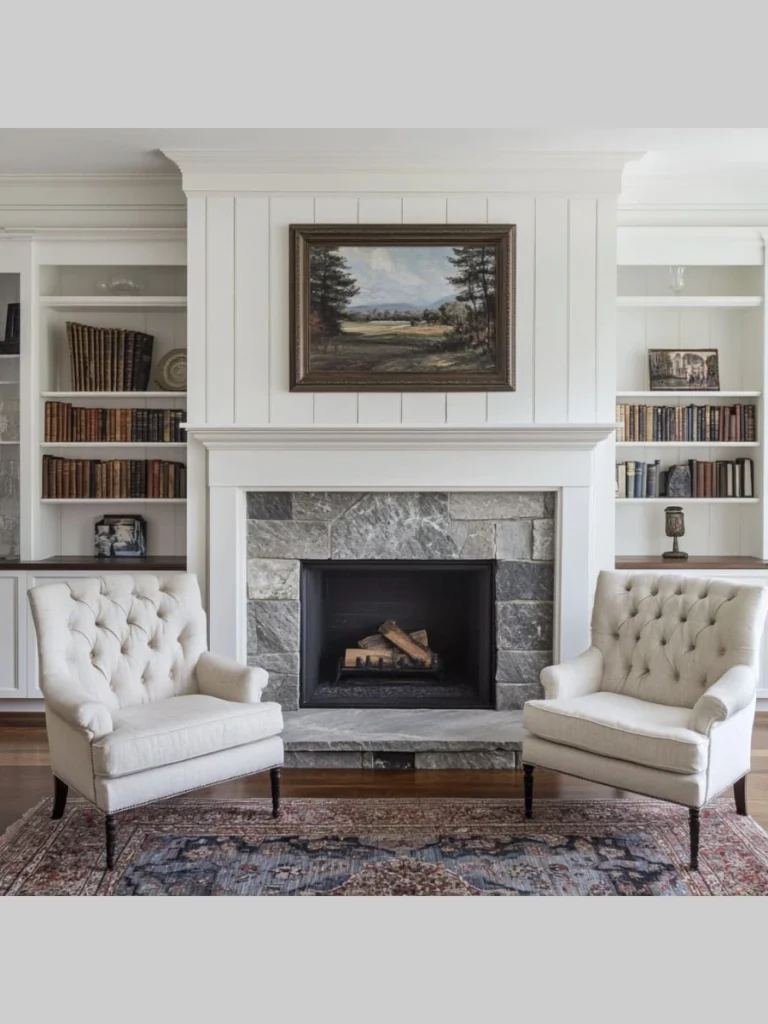
Vertical shiplap offers a fresh take on the classic farmhouse look that fits perfectly in transitional spaces. I think the vertical lines help to draw the eye up and create a feeling of height.
You should paint the shiplap the same color as your walls for a subtle and textured appearance. This prevents the wood panels from looking too rustic or like a themed country house.
I recommend pairing this with a simple stone hearth to ground the light wood panels at the base. The mix of hard and soft materials is what makes this design work so well together.
This style is a great way to add character to a flat wall without spending a fortune on masonry. I find it creates a very cozy and approachable environment for a busy family room.
11. Concrete Plaster Finishes for a Polished Look
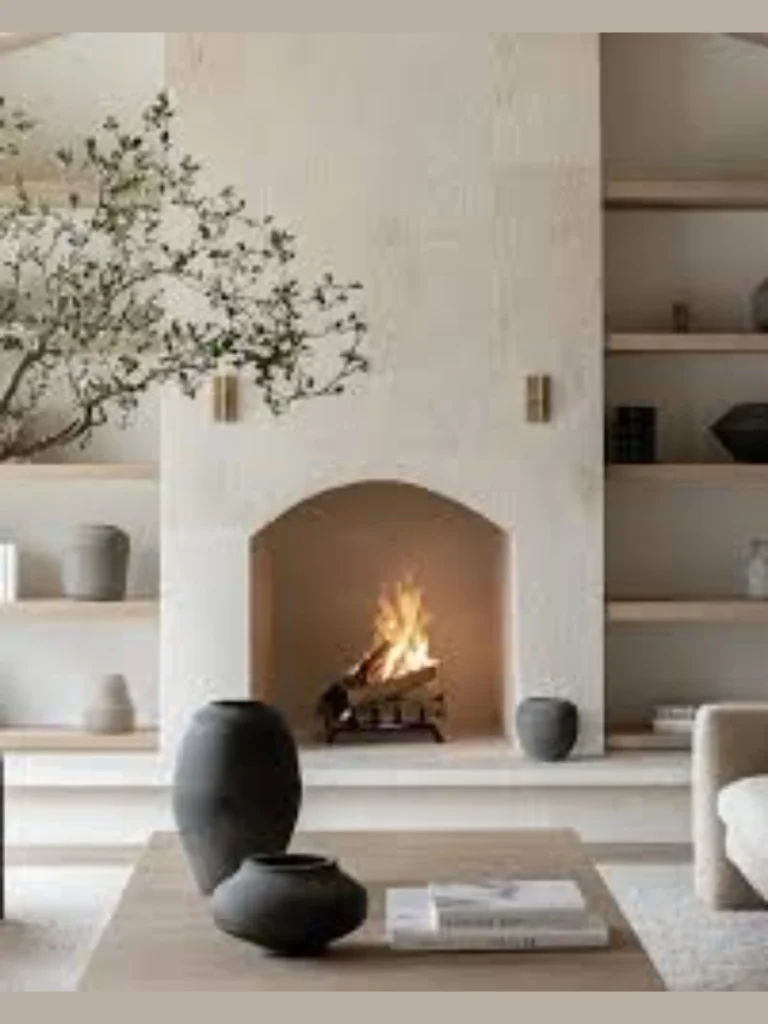
A smooth concrete plaster finish offers a raw but refined look that I find very grounding and calm. The soft grey tones provide a neutral backdrop that works with any seasonal decor you choose.
You can apply the plaster directly over old brick to give your fireplace a fast and total makeover. It results in a seamless surface that looks like a custom-cast piece of modern art.
I like how the hand-applied texture gives the fireplace a unique character that you cannot get from tiles. It feels artisanal and high-quality while maintaining a very minimal and clean profile.
This material is incredibly heat resistant and durable which makes it a very practical choice for daily use. I believe it is the best option for someone who wants an industrial touch in a soft room.
12. Floating Hearth Benches for Extra Seating
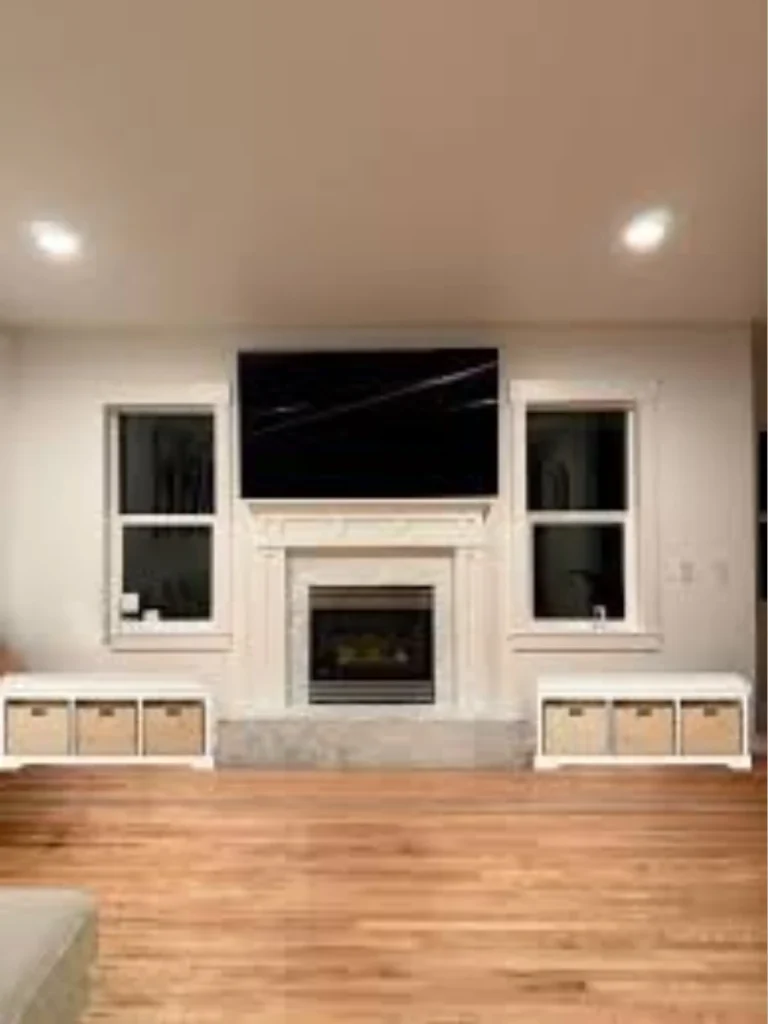
A floating stone hearth provides a clean line at the base of your fireplace while saving floor space. I love how it creates a tidy look that makes the room feel much less cluttered.
You can use a thick slab of limestone or granite to ensure the bench is strong enough to sit on. It offers a perfect spot for guests to warm up during a large holiday gathering.
I suggest keeping the space underneath open to make the fireplace feel like it is hovering. This light and airy feeling is a hallmark of good transitional design in modern homes today.
This functional feature adds a layer of comfort to the room without needing extra bulky furniture pieces. I find it is a brilliant way to maximize the utility of a small or narrow living space.
13. Double Sided Glass for Multi Room Connection
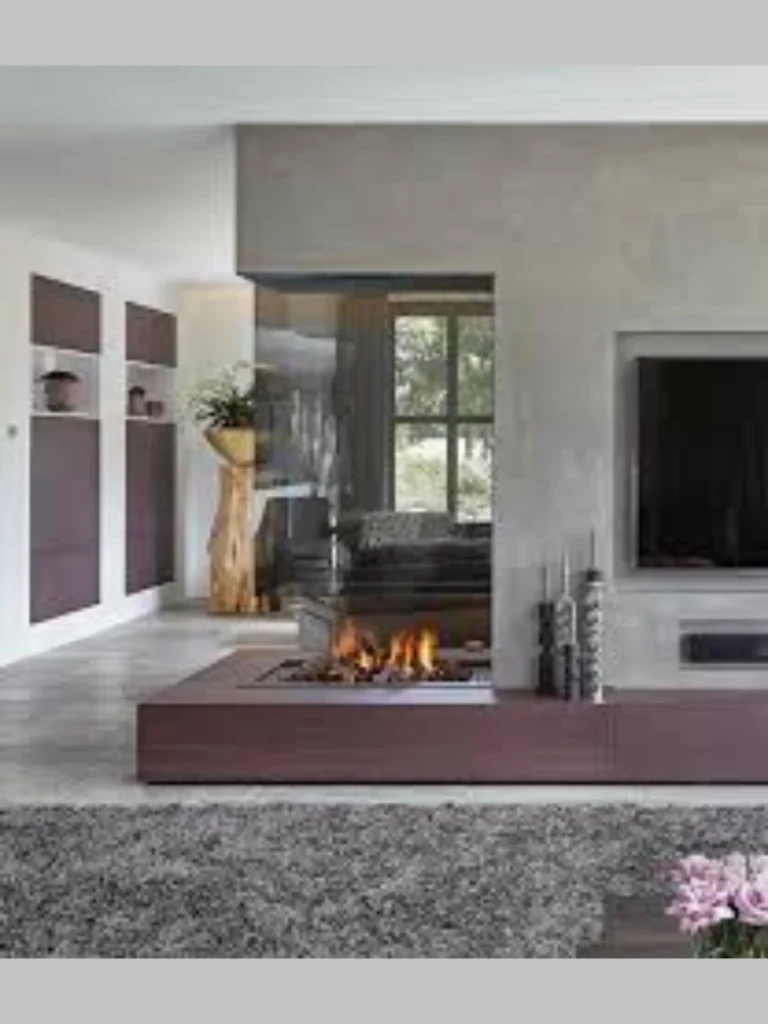
I think a double-sided fireplace is a clever way to share light and warmth between two different areas. It acts as a transparent wall that keeps your home feeling open and very connected.

SEI Furniture - Holly & Martin Frescan Color Changing Electric Fireplace - Transitional Design, Black Glass and Wood - Ideal for Living Room, Bedroom (FC1063059)
SEI Furniture - Holly & Martin Frescan Color Changing Electric Fireplace - Transitional Design, Black…
You should use a simple black frame to keep the focus on the view into the next room. This keeps the divider from feeling like a heavy barrier in the middle of your floor plan.
I find that this works best between a dining room and a living room for a seamless flow. It creates a shared focal point that both spaces can enjoy at the same time.
Maintenance is easy if you use a high-quality glass that is designed to resist soot buildup over time. I believe this is a great solution for modern open-concept homes that need a bit of structure.
14. Integrated Media Walls with Hidden Storage
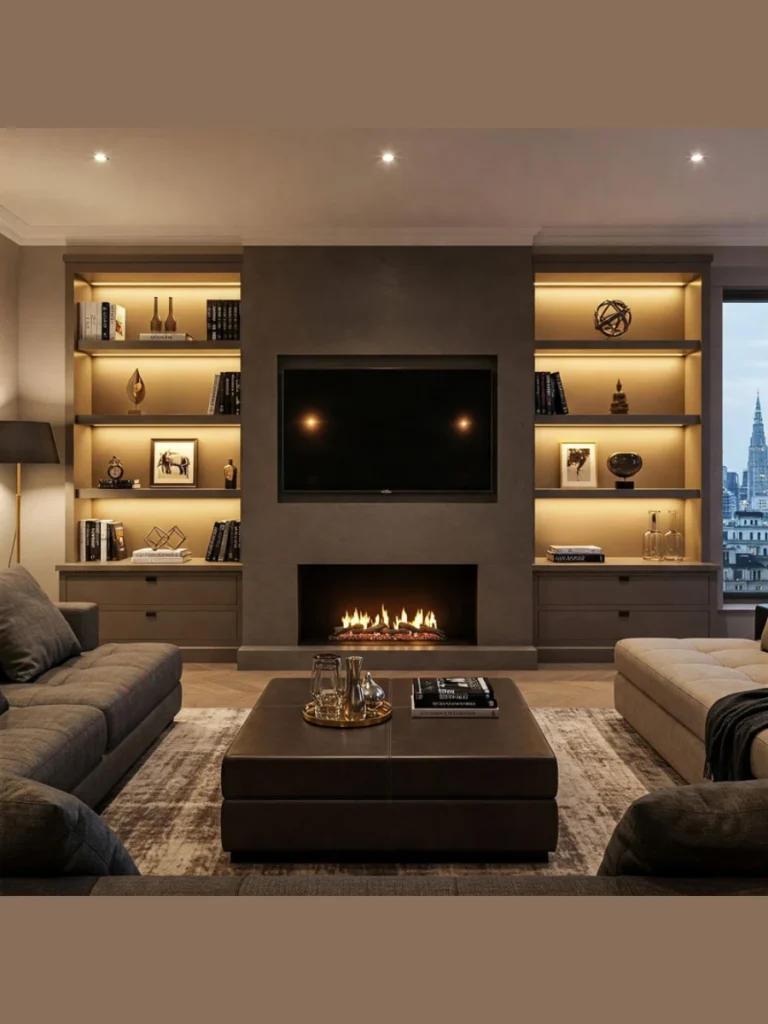
Combining your fireplace with your television creates a single and organized entertainment hub for your family. I love using recessed niches to keep the TV flush with the wall surface.
You can hide your messy wires and game consoles inside matching cabinets on the side or bottom. This ensures that the fireplace remains the star of the show rather than a pile of electronics.
I recommend using a non-combustible mantel to act as a heat shield for your expensive television screen. This safety step protects your technology while allowing for a very tight and clean layout.
This design solves the common problem of having two competing focal points in one single room. I find it makes the living area feel much more balanced and easier to arrange furniture around.
Comparing Fuel Sources for Transitional Homes
| Fuel Type | Efficiency | Installation Ease | Vibe |
| Natural Gas | Very High | Professional Required | Constant & Clean |
| Electric | High | Plug & Play | Versatile & Safe |
| Real Wood | Low | Requires Chimney | Atmospheric & Raw |
| Bio-Ethanol | Medium | No Vent Needed | Modern & Portable |
Strategic Decorating Ideas
- Place a large round mirror above the mantel to bounce light and soften the square lines.
- Use a pair of matching ceramic vases on either side to create that classic transitional symmetry.
- Layer a soft wool rug in front of the hearth to define the seating area and add warmth.
- Choose a fireplace screen with a simple geometric pattern to add a touch of modern art.
Conclusion
I believe that finding the right balance in your home starts with a fireplace that reflects your personal taste. Transitional design is so successful because it allows you to keep what you love while adding what you need.

SEI Furniture - Hebbington Tiled Marble Fireplace - Transitional Design, White Marble Top - Ideal for Living Room, Family Room (FE1080759)
SEI Furniture - Hebbington Tiled Marble Fireplace - Transitional Design, White Marble Top - Ideal…
Focusing on clean lines and neutral materials ensures that your living room remains a peaceful and stylish sanctuary. I find that the most successful projects are those that prioritize quality over passing design trends.
You should feel empowered to mix textures and styles until the space feels exactly right for your daily life. I am certain that one of these fifteen ideas will help you create a beautiful focal point.
I hope you enjoyed this guide and feel ready to start your next home improvement project with confidence. Your perfect transitional fireplace is closer than you think if you follow these simple and effective steps.
FAQs
A transitional fireplace blends the traditional elements of a classic hearth with the clean and simple lines of modern design. I find it uses neutral colors and a mix of textures to create a look that is both timeless and fresh.
Yes, you can often achieve this by painting old brick a neutral color or replacing a heavy mantel with a simpler one. I think small changes like updated hardware and a new screen go a long way in refreshing the style.
Marble is an excellent choice because it is a natural material that has been used for centuries but looks very modern in a matte finish. I recommend a honed finish to keep the look soft and approachable for today.
You can certainly do this if you use a mantel to deflect the heat away from the bottom of the screen. I suggest recessing the TV into the wall to keep the profile slim and intentional within your design.
I suggest sticking to a palette of soft whites, greys, and beiges to keep the space feeling open and calm. These colors allow the texture of your stone or wood to be the main attraction in the room.
Related Posts
- 15 Best Fireplaces Pictures Ideas
- Top 10 Fireplaces in Bedrooms Ideas
- 11 Best Fireplace Surround and Mantel Ideas
- Top 12 Fireplace Frame Ideas
- 13 Best Fireplace with Wood Ideas
- Top 14 Fireplace Trending Ideas