
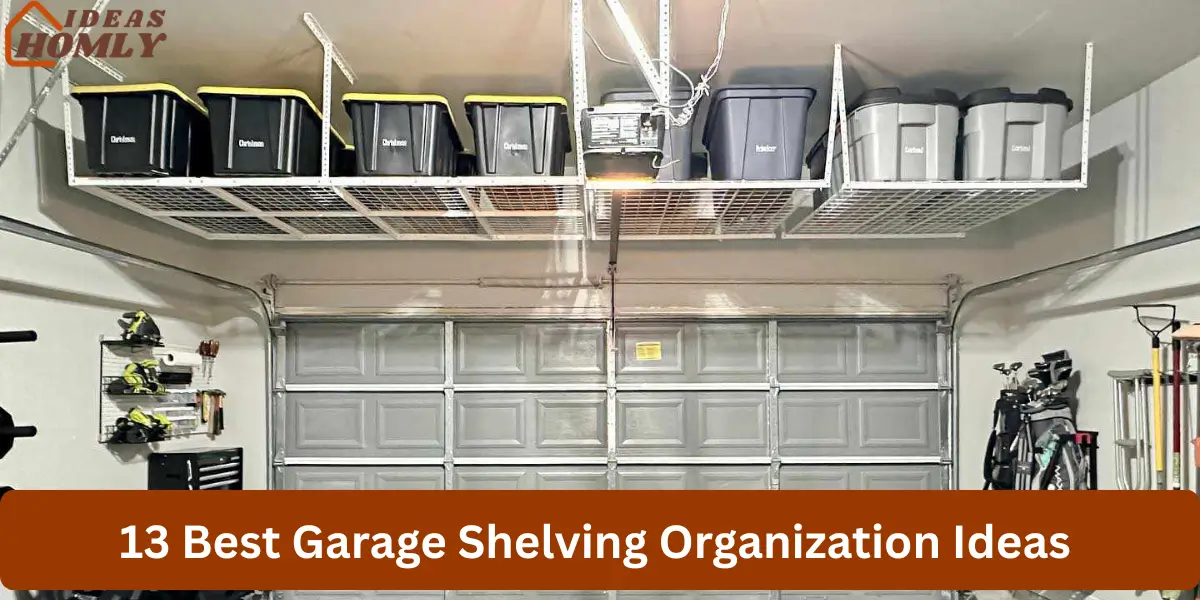

I’ve noticed most garages don’t actually lack space, they lack structure. When everything ends up in random corners, even a big garage starts feeling cramped.
That’s where smart shelving makes a real difference. Instead of piling items, you create a system that works for you.
In this guide, I’ll walk you through practical ways to improve your setup using garage shelving organization ideas that actually solve everyday problems, not just look good.
Smart Ways to Organize Garage Shelving
I always start by looking at how the garage is actually being used instead of jumping straight into storage solutions. Every garage has different needs, so a one-size setup never works well.
When you organize shelving with purpose, you stop wasting time searching for tools or shifting boxes around. A well-planned layout keeps everything visible, accessible, and easy to maintain.
The ideas below are practical, tested, and designed to help you create a system that feels natural to use every day.
1. Wall-Mounted Adjustable Shelves
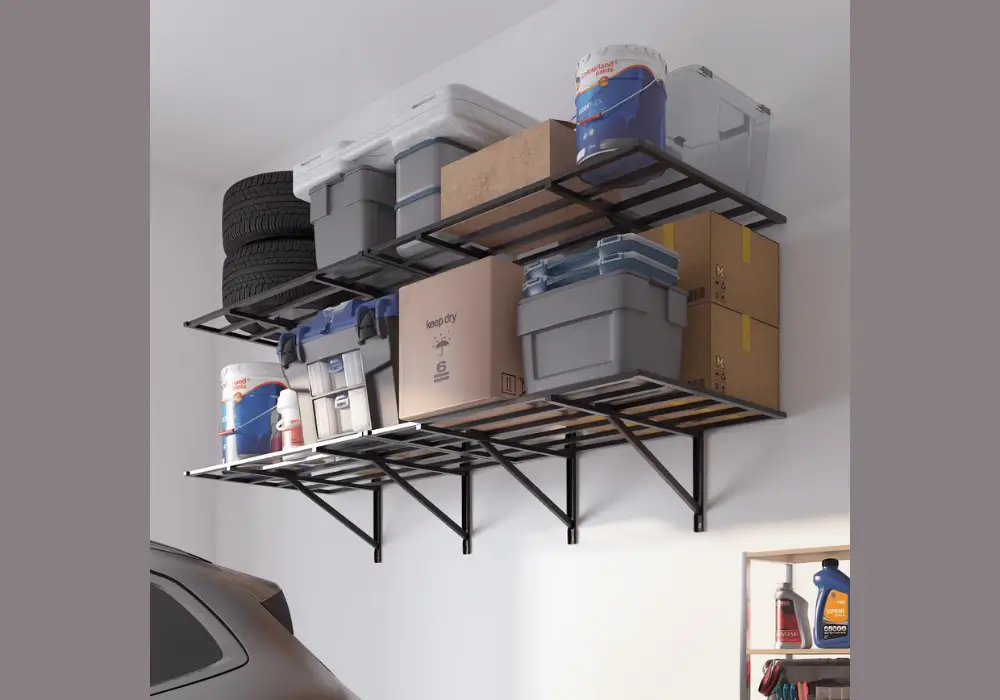
I prefer wall-mounted adjustable shelves when I need flexibility in storage. They allow me to shift shelf heights depending on what I store, which saves me from rebuilding the setup later. This is especially useful when I switch between storing small tools and larger boxes.
I install vertical tracks on the wall and attach brackets that can be moved anytime. This system makes it easy to adapt without damaging the wall again. It also keeps everything aligned and organized.
By lifting storage off the floor, I create more walking space. The garage immediately feels cleaner, and I can move around without obstacles getting in the way.
2. Heavy-Duty Industrial Shelving Units
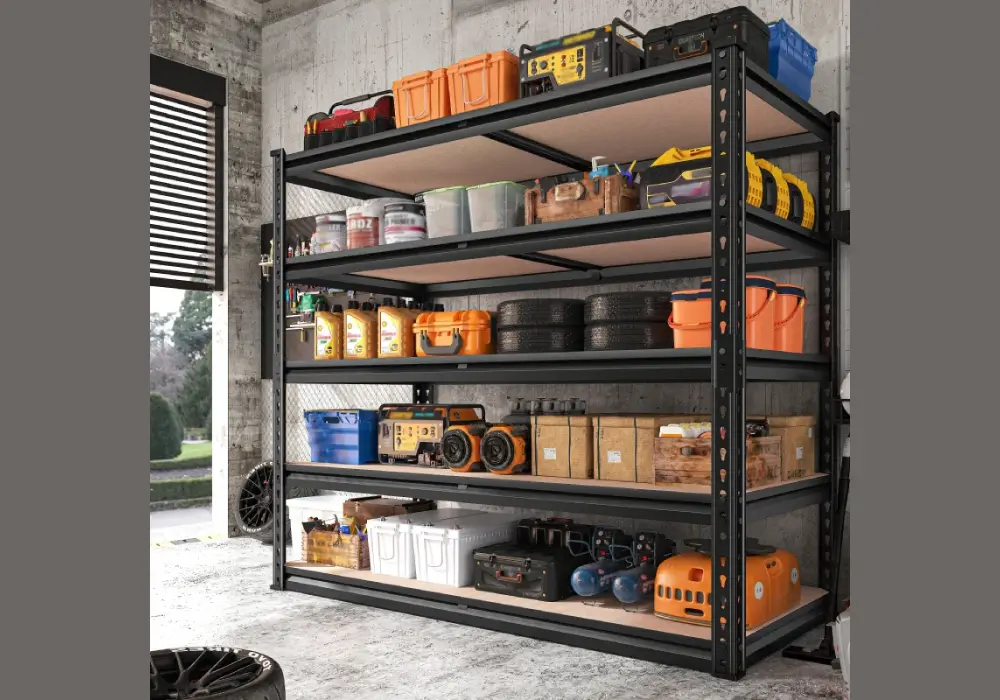
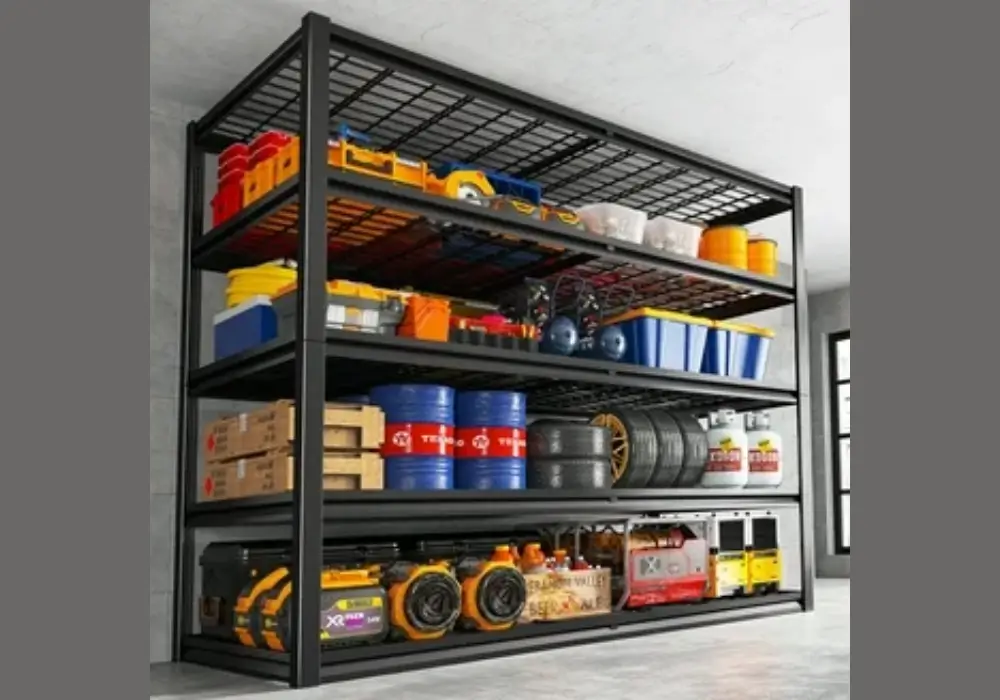
When I deal with heavy equipment or bulky storage bins, I always go for industrial shelving units. These racks provide strong support and don’t bend under pressure, which makes them reliable for long-term use.
I usually choose steel frames with reinforced shelves because they handle weight much better than basic options. This setup works perfectly for power tools, paint buckets, and large containers.
I place these shelves along one wall to keep heavy items in a dedicated zone. This approach keeps the rest of the garage lighter and easier to manage.
3. Ceiling-Mounted Storage Shelves
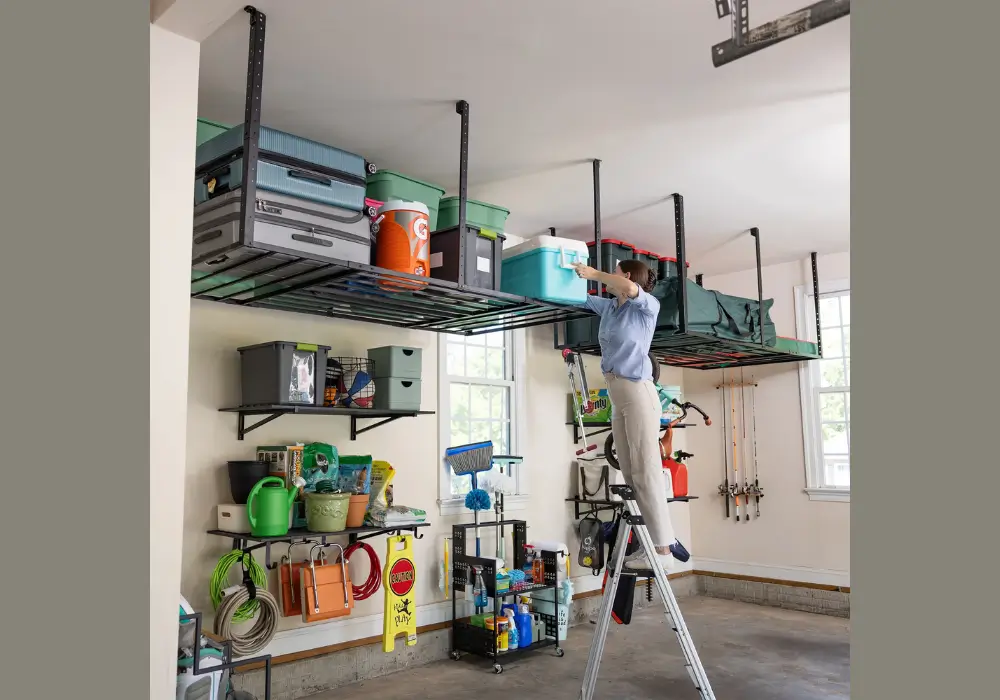
I like using ceiling-mounted shelves for items I don’t need every day. It helps me take advantage of unused overhead space instead of cluttering the floor or walls.
I install strong brackets and make sure the weight is evenly distributed. Safety matters here, so I never overload these shelves or use weak fittings.
This setup works best for seasonal items like decorations or camping gear. It keeps them out of sight but still within reach when needed.
4. Corner Shelving Units
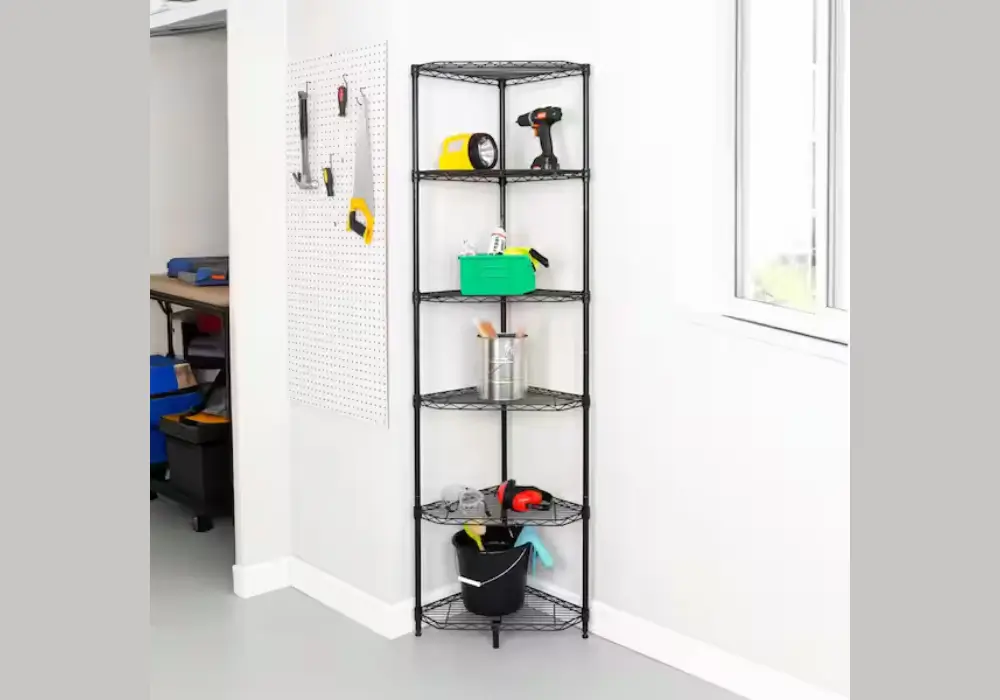
I always notice that garage corners often go unused, which wastes valuable space. Installing corner shelving helps me turn those awkward areas into functional storage spots.
I use L-shaped or triangular shelves that fit neatly into corners. This allows me to store smaller items without interfering with the main storage layout.
By organizing corners properly, I free up wall space for larger shelving units. It also makes the garage layout feel more balanced and complete.
5. Floating Shelves for Minimal Look
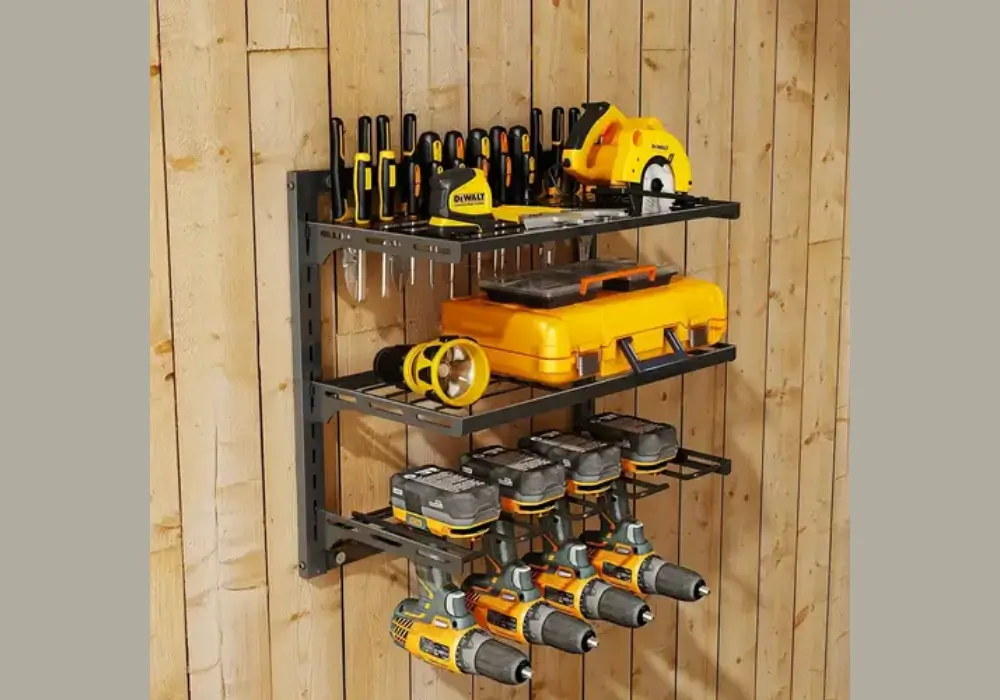
When I want a clean and simple look, I go with floating shelves. They keep the garage from feeling bulky and help maintain a neat visual appearance.
I install them for lighter items like small toolboxes, sprays, or accessories. Since they don’t have visible supports, they make the wall look less crowded.
This setup works well when I want both function and style. It keeps essentials within reach while maintaining an uncluttered environment.
6. Plastic Bin Shelving System
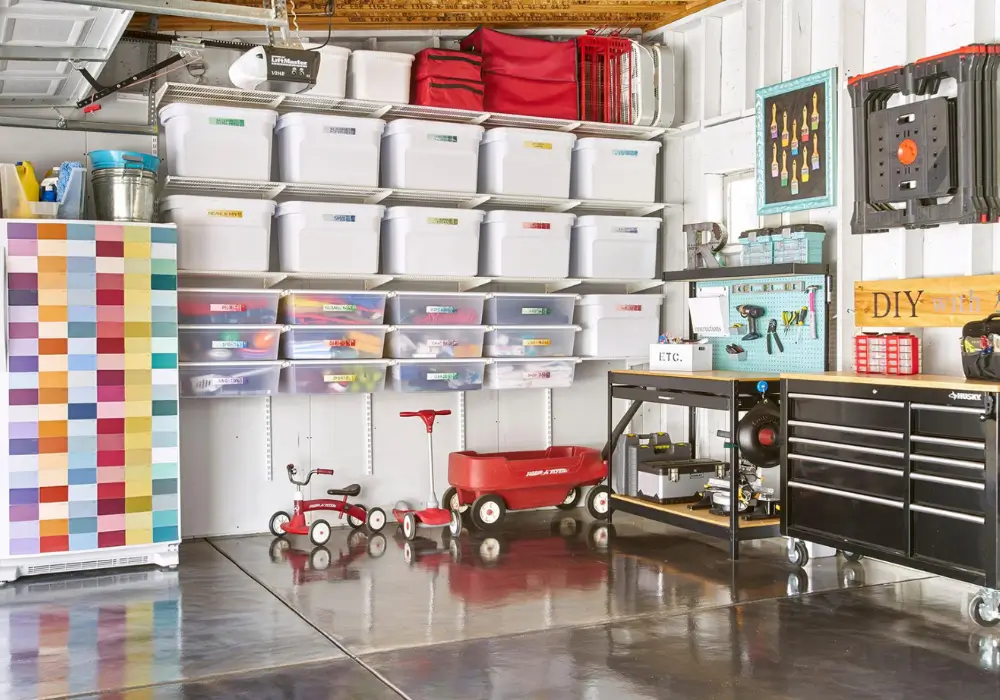
I rely on plastic bin systems when I need to organize smaller items properly. Loose screws, wires, and accessories can easily get lost without proper categorization.
I use labeled or transparent bins so I can quickly identify what’s inside. This saves time and keeps everything in order without constant searching.
Stacking these bins on shelves creates a structured system. It keeps the garage tidy and ensures every item has a designated place.
7. Rolling Shelving Units
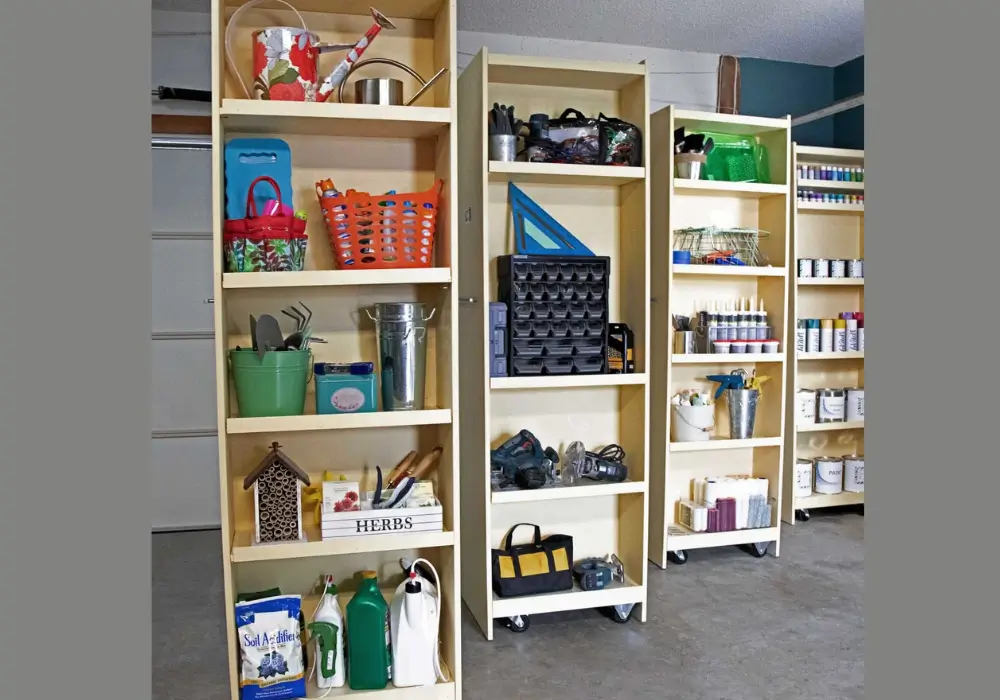
When I need flexibility, I choose rolling shelving units. They allow me to move storage around depending on what I’m working on.
I use these shelves in garages that double as workspaces. I can bring tools closer when needed and move them away to clear space afterward.
This setup adds convenience and improves workflow. It makes the garage feel more dynamic instead of fixed and restrictive.
8. Wooden DIY Shelving
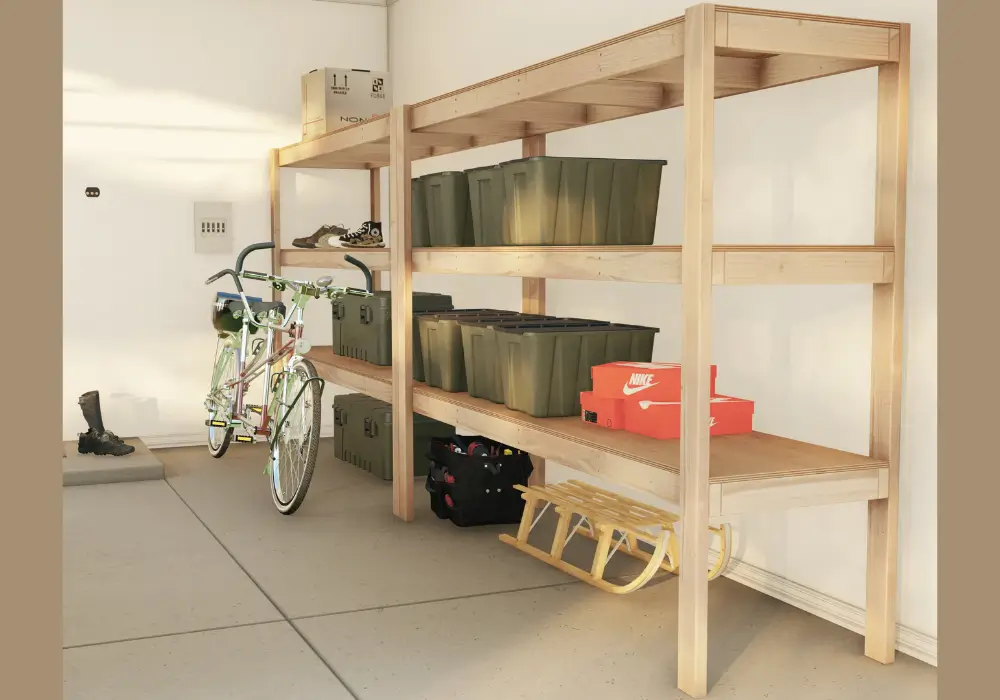
I often build wooden shelves when I want a budget-friendly and customized solution. It gives me full control over size, height, and layout.
I use strong, treated wood to ensure durability and long-term use. Proper support and spacing make a big difference in strength.
This option works well when I need a tailored setup. It also helps me save money while creating something that fits perfectly in my space.
9. Pegboard with Shelf Combo
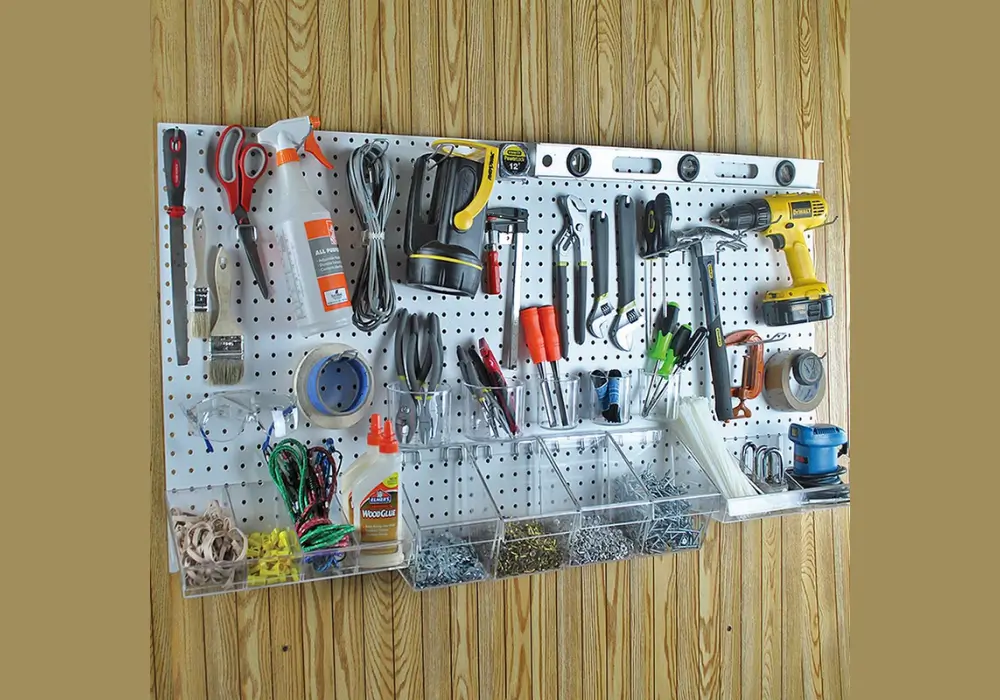
I combine pegboards with shelves when I want better tool organization. Hanging tools on a pegboard keeps them visible and easy to access.
I install shelves below or above the pegboard to store larger items. This combination creates a balanced system for both small and big tools.
It improves efficiency because I don’t waste time searching. Everything stays organized and within reach, which makes daily tasks smoother.
10. Modular Shelving Systems
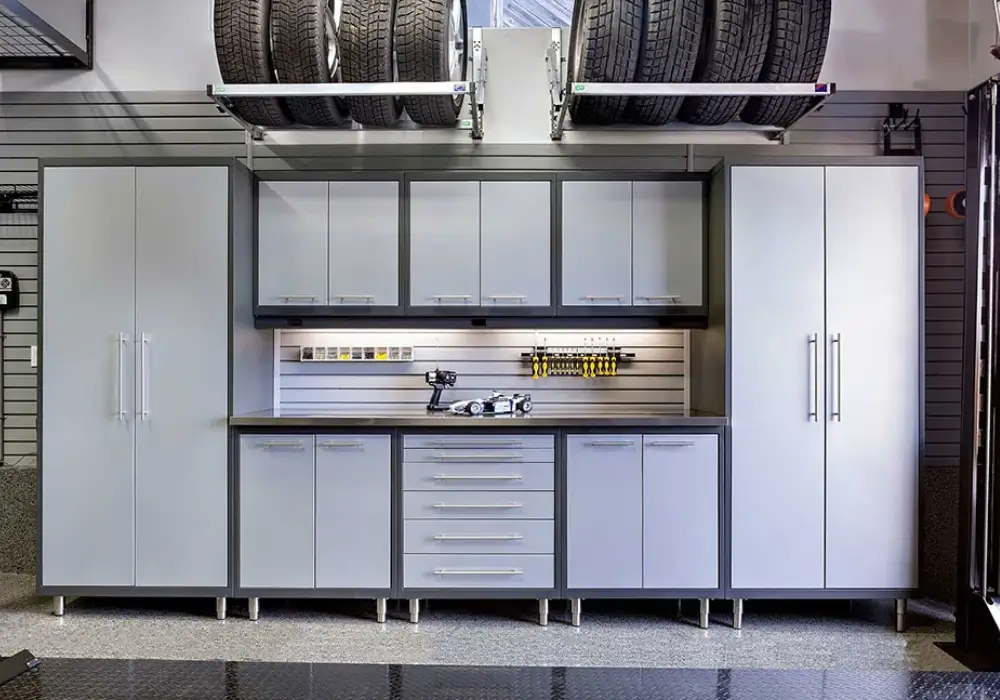
I prefer modular shelving when I expect my storage needs to change over time. These systems allow me to expand or rearrange without starting from scratch.
I can add new sections or adjust the layout based on how my garage evolves. This makes it a long-term solution rather than a temporary fix.
It keeps the setup flexible and future-ready. I don’t have to worry about outgrowing my storage because I can adapt it anytime.
11. Slim Vertical Shelves
I use slim vertical shelves when I need to make use of narrow or awkward spaces. These shelves fit easily between walls, doors, or larger storage units without taking up much room.
I focus on height instead of width, which helps me store more items without crowding the garage. This approach works especially well for items like cleaning supplies or small containers.
By using vertical space efficiently, I keep the floor area open. It makes the garage feel less cramped and much easier to move around.
12. Open Wire Shelving
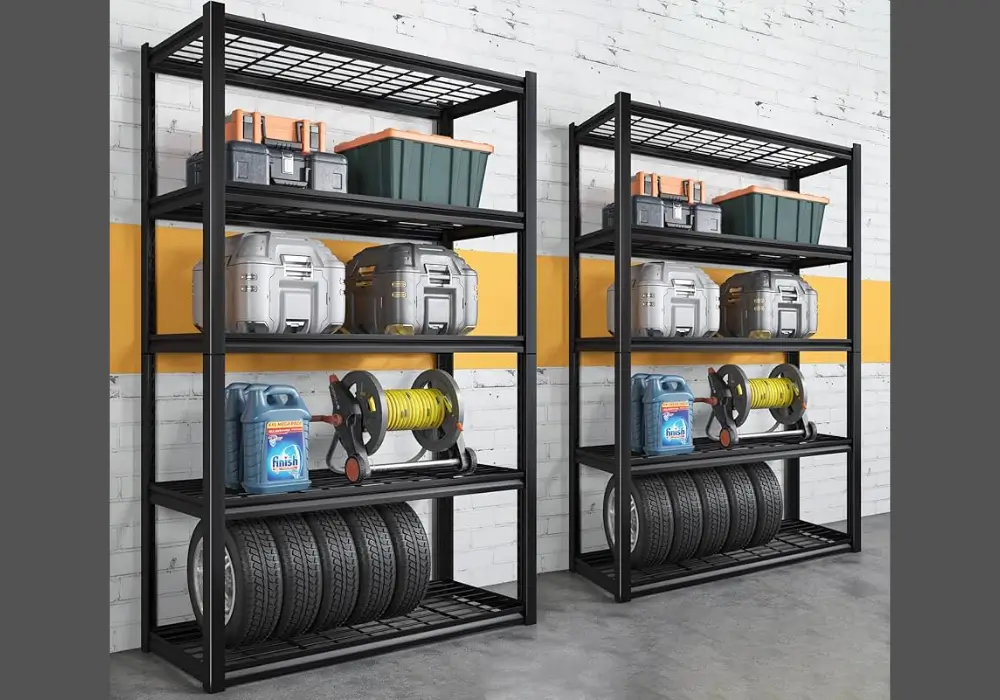
I prefer open wire shelving in garages where airflow matters. These shelves prevent dust buildup and allow better ventilation, especially in humid conditions.
I use them for items that don’t need full coverage, like tools, bins, or boxes. The open design also makes it easier to see everything at a glance.
This setup keeps things simple and practical. It reduces maintenance while still providing strong and reliable storage.
13. Closed Cabinet Shelving Combo
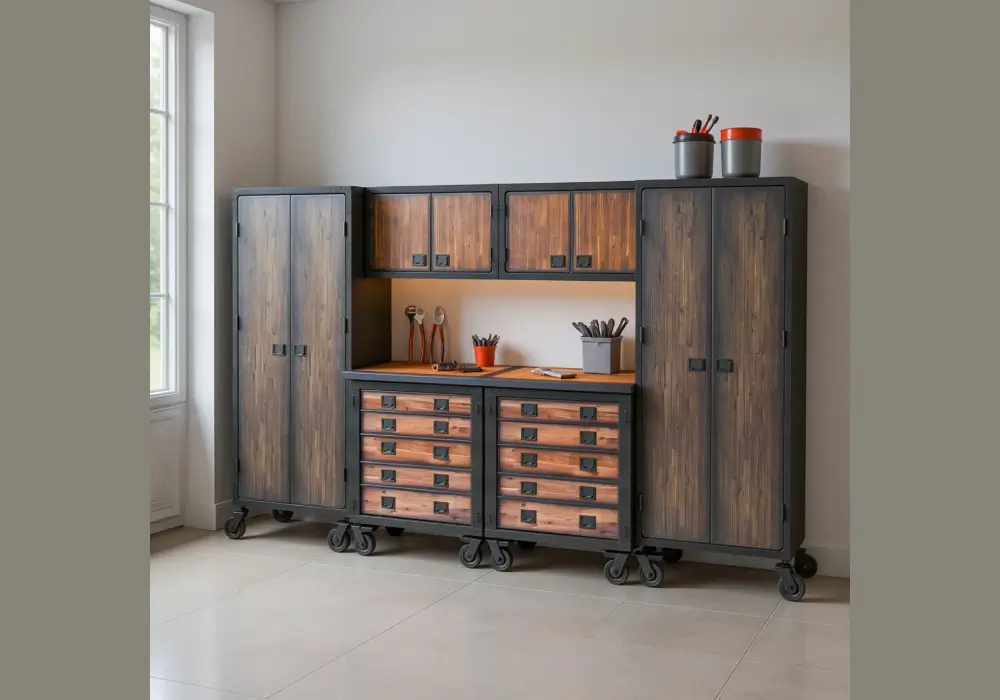
I choose a combination of cabinets and open shelves when I want both function and a clean look. Cabinets help me hide clutter, while shelves keep frequently used items accessible.
I store less attractive or rarely used items inside cabinets to maintain a tidy appearance. At the same time, I use open shelves for tools I need often.
This balance makes the garage look organized without sacrificing usability. It creates a system that feels both practical and visually neat.
Garage Shelving Tips and Storage Guide
I’ve learned that even the best shelving ideas won’t work unless you organize them properly. The way you arrange items matters just as much as the shelves themselves.
When I set up a garage, I focus on creating a system that is easy to maintain. Simple habits like grouping items and keeping things accessible make a big difference over time.
Choose Shelving Based on Weight
I always check how much weight each shelf can handle before placing anything on it. Heavy tools and equipment need strong, reinforced shelving to stay safe.
If I ignore weight limits, shelves can bend or even collapse. That’s why I keep heavier items on lower shelves for better stability and safety.
Use Labels for Better Organization
I label bins and boxes so I don’t waste time searching later. Clear labeling helps me quickly find what I need without opening every container.
This habit keeps everything structured and prevents clutter from building up again.
Keep Frequently Used Items Accessible
I always place commonly used tools at eye level or within easy reach. This makes daily tasks faster and more efficient.
Less-used items go on higher or lower shelves so they don’t get in the way.
Use Vertical Space Effectively
I take advantage of wall height instead of spreading everything across the floor. Vertical storage helps me fit more items without overcrowding the space.
This approach also keeps the garage looking clean and organized.
Avoid Overloading Shelves
I never overload shelves, even if they seem strong. Too much weight can damage the structure over time.
By distributing weight evenly, I make sure the shelving lasts longer and stays safe to use.
Quick Comparison Table
| Shelving Type | Best For | Main Benefit |
|---|---|---|
| Wall-Mounted | Flexible storage | Saves floor space |
| Industrial Shelving | Heavy items | High durability |
| Ceiling Storage | Seasonal items | Uses overhead space |
| Modular Shelving | Growing needs | Easy to adjust |
| Cabinet Combo | Hidden storage | Clean appearance |
Conclusion
I believe a well-organized garage isn’t about adding more storage, it’s about using the right system that fits your routine. When I started focusing on smarter shelving instead of random storage, everything became easier to manage and maintain.
The key is to choose solutions that match your space, not just follow trends. Whether you prefer simple shelves or flexible systems, consistency matters more than complexity.
Once everything has a place, your garage stops feeling like a dumping area and starts working like a functional space you can actually rely on.
FAQs
I find wall-mounted and vertical shelves work best in small garages. They save floor space and make the area feel more open. You can store more items without overcrowding the room.
It depends on the material and design of the shelves. Heavy-duty steel shelves can hold a lot more weight compared to wooden or plastic ones. I always check the weight rating before using them.
Yes, they can be very reliable if you use strong wood and proper support. I make sure to secure them well and avoid overloading. A well-built DIY shelf can last for years.
I follow a simple system of labeling, grouping items, and cleaning regularly. When everything has a fixed place, it becomes easier to maintain order without extra effort.