
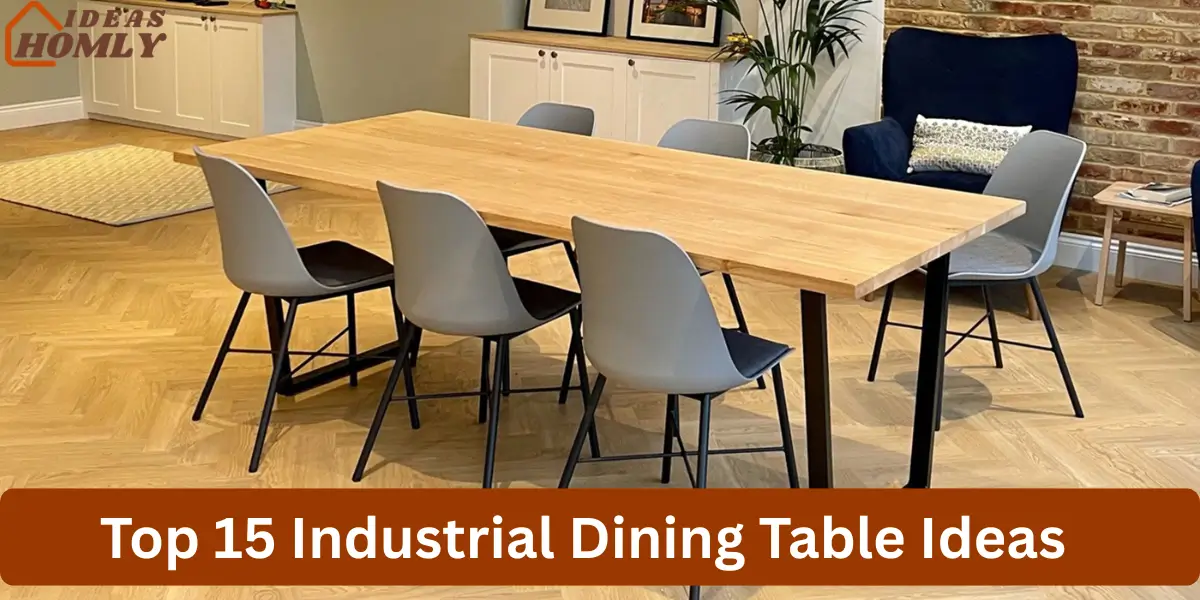

Industrial dining table ideas have a way of turning an ordinary room into a bold, design-driven space. I’ve seen how the right mix of raw wood, steel frames, and rugged finishes instantly adds character without feeling overdone.
This style isn’t just about exposed metal or dark tones; it’s about balance, durability, and honest materials. When chosen carefully, an industrial table becomes more than furniture it becomes the anchor of the room.
In this guide, I’ll walk you through designs that combine strength, simplicity, and modern urban appeal.
Why Industrial Dining Tables Continue to Dominate Modern Interiors
Industrial dining tables remain popular because they combine strength with design clarity. I often recommend this style to homeowners who want furniture that feels grounded and authentic. Raw materials like solid wood, steel, and concrete create visual depth without relying on decoration.
This design approach values structure over ornament. Instead of hiding bolts or welds, industrial pieces celebrate them. That honesty gives the dining room personality and confidence.
When you choose industrial furniture, you invest in durability and timeless character. It adapts easily to loft apartments, modern homes, and even transitional interiors.
1. Reclaimed Wood and Black Steel Table
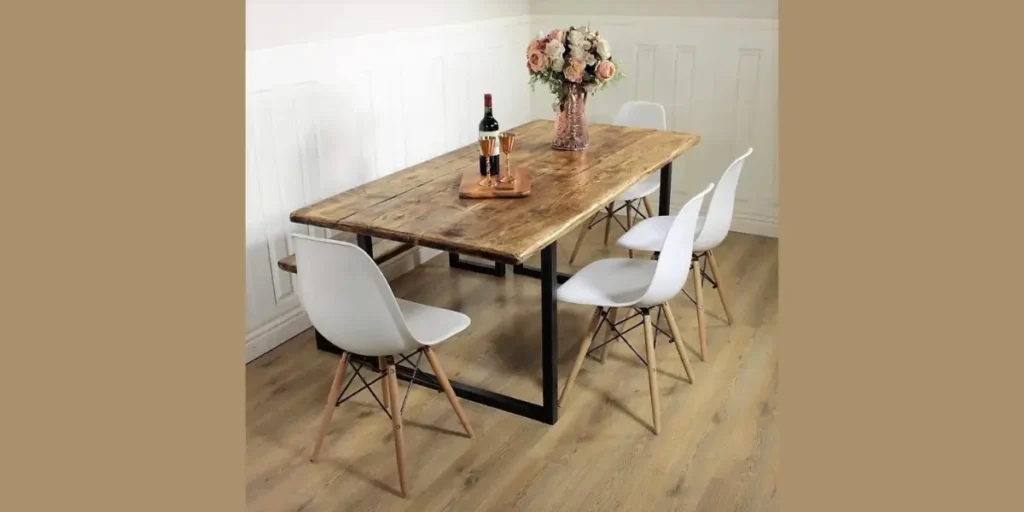
A reclaimed wood and black steel table defines classic industrial style. I appreciate how the aged wood surface carries natural marks, grain variations, and subtle imperfections. These details add warmth while the steel frame introduces strength and contrast.
The matte black base grounds the design and prevents it from feeling overly rustic. I often pair this table with leather or metal chairs to enhance the urban atmosphere. Proper lighting above the table highlights the texture beautifully.
If you want a dining table that feels authentic and durable, this combination delivers character without sacrificing modern appeal.
2. Concrete Top Industrial Dining Table
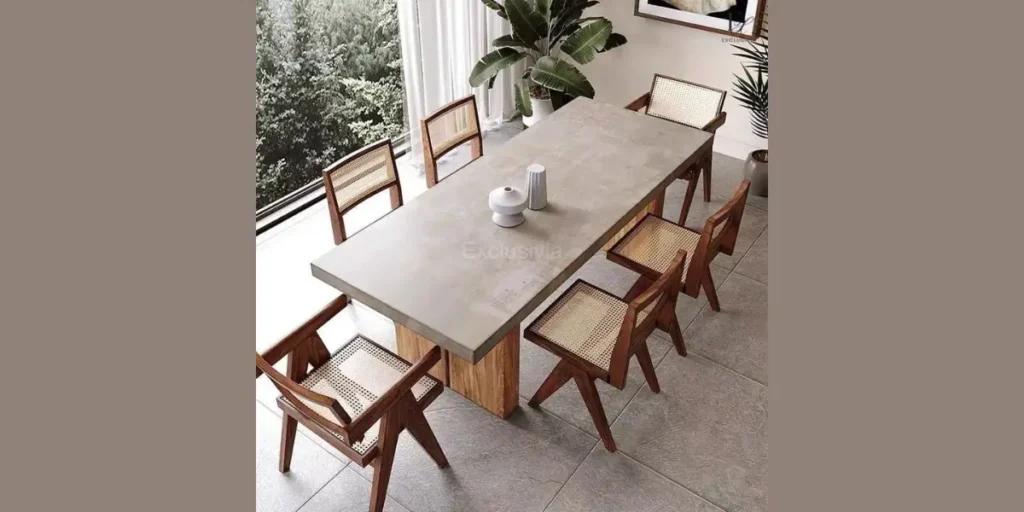
A concrete top instantly makes a bold statement in any dining space. I like using this design when clients want something architectural and striking. The smooth, cool surface contrasts effectively with warmer materials like wood or leather.
Manufacturers reinforce concrete with strong internal support, ensuring long-term durability. I recommend sealing the surface properly to prevent stains and maintain its clean appearance. The weight of the material adds visual authority to the room.
This table works exceptionally well in minimalist or loft-style homes where raw textures define the overall aesthetic.
3. Pipe-Leg Industrial Dining Table
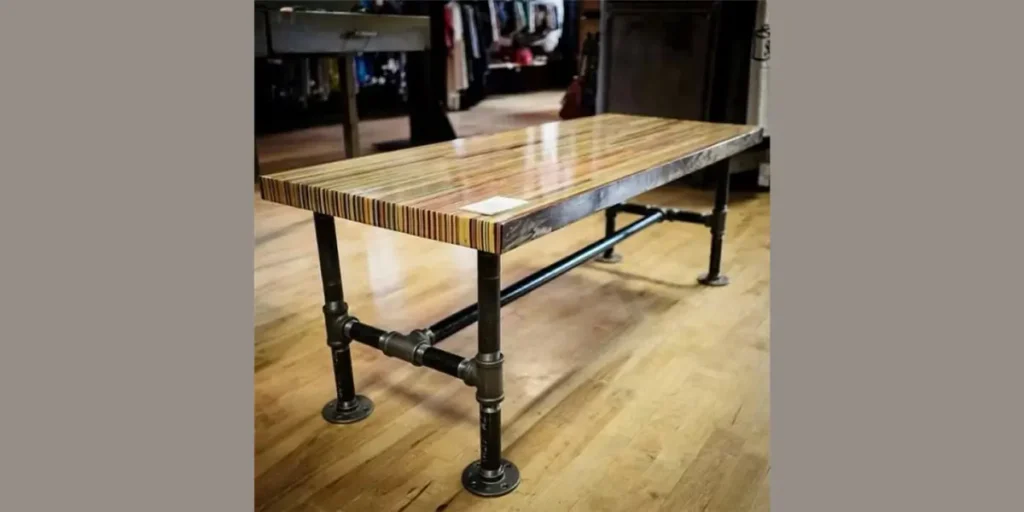
The pipe-leg dining table captures the raw energy of factory-inspired design. I often suggest this option for clients who appreciate visible structure and mechanical detailing. The exposed metal pipes create a strong industrial identity.
A thick wooden top balances the rugged base and keeps the table inviting. I usually recommend darker stains to enhance contrast and highlight the metal framework. The design feels sturdy and purposeful.
This table suits urban interiors where authenticity matters. It feels handcrafted, practical, and visually bold without overwhelming the room.
4. Live Edge Wood Industrial Table
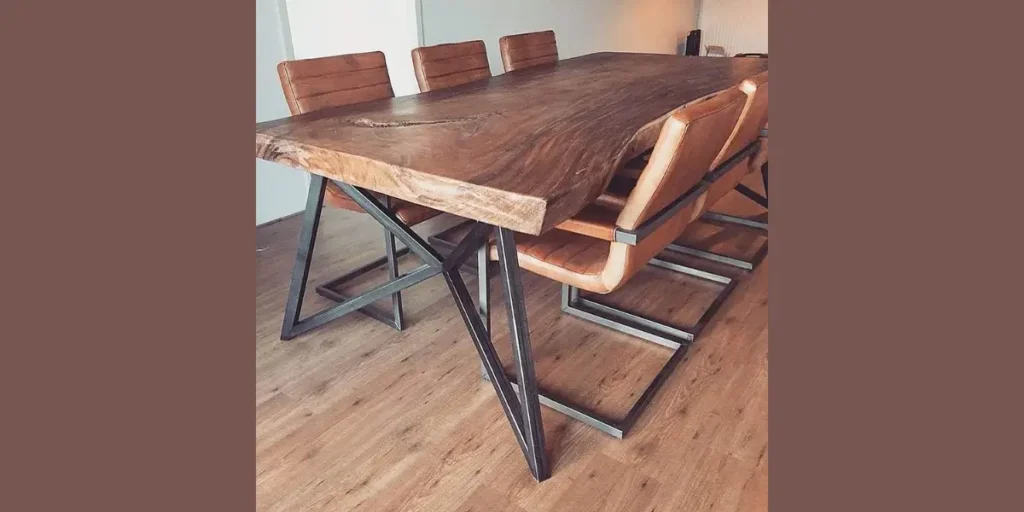
A live edge industrial table brings natural form into a structured environment. I admire how the preserved edges of the wood slab create organic movement. When paired with steel legs, the table achieves perfect balance between nature and industry.
Each slab carries unique grain patterns, making every piece one of a kind. I often leave the finish slightly matte to emphasize texture. Strong metal bases provide the necessary structural support.
This design becomes a focal point instantly. It works beautifully in open-plan spaces where the dining area needs presence and personality.
5. Rustic Oak and Iron Frame Table
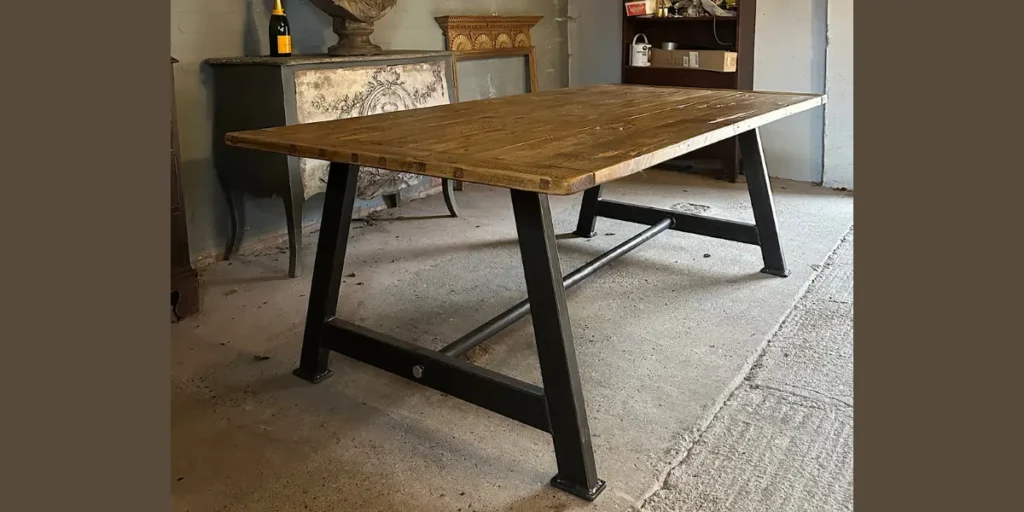
Rustic oak combined with an iron frame creates warmth with structure. I find that oak’s visible grain softens the sharpness of industrial metal. The iron base strengthens the table’s silhouette and reinforces durability.
This design performs well in both modern and transitional homes. I often suggest pairing it with upholstered chairs to introduce comfort. Neutral rugs beneath the table can also balance the heavier materials.
If you want industrial style without excessive darkness, this option offers a welcoming yet strong dining solution.
6. Industrial Trestle Base Dining Table
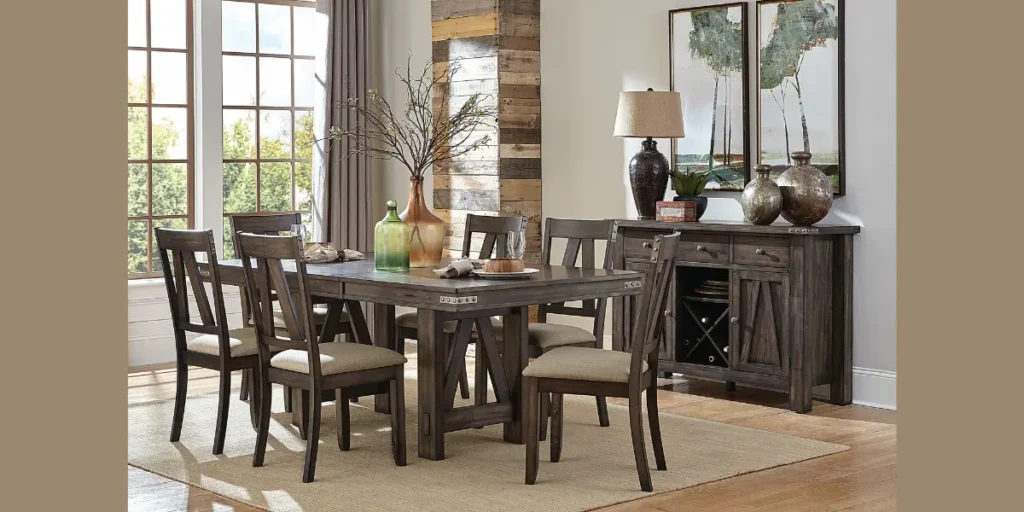
The trestle base dining table introduces bold architectural lines. I appreciate how the wide support beams distribute weight evenly while creating visual stability. This design suits larger dining rooms where scale matters.
A thick wood top enhances durability and complements the strong base structure. I recommend keeping finishes natural to highlight material authenticity. Pendant lighting above the table further emphasizes its linear form.
This table works perfectly for families who host often. It combines structural strength with spacious seating capacity.
7. Black Metal Frame with Solid Wood Top
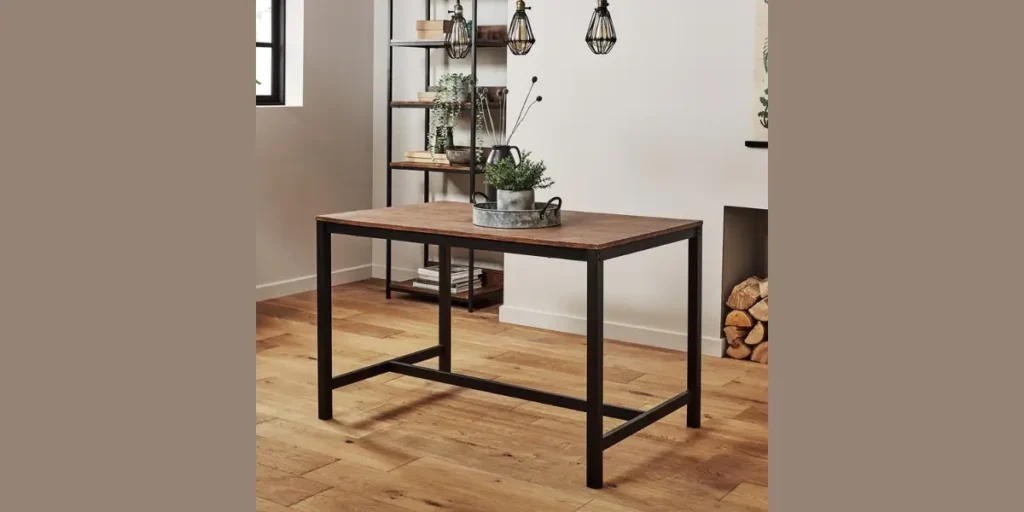
A black metal frame paired with a solid wood top offers a clean and modern industrial look. I often use this design in homes that prefer minimal detailing. The straight lines create clarity and structure.
The wooden surface adds warmth and prevents the space from feeling too cold. I usually choose medium-toned wood to maintain balance between light and dark elements. The result feels sharp yet inviting.
This table adapts easily to different chair styles, making it versatile for evolving interiors.
8. Industrial Dining Table with Built-In Storage
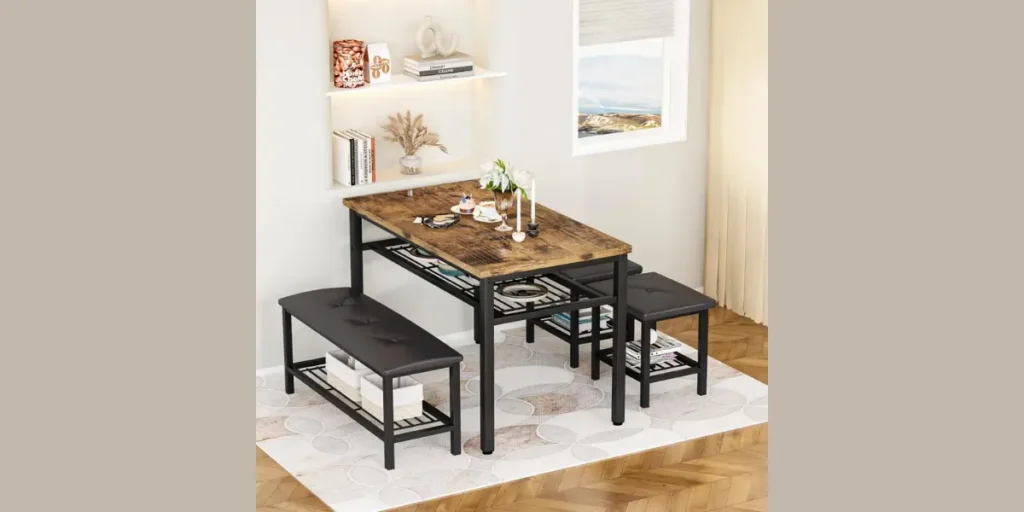
An industrial table with built-in storage combines practicality with design. I recommend this option for compact dining areas where every inch matters. Shelves or drawers beneath the tabletop add valuable organization space.
The metal framework keeps the structure strong while supporting additional compartments. I prefer designs that maintain open shelving to preserve the industrial aesthetic. This approach keeps the table functional without looking bulky.
For homeowners who need efficiency without compromising style, this table offers smart design and rugged charm in one piece.
9. Dark Walnut Industrial Dining Table
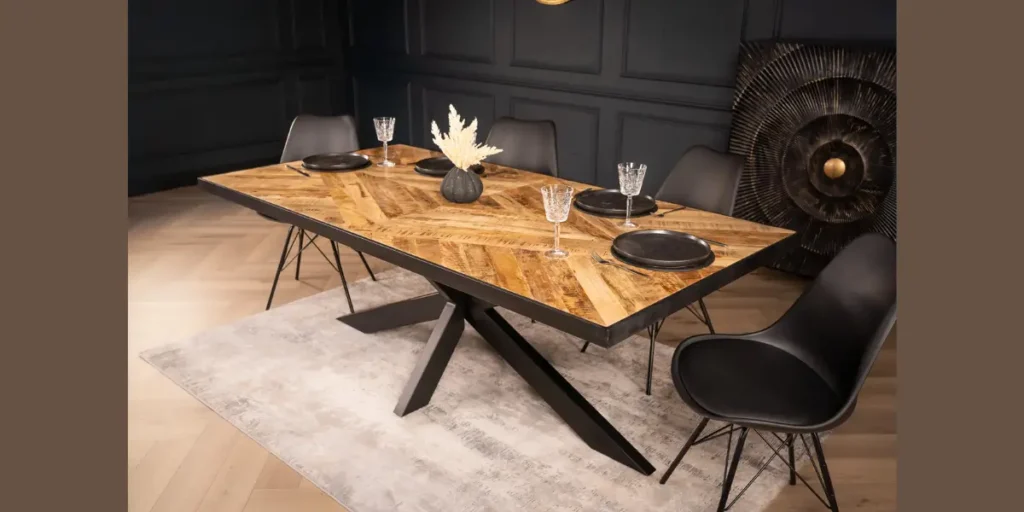
A dark walnut industrial dining table adds depth and refinement to raw design. I often suggest this option when clients want industrial strength with a slightly elevated feel. The deep walnut tone introduces richness without losing the rugged character.
The contrast between dark wood and matte black steel creates a dramatic yet controlled look. I recommend balancing it with lighter walls or textured rugs to prevent the room from feeling heavy. Proper lighting enhances the natural grain beautifully.
This table suits urban homes that aim for sophistication while keeping an industrial edge intact.
10. Square Industrial Dining Table
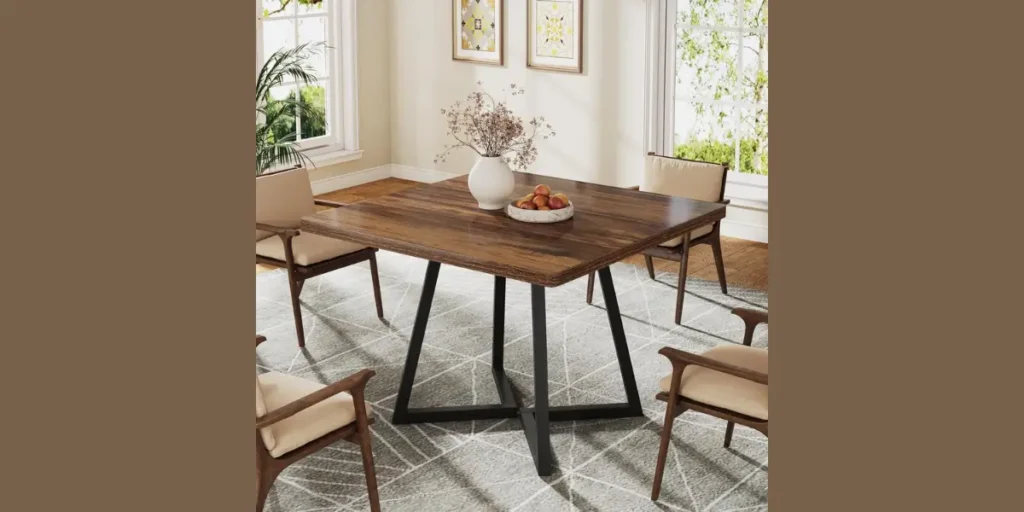
A square industrial dining table works exceptionally well in compact or symmetrical spaces. I like using this design in apartments where layout efficiency matters. The equal sides create visual balance and encourage easy conversation.
Thick wooden tops combined with steel legs maintain industrial authenticity. I usually suggest keeping the base simple to avoid crowding the smaller footprint. This keeps the room feeling open and structured.
If you want a practical table that feels intentional and bold, a square design delivers both comfort and modern edge.
11. Extendable Industrial Dining Table
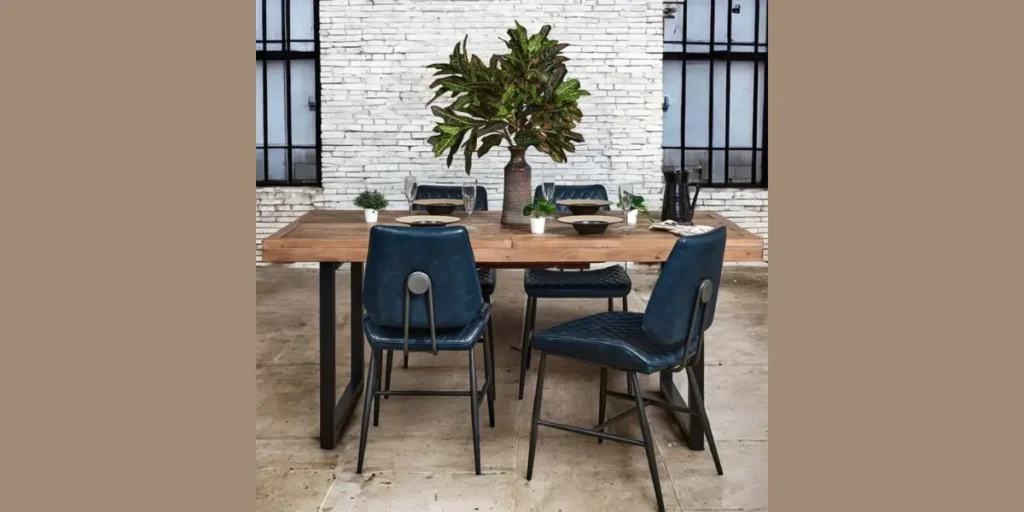
An extendable industrial dining table offers flexibility without compromising design. I often recommend this style for families who entertain frequently but prefer a compact everyday setup. Hidden extension leaves provide additional seating when needed.
Strong metal hardware ensures smooth operation and long-term durability. I prefer designs that maintain consistent wood grain across extension panels for a seamless look. When closed, the table retains its clean industrial profile.
This option combines function and form perfectly, allowing your dining space to adapt effortlessly.
12. Industrial Glass and Metal Dining Table
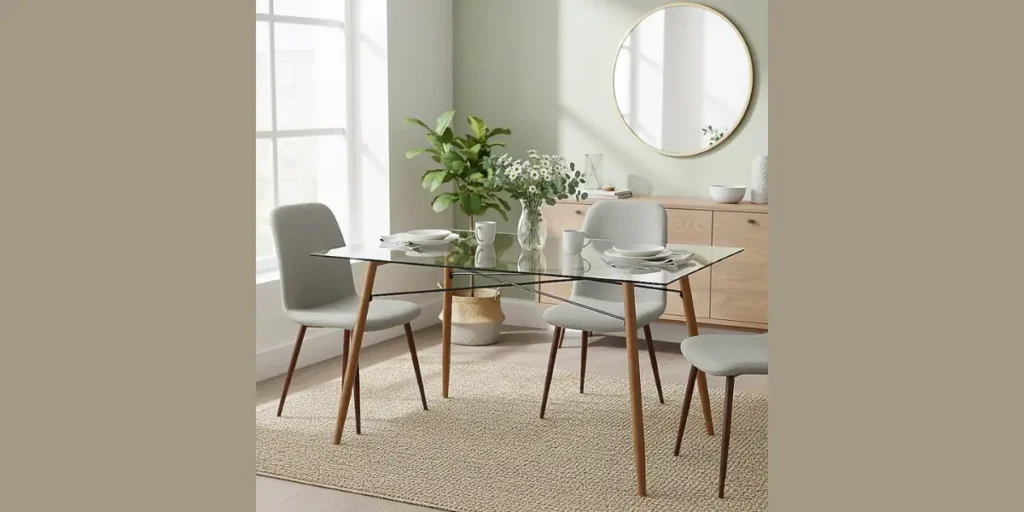
A glass-top industrial table softens the visual weight of heavy materials. I use this design when a room needs openness but still wants metal structure. The transparent surface allows the base to remain the focal point.
Steel or iron frames beneath the glass create architectural interest. I recommend pairing it with upholstered or leather chairs to add warmth. The glass surface also reflects light, making smaller spaces feel brighter.
This table works well in modern urban interiors where industrial structure meets contemporary lightness.
13. Industrial X-Base Dining Table
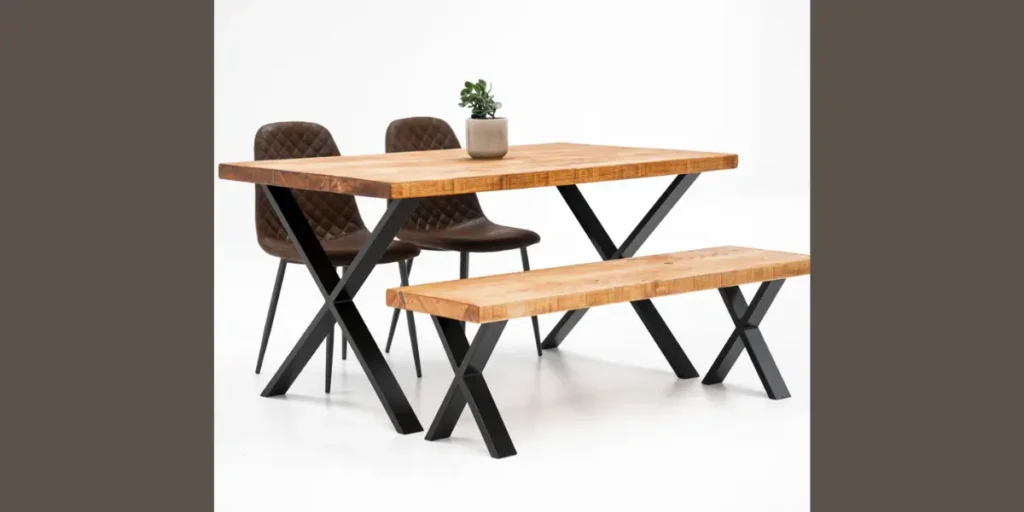
The X-base industrial dining table introduces dynamic geometry. I appreciate how the cross-frame structure provides both stability and visual drama. The design immediately captures attention without unnecessary decoration.
A thick wood slab paired with an X-shaped steel base creates strong contrast. I usually recommend keeping finishes natural to highlight authenticity. The base design also allows ample legroom.
This table fits perfectly in loft-style dining areas where bold architectural elements define the atmosphere.
14. Minimalist Industrial Slab Table
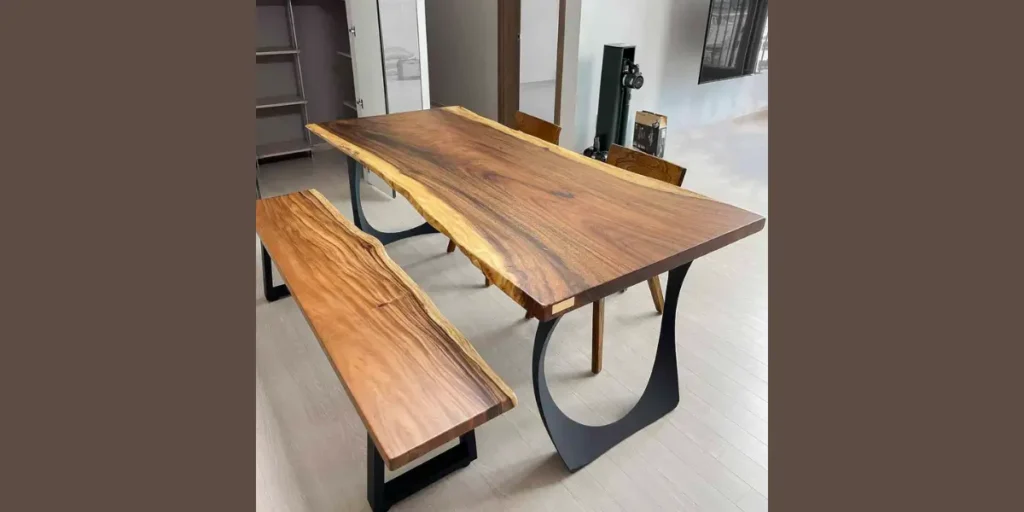
A minimalist industrial slab table focuses entirely on material and proportion. I often suggest this design to clients who prefer simplicity with impact. The thick wood slab becomes the centerpiece without elaborate detailing.
Slim metal legs provide necessary support while keeping the look clean. I recommend straight lines and neutral finishes to maintain balance. The absence of ornament strengthens its modern appeal.
This table proves that industrial design does not require complexity. Strong materials and clear structure create lasting presence.
15. Round Industrial Table with Metal Pedestal
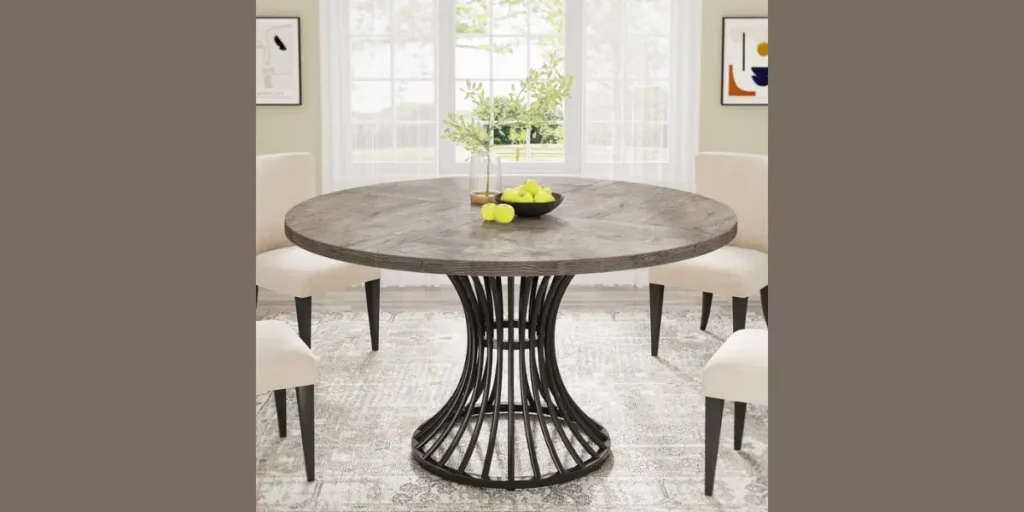
A round industrial table with a metal pedestal softens sharp edges while preserving strength. I find this design ideal for apartments or smaller dining rooms. The central base allows flexible seating and better movement around the table.
The wooden top introduces warmth, while the metal pedestal ensures durability. I usually suggest darker metal finishes for a bold industrial statement. The round shape encourages natural conversation.
If you want industrial style in a more intimate setting, this table offers balance, efficiency, and urban character.
Styling and Buying Guide for Industrial Dining Tables
Choosing the right industrial dining table requires more than liking the look. I always evaluate the material quality, structural strength, and how the table interacts with the surrounding space. Industrial furniture should feel intentional, not randomly assembled.
When you balance texture, scale, and layout, the table becomes a functional centerpiece rather than just a design statement. Paying attention to details like finish, joinery, and hardware ensures you invest in a piece that lasts for years.
Choose the Right Materials
Material selection defines durability and visual impact. I prefer solid hardwoods such as oak or walnut because they resist wear and age beautifully. Reclaimed wood adds character, while engineered wood often lacks long-term resilience.
For the base, steel offers strength and clean lines, while iron delivers a heavier, more rugged appearance. If you consider concrete or glass, ensure proper sealing and support for stability and maintenance.
Consider Size and Layout
Proper sizing prevents the dining area from feeling cramped. I always recommend leaving at least 36 inches of clearance around the table to allow comfortable movement. Without spacing, even a beautiful table can disrupt flow.
Think about seating capacity and daily use. A rectangular table works well for larger families, while round or square designs suit compact layouts. Matching size to lifestyle improves both comfort and practicality.
Balance Texture and Warmth
Industrial materials can feel cold if not balanced correctly. I often introduce warmth through upholstered chairs, textured rugs, or soft lighting. These elements soften metal and concrete surfaces effectively.
Wood naturally adds warmth, but pairing it thoughtfully with leather or fabric enhances comfort. A balanced environment keeps the industrial look inviting rather than harsh.
Match with Industrial Décor Elements
Your dining table should align with surrounding architectural features. Exposed brick walls, concrete floors, and metal lighting fixtures complement industrial furniture beautifully. Consistency strengthens visual impact.
Neutral color palettes like gray, black, and warm browns maintain cohesion. When you coordinate finishes and materials carefully, the entire dining space feels curated and purposeful.
Conclusion
An industrial dining table does more than complete a room, it defines its character. I always see the biggest transformation happen when raw materials, strong lines, and thoughtful proportions come together in one solid piece.
Whether you prefer reclaimed wood with steel, a bold concrete top, or a minimalist slab design, the key is choosing a table that matches your space and daily needs.
When selected carefully, industrial design feels intentional, not overwhelming. It offers durability, authenticity, and long-term style.
Invest in quality craftsmanship, balance it with warmth, and your dining space will feel both powerful and inviting for years.
FAQs
Yes, they can work well in smaller rooms when you choose the right shape and size. Round or square industrial tables often maximize space efficiently. Keeping the base minimal also helps maintain openness.
Regular dusting and wiping with a soft, damp cloth keeps the surface clean. I recommend using wood-safe cleaners for the top and avoiding harsh chemicals on metal. Proper sealing protects both materials from moisture damage.
Absolutely. I often blend industrial tables with modern lighting and neutral décor. The clean lines and strong materials complement contemporary interiors without feeling outdated.
Leather, metal, or upholstered chairs work exceptionally well. I usually choose designs with simple frames to maintain balance. Mixing textures adds depth while preserving the industrial character.