
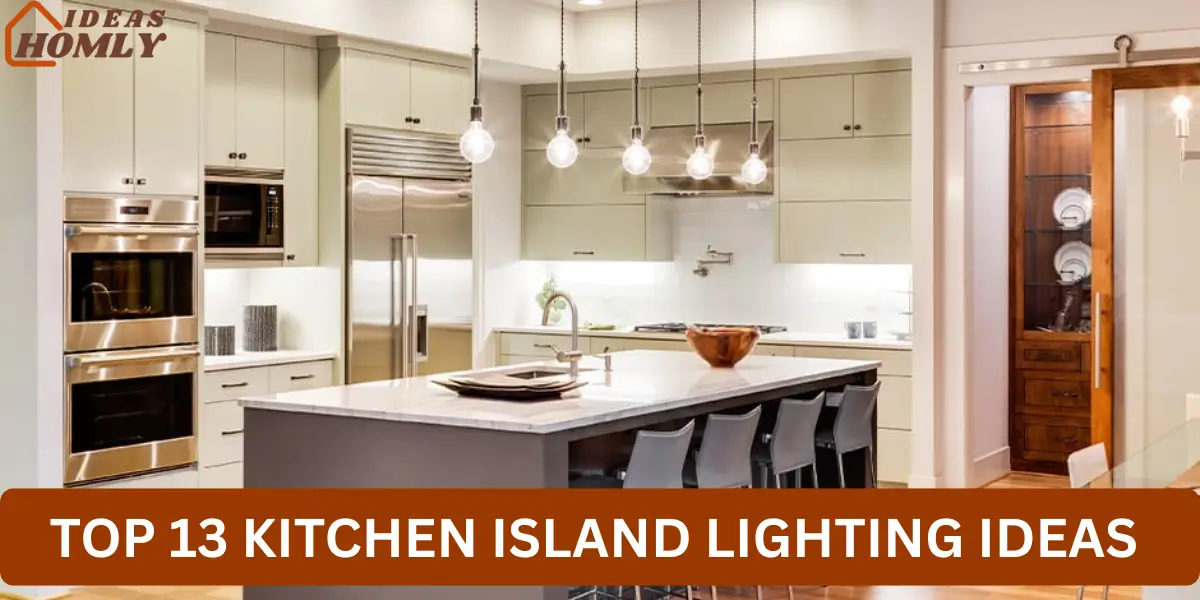

A kitchen island naturally becomes the heart of the kitchen, where cooking, conversations, and quick meals often happen. I’ve seen many kitchens look ordinary until the lighting above the island completely changes the atmosphere.
The right fixture can highlight the island, improve visibility, and add character to the entire space. Instead of treating lighting as an afterthought, many designers now plan it carefully to balance style and function.
That’s why thoughtful kitchen island lighting ideas have become essential for creating a kitchen that feels both practical and visually impressive.
Creative Kitchen Island Lighting Ideas That Elevate the Space
The lighting above a kitchen island does more than simply brighten the countertop. When I design kitchens, I treat island lighting as a central design element because it shapes both the atmosphere and the functionality of the space.
A well-chosen fixture highlights the island, improves visibility during cooking, and adds personality to the kitchen. The following lighting ideas show how different styles can transform an island into a striking focal point.
1. Classic Pendant Lighting Over the Island

Classic pendant lighting remains one of the most reliable choices for kitchen islands. I often recommend pendant lights because they deliver focused illumination exactly where people prepare food.
By hanging directly above the island, these fixtures create a bright workspace while also adding visual balance to the kitchen layout.
Most designers install two or three pendants in a straight line. This arrangement distributes light evenly across the island surface and prevents dark spots on the countertop.
Pendant lighting also acts as a decorative element. Glass, matte metal, or brass finishes allow the fixtures to complement the cabinetry and overall kitchen style.
2. Oversized Statement Pendant Lights
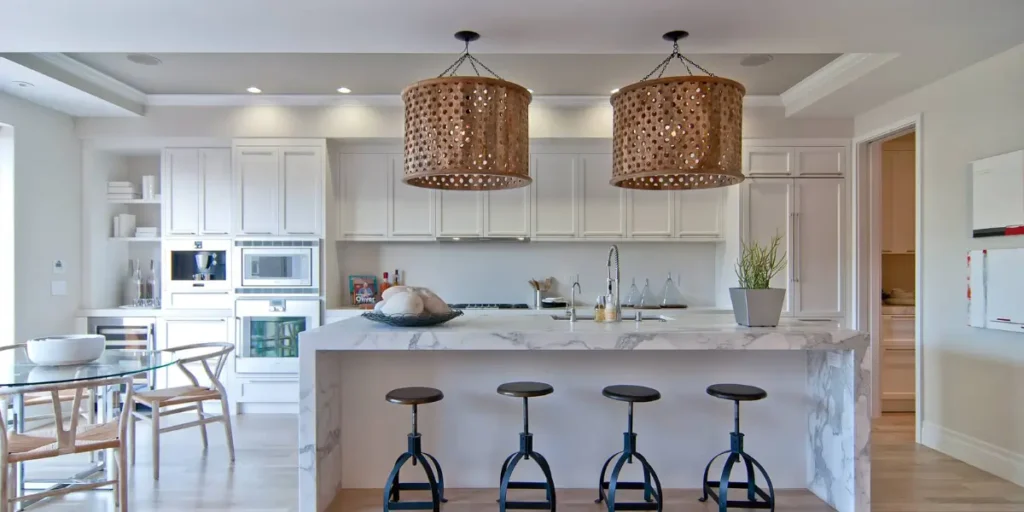
Oversized pendant lights instantly draw attention to the kitchen island. I like using larger fixtures when the island is wide or when the kitchen has higher ceilings. The bold scale of these pendants helps anchor the space visually.
Large pendants also provide strong downward illumination. This focused light makes tasks like chopping vegetables or preparing meals much easier.
Beyond function, oversized fixtures create a striking focal point. Their dramatic presence transforms the island into the centerpiece of the kitchen rather than just another work surface.
3. Glass Globe Island Lighting
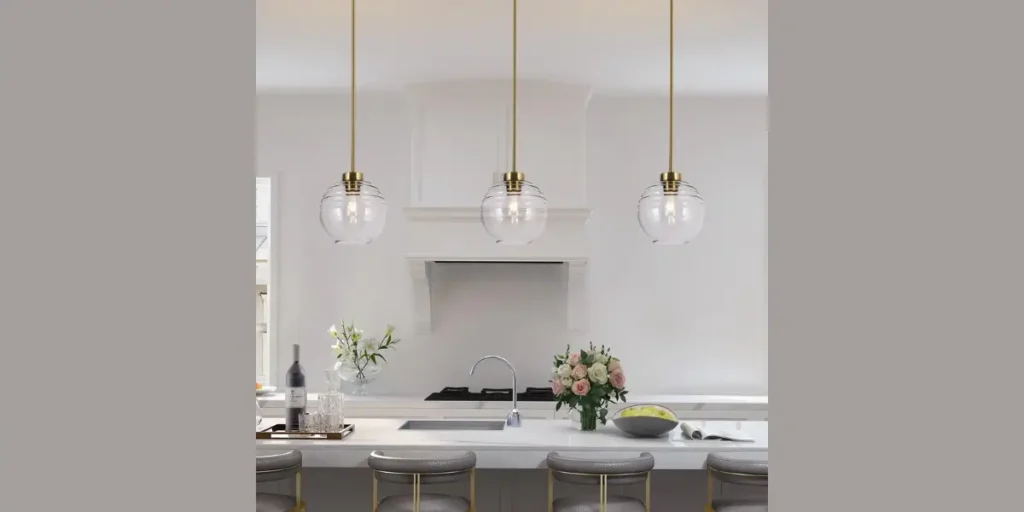
Glass globe lighting creates a clean and elegant appearance above the kitchen island. I appreciate how the transparent glass allows light to spread evenly throughout the surrounding area.
These fixtures soften the lighting effect because the glass gently diffuses the bulb’s brightness. As a result, the island receives clear illumination without harsh glare.
Glass globe lights also work beautifully in modern kitchens. Their simple shape blends easily with contemporary cabinetry and minimalist interiors, helping maintain a light and open atmosphere.
4. Linear Suspension Lighting

Linear suspension lighting offers a sleek solution for long kitchen islands. Instead of multiple pendants, a single horizontal fixture stretches across the island and distributes light evenly.
I often recommend this design when homeowners want a clean, streamlined look. The long fixture creates visual continuity and keeps the ceiling area uncluttered.
Linear lighting also improves functionality. Because the light spreads across the entire island length, every section of the countertop remains well illuminated during cooking and food preparation.
5. Industrial Cage Pendant Lighting
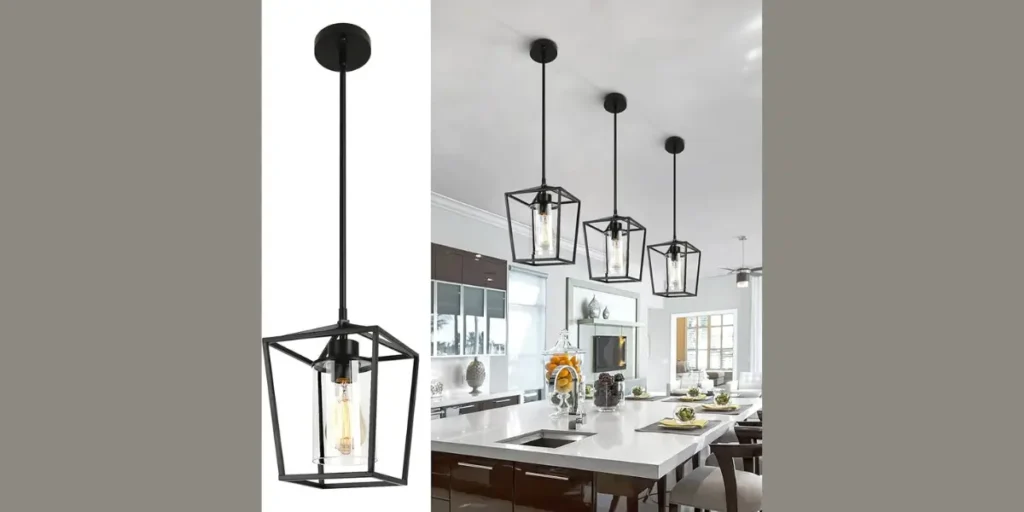
Industrial cage pendant lighting introduces a bold character to the kitchen. The metal cage structure surrounds the bulb while still allowing light to spread freely.
I find that this style works especially well in kitchens with exposed materials such as brick walls, wooden shelves, or matte black hardware.
The open frame design highlights the bulb itself, which creates a warm and slightly vintage feel. This combination of raw materials and simple structure gives the kitchen island a distinctive personality.
6. Lantern Style Island Lighting
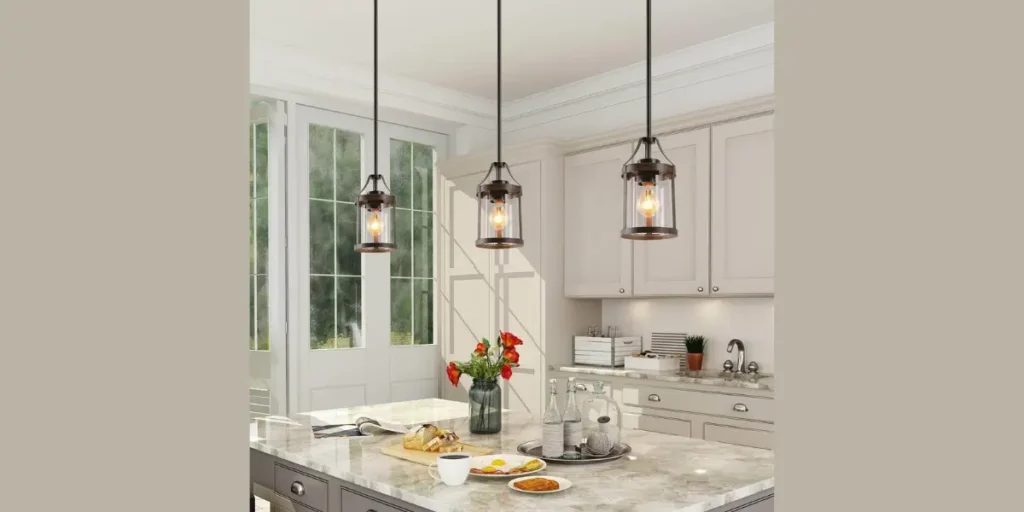
Lantern lighting brings timeless charm to a kitchen island. I often suggest this style when the kitchen blends traditional and modern design elements.
The open frame design of lantern fixtures allows light to travel in multiple directions. This creates a balanced illumination that brightens the entire island area.
Lantern lights also add architectural interest to the space. Their geometric frames introduce structure and elegance while maintaining a comfortable and welcoming atmosphere.
7. Minimalist LED Bar Lighting

Minimalist LED bar lighting fits perfectly in contemporary kitchens. I like this option because the slim fixture delivers strong illumination while maintaining a very clean visual appearance.
The narrow design stretches across the island and distributes light evenly. This ensures that the entire workspace receives consistent brightness.
LED technology also improves energy efficiency. These fixtures consume less electricity while producing long-lasting illumination, making them both practical and modern.
8. Cluster Pendant Lighting
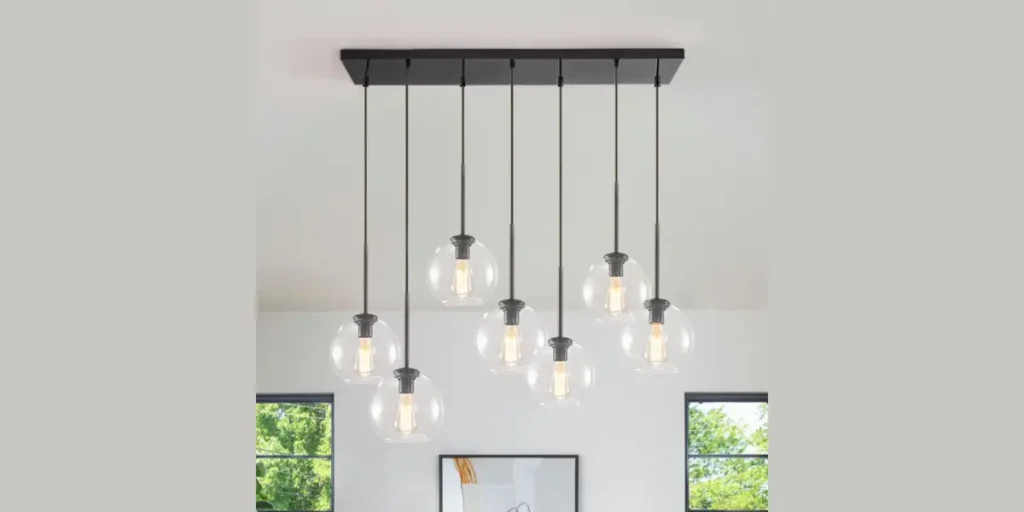
Cluster pendant lighting combines several small fixtures into one arrangement above the island. Instead of a single large pendant, multiple lights hang at slightly different heights.
I enjoy using this design because it creates movement and visual interest in the kitchen ceiling area.
Cluster lighting also spreads illumination across a wider space. The multiple bulbs ensure the island remains bright while the arrangement adds a creative, decorative element to the room.
9. Track Lighting Over the Island
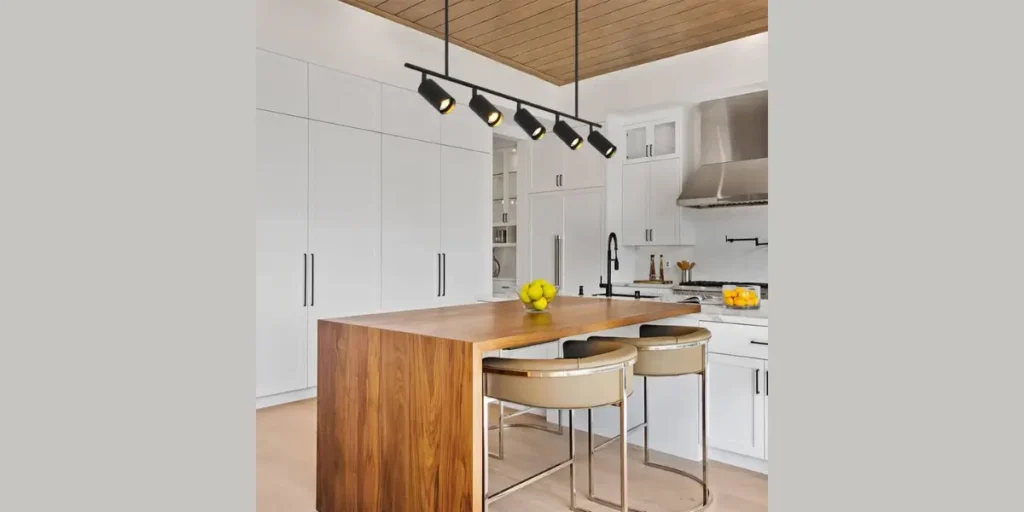
Track lighting provides excellent flexibility for kitchen island illumination. Each light head attaches to a track and can rotate in different directions.
I often recommend track lighting when homeowners want adjustable lighting that can highlight various parts of the island.
This system allows the lights to focus on food preparation areas, seating zones, or decorative surfaces. The adjustable design makes it easy to adapt the lighting layout as kitchen needs change.
10. Crystal Pendant Lighting
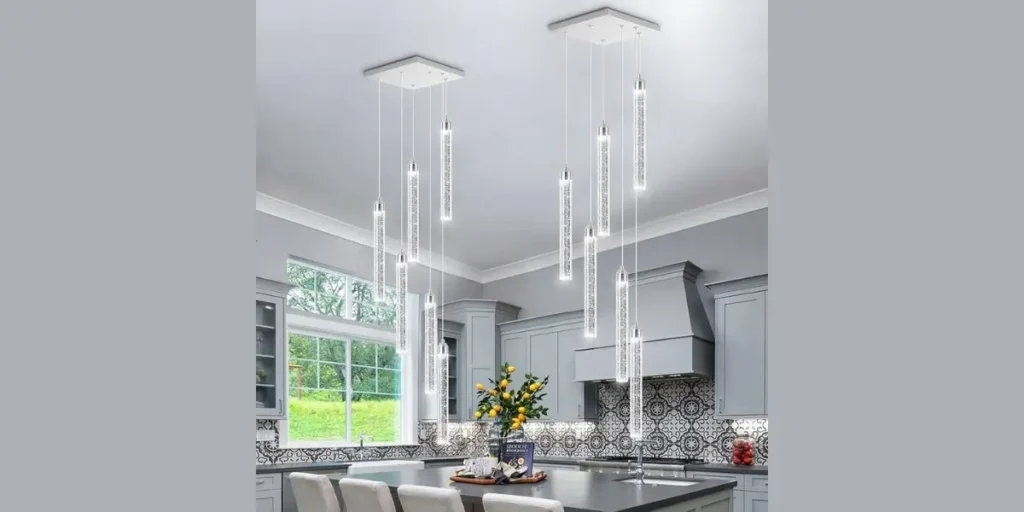
Crystal pendant lighting introduces a sense of luxury to the kitchen island. The reflective surfaces scatter light in multiple directions and create beautiful shimmering effects.
I find that crystal fixtures work particularly well in kitchens that aim for an elegant or high-end appearance.
Despite their decorative nature, crystal pendants still provide effective task lighting. When positioned correctly, they illuminate the island while simultaneously adding sophistication and visual sparkle to the kitchen.
11. Dome Metal Pendant Lighting
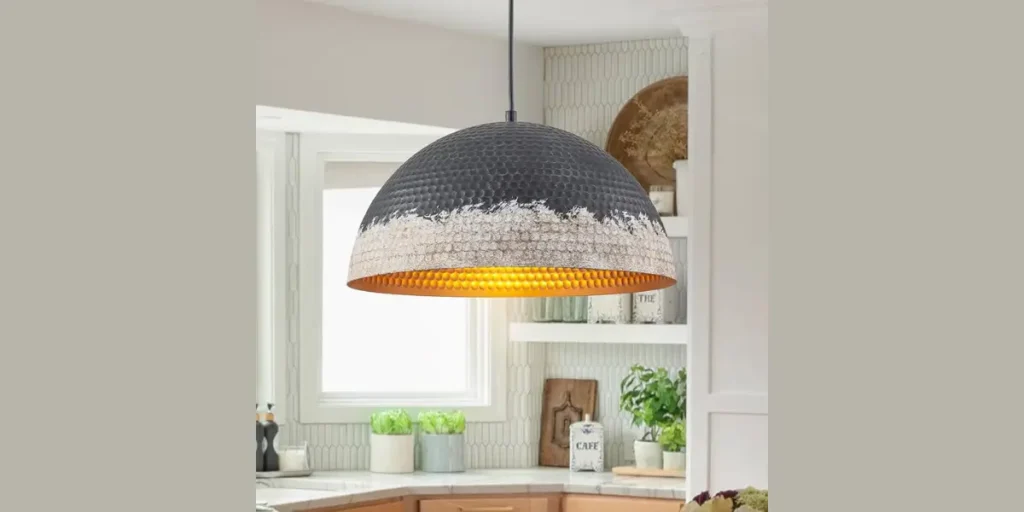
Dome metal pendant lights provide focused and practical lighting for kitchen islands. I often recommend this style because the curved metal shade directs light downward, which makes the island surface brighter and easier to work on.
This focused illumination works especially well during food preparation or casual dining.
These pendants usually come in finishes such as matte black, brushed nickel, or brass. Each finish adds a slightly different character to the kitchen while still maintaining a clean and structured appearance.
Dome pendants also complement several kitchen styles. They look equally comfortable in modern farmhouse kitchens, industrial interiors, or minimalist designs where simple shapes and strong materials stand out.
12. Wooden Pendant Lighting
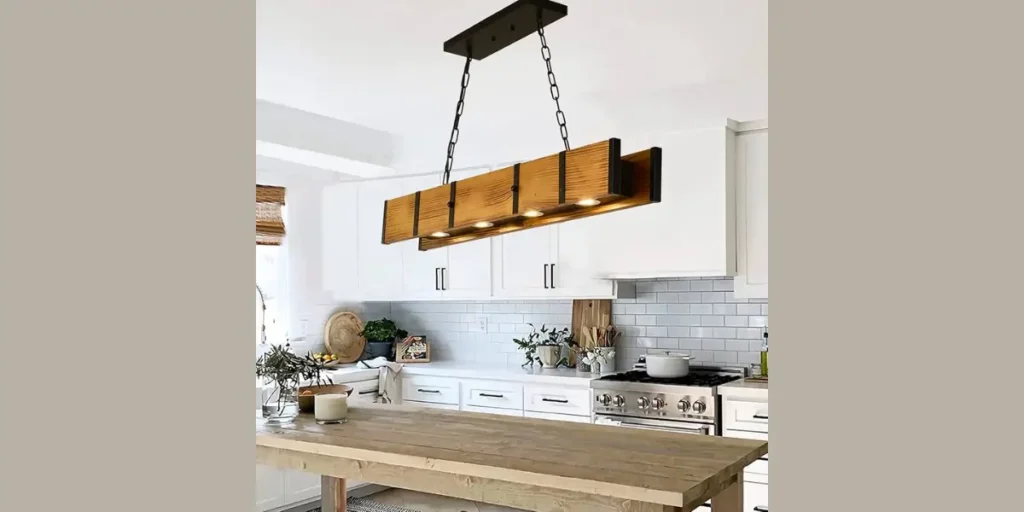
Wooden pendant lighting introduces natural warmth above the kitchen island. I often choose wooden fixtures when the goal is to soften the overall kitchen design and create a more welcoming atmosphere. The natural texture contrasts beautifully with stone countertops and sleek cabinetry.
These fixtures often feature carved or layered wooden elements that allow light to pass through gently. This creates a softer lighting effect that feels comfortable rather than overly bright.
Wooden pendants also work well in Scandinavian, rustic, or organic kitchen designs. By bringing natural materials into the lighting design, the island area feels more relaxed and visually balanced.
13. Smart LED Island Lighting
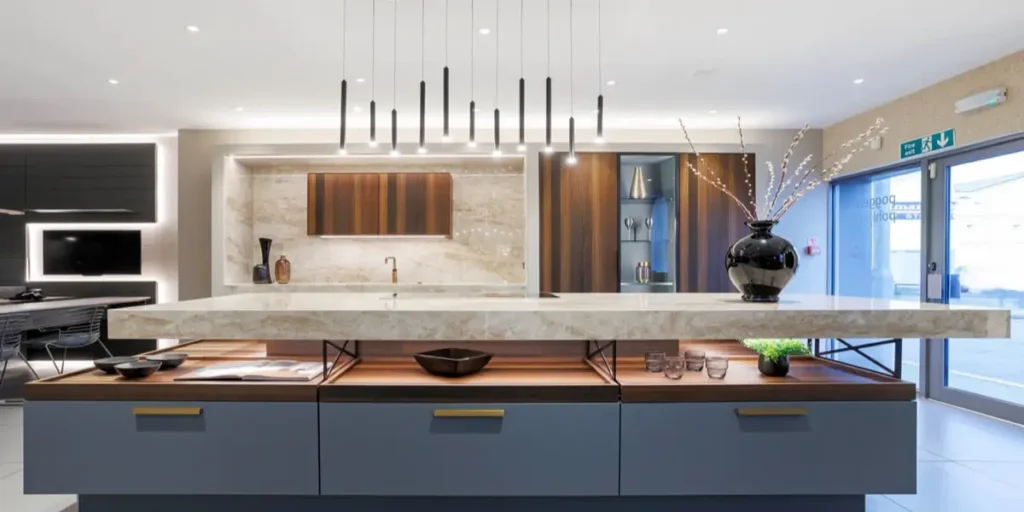
Smart LED lighting offers one of the most flexible solutions for kitchen island illumination. I appreciate how these systems allow homeowners to adjust brightness, color temperature, and sometimes even color through mobile apps or voice control.
During cooking, the lights can provide bright white illumination that improves visibility. In the evening, the brightness can be reduced to create a softer atmosphere around the island.
Smart lighting also supports energy efficiency. Because the system allows scheduling and remote control, it becomes easier to manage electricity use while maintaining perfect lighting for everyday kitchen activities.
Kitchen Island Lighting Planning Tips
Choosing the right lighting for a kitchen island requires more than selecting a beautiful fixture.
I usually look at how the island functions during daily activities such as cooking, preparing food, and gathering with family. Proper lighting should support these tasks while also highlighting the island as a central design feature.
A well-planned lighting setup balances brightness, placement, and style. When fixtures are positioned correctly and scaled to the island size, they improve visibility without overwhelming the space.
These simple planning ideas help create a kitchen island that feels both practical and visually balanced.
Choose the Right Fixture Size
The size of the lighting fixture should match the dimensions of the kitchen island. Large islands can support bigger pendants or longer fixtures, while smaller islands benefit from compact lights that do not dominate the space. Proper scale helps maintain visual balance in the kitchen.
Maintain Proper Spacing
Spacing between lights plays an important role in even illumination. I usually recommend placing pendant lights evenly across the island to avoid shadows. Balanced spacing ensures that the entire countertop receives consistent brightness.
Consider Ceiling Height
Ceiling height affects how low the lighting should hang above the island. Pendant lights normally hang around 30 to 36 inches above the countertop. This height keeps the light effective while maintaining a clear view across the kitchen.
Use Warm Lighting
Warm lighting creates a comfortable and welcoming atmosphere around the island. It softens the space and works well for both cooking and casual dining. Many kitchens use warm white bulbs to maintain a cozy environment.
Conclusion
Kitchen island lighting plays a bigger role than many people expect. When I plan a kitchen, I treat the island lighting as both a functional necessity and a design highlight. The right fixture improves visibility for cooking while also drawing attention to the island as the central feature of the kitchen.
From classic pendant lights to modern smart LED fixtures, each lighting style offers a different way to enhance the space. The key is selecting lighting that suits the island’s size, the kitchen layout, and the overall interior style.
By exploring these kitchen island lighting ideas, homeowners can create a kitchen that feels brighter, more inviting, and perfectly designed for everyday living.
FAQs
Pendant lights remain one of the most popular options because they provide direct task lighting above the island. Many kitchens combine pendant lighting with recessed ceiling lights to ensure the entire kitchen stays evenly illuminated.
The number of lights depends on the length of the island. Smaller islands usually look balanced with two pendants, while larger islands often require three lights to distribute illumination evenly across the surface.
Most designers recommend hanging pendant lights about 30 to 36 inches above the island countertop. This height allows the light to illuminate the workspace effectively while still keeping the view open across the kitchen.
LED lights work extremely well in kitchen island fixtures because they are energy efficient and long lasting. They also provide bright illumination that helps improve visibility while cooking and preparing meals.