
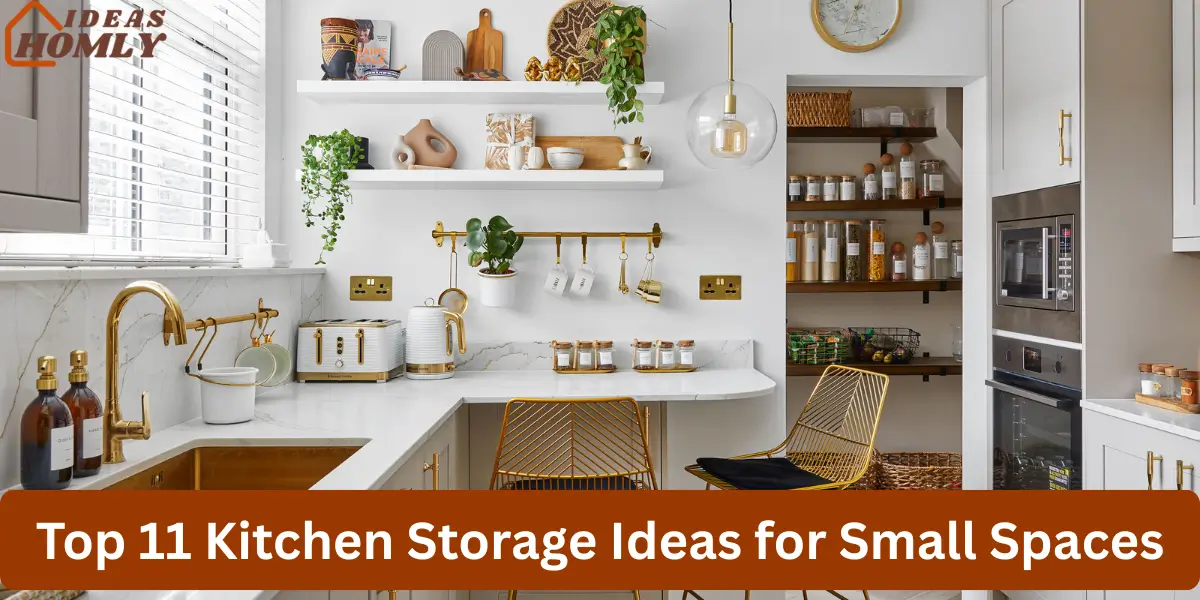

A small kitchen can quickly feel crowded when every cabinet and counter becomes filled with utensils and groceries. I often notice that the real problem is not the size of the kitchen but how the available space is used.
When storage is planned carefully, even a compact kitchen can feel organized and comfortable to work in. While exploring different layouts and solutions, I realized that simple kitchen storage ideas for small spaces can completely improve how the kitchen functions.
With the right approach, it becomes much easier to keep everyday items arranged without creating clutter.
Smart Kitchen Storage Ideas for Small Spaces
When I work with small kitchens, the biggest challenge usually comes from limited cabinet space and crowded countertops.
A compact kitchen needs thoughtful storage so that every tool, ingredient, and appliance has a clear place. Without a good system, even a beautiful kitchen can quickly become messy and difficult to use.
Small kitchens often contain hidden opportunities for storage that many people overlook. Walls, cabinet doors, and narrow gaps between appliances can all provide useful space.
By using practical solutions, it becomes possible to keep a small kitchen organized while still maintaining a comfortable and functional cooking area.
1. Wall-Mounted Floating Shelves
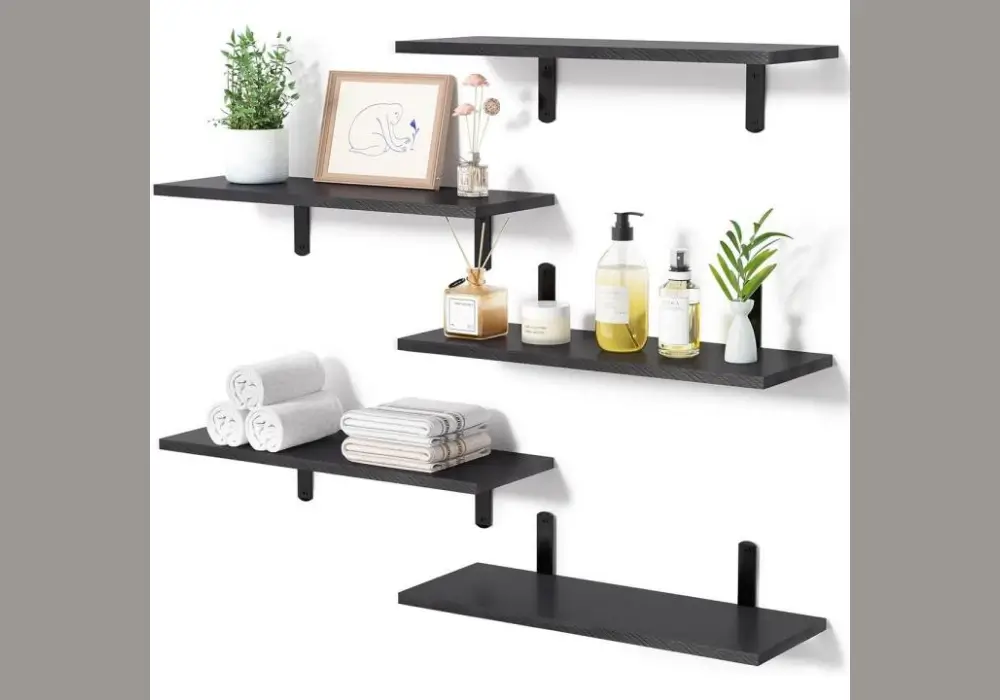
Floating shelves are one of the easiest ways to add storage without taking up floor space. I often recommend installing them above countertops or along empty kitchen walls where cabinets might feel too heavy. These shelves provide quick access to frequently used items such as plates, bowls, jars, and small containers.
Many homeowners prefer wooden floating shelves because they add warmth while still keeping the kitchen open and airy. Metal or glass shelves can also work well in modern kitchens where a lighter visual appearance is preferred.
Another benefit is flexibility. Floating shelves can hold spices, cooking oils, or decorative containers while keeping everything visible. This approach helps maintain organization and makes everyday cooking tasks more convenient.
2. Magnetic Knife Strip
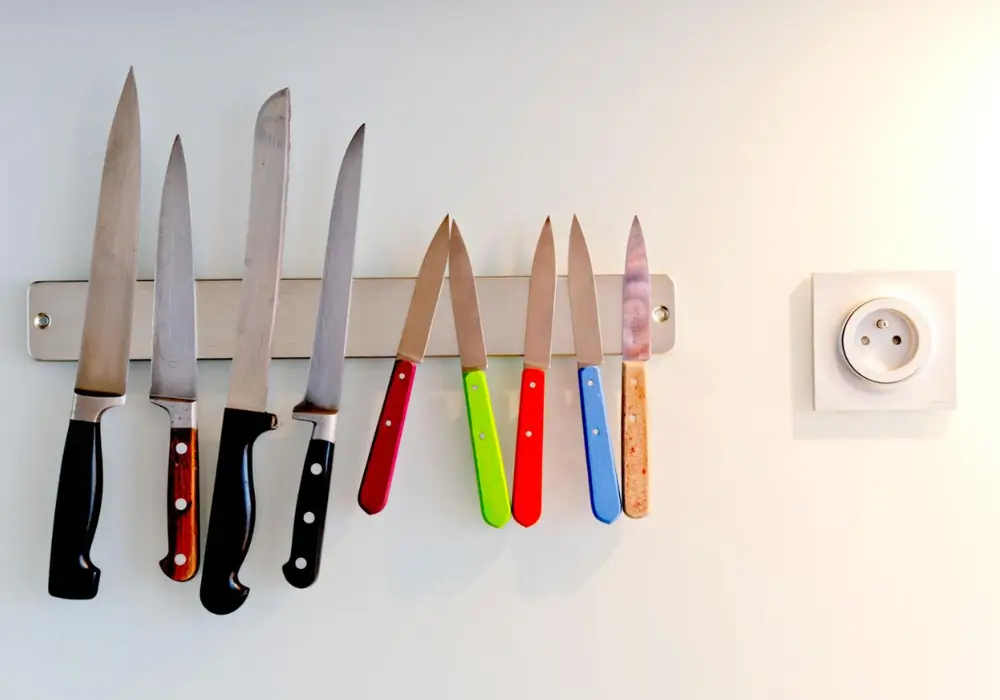
A magnetic knife strip helps save valuable drawer and counter space in a small kitchen. Instead of storing knives inside a drawer or bulky knife block, this system mounts directly on the wall. I often see this solution used near the cooking area where knives remain easy to reach.
The strip holds knives securely through strong magnets, which keeps them organized and visible. This also helps protect the blades from dulling because they no longer rub against other utensils.
Another advantage is cleanliness. Wall-mounted knife storage reduces clutter on the countertop and allows knives to stay dry and easy to clean. This simple solution can significantly improve efficiency in a compact kitchen.
3. Over-the-Sink Drying Rack
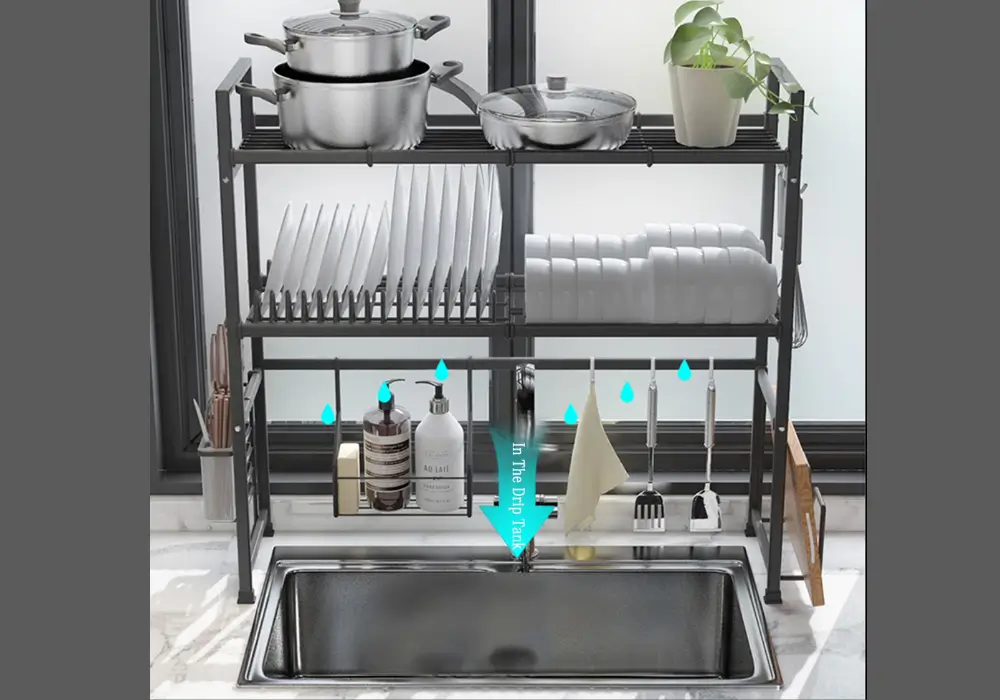
An over-the-sink drying rack makes excellent use of an area that usually stays empty. I often recommend this option for small kitchens where counter space is extremely limited. By placing the rack directly above the sink, dishes can dry without occupying valuable preparation space.
These racks typically hold plates, cups, and utensils while allowing water to drain directly into the sink. This keeps the surrounding counter dry and organized.
Another benefit is flexibility. Many racks fold or roll up when not in use, which makes them ideal for kitchens where every inch of space matters.
4. Pull-Out Pantry Cabinet
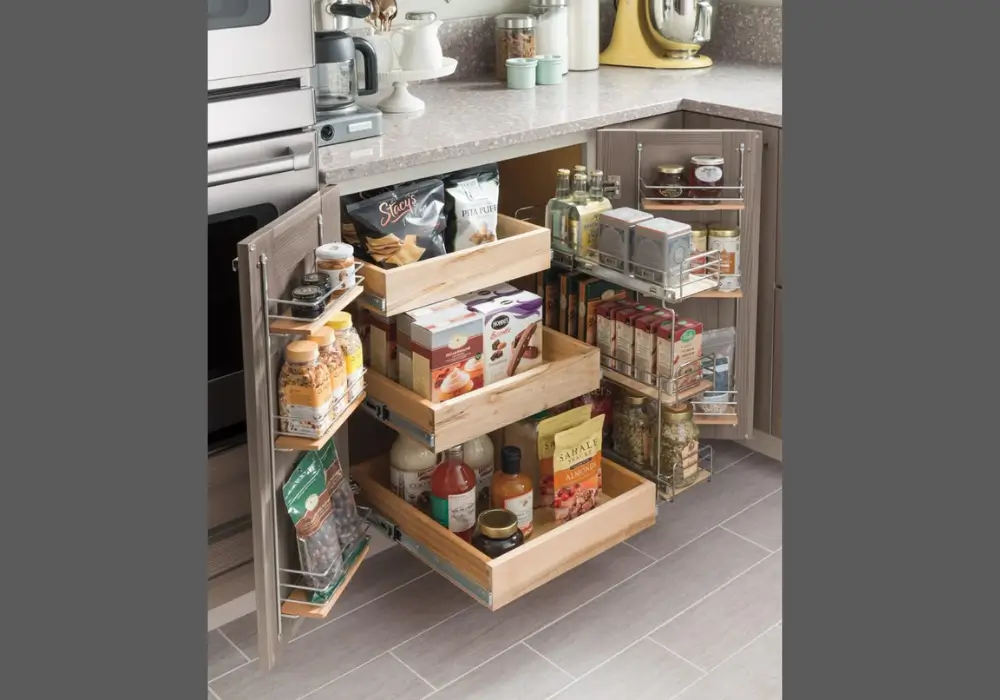
A pull-out pantry cabinet works perfectly in narrow kitchen spaces. I frequently notice slim gaps between refrigerators, cabinets, or walls that remain unused. Installing a pull-out pantry in these areas can transform them into efficient storage zones.
These tall cabinets slide outward smoothly, revealing multiple shelves designed for jars, spices, and packaged foods. Every item becomes visible and easy to access.
This design also prevents items from getting lost at the back of a cabinet. When the shelves glide forward, everything stays organized and within reach, which makes cooking preparation faster.
5. Cabinet Door Storage Racks
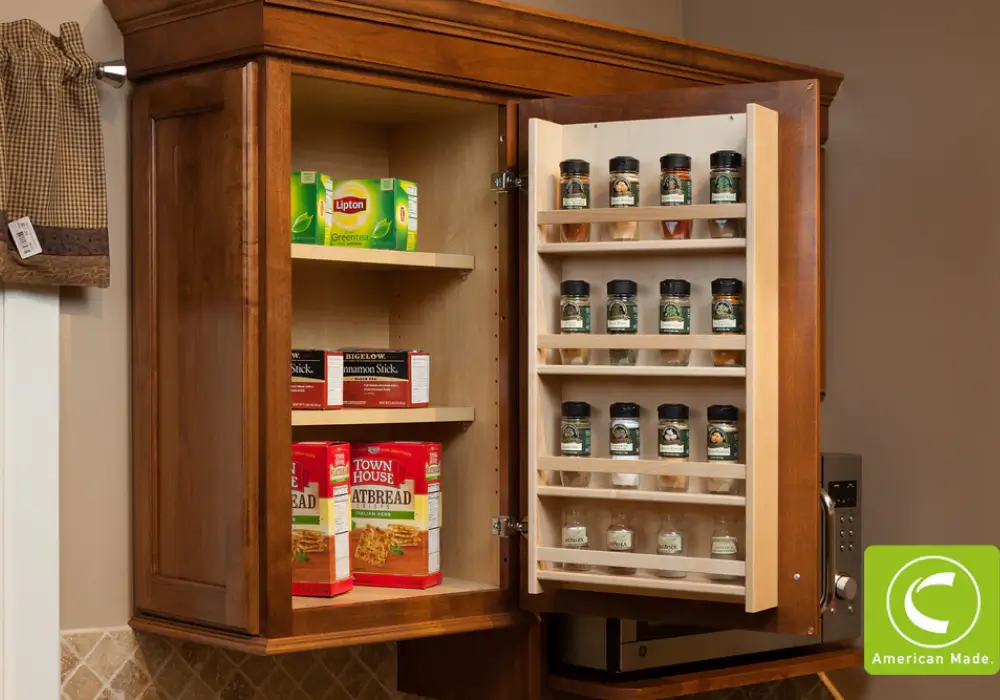
Cabinet doors often hide valuable storage opportunities. I usually recommend installing small racks or baskets on the inside of cabinet doors to hold lightweight items. This space works well for spices, foil, plastic wraps, or cleaning supplies.
Because the racks remain inside the cabinet, they do not affect the appearance of the kitchen. At the same time, they create extra storage without requiring additional cabinets.
Using door racks also keeps frequently used items accessible. When the cabinet opens, the stored items remain immediately visible and easy to grab.
6. Corner Shelf Storage
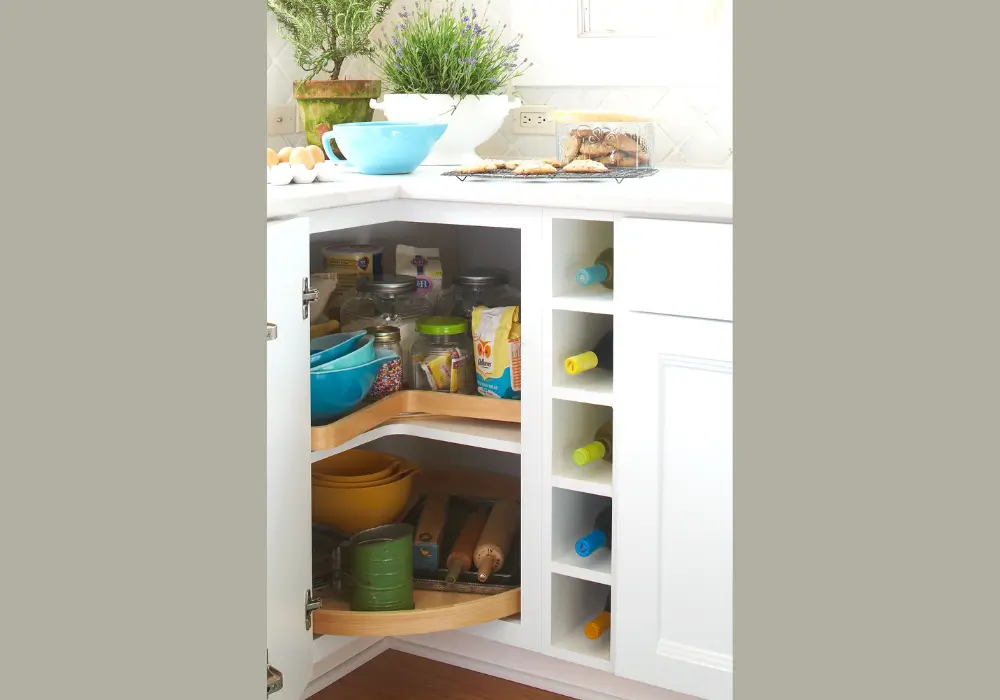
Corners can become wasted space in many kitchens if they are not used properly. I often suggest installing corner shelves that turn empty angles into practical storage areas. These shelves work especially well for small jars, mugs, or decorative containers.
Floating corner shelves also help maintain an open and light appearance. They allow homeowners to store useful items without crowding the kitchen.
Another advantage is convenience. Items placed on corner shelves remain easy to reach during cooking while still keeping the countertop free for food preparation.
7. Stackable Storage Containers
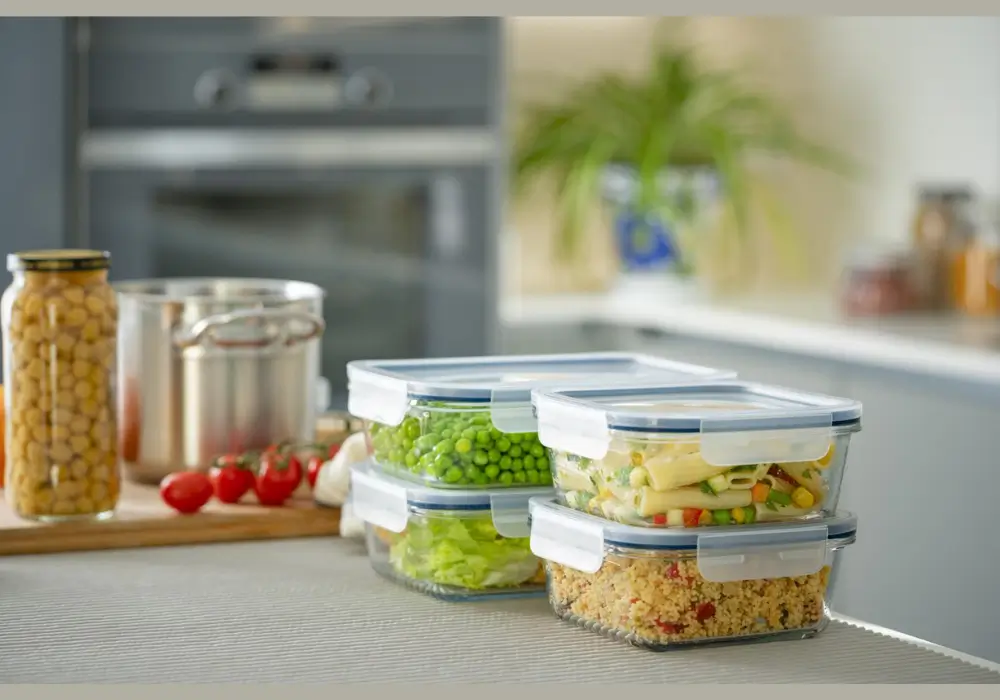
Stackable containers make a significant difference in small kitchens where pantry space is limited. I often recommend using clear containers that allow ingredients to remain visible while staying neatly arranged.
These containers stack vertically, which maximizes cabinet height and prevents wasted space between shelves. Dry ingredients such as rice, flour, and pasta can stay organized and easy to access.
Another advantage is freshness. Many stackable containers include airtight lids that protect food from moisture and pests. This solution keeps both the pantry and kitchen cabinets tidy.
8. Hanging Mug Hooks
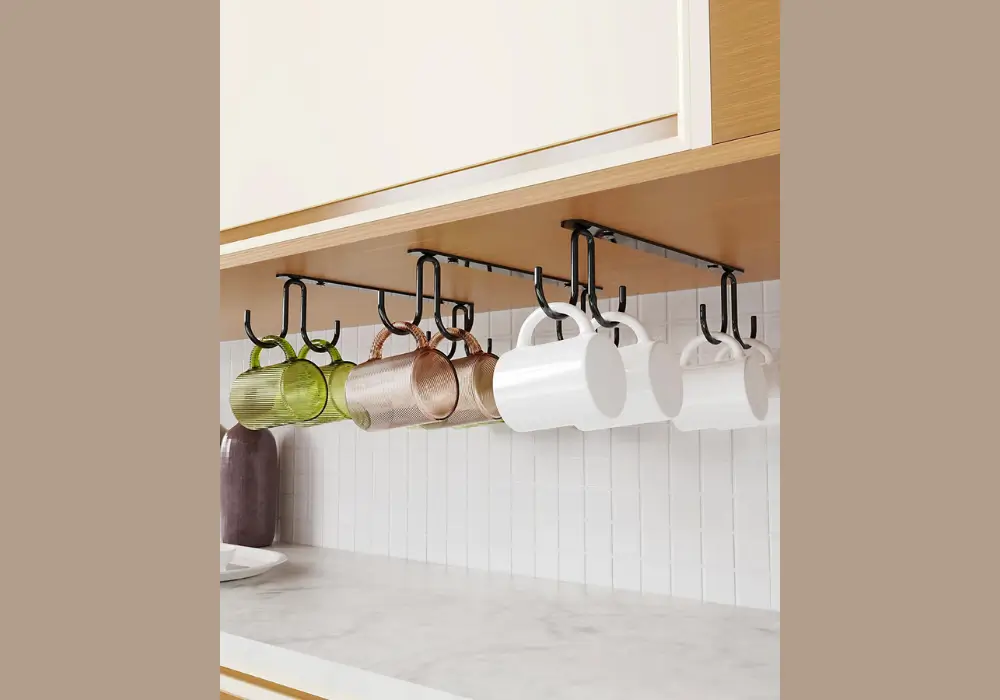
Mugs can quickly fill valuable cabinet space in a small kitchen. I often recommend installing hooks beneath shelves or cabinets to hang mugs instead. This simple idea frees up cabinet storage while keeping mugs accessible.
Many homeowners create a small coffee corner using hanging hooks and a nearby shelf. This arrangement organizes mugs while adding character to the kitchen.
Another benefit is visibility. When mugs hang neatly from hooks, it becomes easier to grab one quickly without searching through a crowded cabinet.
9. Slim Rolling Storage Cart
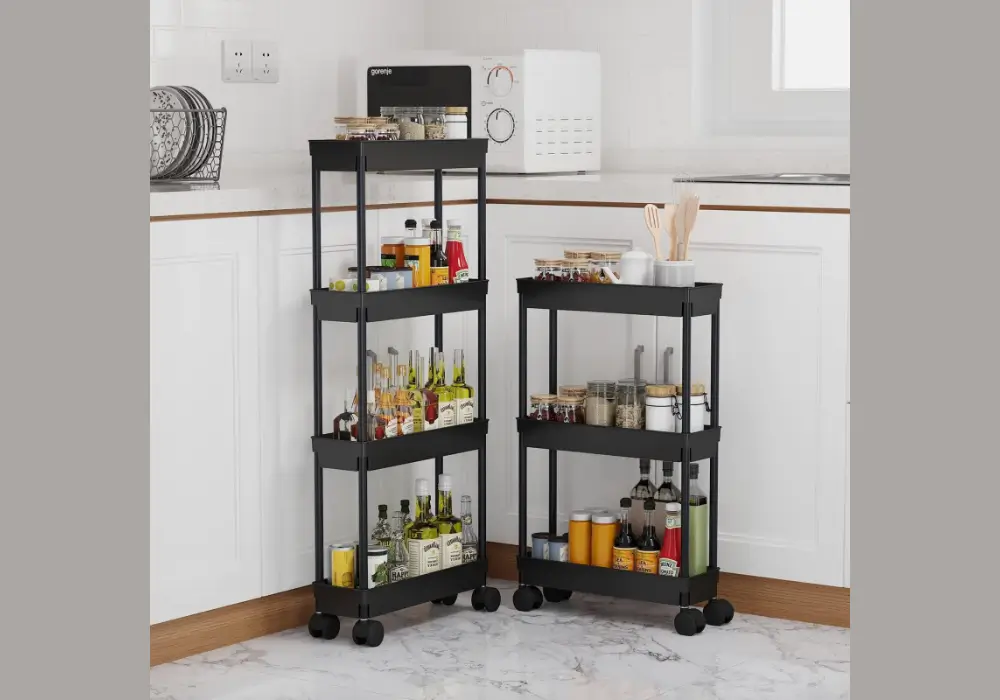
A slim rolling storage cart fits perfectly into narrow spaces that many kitchens ignore. I frequently see small gaps between appliances or cabinets where a compact cart can slide in easily.
These carts typically include multiple tiers that hold spices, cooking oils, or pantry items. Because the cart rolls out smoothly, it allows easy access whenever needed.
The mobility of the cart adds extra convenience. When additional workspace or storage is required, the cart can move to another part of the kitchen.
10. Under-Cabinet Storage Baskets
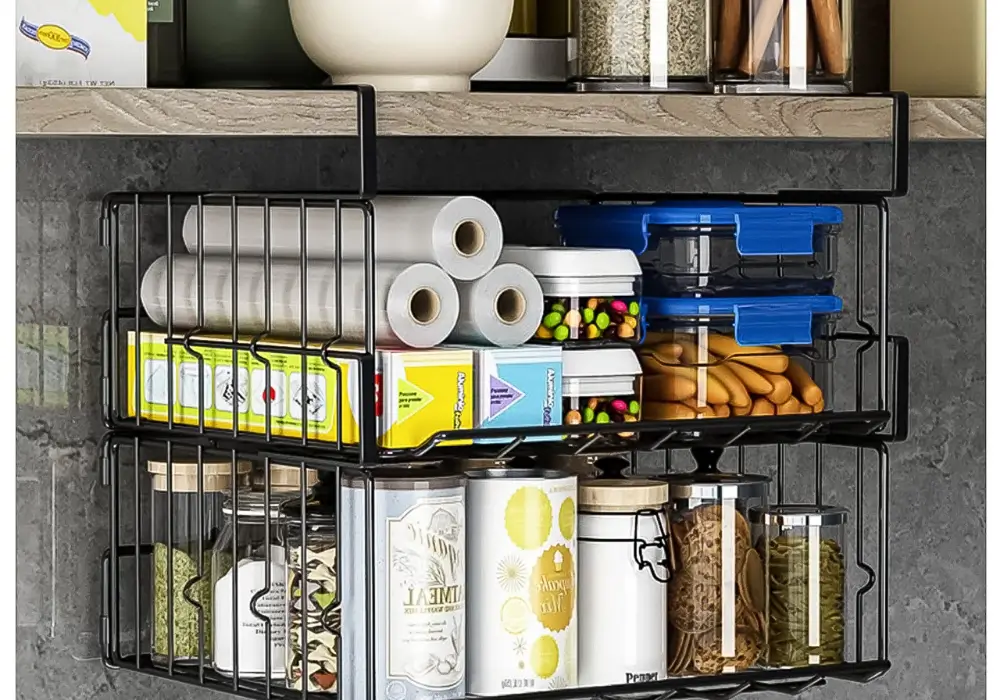
Under-cabinet baskets create additional storage without installing new cabinets. I often recommend sliding these baskets beneath existing shelves where unused space usually exists.
These baskets can hold dish towels, packaged snacks, or small kitchen tools. By using the area beneath shelves, they expand storage without affecting the main cabinet space.
Another advantage is simplicity. Most under-cabinet baskets install quickly without drilling or permanent modifications, making them ideal for small kitchens.
11. Foldable Wall Table with Storage
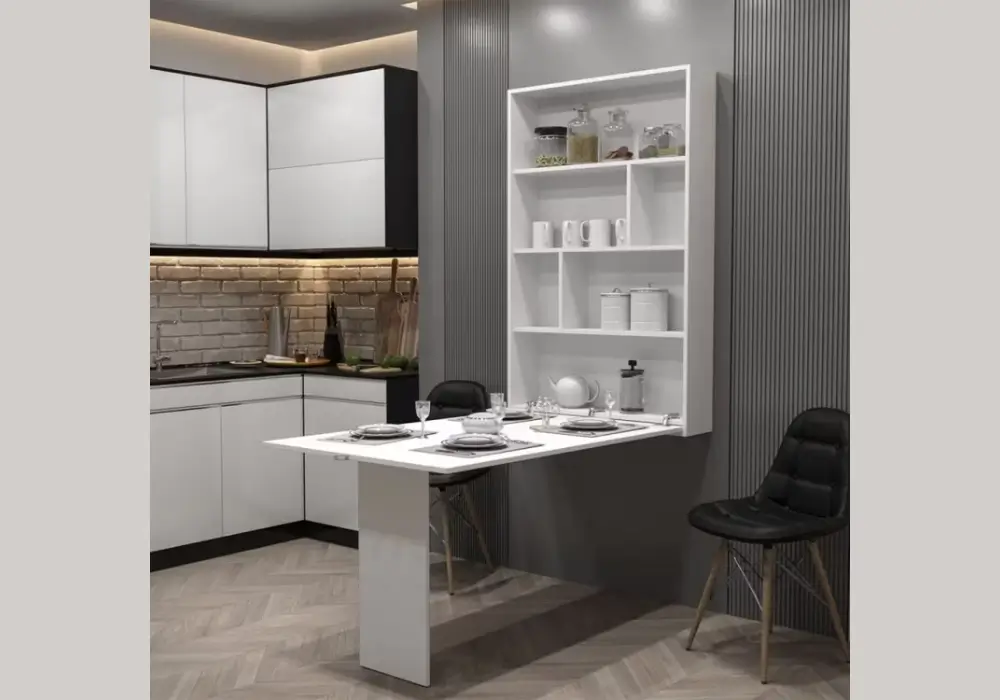
A foldable wall table offers both workspace and storage in compact kitchens. I often see this design used in apartments or studio kitchens where space remains extremely limited.
When folded down, the table provides a convenient surface for meal preparation or quick dining. When folded back up, it frees valuable floor space and keeps the kitchen open.
Many foldable tables also include small shelves or compartments that hold utensils, spices, or cookbooks. This combination of storage and functionality makes it especially useful in small kitchens.
Practical Tips to Maximize Storage in a Small Kitchen
Improving storage in a small kitchen requires smart planning rather than adding more cabinets. I often notice that many compact kitchens already have enough space, but it remains poorly used. When shelves, walls, and cabinets are organized thoughtfully, even a small kitchen can feel efficient and comfortable.
Another key factor is minimizing clutter. Small kitchens benefit greatly when unnecessary tools and appliances stay stored properly. By focusing on practical organization methods and using vertical space, homeowners can create a kitchen that feels both tidy and functional.
Use Vertical Wall Space Efficiently
Walls provide valuable storage opportunities in small kitchens. I usually recommend installing floating shelves, hanging racks, or magnetic strips that keep tools accessible while freeing up cabinets.
Using vertical storage also prevents overcrowded countertops. This approach helps maintain a clean kitchen while still keeping essential items nearby.
Choose Multi-Purpose Storage Furniture
In compact kitchens, furniture that performs multiple functions can make a significant difference. I often see foldable tables, rolling carts, and islands with drawers used to combine storage and workspace.
These solutions allow homeowners to maximize available space without making the kitchen feel crowded.
Keep Everyday Items Within Easy Reach
An efficient kitchen always keeps frequently used items accessible. I prefer storing utensils, spices, and cooking tools close to the areas where they are used.
This arrangement reduces unnecessary movement and improves the cooking workflow in smaller kitchens.
Organize Cabinets with Dividers and Containers
Cabinet organization plays an important role in small kitchens. I usually recommend using drawer dividers, stackable containers, and storage bins to separate items.
This method helps prevent clutter and ensures that every item has a clear and organized place.
Avoid Countertop Clutter
Counter space becomes extremely valuable in small kitchens. I often suggest storing appliances and tools inside cabinets or on shelves instead of leaving them on the counter.
Keeping countertops clear creates a more open environment and provides more room for food preparation.
Conclusion
A small kitchen does not have to feel crowded or difficult to manage. When I look at well-organized compact kitchens, I usually notice that the difference comes from smart storage choices rather than the size of the room.
Simple solutions like wall shelves, pull-out cabinets, and vertical organizers can turn limited space into practical storage areas.
Thoughtful organization helps keep utensils, ingredients, and cookware within reach while maintaining a clean environment. With the right approach, even the smallest kitchen can feel comfortable and efficient.
By applying these storage ideas carefully, it becomes much easier to create a kitchen that stays organized and enjoyable to use every day.
FAQs
One effective way to add storage is by using vertical space such as wall shelves, hanging racks, or magnetic strips. These solutions keep items organized while freeing cabinet space. Adding organizers inside drawers and cabinets can also significantly increase usable storage.
Compact kitchens benefit from multi-functional solutions like rolling carts, foldable tables, and pull-out pantry cabinets. These designs use narrow or hidden spaces efficiently. They also keep frequently used items accessible without overcrowding the kitchen.
Floating shelves work very well in small kitchens because they use wall space instead of cabinet space. They allow easy access to everyday items like plates, jars, and spices. When arranged neatly, they also help create a lighter and more open kitchen appearance.
Reducing clutter begins with removing items that are rarely used. After that, organizing cabinets and drawers with storage containers can help maintain order. Keeping countertops clear and storing appliances properly also improves the overall appearance of a small kitchen.