
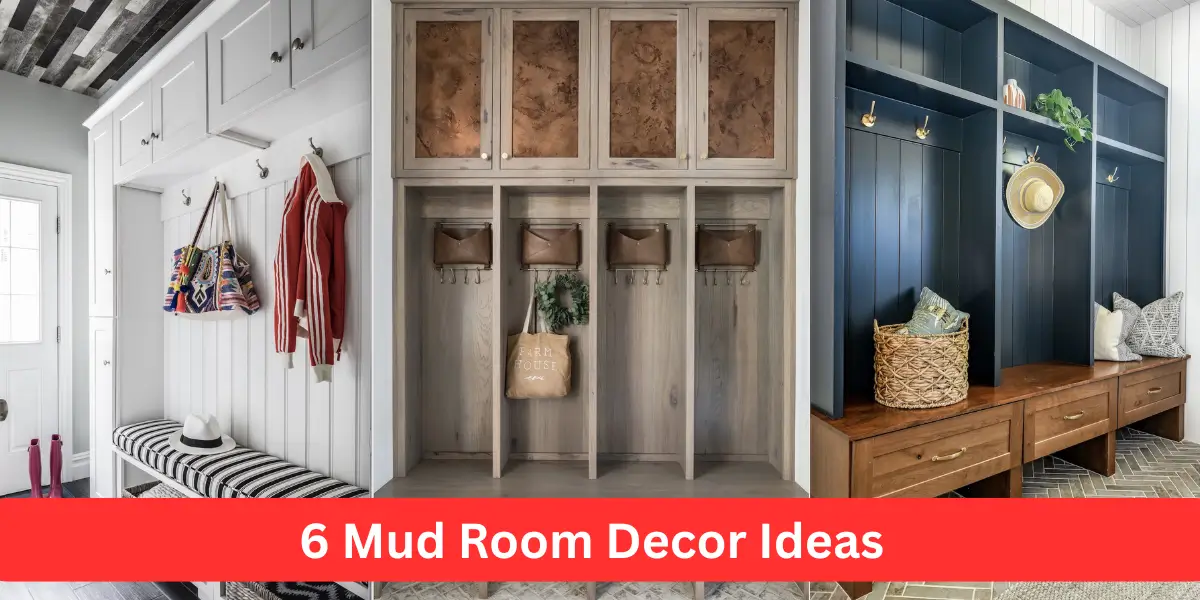

Mud room decor ideas play a bigger role than most people realize, because this space sets the tone for the entire home. From my experience, a well-designed mud room makes daily routines smoother while keeping clutter under control.
It’s often the first and last area used each day, so it needs to work hard without feeling messy or unfinished. I’ve noticed that the best mud rooms balance smart storage with simple, thoughtful styling.
When function comes first, style naturally follows. With the right layout, materials, and organization choices, a mud room can feel welcoming, efficient, and visually cohesive instead of chaotic or overlooked.
1. Built-In Bench with Hidden Storage
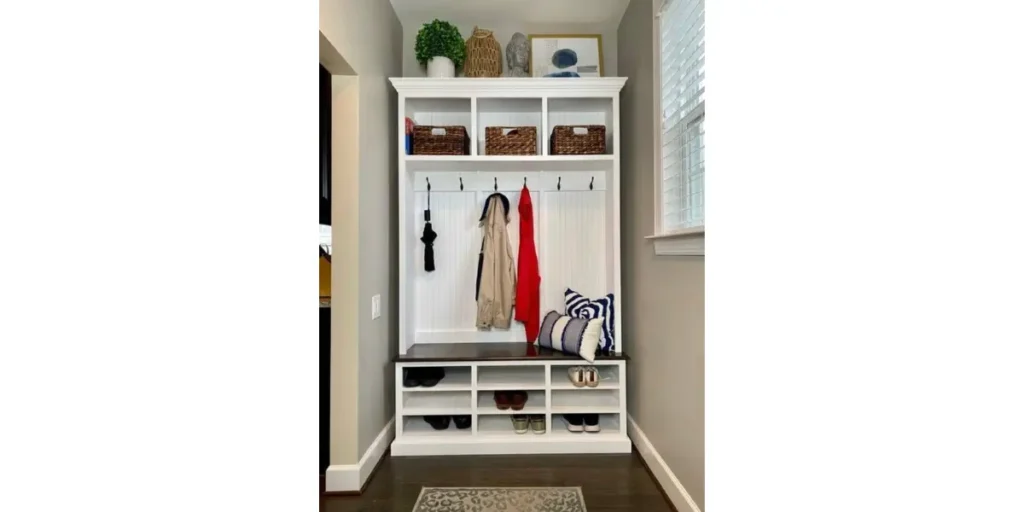
From my experience, a built-in bench is the most practical foundation for any mud room. It immediately creates a dedicated spot to sit, which makes putting on or taking off shoes much easier.
I’ve noticed that when seating is built into the design, the space feels intentional rather than improvised. A bench also helps define the mud room visually, even in open layouts.
Hidden storage beneath the bench is where this idea truly shines. Drawers or lift-up compartments keep shoes, bags, and seasonal items out of sight.
I’ve found this especially helpful in busy households where clutter builds quickly. Everything has a place, which reduces daily mess.
The key is keeping the design simple and durable. When done right, a built-in bench adds comfort, organization, and a clean, custom look that holds up to everyday use.
2. Wall Hooks and Vertical Organization
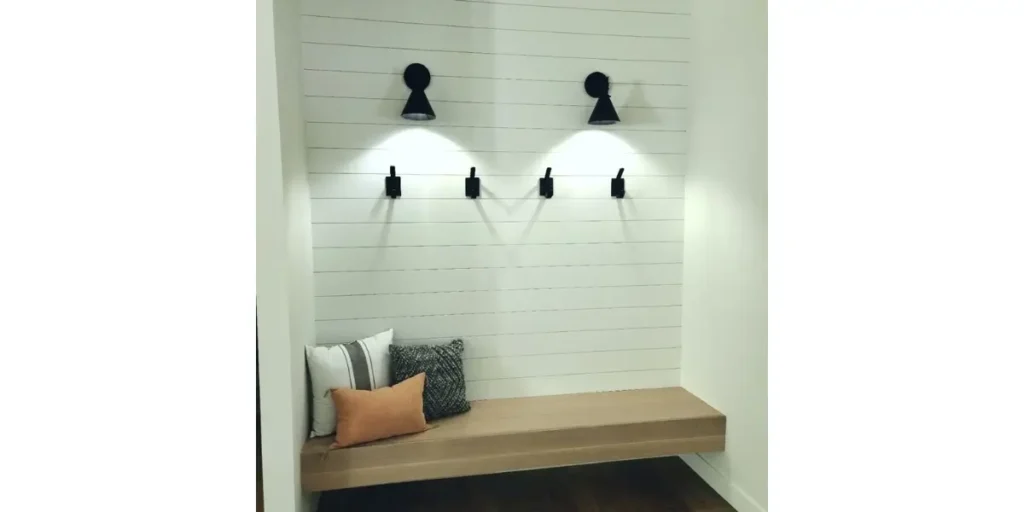
Vertical organization completely changed how I approach mud room design. From my experience, wall hooks are one of the easiest ways to keep daily essentials accessible without using floor space.
Coats, bags, and backpacks stay visible, which helps everyone stay organized. This setup works especially well for families with different routines.
I usually recommend installing hooks at varied heights. Lower hooks make it easier for children to hang their own items, while higher hooks work for adults. I’ve noticed this small adjustment improves daily habits and reduces clutter instantly.
3. Open Shelving with Decorative Baskets

Open shelving is one of my favorite ways to balance storage and style in a mud room. In my experience, shelves keep the space feeling light and accessible, especially compared to bulky cabinets. They also make it easier to adapt storage as needs change over time.
Decorative baskets are what make this idea work visually. I use them to hide smaller items like gloves, scarves, or pet supplies while keeping everything within reach. Baskets add warmth and texture, which softens the utilitarian nature of a mud room.
The key is consistency. Using similar baskets and spacing shelves evenly keeps the look cohesive. When styled thoughtfully, open shelving creates an organized mud room that feels practical, calm, and visually pleasing.
4. Mud Room with Statement Tile Flooring
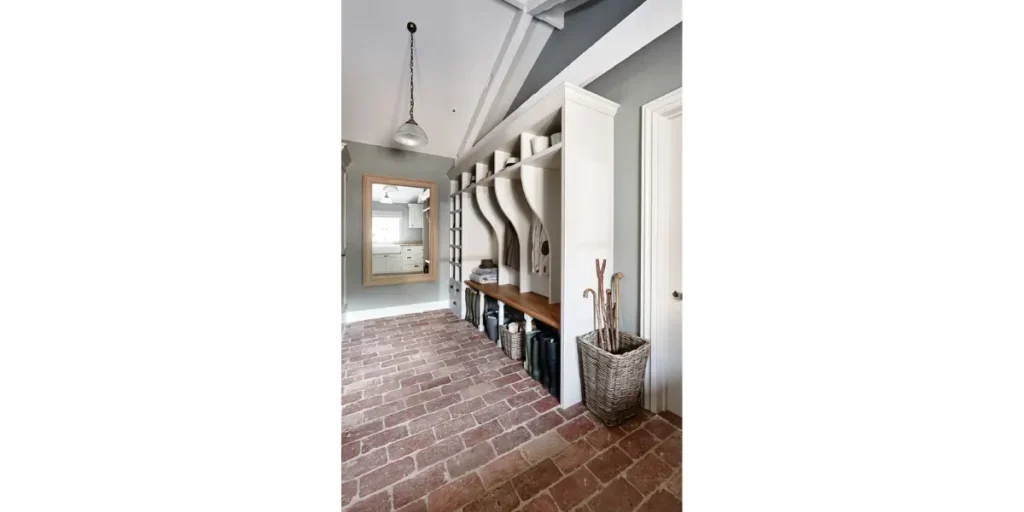
In my experience, flooring is one of the most important design choices in a mud room. This space handles constant foot traffic, moisture, and dirt, so durability matters.
Statement tile flooring allows the mud room to feel intentional while standing up to daily wear. Patterned or textured tiles also hide dirt better than plain surfaces.
I’ve noticed that choosing tiles with subtle contrast adds visual interest without overwhelming the space. Neutral patterns work well because they complement different decor styles over time.
Tiles also make cleaning easier, which is essential for a high-use entry area.
5. Compact Mud Room with Lockers
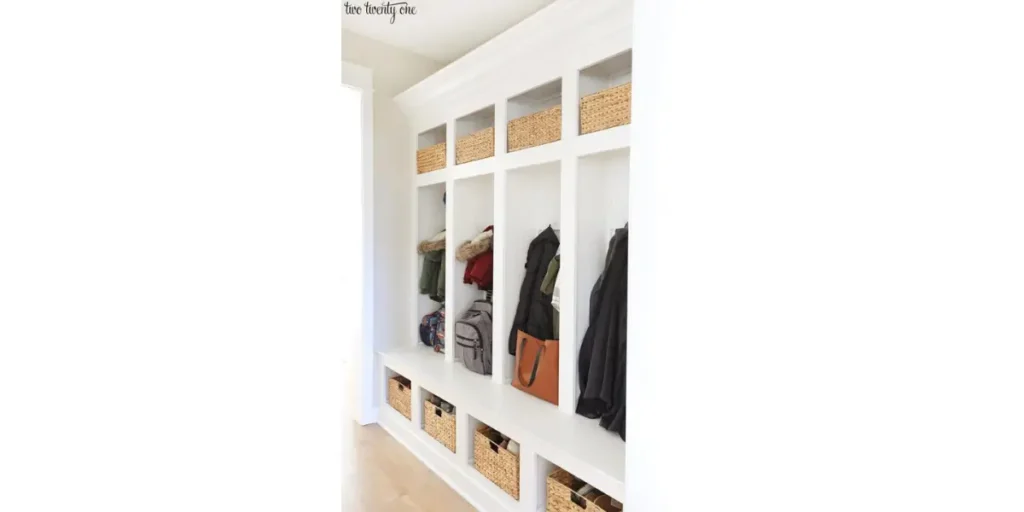
Lockers bring structure and clarity to a busy mud room. From my experience, assigning individual storage spaces reduces clutter and daily confusion.
Each person knows exactly where their items belong, which helps maintain order. This setup is especially useful for families with children.
I prefer lockers that combine open cubbies with closed compartments. Open areas keep frequently used items visible, while closed sections hide less attractive necessities. I’ve found this mix keeps the space functional without looking rigid.
Even in smaller mud rooms, lockers can be scaled to fit. When designed thoughtfully, they create a clean, organized look that makes daily routines smoother and more efficient.
6. Styled Mud Room with Mirrors and Lighting
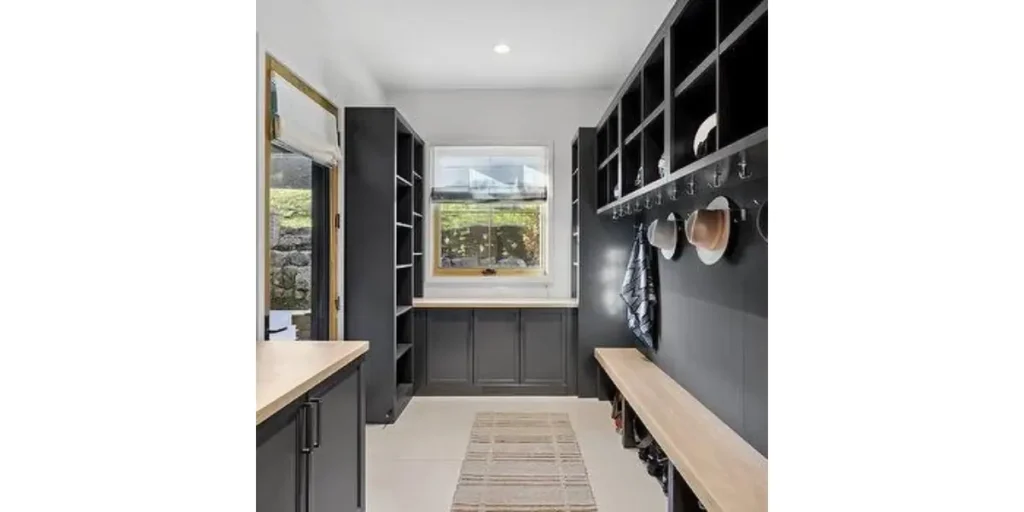
Mirrors and lighting are often overlooked in mud rooms, but they make a huge difference. From my experience, adding a mirror instantly makes the space feel larger and brighter. It’s also practical for quick checks before leaving the house.
Good lighting improves both function and mood. I always recommend layered lighting, combining overhead fixtures with wall or accent lights. Warm lighting helps soften the space and makes it feel more welcoming.
When mirrors and lighting are styled thoughtfully, the mud room feels polished rather than purely functional. These elements elevate the design, turning an everyday entry into a space that feels intentional and inviting.
How to Design a Mud Room That Stays Organized Every Day
From my experience, the most successful mud rooms are designed with daily habits in mind. I always focus on how people enter, exit, and store items throughout the day.
Clear zones for shoes, coats, and accessories help prevent clutter from building up. I’ve noticed that when storage is easy to access and logically placed, the space stays tidy with minimal effort.
A well-designed mud room should support routines, not fight them. When function leads the design, the space remains practical, calm, and visually balanced even with constant use.
FAQs
What are the must-have elements in a mud room?
A functional mud room should include seating, storage, and durable flooring. I always recommend a bench, hooks or lockers, and easy-to-clean surfaces. These elements support daily routines and reduce mess. Together, they create a space that works efficiently.
How can I decorate a small mud room effectively?
In small mud rooms, I focus on vertical storage and light colors. Wall hooks, shelves, and mirrors help save space and make the area feel open. Keeping decor minimal prevents visual clutter. Smart layout choices make a big difference.
What materials work best for mud rooms?
Durable and moisture-resistant materials work best in mud rooms. I often use tile, sealed wood, or vinyl flooring for easy maintenance. Storage should be sturdy and easy to clean. These materials handle heavy use well.
Conclusion
A well-designed mud room brings order, comfort, and style to one of the hardest-working spaces in the home. From my experience, the most effective mud rooms are built around daily routines rather than decoration alone.
When seating, storage, and durable materials are planned thoughtfully, the space stays functional without feeling cluttered. I’ve noticed that small design choices, like vertical organization or hidden storage, can completely change how the room is used.
A mud room doesn’t need to be large to work well; it just needs to be intentional. By balancing practicality with simple, cohesive styling, a mud room can become a welcoming entry that supports everyday life while still feeling calm, organized, and visually appealing.