
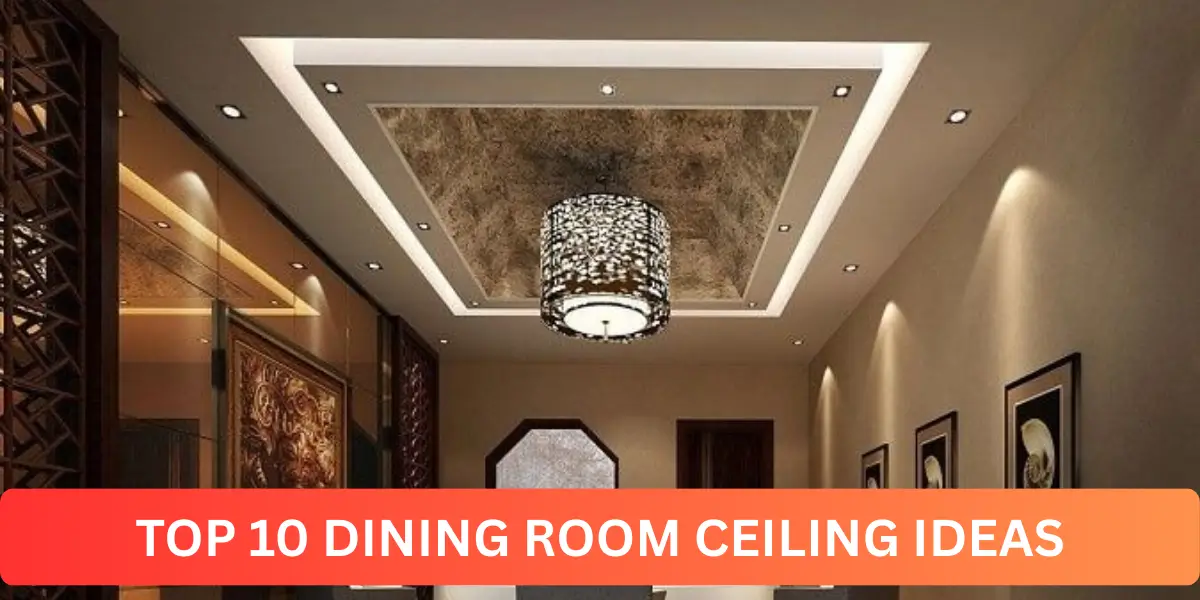

Most people focus on walls and furniture, yet the ceiling quietly shapes the entire dining experience. I have seen ordinary rooms feel extraordinary simply by rethinking what sits overhead.
The right ceiling treatment can adjust proportions, enhance lighting, and introduce architectural interest without changing the layout.
In this guide, I will explore dining room ceiling ideas that elevate style and atmosphere in subtle but powerful ways. When designed thoughtfully, the ceiling becomes more than a surface, it becomes a defining feature of the room.
Why Ceiling Design Changes the Entire Dining Room
The ceiling influences how a dining room feels more than most people expect. I always evaluate height, natural light, and architectural details before selecting any ceiling treatment. Even subtle changes can shift the perception of scale and depth.
A well designed ceiling also enhances lighting performance. It reflects brightness, defines focal points, and frames statement fixtures beautifully. When treated intentionally, the ceiling stops being an afterthought and becomes a defining design element.
Below are ten ceiling ideas that I have seen transform dining spaces in both subtle and dramatic ways.
1. Coffered Ceiling for Architectural Depth
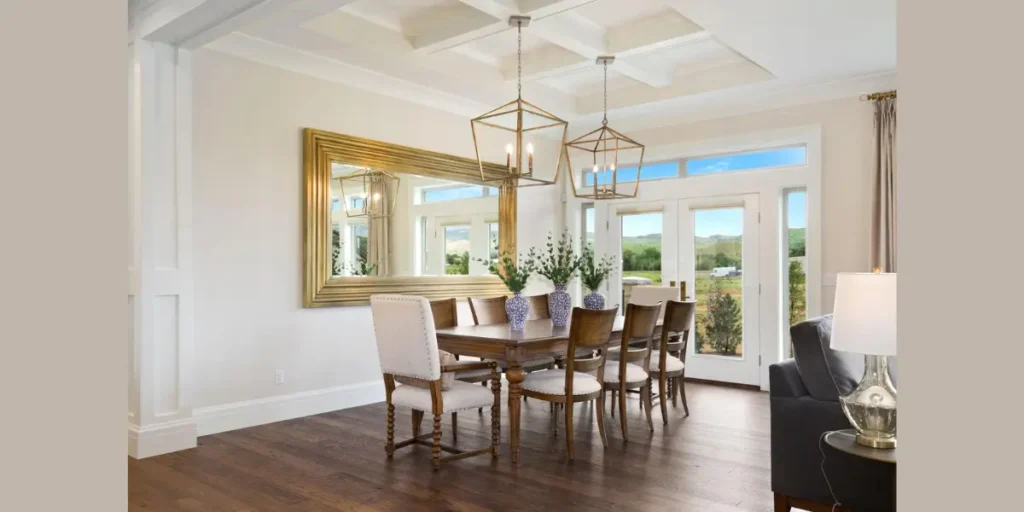
A coffered ceiling introduces structure and timeless elegance. I often recommend this design for formal dining rooms with adequate ceiling height. The grid pattern creates dimension while maintaining symmetry.
Each recessed panel adds visual depth and enhances shadow play. I usually pair this ceiling with a central chandelier to emphasize balance. Light colored beams keep the room bright and refined.
Coffered ceilings work particularly well in traditional and transitional interiors. They elevate the space without overwhelming it and add architectural value that feels intentional and permanent.
2. Exposed Wood Beam Ceiling
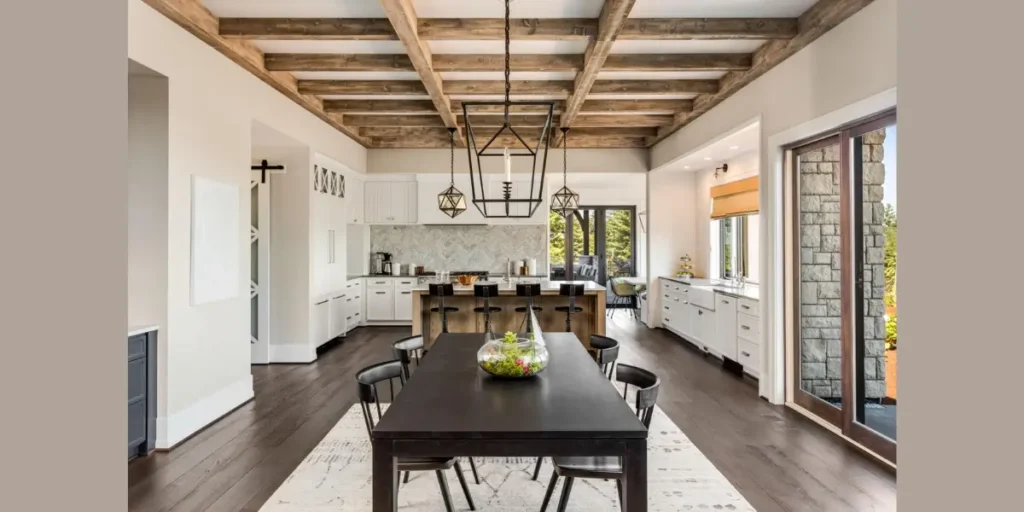
Exposed wood beams instantly introduce warmth and character. I like using natural or lightly stained beams to highlight texture and craftsmanship. The contrast against a lighter ceiling surface feels grounded and inviting.
Beams can run parallel to elongate the room or crosswise to create intimacy. I ensure proportions remain balanced so the beams enhance rather than dominate.
This idea suits rustic, farmhouse, and even modern interiors. When styled thoughtfully, wood beams create authenticity and make the dining room feel welcoming and substantial.
3. Tray Ceiling with Ambient Lighting
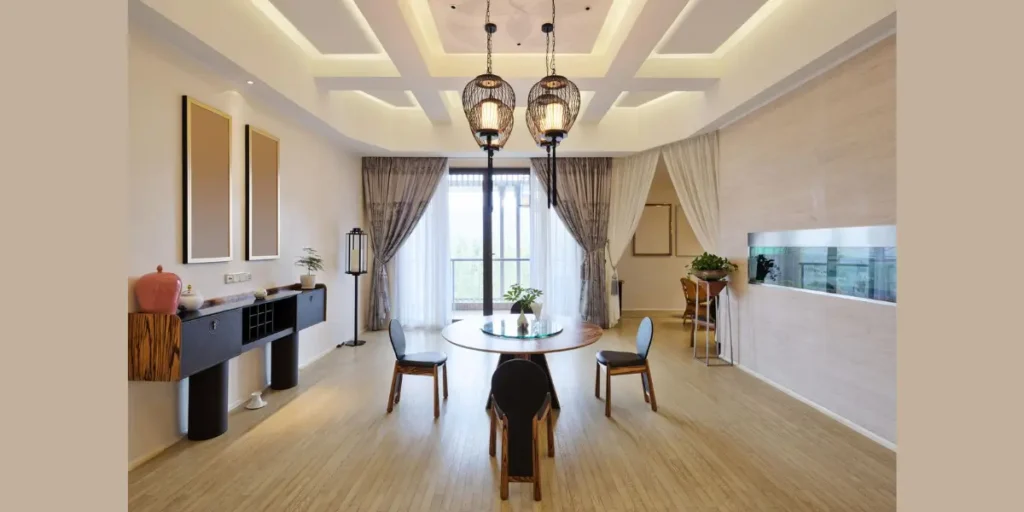
A tray ceiling adds layered dimension without heavy detailing. I often integrate concealed LED lighting within the recessed section to create soft ambient glow. This technique enhances mood without visible fixtures.
The stepped design naturally draws the eye upward. I choose neutral tones to maintain subtle sophistication while allowing lighting to take focus.
Tray ceilings work beautifully in contemporary homes. They provide architectural interest while maintaining a clean and refined aesthetic that complements modern dining spaces.
4. Statement Ceiling Wallpaper
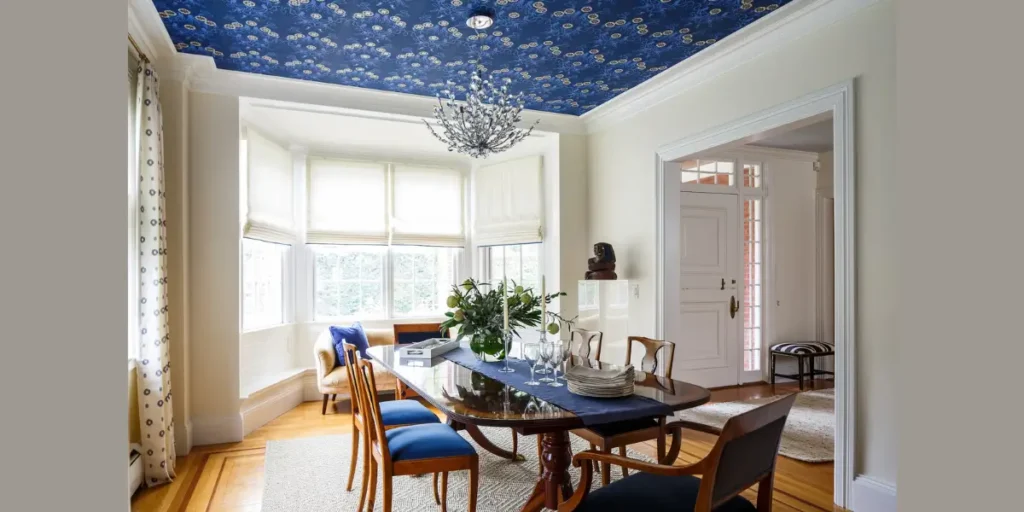
Ceiling wallpaper introduces unexpected drama. I use this approach when clients want personality without overwhelming the walls. Patterns or textured prints transform the overhead plane into a design feature.
I balance bold ceilings with neutral furnishings to prevent visual overload. Proper lighting highlights the pattern without creating glare.
This solution works well in eclectic or transitional interiors. It creates a memorable focal point and adds creative expression to the dining room.
5. Painted Accent Ceiling
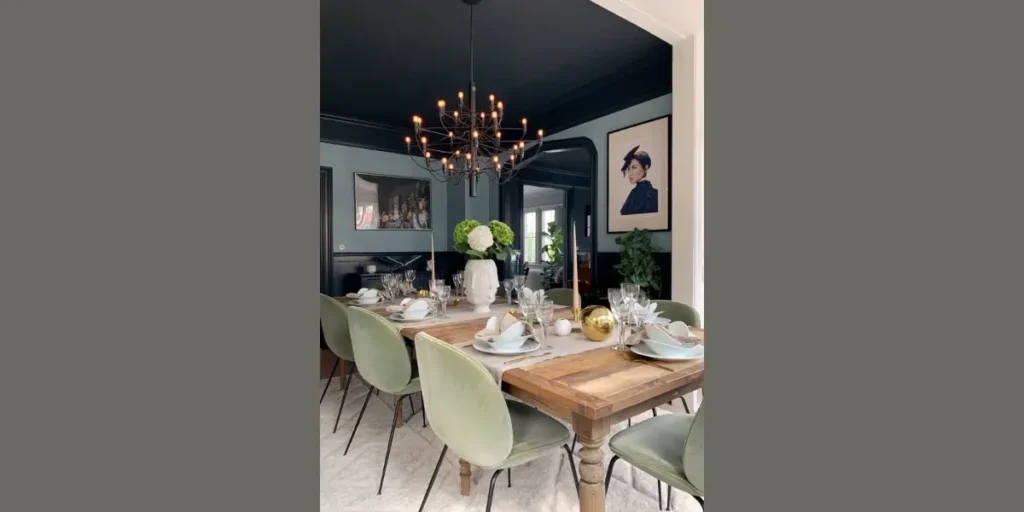
Painting the ceiling in a contrasting shade changes the atmosphere instantly. I often recommend deep navy or charcoal for intimacy, especially in larger dining rooms.
Lighter pastel tones can also soften the space and introduce warmth. I always consider how natural and artificial light interact with the selected color.
A painted ceiling provides impact without major renovation. It offers a cost effective way to redefine the dining room’s character while maintaining design cohesion.
6. Shiplap or Wood Plank Ceiling
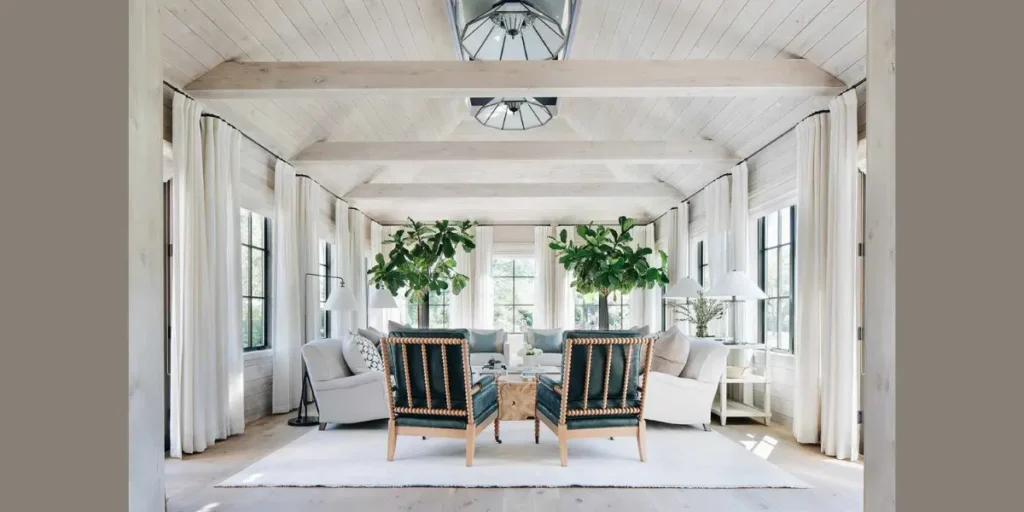
Shiplap ceilings add subtle texture and rhythm. I prefer white painted planks for coastal or farmhouse interiors, while natural finishes emphasize rustic warmth.
The linear pattern elongates the space and introduces visual movement. I coordinate the ceiling tone with flooring or furniture to maintain harmony.
This ceiling style feels approachable and relaxed. It enhances charm without excessive ornamentation and supports a welcoming dining environment.
7. Minimalist Flat Ceiling with Recessed Lighting
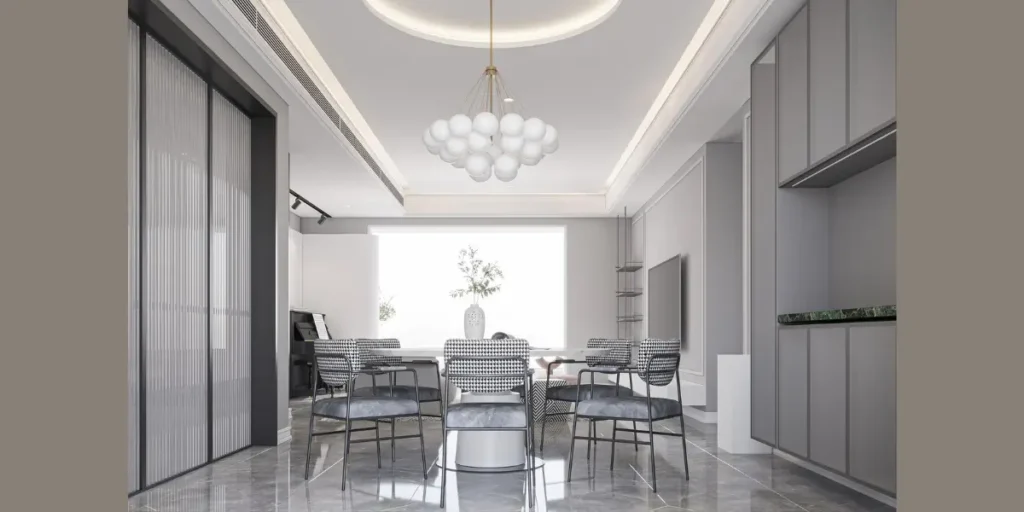
A flat ceiling with recessed lights keeps the design clean and uncluttered. I rely on this option in modern dining rooms where simplicity defines the aesthetic.
Strategic placement of recessed fixtures ensures even illumination across the table. I often combine them with a central pendant for layered lighting.
This approach emphasizes subtlety. It supports functionality while allowing furniture and décor to take center stage within the dining space.
8. Decorative Ceiling Medallion
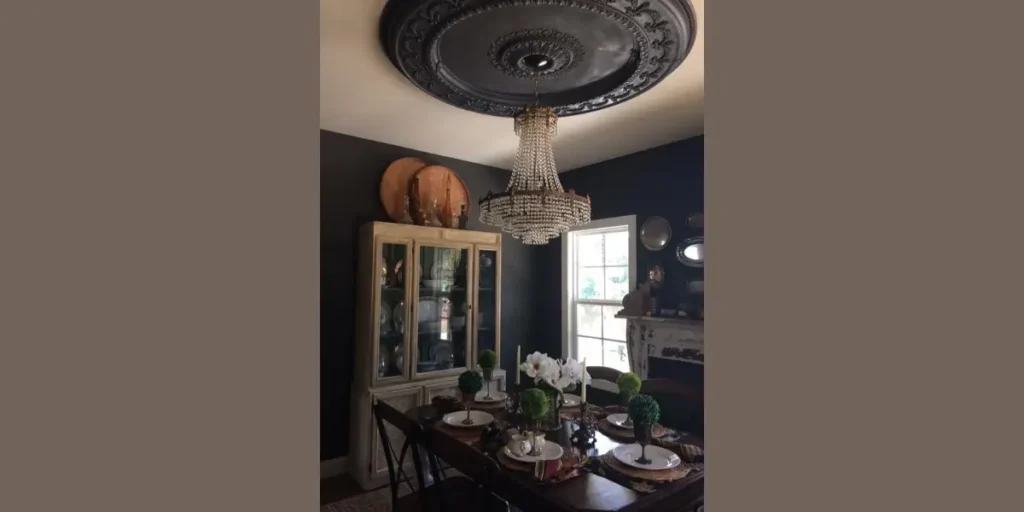
A ceiling medallion frames a chandelier beautifully. I recommend this detail in traditional dining rooms that benefit from refined ornamentation.
The medallion adds texture and architectural emphasis around the light fixture. I ensure scale matches the chandelier diameter for proper proportion.
This classic feature enhances elegance without overwhelming the ceiling. It provides a polished finishing touch that complements formal interiors.
9. Vaulted or Cathedral Ceiling
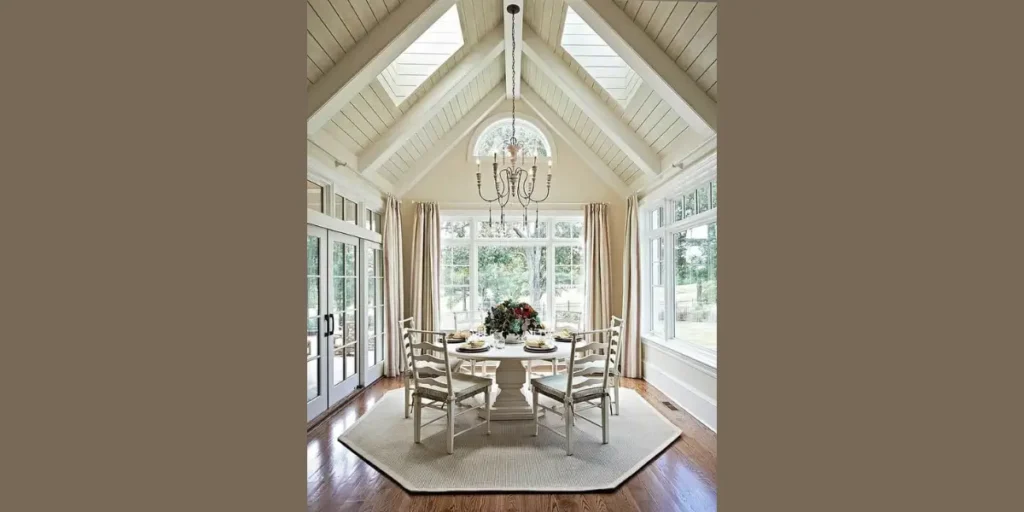
A vaulted ceiling creates openness and grandeur. I appreciate how angled lines draw the eye upward and make the room feel expansive.
This design enhances natural light flow, especially when paired with large windows. I balance height with statement lighting to maintain intimacy.
Vaulted ceilings suit open concept homes and contemporary layouts. They transform the dining room into a dramatic yet airy space.
10. Metallic or Gloss Finish Ceiling
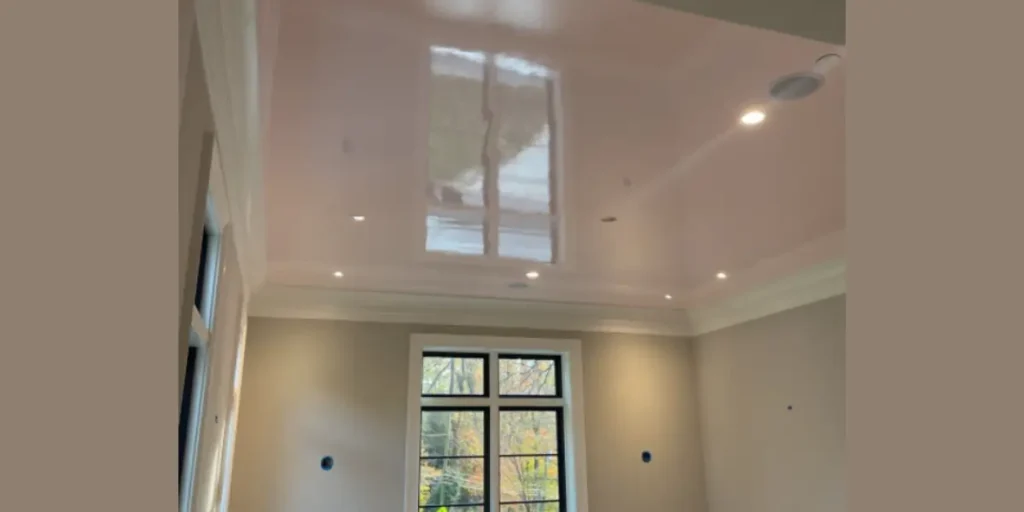
A metallic or high gloss ceiling reflects light in a striking way. I use this finish when clients want subtle luxury without heavy detailing.
Soft metallic tones such as champagne or muted gold add warmth. Gloss finishes amplify brightness and create depth.
This design choice works particularly well in modern and upscale interiors. It elevates the atmosphere and introduces understated glamour above the dining table.
How to Choose the Right Ceiling Design for Your Dining Room
Selecting the right ceiling design requires more than choosing what looks impressive. I always begin by studying the room’s proportions, lighting conditions, and architectural features.
A design that works beautifully in a high ceiling space may feel overwhelming in a compact dining room.
Important Details Before You Decide
The ceiling should support the overall interior style rather than compete with it. When materials, color, and lighting align with the furniture and layout, the room feels cohesive and intentional.
A well chosen ceiling enhances atmosphere without distracting from the dining experience.
Ceiling height and room proportions determine the level of detail you can introduce. In lower rooms, I prefer subtle treatments like paint or recessed lighting. Taller ceilings allow beams, trays, or coffered designs to shine without feeling heavy.
Lighting plays a crucial role in ceiling design. I always evaluate how natural and artificial light will reflect off surfaces. Glossy finishes amplify brightness, while matte textures soften it.
Interior design style should guide the final choice. Rustic homes benefit from wood elements, while modern spaces respond better to clean lines and minimal detailing. Budget and maintenance also matter, especially when selecting textured finishes or wallpaper.
Conclusion
A thoughtfully designed ceiling can completely redefine the dining room without altering the layout or furniture. I have seen simple overhead updates create depth, improve lighting balance, and add architectural personality instantly.
Whether you choose structural details like beams and coffers or subtle finishes such as paint and recessed lighting, the key lies in proportion and harmony.
The ceiling should support the room’s style while enhancing comfort and atmosphere.
When treated intentionally, it becomes more than a surface above, it becomes a defining feature that elevates every meal and gathering in the space.
FAQs
Coffered and tray ceilings remain popular because they add depth without overwhelming the space. Both designs enhance lighting and architectural interest while maintaining balance. The choice depends largely on ceiling height and overall style.
Yes, darker ceiling colors create intimacy and drama, especially in larger rooms. I recommend pairing them with adequate lighting to prevent the space from feeling too enclosed. Proper balance keeps the room inviting.
Wood beams can work beautifully in modern homes when styled thoughtfully. I often use lighter stains and clean lines to blend rustic warmth with contemporary simplicity. The key lies in proportion and restraint.
Use lighter paint colors and vertical elements such as tall drapery to create the illusion of height. Avoid heavy ceiling details and keep lighting fixtures proportionate to maintain openness.
Ceiling wallpaper works well if installed properly and paired with balanced décor. I recommend choosing subtle patterns for longevity and ensuring the room has adequate lighting to highlight the design.