
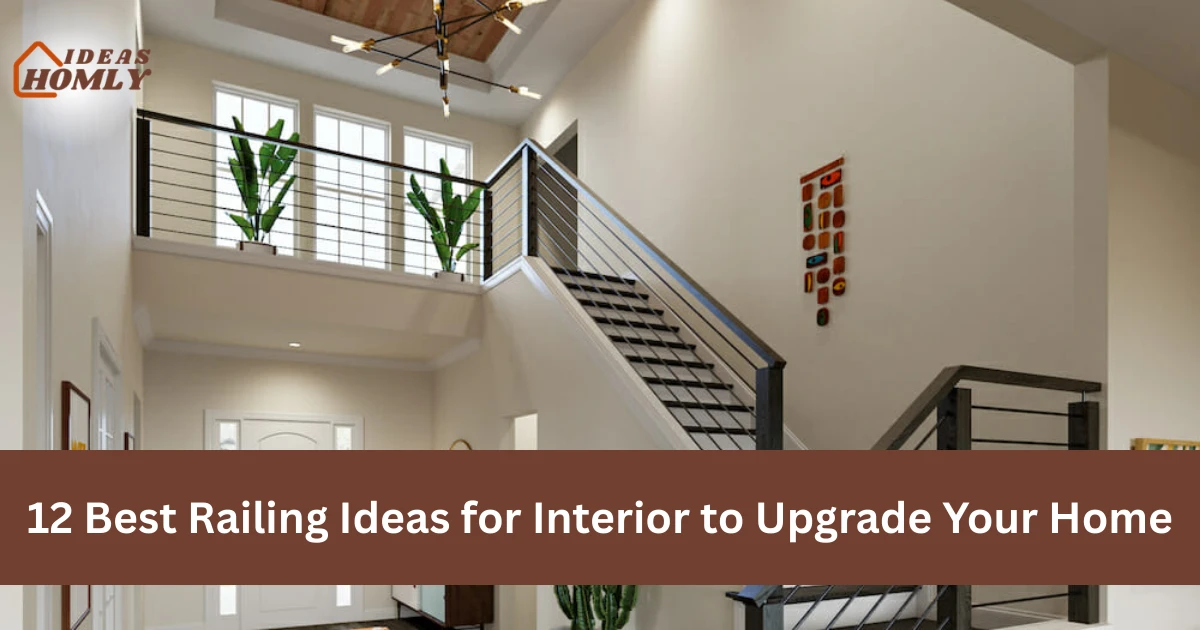

The best railing ideas for interior spaces combine safety, style, and smart material choice to improve the overall look of your home. When I choose an interior railing design, I focus on durability, visual appeal, and how well it blends with stairs, balconies, or loft areas. A good railing does more than prevent falls. It shapes the entire mood of your interior.
If you are renovating your staircase or building a new home, interior stair railing ideas matter more than most people think. The right indoor railing design can make a small hallway look spacious or give a simple staircase a premium feel. In this guide, I will share 12 best railing ideas for interior spaces that work in real homes, not just in magazines.
I have personally seen how changing a railing transforms an entire living area. So let’s go straight to practical, stylish, and realistic interior railing options you can actually install.
Why Interior Railing Design Matters in Modern Homes
Interior railing design directly affects both safety and aesthetics inside your home. Many homeowners treat railings as a small detail, but they sit at eye level and become a focal point in staircases and mezzanines. A well-chosen stair railing design can make your home look polished and thoughtfully designed.
Modern interior railing ideas also help define architectural style. Whether your home leans modern, farmhouse, industrial, or classic, the railing ties everything together. I always suggest choosing a railing style that complements flooring, wall color, and staircase material.
Now let’s move to the 12 best railing ideas for interior spaces that balance beauty and practicality.
1. Modern Glass Railing for a Clean and Open Interior Look
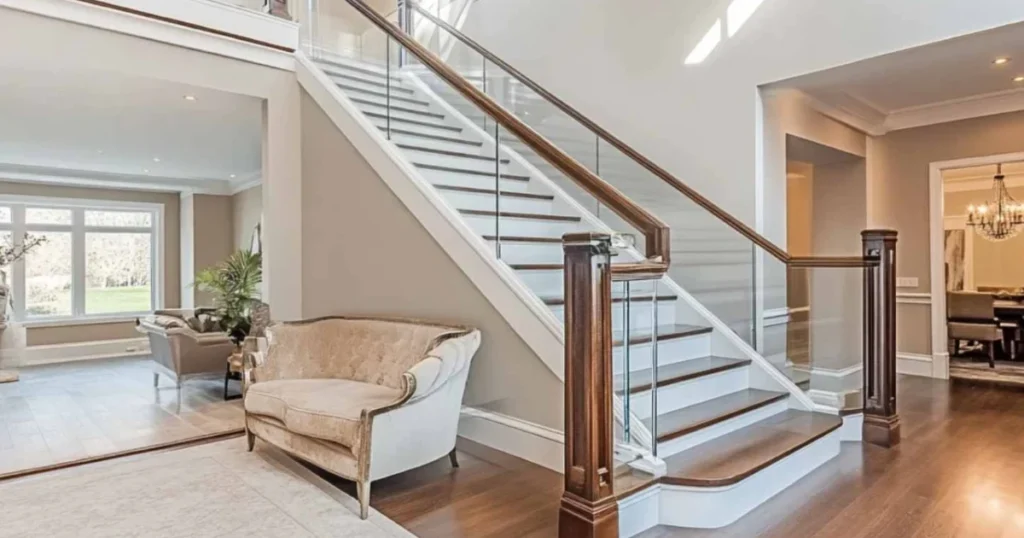
Glass railing is one of the best interior railing ideas if you want a bright and spacious feel. It allows natural light to move freely across floors and makes even small staircases appear larger. Frameless glass panels work especially well in contemporary homes.
Glass interior stair railings suit duplex houses, modern villas, and apartments with open floor plans. I like recommending tempered glass for safety because it is strong and resistant to impact. It also requires minimal framing, which keeps the design simple.
Maintenance is easy but regular cleaning is necessary. Fingerprints show quickly, especially in homes with kids. If you do not mind occasional wiping, glass railing offers a premium and minimal interior look.
2. Wooden Stair Railing for a Warm and Timeless Interior
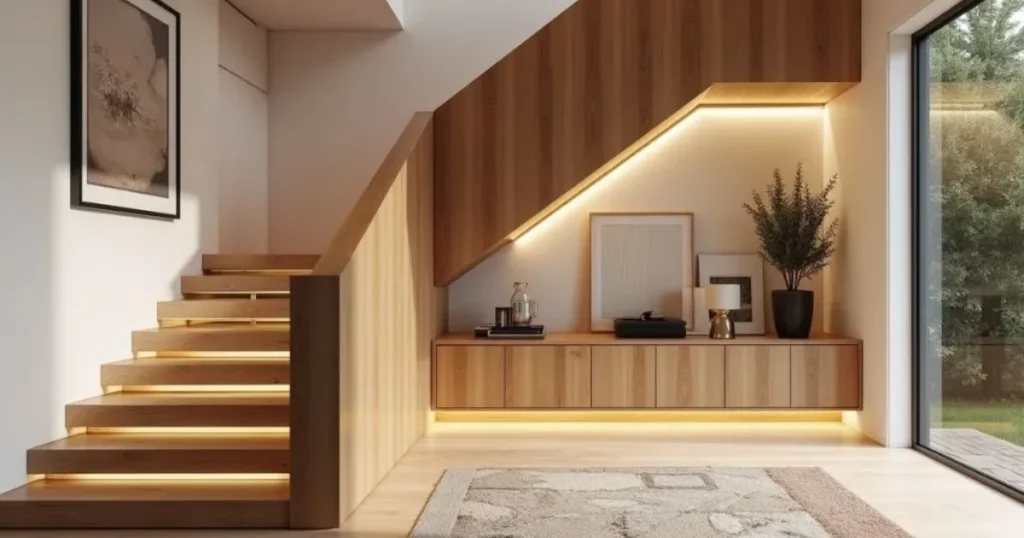
Wooden railing remains one of the most popular indoor railing ideas because it adds warmth instantly. Solid wood railings work well with traditional, farmhouse, and even transitional interiors. Oak, teak, and walnut are common choices.
I personally prefer wooden stair railings when the staircase itself is wooden. Matching tones create a cohesive design. You can stain the wood darker for a bold look or keep it light for a Scandinavian vibe.
Wood railings need polishing and occasional refinishing. However, the comfort of holding a natural wood handrail makes it worth the effort. It feels solid, warm, and welcoming.
3. Black Metal Railing for a Modern Industrial Interior
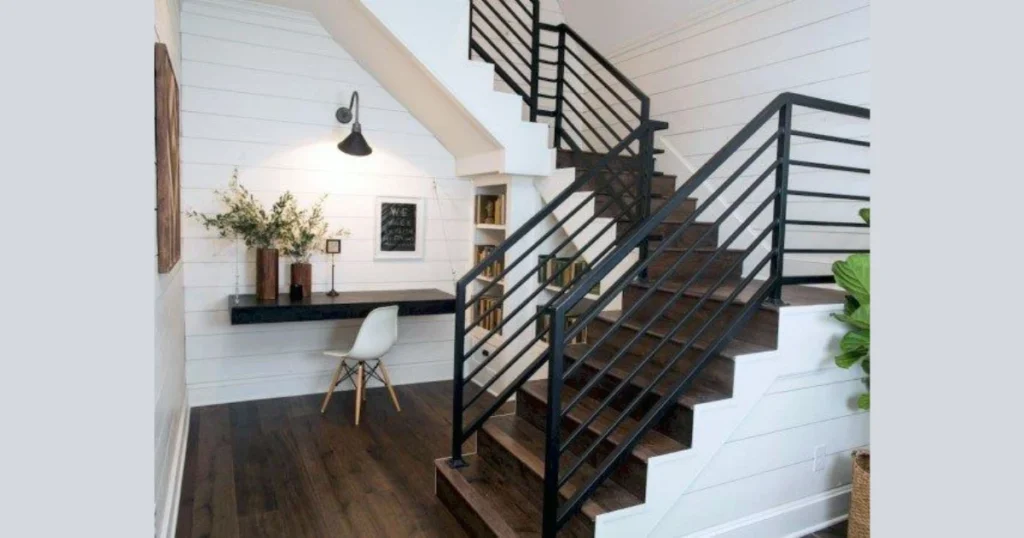
Black metal railing creates a sharp and stylish contrast in interior spaces. It fits perfectly in modern, industrial, and minimalist homes. Slim metal balusters with a matte black finish look sleek and contemporary.
This interior stair railing design works beautifully against white walls and wooden steps. I often suggest vertical metal bars for safety and clean lines. They also make cleaning simple.
Metal railings are durable and low maintenance. A powder-coated finish prevents rust and scratches. If you want something bold but not flashy, black metal railing does the job perfectly.
4. Cable Railing for a Sleek and Minimal Interior Design
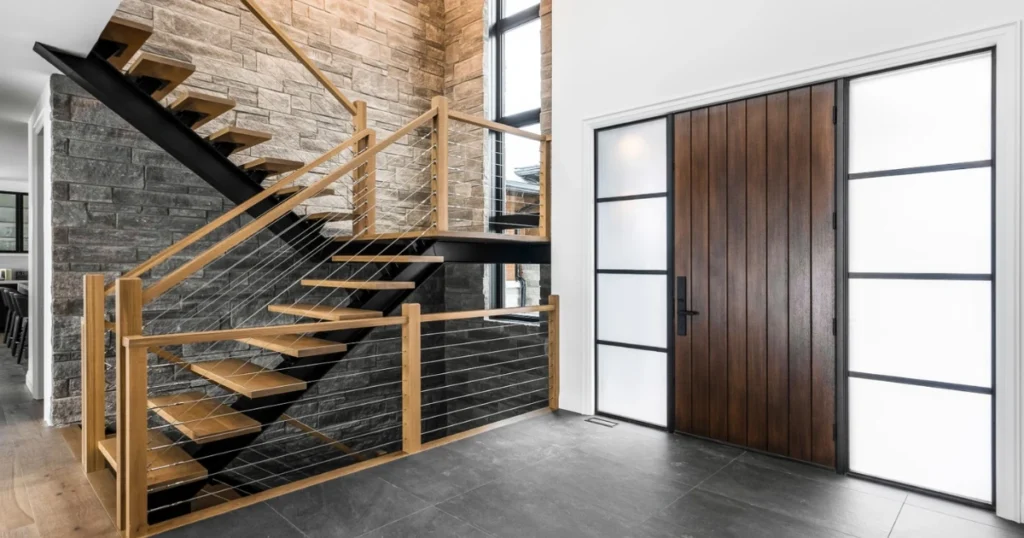
Cable railing offers a modern interior look with thin horizontal lines. Stainless steel cables replace traditional balusters, creating a light and airy feel. This style suits contemporary homes and loft-style interiors.
Cable interior railing ideas work best in open-plan layouts. They do not block views and maintain a spacious appearance. I like them for homes with large windows or double-height ceilings.
However, installation must follow safety spacing rules. Tensioned cables require proper fitting to avoid sagging. If installed correctly, cable railing looks clean and modern for years.
5. Wrought Iron Railing for Decorative Interior Appeal
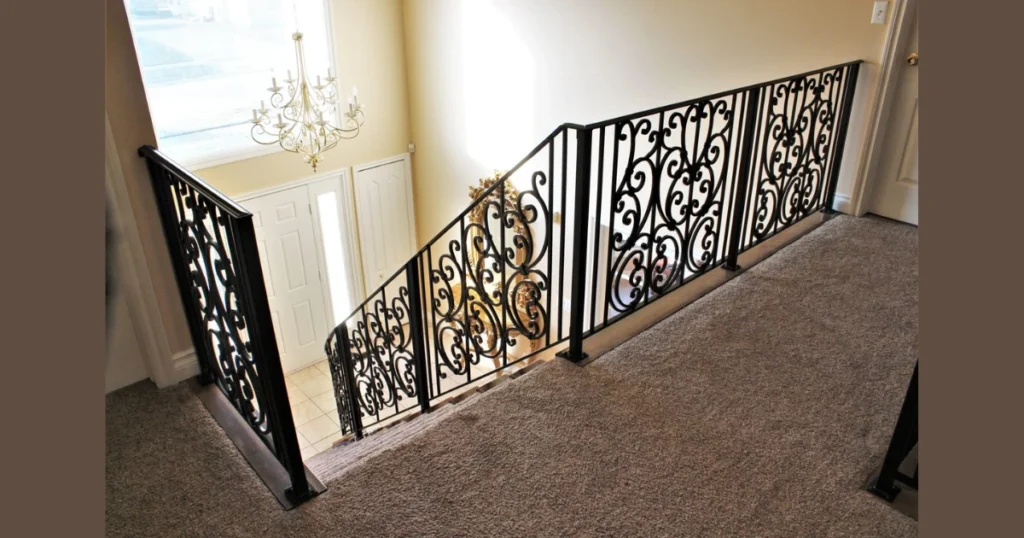
Wrought iron railing adds character and artistic detail to interior staircases. This type of indoor railing design often features curves, patterns, and custom metalwork. It fits well in classic and Mediterranean-style homes.
I have seen wrought iron railings become the centerpiece of an entrance staircase. You can combine them with wooden handrails for a balanced look. The mix of metal and wood feels elegant.
Wrought iron requires occasional repainting to maintain its finish. Still, if you want a more decorative interior railing idea, this option brings personality and craftsmanship.
6. Horizontal Bar Railing for a Contemporary Staircase
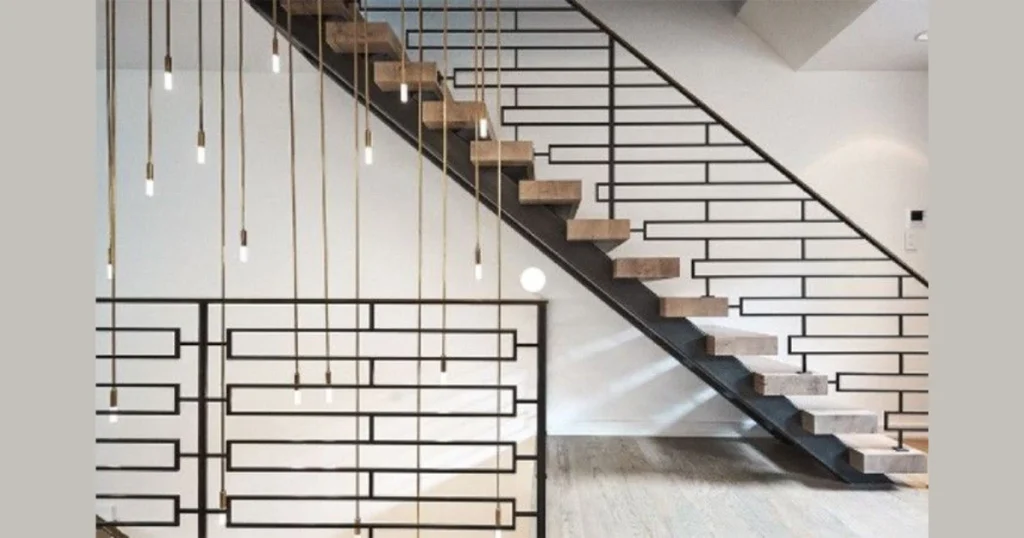
Horizontal bar railing gives a clean and linear look to interior spaces. Instead of vertical balusters, this design uses parallel metal bars running horizontally. It feels modern and structured.
This railing style works best in minimalist interiors. I usually suggest stainless steel or black powder-coated bars. They create a strong visual impact without overcrowding the staircase.
One thing to consider is child safety. If you have small children, ensure spacing meets safety standards. With correct installation, horizontal railing looks sharp and organized.
7. Floating Stair Railing for a Light and Stylish Interior
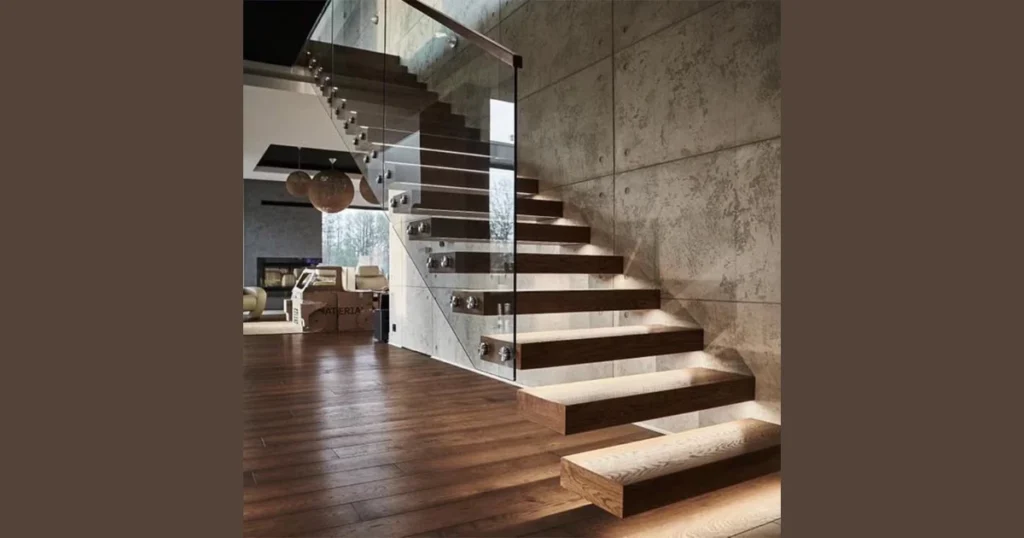
Floating stair railing enhances the modern appeal of open staircase designs. This style usually pairs with floating stairs where treads attach directly to the wall. The railing appears minimal and almost invisible.
I recommend combining glass panels or slim metal supports with floating stairs. This combination keeps the space open and elegant. It works especially well in duplex homes and modern interiors.
Installation requires structural planning. You must ensure strong wall support and precise fitting. When done correctly, floating interior railings look refined and impressive.
8. Half Wall Railing for a Solid and Practical Interior Setup
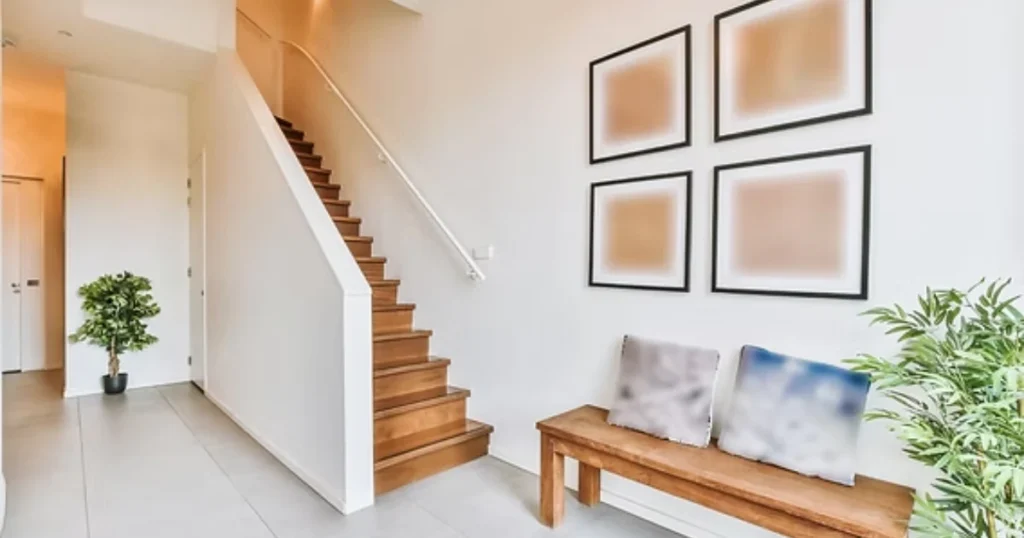
Half wall railing offers privacy and structural support in interior staircases. Instead of open balusters, this design uses a short wall that follows the stairs. It creates a more enclosed and safe feeling.
I often suggest half wall railings for family homes with children. The solid barrier reduces fall risks and feels sturdy. You can finish the wall with paint, paneling, or stone texture.
Although it blocks some light, you can add a wooden or metal handrail on top. This combination keeps the design functional and visually balanced.
9. Wooden and Metal Combination Railing for a Balanced Interior Look
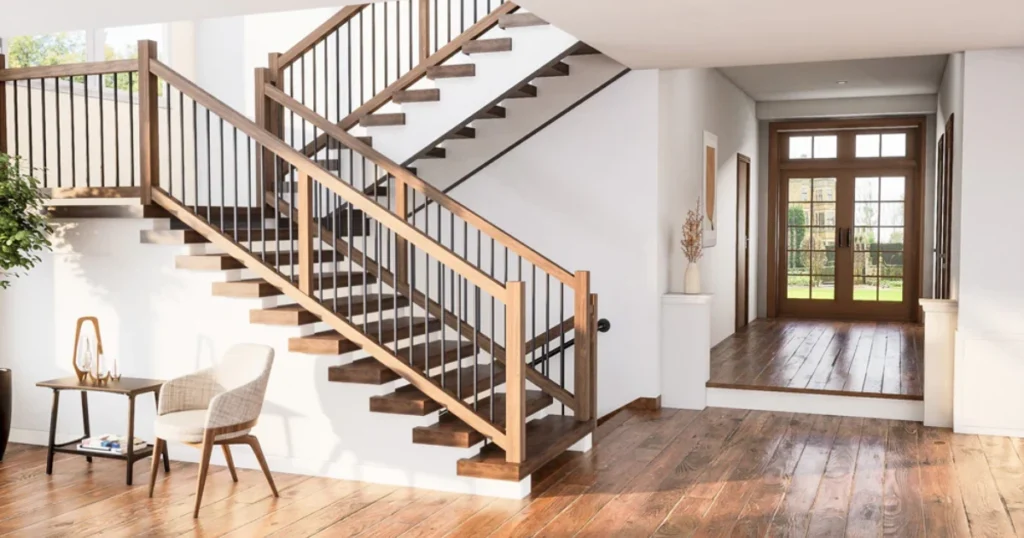
A wood and metal combination railing blends warmth with strength. This hybrid interior railing idea works well in transitional and modern farmhouse homes. It gives structure without feeling too industrial.
I like pairing wooden handrails with black metal balusters. The wood softens the metal, while the metal adds durability. This contrast creates depth in interior stair design.
Maintenance remains manageable since metal needs little care and wood only needs occasional polishing. This combination feels practical and stylish at the same time.
10. Minimalist White Railing for a Bright Interior Finish
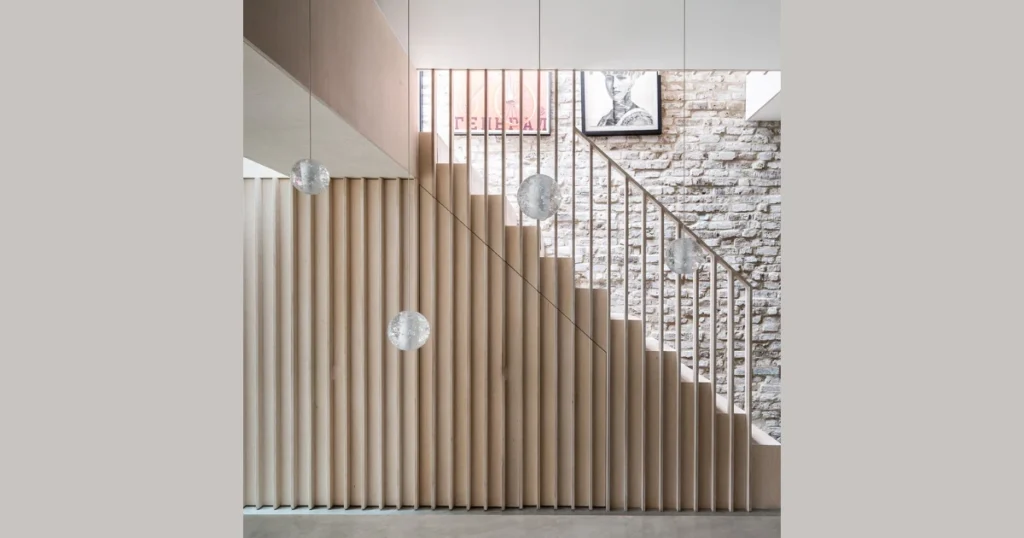
White railing brightens interior spaces and supports a clean design theme. It works beautifully in Scandinavian, coastal, and modern homes. White reflects light and makes staircases appear larger.
I suggest using painted wood or powder-coated metal for durability. Matte white finishes reduce glare and look more refined than glossy surfaces. This detail makes a visible difference.
White interior railing ideas require periodic cleaning. However, the airy and fresh atmosphere they create makes the effort worthwhile.
11. Loft-Style Interior Railing for Double-Height Spaces
Loft-style railing suits open mezzanines and double-height living areas. This type of interior railing often uses black metal frames, mesh panels, or vertical bars. It adds character without blocking the view.
I have seen loft railings transform empty upper floors into stylish gallery-like spaces. They create separation while keeping the layout open. This balance matters in modern homes.
Choose strong materials and secure installation. Loft areas often experience higher foot traffic, so durability should be a priority.
12. Decorative Panel Railing for a Custom Interior Statement
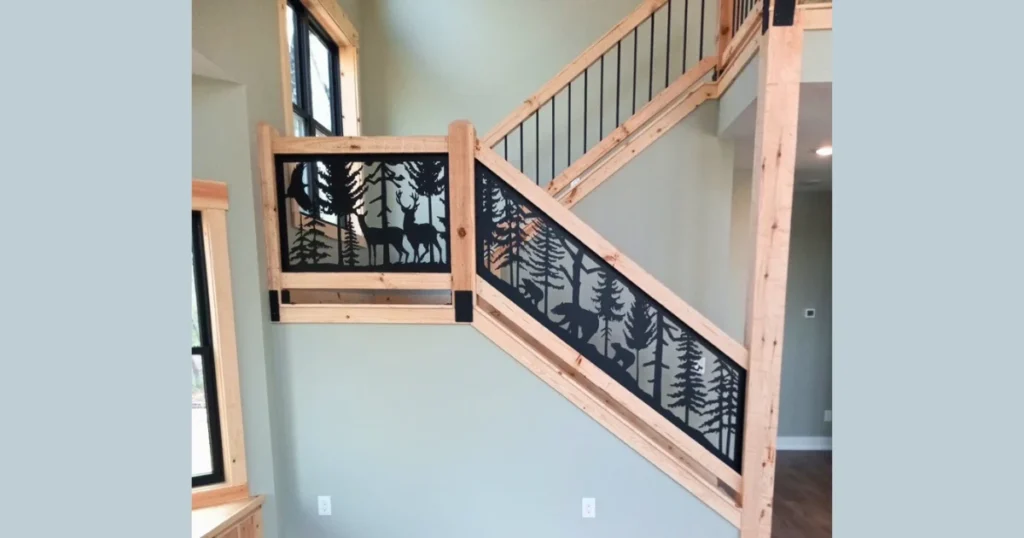
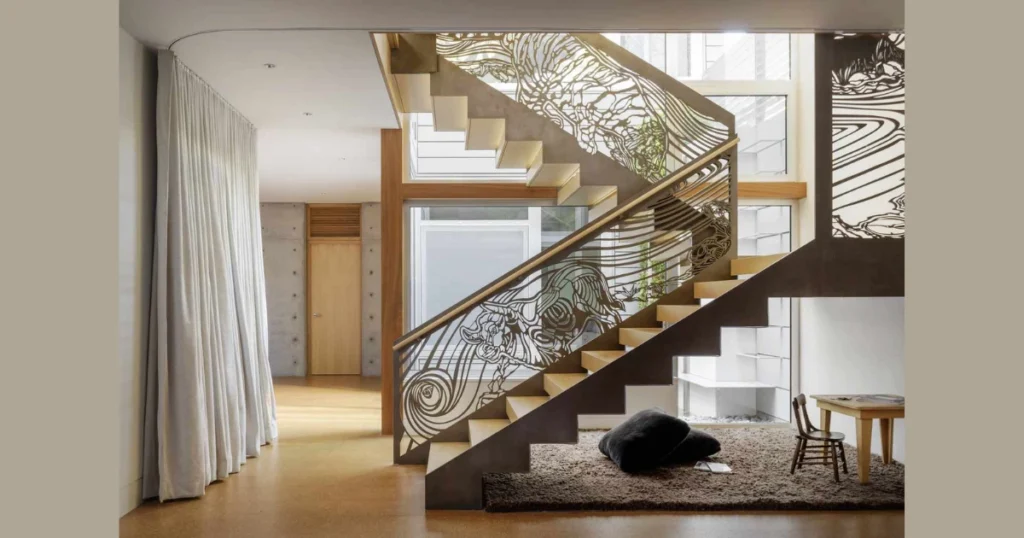
Decorative panel railing creates a unique focal point in interior design. Instead of traditional bars, this style uses laser-cut metal sheets, carved wood panels, or geometric patterns.
I personally enjoy this option for feature staircases near entrances. A patterned railing adds personality without needing extra decor. It works well in both contemporary and artistic interiors.
Customization increases cost, but it allows you to reflect your taste. If you want your interior stair railing to stand out, decorative panels offer creative freedom.
How to Choose the Best Interior Railing for Your Home
Choosing the right interior railing depends on safety, style, and budget. I always evaluate these three factors before finalizing any stair railing design. A railing should look good but also meet safety standards.
Key Factors to Consider Before Installing Interior Railings
- Safety Standards
- Follow local building codes.
- Maintain proper spacing between balusters.
- Ensure strong anchoring.
- Material Durability
- Wood offers warmth but needs maintenance.
- Metal provides strength and low upkeep.
- Glass delivers openness but needs cleaning.
- Interior Design Style
- Modern homes suit glass and metal.
- Farmhouse interiors match wooden railings.
- Industrial themes work well with black steel.
- Budget Planning
- Glass and custom panels cost more.
- Standard wood or metal options are more affordable.
- Combination railings balance price and style.
Comparison Table of Interior Railing Ideas
| Railing Type | Best For Style | Maintenance Level | Cost Range |
|---|---|---|---|
| Glass Railing | Modern, Minimal | Medium | High |
| Wooden Railing | Traditional, Farmhouse | Medium | Medium |
| Black Metal Railing | Industrial, Modern | Low | Medium |
| Cable Railing | Contemporary | Low | Medium to High |
| Wrought Iron | Classic, Decorative | Medium | Medium to High |
| Decorative Panel Railing | Custom Interiors | Medium | High |
Interior Stair Railing Installation and Maintenance Tips
Proper installation and regular care keep interior railings safe and attractive for years. I always tell homeowners that even the best railing idea fails if installation goes wrong. Strong anchoring and correct height make all the difference.
Before installing any interior stair railing, measure carefully and follow building codes. Handrail height usually ranges between 34 to 38 inches. Correct spacing between balusters prevents safety risks, especially for children.
Maintenance depends on material choice. Wood needs polishing and sealing. Metal requires occasional cleaning and touch-up paint. Glass demands regular wiping to remove smudges.
Simple Maintenance Guide by Material
| Material Type | Cleaning Frequency | Extra Care Needed |
|---|---|---|
| Wood | Monthly dusting | Annual polishing |
| Glass | Weekly cleaning | Check fittings |
| Metal | Monthly wipe | Rust inspection |
| Cable | Monthly wipe | Tension check |
Cost Considerations for Interior Railing Ideas
Interior railing cost varies based on material, design complexity, and labor. Many people focus only on design and forget budget planning. I prefer deciding a clear price range before selecting a style.
Glass railing often costs more due to tempered panels and hardware. Decorative panel railings also raise expenses because of custom fabrication. Standard wood or metal balusters usually stay more affordable.
Installation charges depend on staircase design. Straight stairs cost less to fit than curved or spiral staircases. Planning ahead avoids surprise expenses later.
The Best Thoughts Choosing the Best Interior Railing
The best railing ideas for interior spaces combine safety, comfort, and visual balance. Every style I shared works in real homes and suits different budgets and themes. You simply need to match it with your space and lifestyle.
If you prefer brightness and openness, glass railing fits well. If you love warmth, wooden railing feels inviting. If you enjoy a modern edge, metal or cable designs create a clean look.
I always suggest standing at the bottom of your staircase and imagining how the railing will frame that view. That simple step helps you make the right decision.
Conclusion
Choosing the right interior railing design depends on your home style, budget, and safety needs. In this guide, I covered 12 best railing ideas for interior spaces including glass, wood, metal, cable, loft-style, and decorative panel options.
Each indoor railing idea serves a different purpose. Glass creates openness. Wood adds warmth. Metal brings structure. Decorative panels add personality. When you compare materials, maintenance, and cost, you make a smarter decision.
If you are serious about upgrading your staircase, start with your interior theme and work from there. A well-chosen stair railing does not just support your steps. It shapes your entire home’s visual identity.
FAQs
Glass and black metal railings remain highly popular because they suit modern interiors and require low maintenance.
The best material depends on your needs. Wood feels warm and classic. Metal offers durability. Glass provides openness and light flow.
Yes, tempered glass railings are safe when installed correctly. Ensure proper thickness and secure fittings for safety.
Costs vary widely. Basic wooden or metal railings are more affordable, while glass and custom decorative designs cost more.
Yes, a well-designed interior railing improves visual appeal and can positively influence resale value.
You should clean railings monthly. Wood may need yearly refinishing. Glass requires more frequent wiping.
Yes, combining wood and metal is common and creates a balanced look. It also improves durability.