
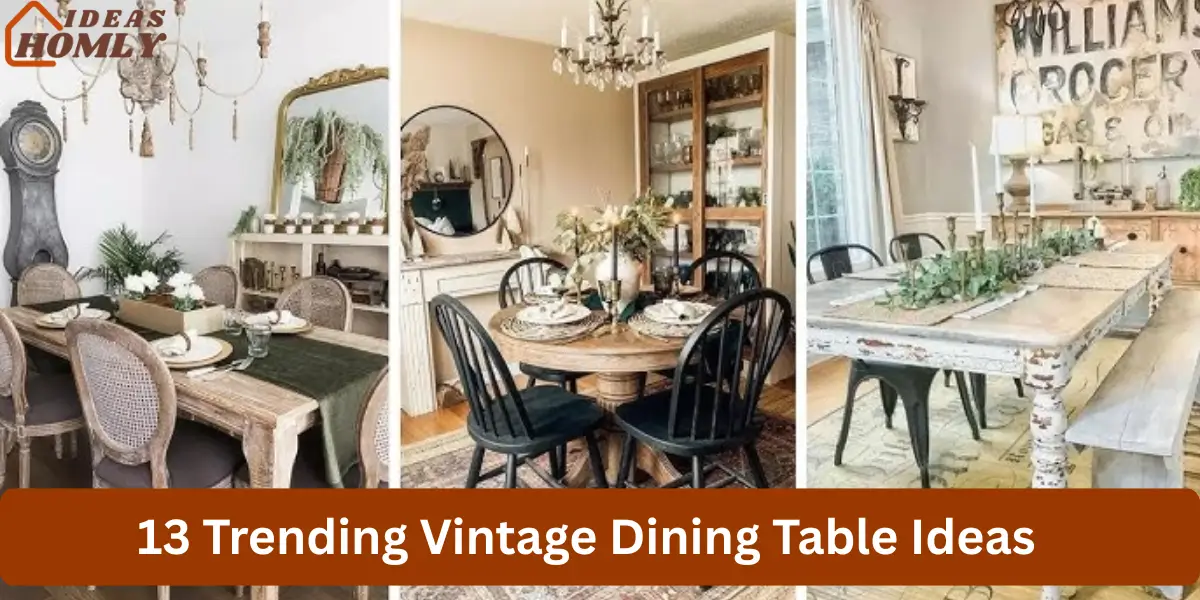

Vintage dining table ideas have a way of adding depth and personality that new furniture simply can’t replicate. Whenever I design a dining space with a vintage centerpiece, the room immediately feels richer and more layered.
The subtle patina, handcrafted details, and aged wood tones tell a story that modern finishes often lack. Rather than chasing trends, I focus on pieces that carry history and character.
In this guide, I’ll share distinctive styles that bring authenticity, charm, and lasting beauty into your dining room without sacrificing functionality.
What Gives a Dining Table True Vintage Character
A dining table earns the label “vintage” through craftsmanship, material, and age. I always look for solid wood construction, visible joinery, and natural wear that develops over decades. Genuine vintage pieces carry subtle imperfections that add depth rather than diminish value.
Patina plays a major role in defining authenticity. Light surface wear, softened edges, and deepened wood tones reveal history. These signs of aging create warmth that modern replicas often fail to achieve.
Proportion and detailing also matter. Whether ornate or simple, the design should reflect the era it represents. When these elements align, the table feels original, balanced, and timeless.
1. Antique Farmhouse Wooden Table
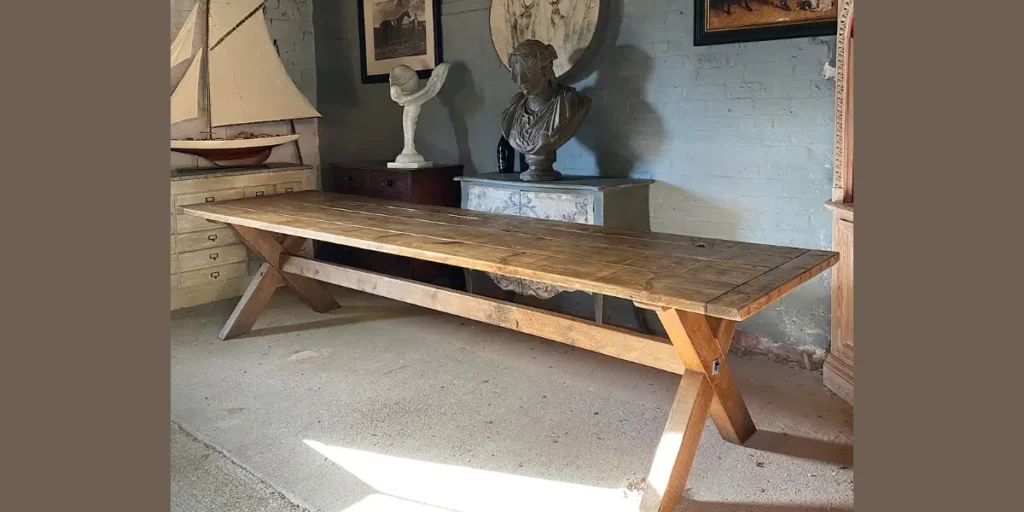
An antique farmhouse table brings honesty and durability into the dining room. I admire how thick wooden planks and sturdy legs reflect practical craftsmanship. The surface often shows subtle marks from years of use, which only enhance its charm.
Natural oak or pine commonly defines this style. I prefer lightly restored finishes that preserve the wood’s aged tone. Keeping the texture visible ensures the table retains its authenticity.
This table suits rustic interiors and relaxed family spaces. It encourages everyday dining while adding character that feels earned rather than manufactured.
2. Victorian Ornate Dining Table
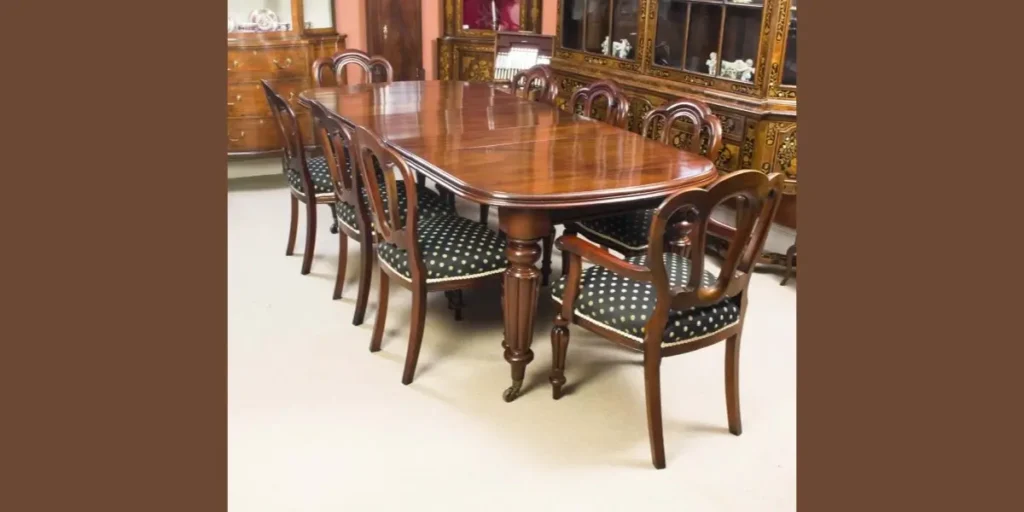
A Victorian dining table immediately commands attention through intricate carving and rich wood tones. I often recommend this style when a client wants dramatic presence. Detailed legs, curved edges, and decorative motifs define its personality.
Mahogany remains the most common material in authentic Victorian pieces. Its deep finish enhances the formal atmosphere. I usually pair this table with upholstered chairs to maintain elegance.
This design fits traditional dining rooms with classic lighting and layered décor. It creates a refined setting that feels both historic and sophisticated.
3. French Provincial Vintage Table
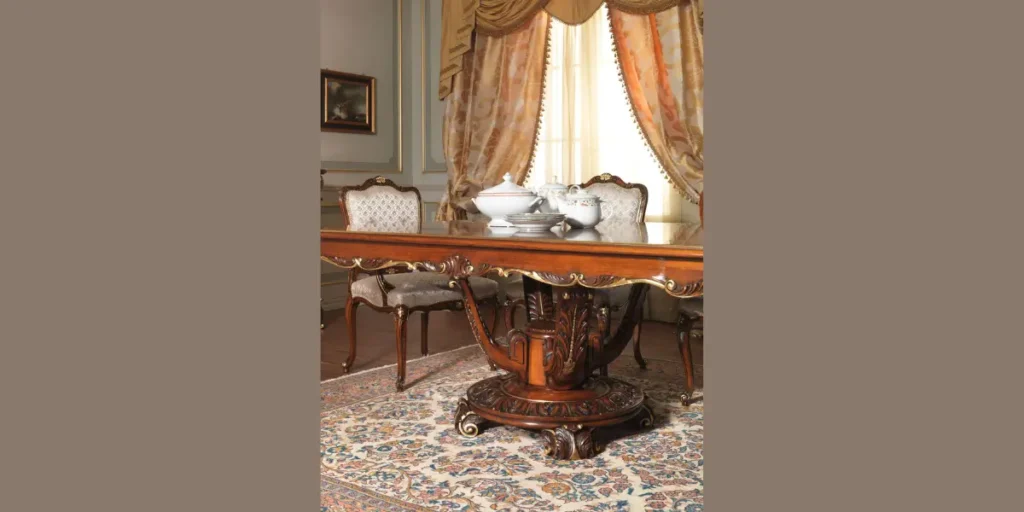
French Provincial tables introduce softness into vintage design. I appreciate the graceful cabriole legs and gently curved lines that define this style. Light finishes or subtle distressing create a romantic atmosphere.
Oak or fruitwood often shapes these tables, offering durability with visual warmth. I prefer neutral palettes around this piece to allow its curves to stand out naturally.
This table works beautifully in cottage-inspired interiors. It blends elegance and comfort, making the dining space feel inviting without appearing overly formal.
4. Mid-Century Vintage Dining Table
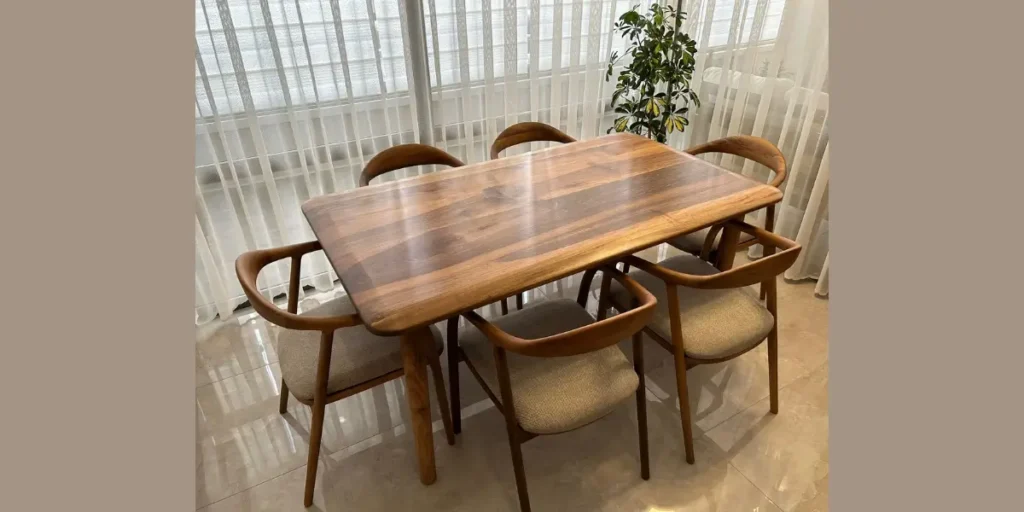
A mid-century vintage table offers clean lines and restrained detailing. I value this style for its simplicity and practicality. Tapered legs and streamlined forms reflect thoughtful design without ornament.
Teak and walnut dominate authentic mid-century pieces. Their rich grain adds warmth while maintaining minimal structure. I recommend preserving original finishes whenever possible.
This table integrates easily into modern homes. It balances retro charm with functional efficiency, making it versatile and enduring.
5. Pedestal Base Antique Dining Table
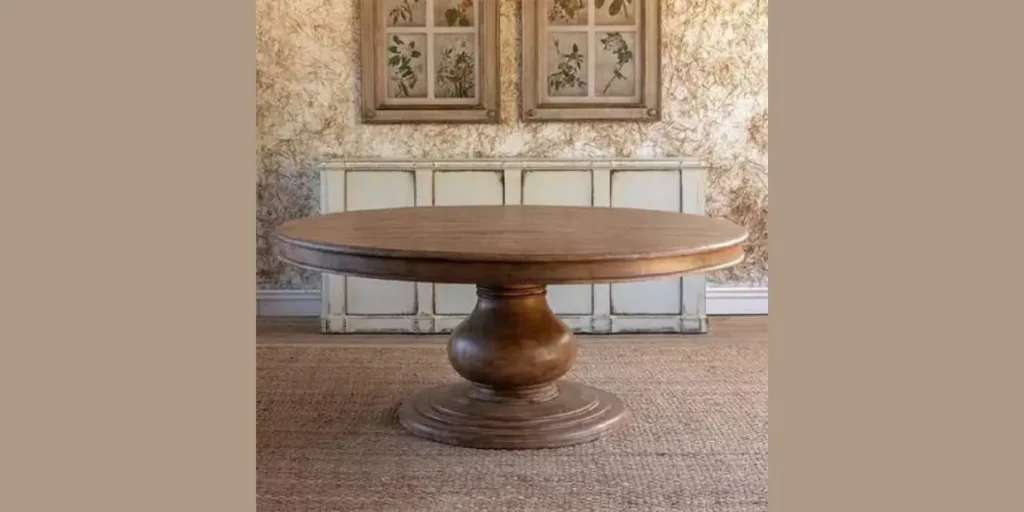
A pedestal base antique table creates elegance through symmetry. I often suggest this style for round dining areas because it improves legroom and encourages conversation. The central support adds balance and structure.
Mahogany or cherry wood commonly shapes these pieces. I ensure the base feels sturdy and well-proportioned to support the tabletop properly.
This design suits intimate dining rooms. It combines functionality with traditional craftsmanship, delivering a timeless silhouette.
6. Art Deco Vintage Dining Table
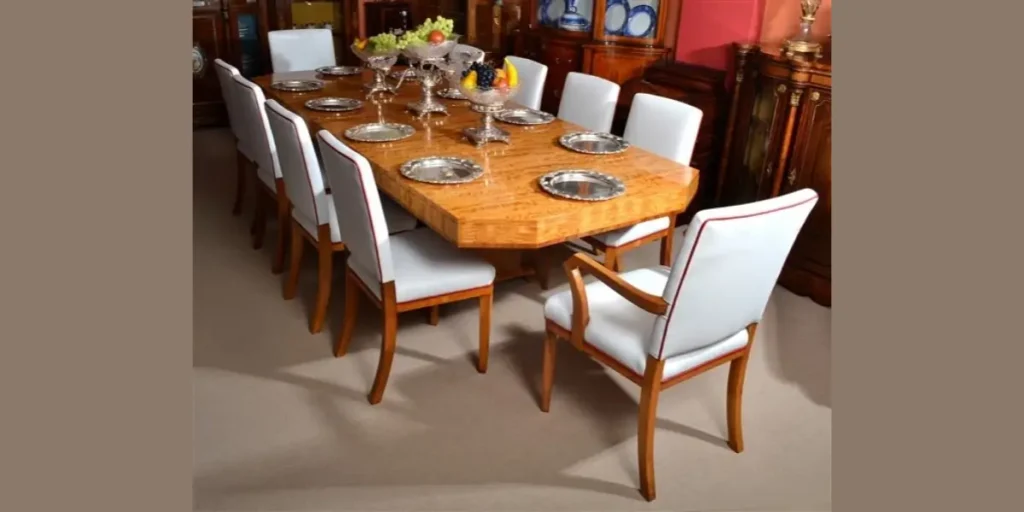
An Art Deco dining table introduces bold geometry into vintage interiors. I admire the strong lines, symmetrical shapes, and polished finishes that define this era. The design feels confident and distinctive.
Exotic woods, lacquered surfaces, and metallic accents often appear in authentic pieces. I recommend maintaining clean edges and polished details to preserve character.
This table fits glamorous interiors beautifully. It adds structure and visual drama while staying true to its historical roots.
7. Drop-Leaf Vintage Dining Table
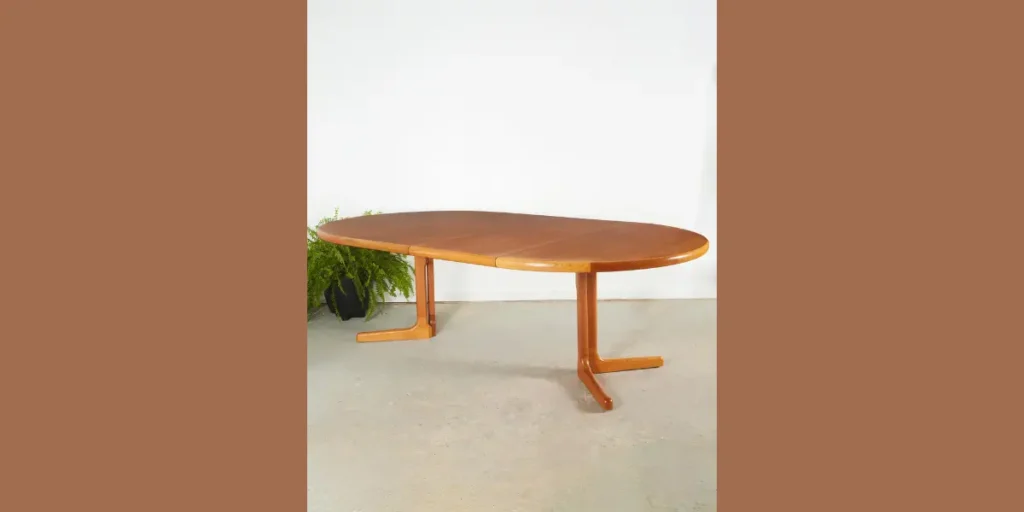
A drop-leaf vintage table offers flexibility without sacrificing character. I appreciate how the hinged sides allow expansion when needed. This design proves that vintage craftsmanship often prioritized function.
Solid wood construction ensures durability over time. I always inspect the hinges and supports to confirm smooth operation. Preserving original hardware maintains authenticity.
This table suits smaller dining spaces or multi-purpose rooms. It adapts easily while maintaining historical charm and practicality.
8. Rustic Reclaimed Wood Vintage Table
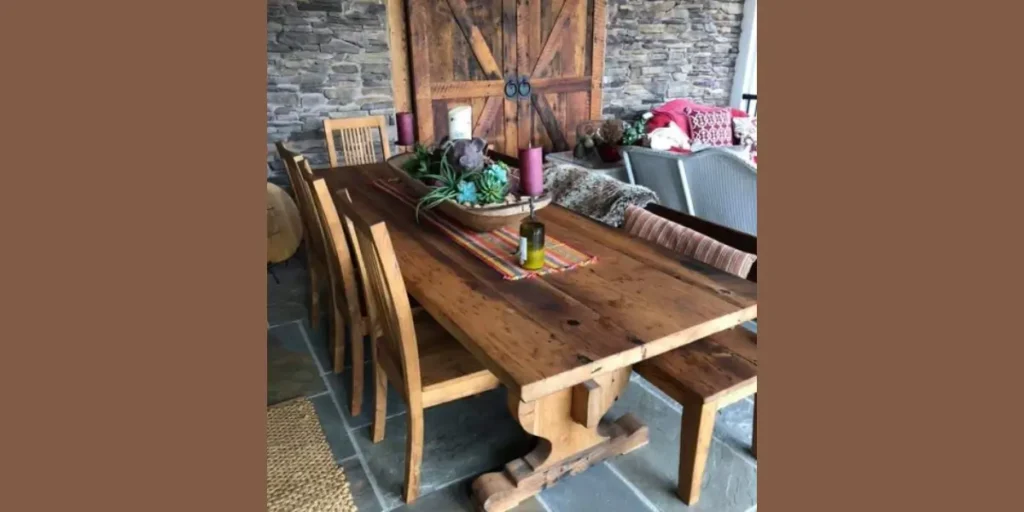
A reclaimed wood vintage table carries natural texture and visible history. I often choose this style when I want a dining space to feel grounded and organic. Each plank tells a story through knots and grain variation.
Reclaimed timber provides strength while reducing waste. I prefer matte finishes that highlight the wood’s authenticity rather than conceal it.
This design complements farmhouse or cottage interiors. It creates warmth and character, ensuring the dining room feels lived-in and meaningful.
9. Marble Top Antique Dining Table
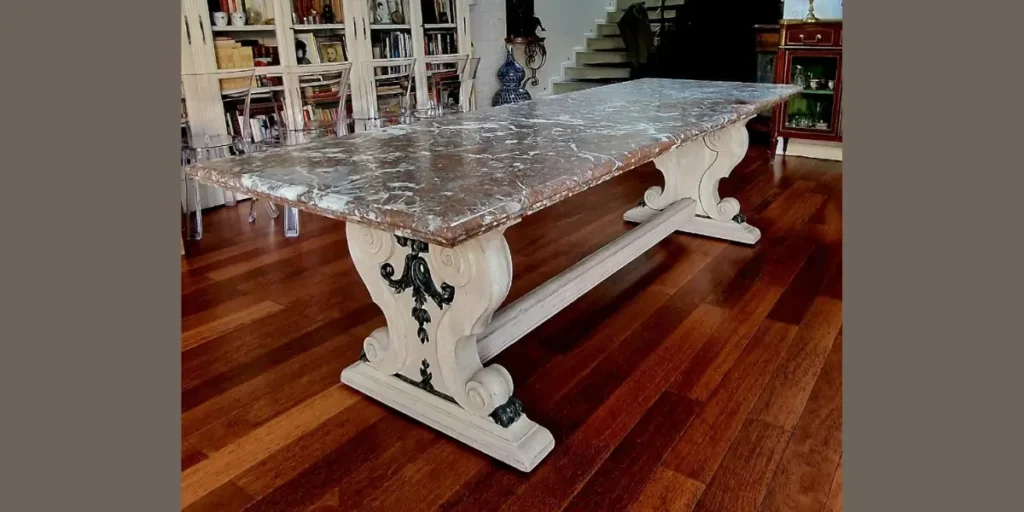
A marble top antique dining table brings refined elegance into a vintage setting. I often recommend this style when the space calls for a touch of sophistication without losing historical depth. The smooth stone surface contrasts beautifully with a carved wooden base.
White or light gray marble keeps the design balanced and timeless. I always check for natural veining and secure attachment to the base to ensure durability. Proper sealing protects the surface from stains and wear.
This table suits formal dining rooms with classic lighting and layered textiles. It elevates the atmosphere while preserving authentic vintage character.
10. Industrial Vintage Dining Table
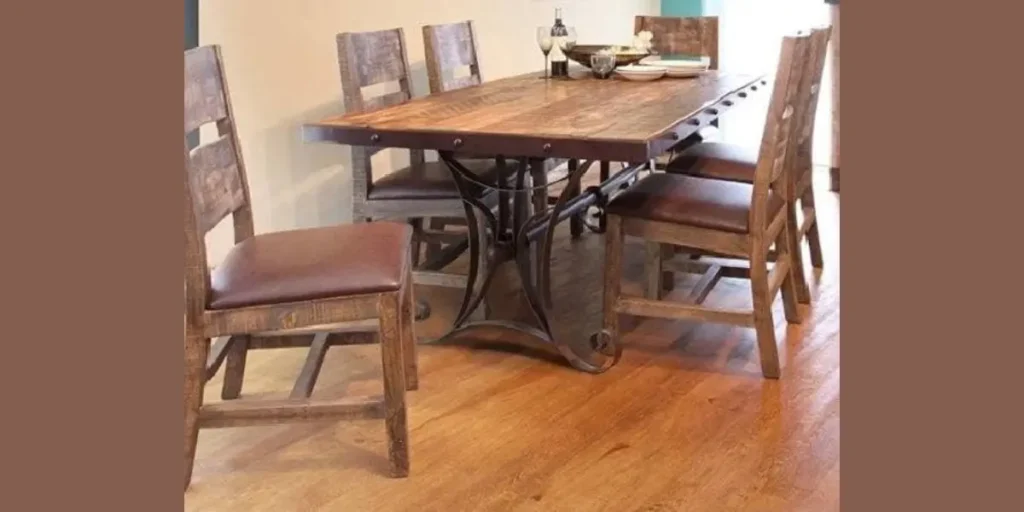
An industrial vintage dining table blends aged wood with metal structure. I appreciate how this combination feels rugged yet nostalgic. The exposed bolts, iron legs, and distressed timber create honest visual strength.
Reclaimed wood paired with blackened steel defines this style. I usually recommend keeping finishes matte to maintain authenticity. The sturdy frame ensures long-term durability.
This table works especially well in loft-style homes or eclectic interiors. It delivers character through material contrast while remaining practical for everyday dining.
11. Oval Edwardian Dining Table
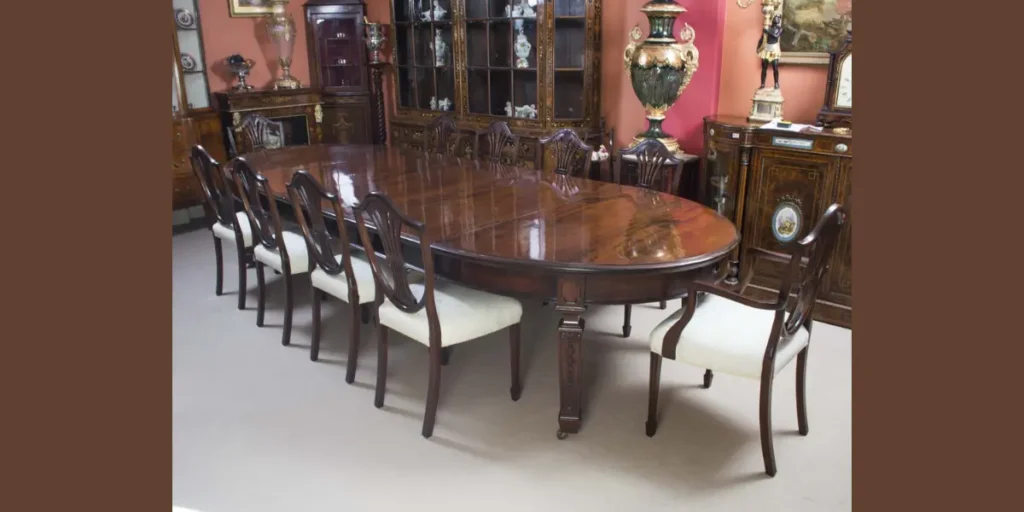
An Edwardian dining table reflects subtle elegance and balanced proportions. I value this design for its refined detailing without excessive ornamentation. The oval shape softens the room and improves movement around the table.
Mahogany often defines authentic Edwardian pieces, offering rich tone and structural strength. I prefer preserving original finishes to retain historical authenticity. Gentle curves enhance its graceful appearance.
This table fits transitional dining rooms beautifully. It feels formal yet approachable, making it suitable for both gatherings and daily meals.
12. Retro 1950s Chrome and Wood Table
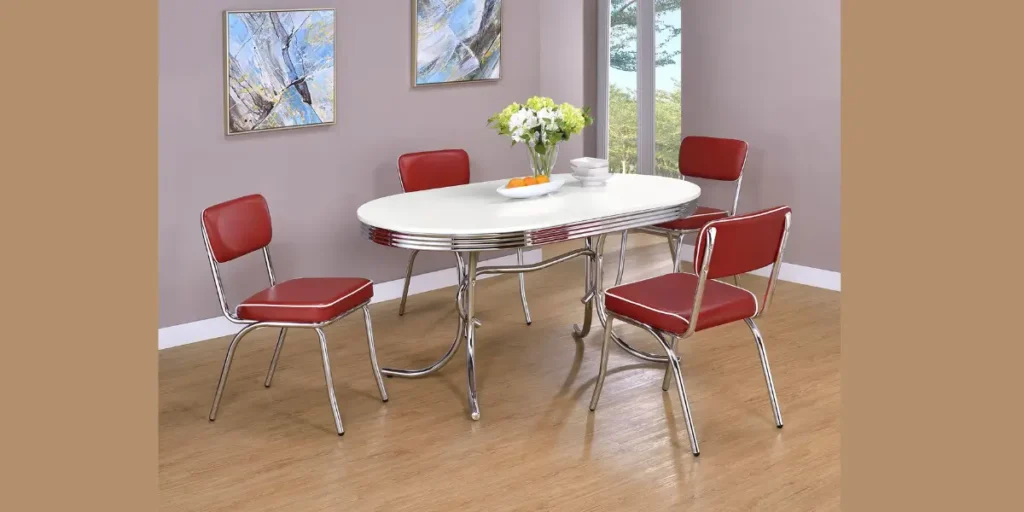
A 1950s chrome and wood dining table introduces playful vintage energy. I like how the polished chrome legs contrast with a warm wooden or laminate top. The combination feels nostalgic yet functional.
The structure remains simple and sturdy. I recommend pairing it with retro-style chairs to complete the aesthetic. Maintaining clean metal finishes preserves its character.
This table suits vintage-inspired kitchens and casual dining areas. It adds personality and charm while remaining practical for everyday use.
13. Turned Leg Colonial Dining Table
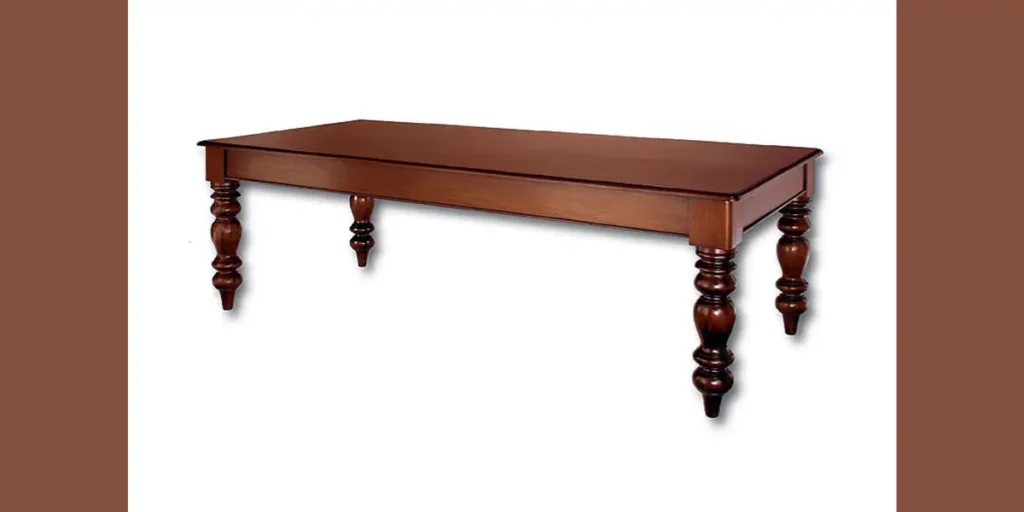
A turned leg colonial dining table highlights traditional craftsmanship. I admire the detailed wood turning that adds texture without overwhelming the structure. The design feels grounded and enduring.
Solid oak or maple commonly defines these pieces. I prefer natural or lightly stained finishes to emphasize the wood’s grain. The thick tabletop enhances durability.
This table fits heritage-style homes and classic interiors. It brings authenticity, warmth, and long-lasting strength to the dining space.
How to Identify and Style an Authentic Vintage Dining Table
Choosing a true vintage dining table requires careful observation. I always examine construction quality, surface condition, and how the piece aligns with the overall interior theme.
Authentic vintage furniture should show age gracefully while maintaining structural strength. When selected thoughtfully, it adds history and depth rather than looking outdated.
Understanding craftsmanship helps you avoid replicas and poorly restored pieces. I focus on joinery, wood type, and original detailing before making a recommendation.
Styling also matters just as much as authenticity, because the right pairing elevates the entire dining space.
Check Construction Quality
I begin by examining the frame and joinery. Solid wood construction and traditional joints like dovetail or mortise-and-tenon indicate durability. Veneer surfaces or stapled joints often signal later reproductions.
Weight also reveals quality. Genuine vintage tables typically feel sturdy and balanced. I gently test stability and inspect the underside to confirm authentic craftsmanship.
Evaluate Surface Condition
Surface wear tells a story, but you must distinguish between natural patina and structural damage. Light scratches and softened edges add character, while deep cracks may require restoration.
I recommend preserving original finishes whenever possible. Over-refinishing can remove historical charm. Careful cleaning and protective treatments usually maintain integrity without erasing age.
Match with Interior Theme
Styling determines whether a vintage table feels cohesive or misplaced. I align the table’s era with lighting, textiles, and surrounding décor.
For example, ornate Victorian pieces suit classic interiors, while mid-century tables blend easily with modern elements.
Balancing old and new prevents the room from feeling overly themed. Thoughtful coordination creates harmony and highlights the table as the centerpiece.
Conclusion
A vintage dining table does more than furnish a room; it introduces depth, craftsmanship, and a sense of history that modern pieces rarely replicate.
Whenever I incorporate a genuine vintage table into a design, the entire space gains personality and quiet confidence. From farmhouse sturdiness to Victorian elegance or mid-century restraint, each style reflects a specific era and story.
The key is choosing a piece that feels authentic, structurally sound, and aligned with your lifestyle.
When you balance preservation with thoughtful styling, a vintage dining table becomes a lasting centerpiece that grows more meaningful with time.
FAQs
Mahogany, oak, walnut, teak, and cherry frequently appear in genuine vintage furniture. These hardwoods offer strength and longevity. I always recommend confirming the wood type before purchasing.
Refinishing can improve appearance but may reduce historical value. I prefer light restoration and preservation whenever possible. Maintaining original finishes keeps authenticity intact.
Many vintage tables were built with solid hardwood and strong joinery, making them highly durable. With proper care and maintenance, they can handle everyday dining comfortably.
Upholstered, wooden, or even mixed-style chairs can complement vintage tables. I focus on matching scale and era while introducing subtle contrast for balance.