


A rug can completely redefine how a dining area feels. I have often seen a well chosen rug transform a simple setup into a cohesive and inviting space.
Beyond adding softness, it frames the table, absorbs sound, and protects flooring from constant chair movement. The challenge lies in selecting the right size, material, and pattern without overwhelming the room.
In this guide, I will share dining table rug ideas that combine proportion, durability, and style so your dining area feels grounded, comfortable, and thoughtfully designed.
Why the Right Rug Elevates Your Dining Area
A dining rug does more than sit beneath the table. I always treat it as a design anchor that defines the eating zone, especially in open layouts.
The right rug improves acoustics, protects flooring, and enhances visual balance. Material, pile height, and size directly influence comfort and functionality.
Now let me walk you through the first eight dining table rug ideas that blend practicality with strong visual impact.
1. Large Neutral Area Rug
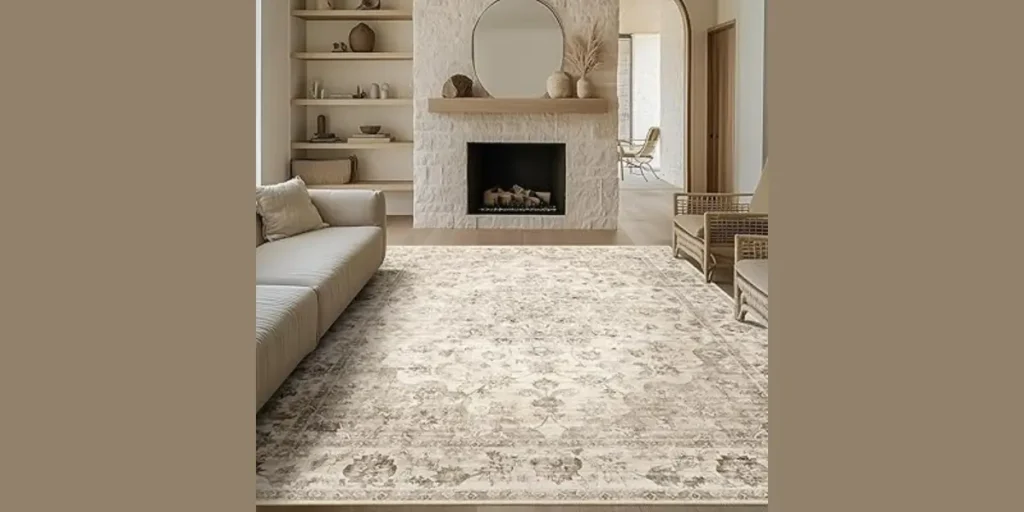
A large neutral rug creates a calm and cohesive foundation. I often recommend shades like beige, taupe, or soft gray because they complement almost any dining furniture. Neutral tones allow the table and chairs to stand out without competing visually.
Proper sizing matters more than color. I ensure the rug extends at least 24 inches beyond the table so chairs remain fully supported when pulled out.
This option works beautifully in modern, transitional, and minimalist interiors. It delivers balance, warmth, and long term versatility.
2. Bold Patterned Rug
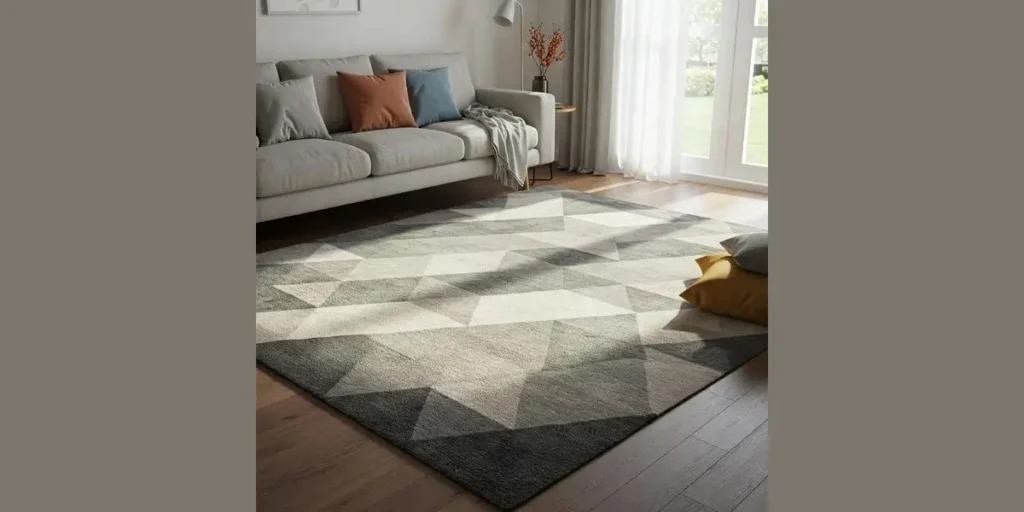
A bold patterned rug injects personality into the dining room. I use geometric or floral motifs when the furniture feels simple and understated. Pattern adds movement without requiring additional décor.
When selecting a bold design, I keep the surrounding palette controlled. Balanced contrast prevents visual overload.
This choice suits eclectic and contemporary interiors. It transforms the dining space into a lively focal point while maintaining comfort underfoot.
3. Round Rug Under Round Table
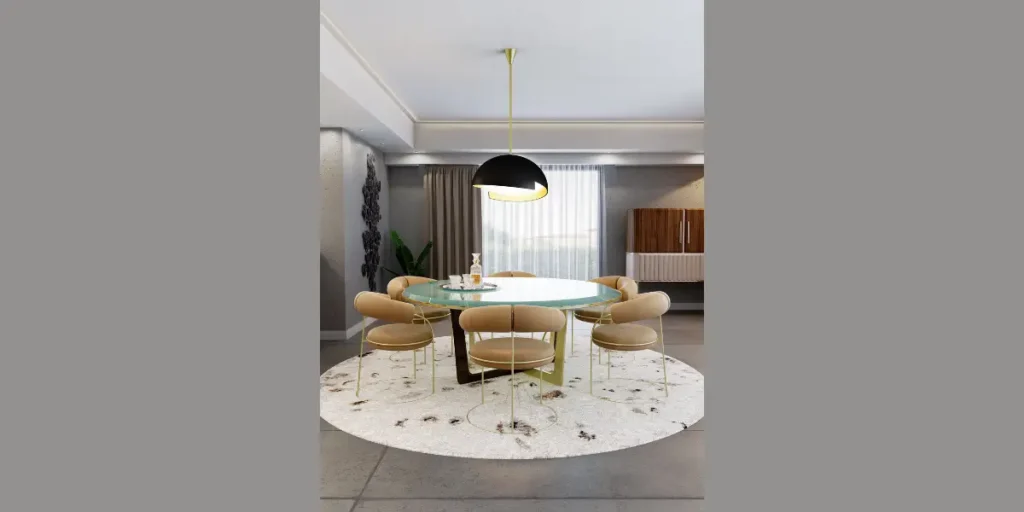
Pairing a round rug with a round table creates symmetry. I recommend this combination because it reinforces visual harmony and improves proportion.
The circular shape softens rigid room layouts. I always ensure the rug diameter allows chairs to remain on the surface comfortably.
This pairing feels balanced and inviting. It enhances flow while keeping the dining area visually unified and intentional.
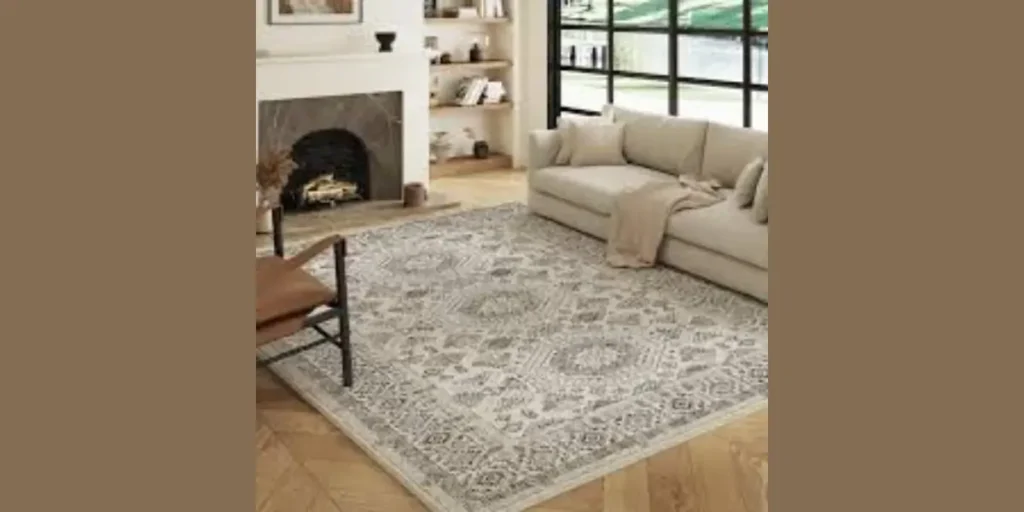
4. Vintage Persian Style Rug
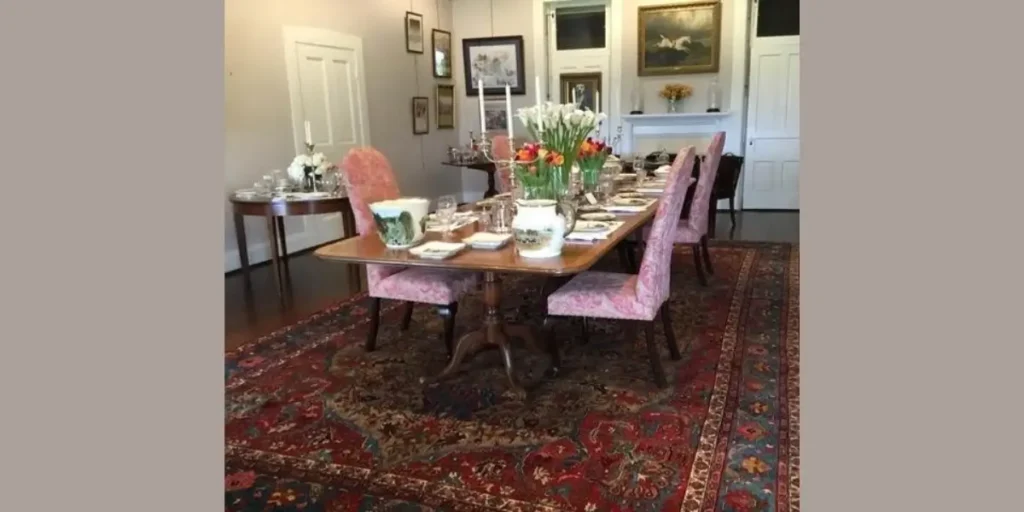
A Persian style rug introduces timeless elegance and intricate detailing. I appreciate how its layered patterns add richness without overwhelming the table.
These rugs often conceal minor spills due to complex designs. I still recommend durable materials for practicality.
This option fits traditional and transitional interiors beautifully. It adds depth, warmth, and a sense of heritage to the dining space.
5. Natural Jute or Sisal Rug
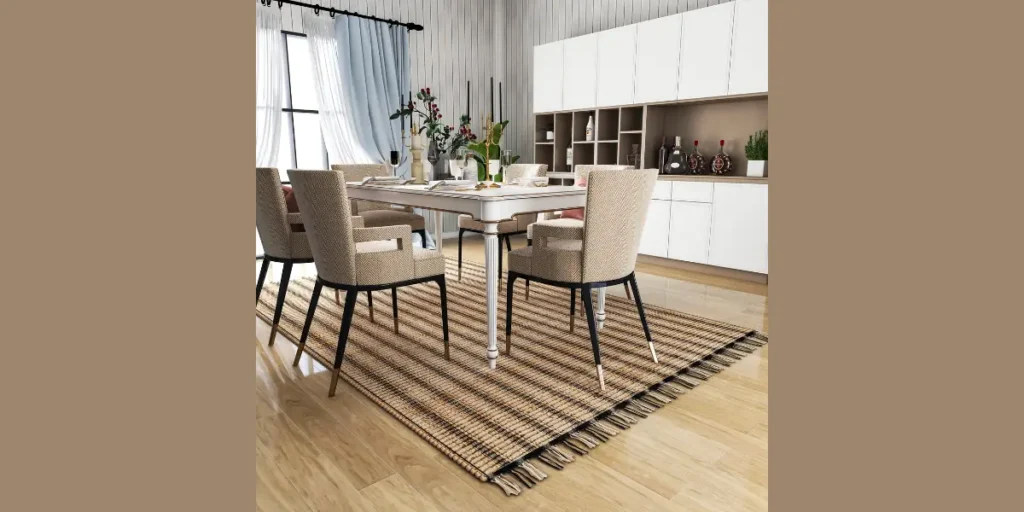
Jute and sisal rugs bring organic texture into the room. I favor this choice when creating a relaxed, earthy atmosphere. Their woven surfaces feel grounded and natural.
These fibers handle foot traffic well, though I recommend spot cleaning to maintain appearance. Low pile ensures chairs move easily.
This style complements coastal, farmhouse, and bohemian interiors. It introduces warmth while maintaining understated simplicity.
6. Modern Geometric Rug
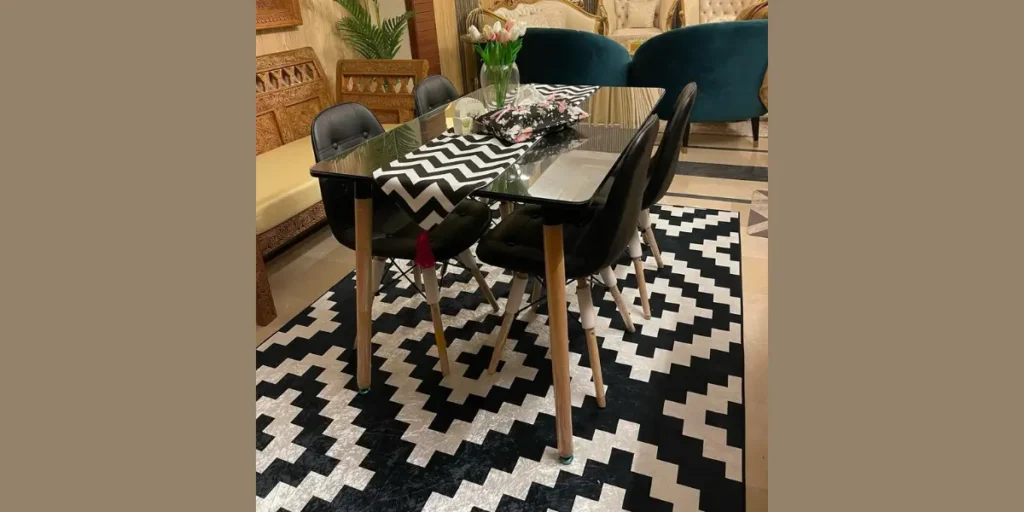
A geometric rug adds structure and contemporary flair. I use clean lines and sharp patterns to reinforce modern dining designs.
Black and white or muted tones keep the look refined. I avoid excessive color to maintain balance.
This rug style pairs well with minimalist furniture. It defines the dining area clearly while adding subtle design interest.
7. High Contrast Black and White Rug
A black and white rug creates dramatic contrast. I recommend this option when the dining furniture features simple silhouettes.
The strong pattern grounds the table and enhances visual clarity. I ensure proper lighting to prevent the space from feeling too stark.
This style suits modern and industrial interiors. It offers bold character without relying on excessive decoration.
8. Soft Textured Wool Rug
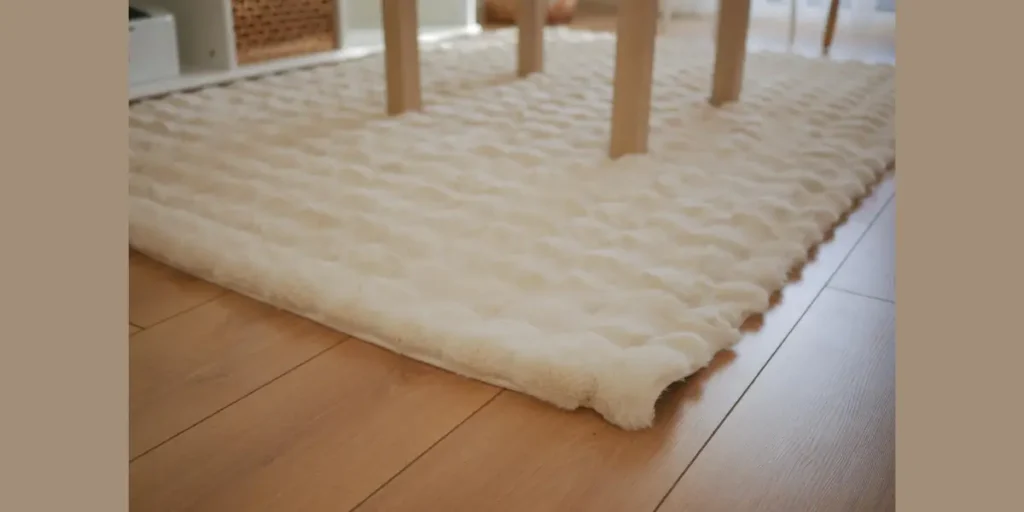
A wool rug delivers softness and acoustic comfort. I appreciate how it absorbs sound, especially in open concept homes.
Wool fibers provide durability and natural resilience. I prefer low to medium pile for easy chair movement.
This choice adds warmth and refinement. It creates a comfortable dining environment while maintaining long lasting quality.
9. Striped Rug Design
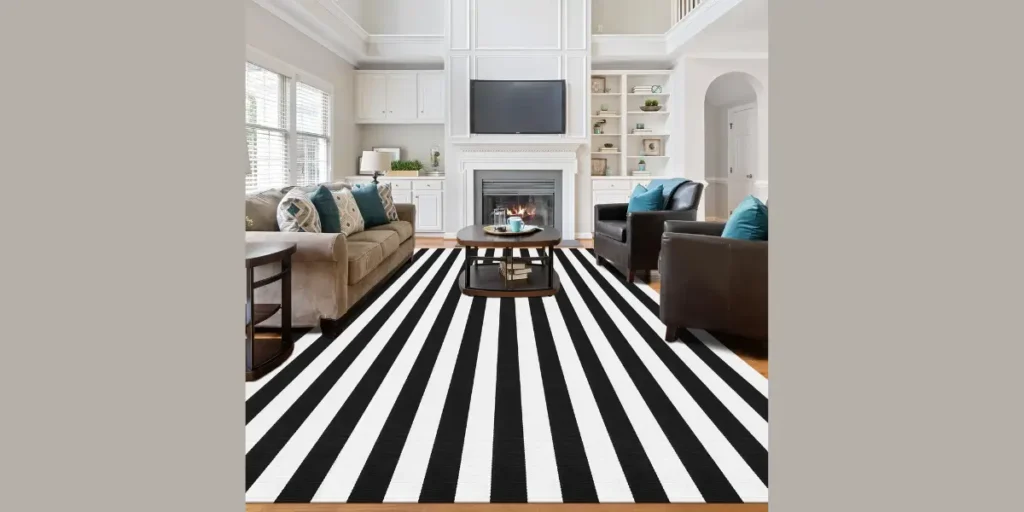
A striped rug can subtly reshape how a dining room feels. I often use horizontal stripes to visually widen a narrow space or vertical stripes to create the illusion of length. This simple pattern delivers strong visual direction without overwhelming the furniture.
Color choice matters with stripes. I prefer neutral combinations for a refined look or muted tones that echo existing décor. Balance keeps the room cohesive rather than busy.
Striped rugs work especially well in contemporary or coastal interiors. They provide structure and rhythm while maintaining a clean, approachable aesthetic.
10. Washable Dining Room Rug
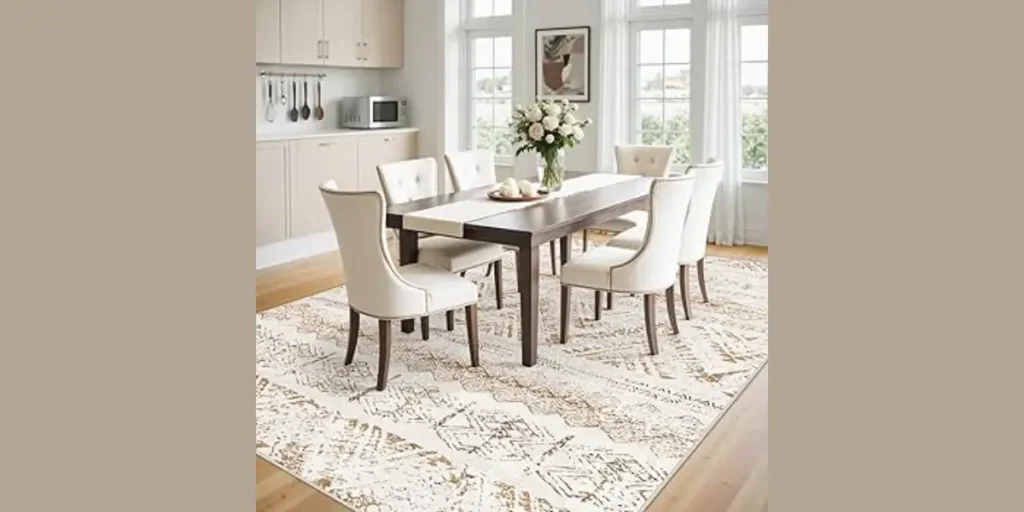
A washable rug offers practical advantages for everyday living. I recommend this option for families or frequent entertainers who want style without constant worry about spills. Modern washable designs now look as refined as traditional rugs.
Low pile construction ensures chairs move smoothly across the surface. I always check that the backing remains secure and slip resistant.
This solution combines functionality with flexibility. It supports busy households while maintaining a polished and thoughtfully styled dining area.
11. Layered Rug Look
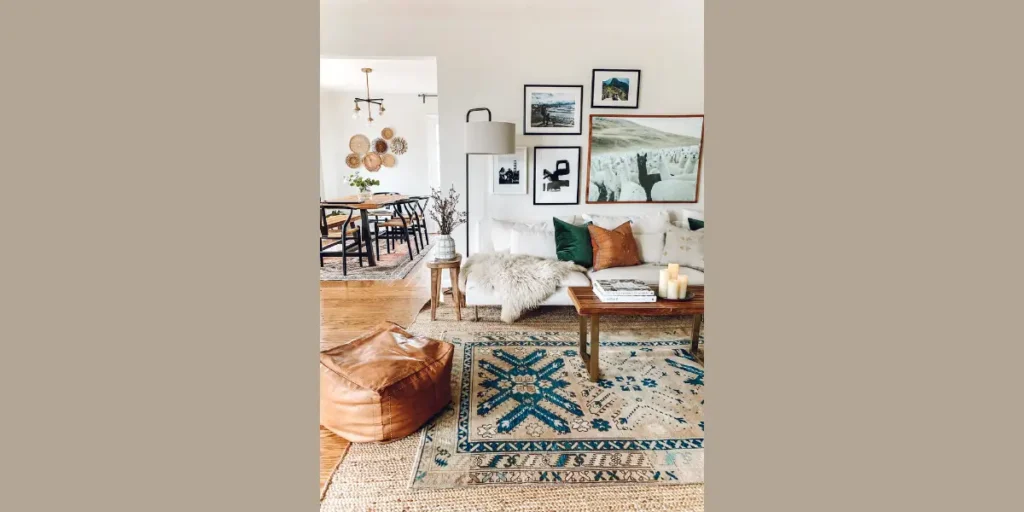
Layering rugs introduces depth and texture into the dining space. I typically place a larger neutral base rug beneath a smaller patterned piece for contrast. This approach adds visual interest without replacing the main rug entirely.
The key lies in proportion and balance. I keep the layering subtle so chair movement remains practical.
This design choice suits eclectic or bohemian interiors. It creates dimension and warmth while allowing creative freedom in styling.
12. Abstract Modern Rug
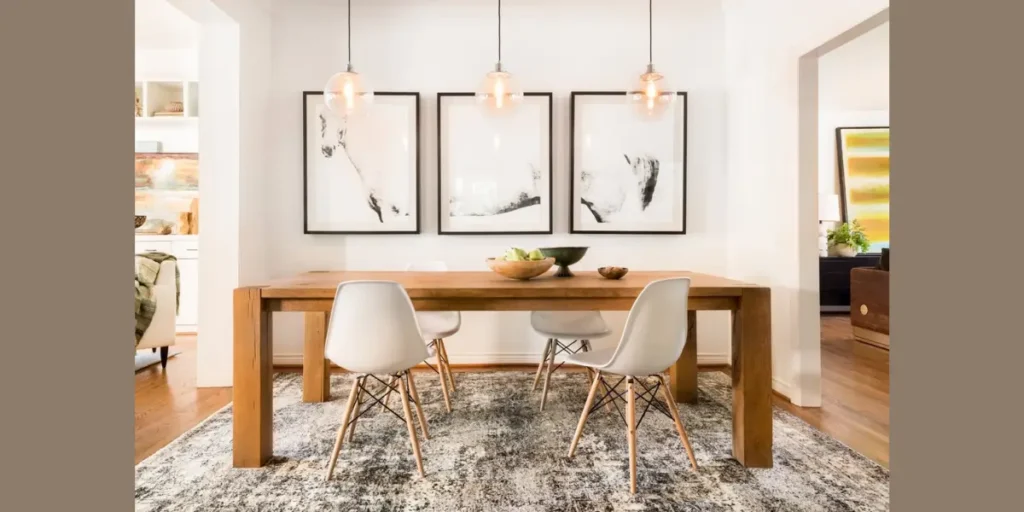
An abstract rug transforms the dining area into a statement zone. I use fluid patterns or painterly designs when I want to introduce artistic expression beneath the table.
Muted abstract tones maintain sophistication, while bolder color blends energize the space. I ensure the design complements the furniture rather than competing with it.
This style fits contemporary interiors beautifully. It anchors the table visually and adds personality without overwhelming the overall layout.
Rug Sizing and Placement Guide for Dining Tables
Choosing the correct rug size is one of the most important decisions in a dining room. I always measure the table first and then ensure the rug extends at least 24 to 30 inches beyond all sides.
This allows chairs to remain fully on the rug even when pulled out. If the rug is too small, the room feels visually disconnected and chairs may catch on the edges. Proper proportion creates a grounded and cohesive look.
Pile height also affects functionality. I prefer low to medium pile rugs because they allow smooth chair movement and are easier to clean. Thick, high pile rugs may look luxurious but can create imbalance and instability under dining chairs.
Material durability matters just as much as design. Wool, flatweave, and certain performance synthetics handle spills and frequent traffic better than delicate fibers.
Placement should center both the table and lighting fixture. I align the rug directly beneath the dining table and chandelier to maintain symmetry.
In open concept layouts, a rug clearly defines the dining zone and separates it visually from adjacent living spaces. When sizing, material, and placement work together, the dining area feels intentional and well designed.
Conclusion
A dining rug does far more than soften the floor. It frames the table, defines the dining zone, and quietly supports everyday comfort. I always approach rug selection by balancing proportion, durability, and design harmony.
The right size ensures chairs move smoothly, while the right material withstands spills and daily use.
Whether you prefer a bold pattern, a neutral base, or a textured natural fiber, thoughtful placement makes the difference between a styled room and a cohesive one.
When chosen carefully, your dining rug becomes a practical foundation that enhances warmth, structure, and long lasting visual balance.
FAQs
The rug should extend at least 24 to 30 inches beyond the table on all sides. This ensures chairs remain fully on the rug when pulled out. Proper sizing improves both comfort and visual balance.
High pile rugs can make chair movement difficult and may trap food debris. I usually recommend low to medium pile options for better practicality and easier maintenance.
Yes, washable rugs are highly practical, especially in homes with children or frequent gatherings. They allow easy cleaning while still maintaining a polished appearance.
While possible, the proportions must feel intentional. In most cases, matching the rug shape to the table shape creates better visual balance and symmetry.