
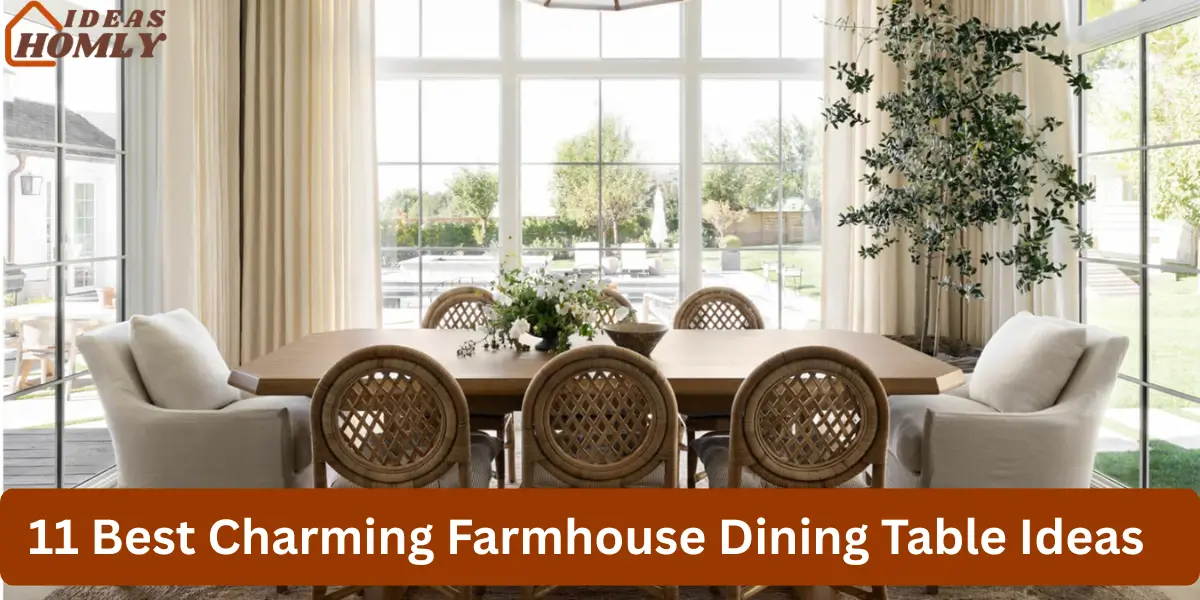

Farmhouse dining table ideas have a special way of turning an ordinary room into the heart of the home. I’ve seen how the right table instantly creates warmth, encourages conversation, and makes everyday meals feel more meaningful.
What makes this style so enduring is its focus on solid craftsmanship, natural wood textures, and practical design.
Whether your home leans traditional or slightly modern, a thoughtfully chosen farmhouse table brings comfort without sacrificing structure.
In this guide, I’ll share inspiring designs that balance rustic character with functionality for real family living.
What Makes a Farmhouse Dining Table Truly Timeless
A farmhouse dining table earns its place through durability, proportion, and warmth. I always focus on solid wood construction and balanced scale before anything else. The design should feel welcoming but never oversized.
This style values practicality. Thick tabletops, visible grain, and sturdy legs create confidence in both structure and appearance. Instead of chasing trends, farmhouse tables rely on honest materials.
When I design around a farmhouse table, I make sure it supports daily family life. It must handle gatherings, homework sessions, and celebrations without losing its charm.
1. Classic Solid Wood Farmhouse Table
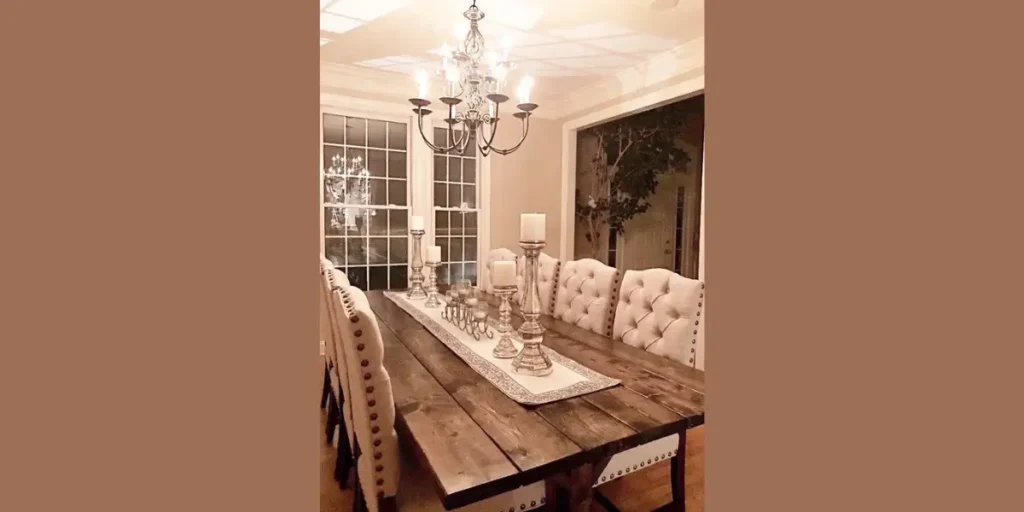
A classic solid wood farmhouse table forms the foundation of this style. I prefer thick plank tops that showcase natural grain and subtle imperfections. These details create authenticity and depth.
Strong square legs support the tabletop and provide visual balance. I often choose warm oak or pine finishes that highlight texture without appearing overly polished. A matte seal keeps the look natural.
This table works beautifully in both traditional and modern farmhouse homes. It creates a grounded centerpiece that feels reliable and inviting.
2. Farmhouse Trestle Base Dining Table
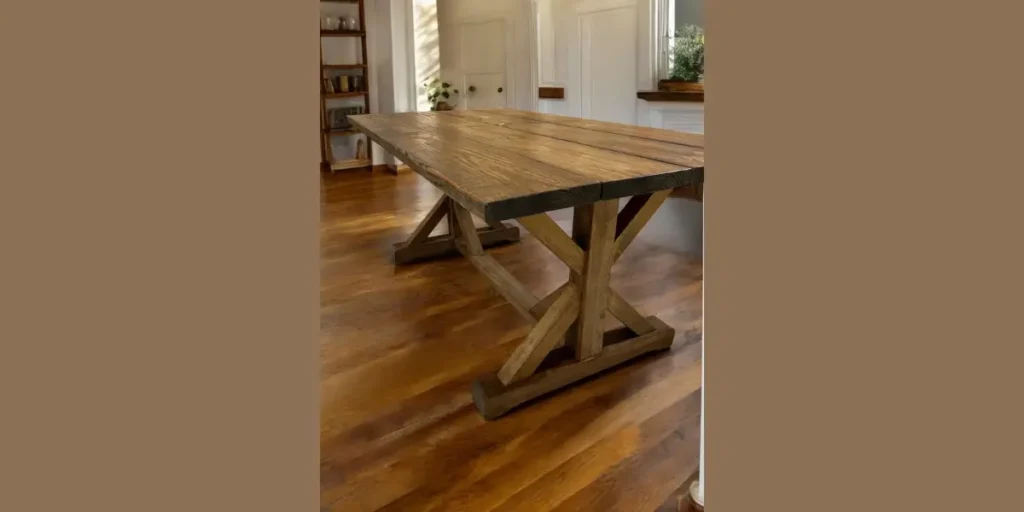
The trestle base design adds architectural interest beneath the tabletop. I like how wide support beams create stability and distribute weight evenly. This structure suits larger dining spaces.
The thick top paired with the trestle base delivers strong visual impact. I recommend keeping the finish natural to maintain warmth. The open base allows comfortable seating placement.
This option supports family gatherings effortlessly. It combines craftsmanship with practicality, making it ideal for everyday use.
3. Whitewashed Farmhouse Dining Table
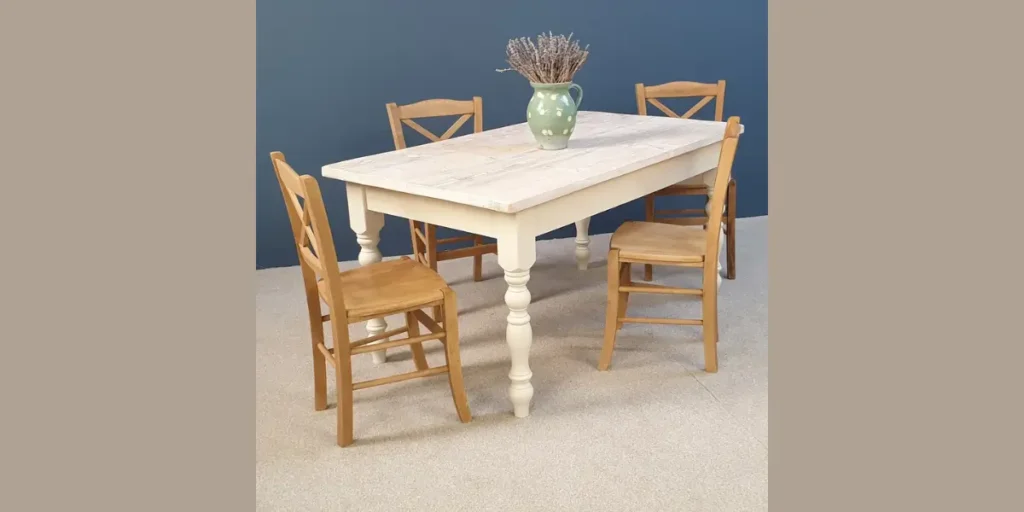
A whitewashed farmhouse table brightens the room while preserving rustic character. I use this style when natural light plays a central role in the space. The soft finish creates an airy atmosphere.
Subtle distressing allows the wood texture to remain visible. I usually pair it with neutral upholstery and woven accents to enhance warmth. The overall look feels relaxed yet structured.
This table fits cottage-inspired and modern farmhouse interiors. It offers charm without overwhelming the room visually.
4. Farmhouse Table with Bench Seating
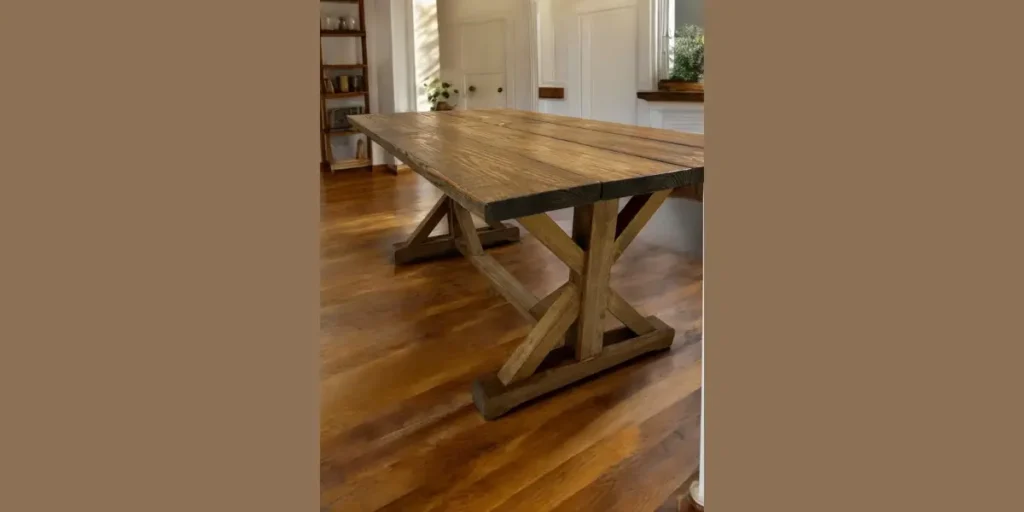
Adding bench seating transforms the dining area into a communal space. I often recommend benches for families because they provide flexible seating arrangements. They also reduce visual clutter.
A sturdy wooden bench complements the table’s thickness and material. I prefer matching finishes to maintain cohesion. Cushions or linen pads can add comfort without compromising style.
This setup works particularly well in open kitchens. It encourages connection and keeps the layout practical.
5. Reclaimed Wood Farmhouse Table
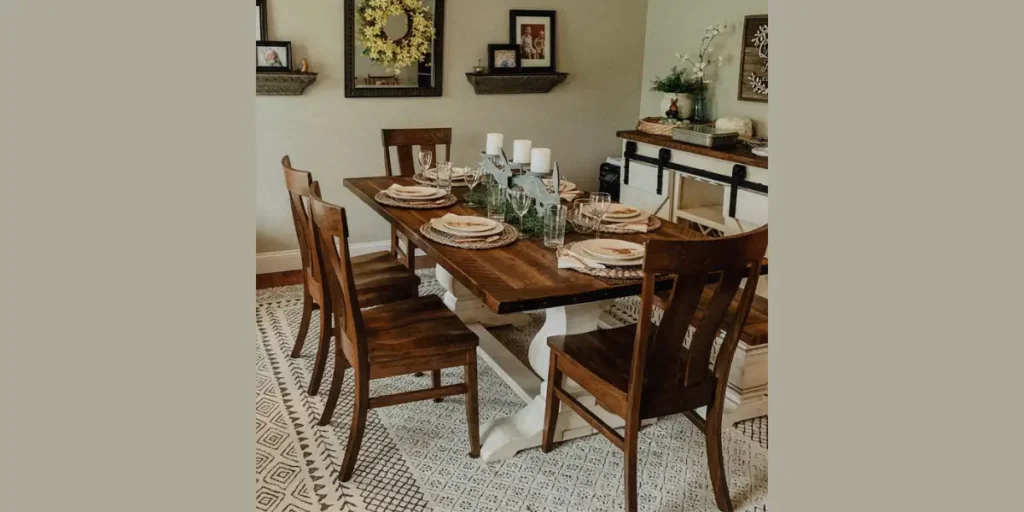
A reclaimed wood farmhouse table introduces history and character into the room. I appreciate how aged planks reveal knots, grain variation, and subtle imperfections. These features create authenticity.
Craftsmen often reinforce reclaimed wood for strength and longevity. I suggest sealing the surface properly to protect against daily wear. Keeping the finish natural enhances its story.
This table becomes a focal point instantly. It suits homeowners who value sustainability and timeless texture.
6. Round Farmhouse Pedestal Table
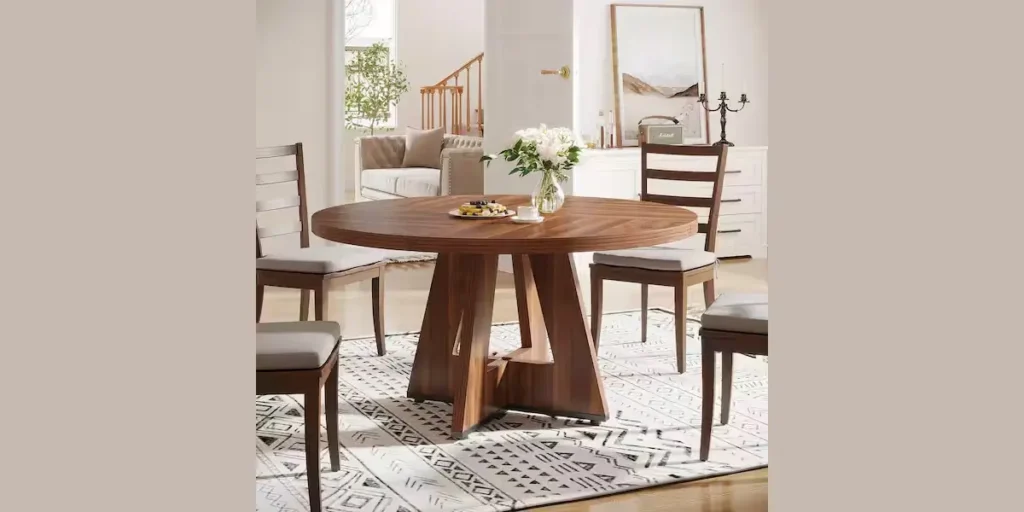
A round pedestal table softens the overall layout while maintaining farmhouse warmth. I like using this option in smaller dining rooms where movement matters. The central base improves legroom.
The circular shape encourages conversation naturally. I often select medium wood tones to prevent heaviness. Balanced proportions keep the design from dominating the space.
This table works beautifully in breakfast nooks or compact kitchens. It blends comfort with practicality.
7. Modern Farmhouse Dining Table with Metal Legs
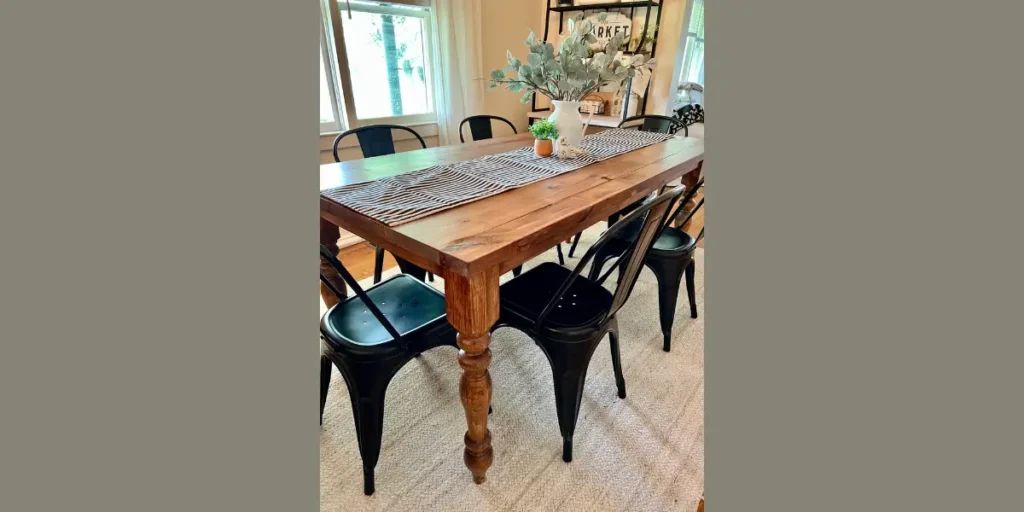
Combining wood with metal legs introduces subtle contrast. I often recommend matte black steel to create structure without overpowering the warmth of the wood.
The solid wooden top remains the main feature. Clean lines in the metal base keep the look modern yet grounded. This pairing feels intentional and balanced.
This style suits transitional interiors. It bridges rustic charm with contemporary simplicity.
8. Extendable Farmhouse Dining Table
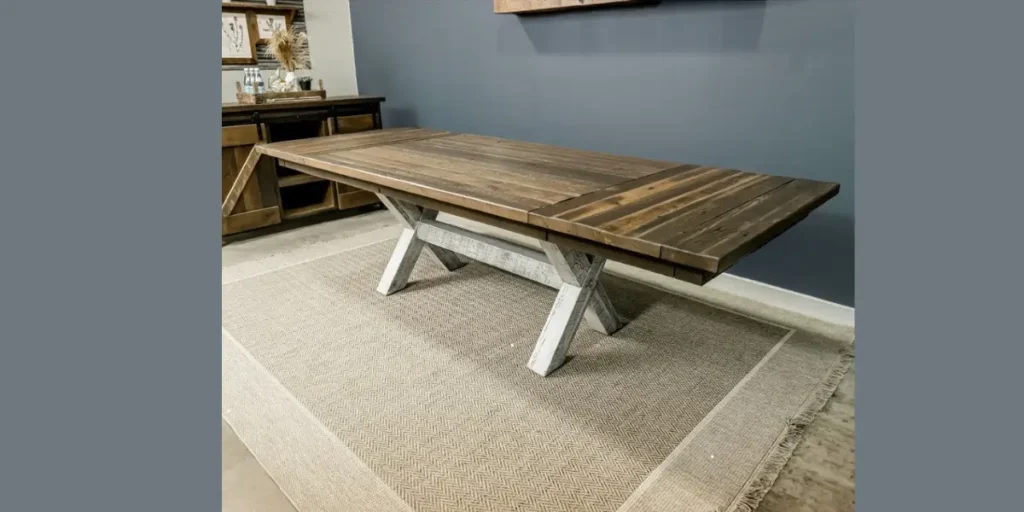
An extendable farmhouse table adapts easily to changing needs. I suggest this design for families who host regularly but prefer a compact everyday setup. Hidden leaves provide additional seating.
When closed, the table maintains clean lines and balanced proportion. Quality extension mechanisms ensure smooth operation and durability. Matching wood grain keeps the design cohesive.
This table offers flexibility without sacrificing farmhouse authenticity. It supports both daily meals and large gatherings comfortably.
9. Distressed Gray Farmhouse Table
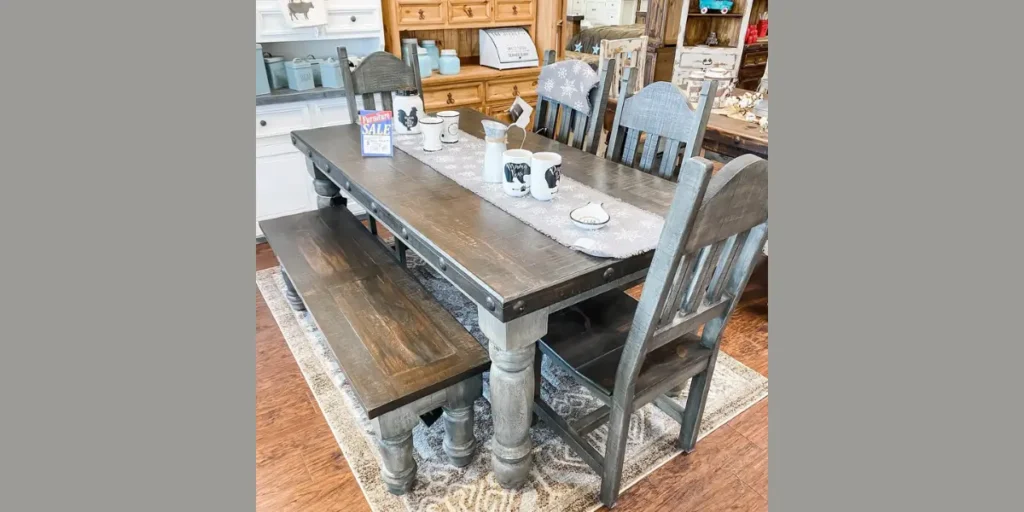
A distressed gray finish creates a softer farmhouse aesthetic. I use this option when clients want rustic charm with a modern twist. The muted tone pairs well with white walls.
Subtle texture beneath the paint adds depth without heaviness. I often coordinate it with neutral décor and warm lighting to maintain balance.
This table works especially well in contemporary farmhouse interiors. It feels relaxed yet thoughtfully designed.
10. Farmhouse X-Base Dining Table
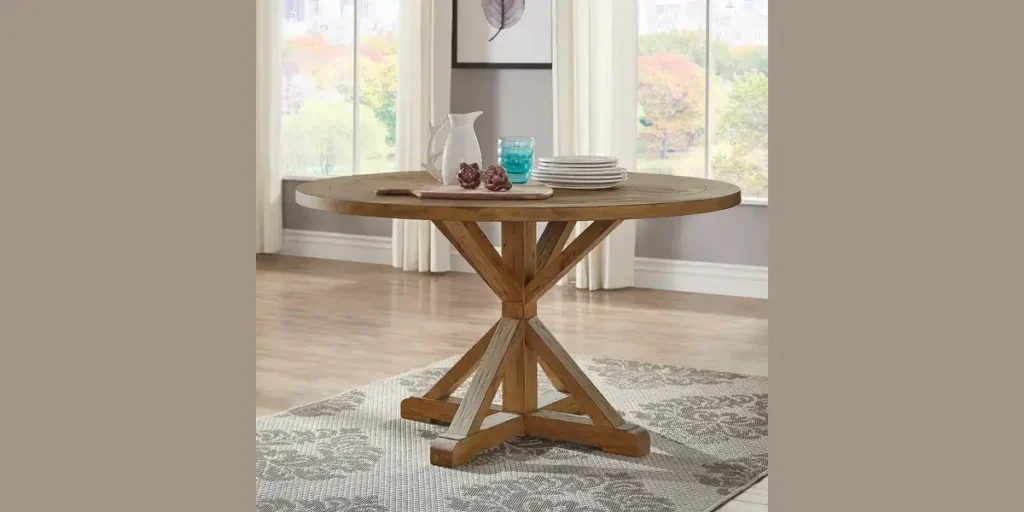
An X-base farmhouse table introduces handcrafted character beneath a thick wooden top. I appreciate how the cross-frame design strengthens stability and visual interest.
The open base keeps seating flexible while maintaining structural integrity. I prefer natural finishes that emphasize wood grain. This approach highlights craftsmanship.
This design suits larger dining rooms. It creates a bold yet welcoming presence that anchors the space effectively.
11. Antique-Inspired Farmhouse Dining Table
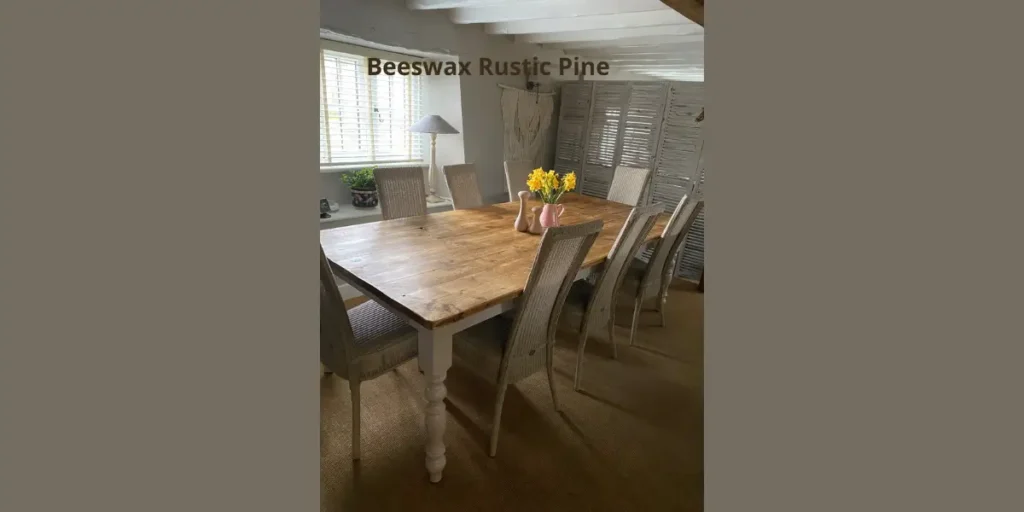
An antique-inspired farmhouse table brings heritage into the dining space. I often recommend turned legs and subtle detailing for clients who appreciate traditional craftsmanship.
The aged finish enhances warmth and authenticity. I pair this table with classic wooden or upholstered chairs for comfort. Balanced décor ensures cohesion.
This option fits homes that lean toward vintage charm. It combines timeless elegance with practical everyday function.
Smart Planning Guide for Selecting a Farmhouse Dining Table
Selecting the right farmhouse dining table requires thoughtful planning. I always begin by assessing room dimensions, natural light, and how the space functions daily.
A table should feel proportional and welcoming, not oversized or restrictive. Farmhouse style may look relaxed, but it relies heavily on proper scale and durable materials.
Beyond appearance, I focus on long-term practicality. The right finish, seating combination, and layout ensure the table supports real family life. When planning carefully, you create a dining space that feels warm, balanced, and built to last.
Determine the Ideal Table Size
I always measure the dining area before recommending any table. You should leave at least 36 inches of clearance around all sides for comfortable movement. Without proper spacing, even the most beautiful farmhouse table can overwhelm the room.
Consider seating capacity and daily use. A rectangular table works well for larger families, while round or extendable options suit smaller layouts. Proper sizing ensures comfort and functionality.
Choose the Right Finish
The finish defines the mood of the table. Natural wood stains highlight grain and warmth, while painted or whitewashed finishes create a lighter farmhouse feel. I recommend selecting finishes that complement flooring and cabinetry.
Durability also matters. A sealed matte finish protects against spills and scratches while preserving texture. The right finish keeps the table looking authentic over time.
Balance Comfort and Style
Comfort should never be overlooked. I often mix chairs with bench seating to create flexibility and visual interest. Upholstered cushions or soft textiles prevent the space from feeling too rigid.
Layering textures such as woven rugs and warm lighting enhances coziness. When comfort and design work together, the dining area becomes inviting for everyday meals and gatherings.
Coordinate with Farmhouse Décor Elements
Your table should align with the overall farmhouse aesthetic. I usually pair it with neutral color palettes, vintage-inspired lighting, and natural materials. Consistency strengthens the room’s character.
Simple centerpieces, wood accents, and soft fabrics complete the look. When décor elements complement the table, the space feels cohesive and intentional.
Conclusion
A farmhouse dining table does more than fill a room; it sets the tone for how your home feels every day.
When I choose one for a project, I focus on craftsmanship, proportion, and how naturally it fits into daily life.
Whether you prefer reclaimed wood, a trestle base, or a lighter whitewashed finish, the right table should feel sturdy, welcoming, and built for real use.
Farmhouse style succeeds because it blends warmth with practicality. If you invest in quality materials and thoughtful planning, your dining table will become the heart of family gatherings, celebrations, and quiet everyday meals for years to come.
FAQs
Hardwoods like oak, maple, and walnut provide excellent durability and visible grain. I often recommend solid wood construction because it withstands daily use. Proper sealing protects the surface and maintains warmth over time.
Yes, especially round or extendable designs. I suggest choosing slimmer proportions and lighter finishes to maintain openness. Proper spacing around the table prevents the room from feeling crowded.
Use a soft cloth and mild cleaner to avoid damaging the finish. I advise resealing the surface periodically to protect against moisture. Avoid harsh chemicals that may strip the distressed look.
Yes, metal legs or brackets add subtle structure and contrast. I prefer matte black or brushed finishes to maintain warmth. The combination works well in modern farmhouse interiors.
High-quality extendable tables remain durable when built with strong hardware and solid wood. I recommend checking extension mechanisms before purchasing. With proper care, they perform reliably for years.