
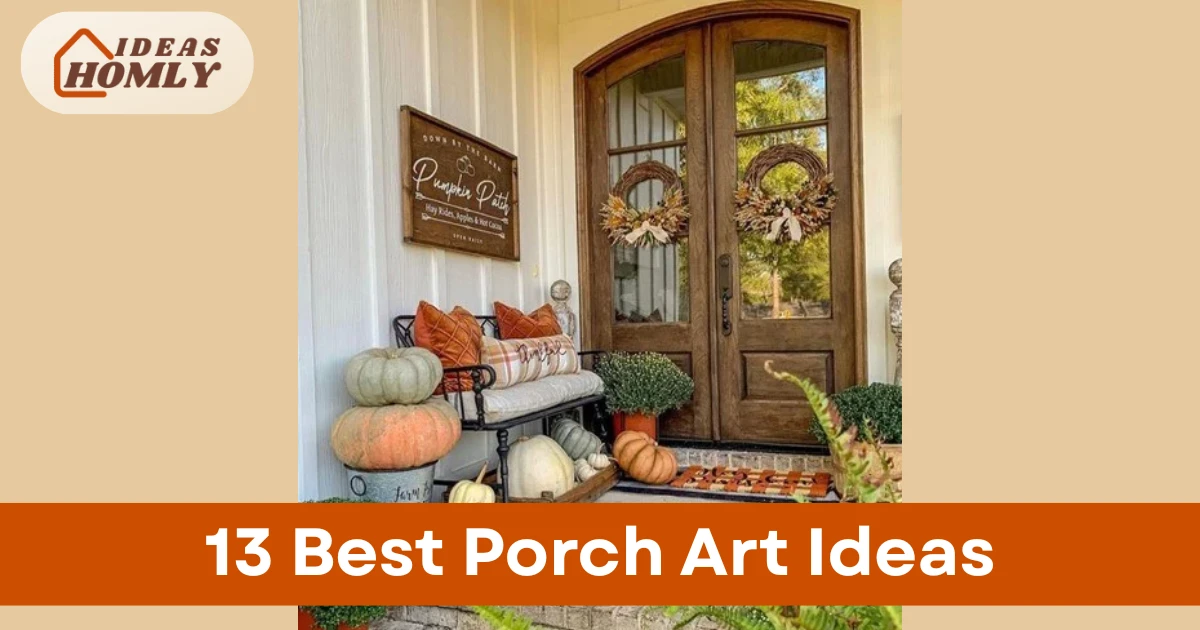

I believe your front porch deserves more personality than a standard welcome mat and a plastic chair. Adding art to your outdoor walls creates a cozy room feel that makes your neighbors slightly jealous of your style.
Key Considerations for Weather-Resistant Porch Decor
I believe that choosing the right material for your porch art is just as important as the design itself. You should focus on items that can handle the specific climate in your area without losing their visual appeal.
I find that checking for UV protection and moisture resistance will save you from having to replace your decor every year. Choosing professional-grade finishes ensures your art remains a long-term investment for your home’s exterior beauty and value.
You must ensure that your mounting hardware is as durable as the art piece to prevent rust streaks on your walls. I recommend using stainless steel or galvanized screws to keep your house looking clean and well-maintained through every season.
I think a well-planned layout helps your porch feel like a balanced and professional extension of your indoor living space. Your guests will appreciate the effort you put into creating a curated atmosphere that feels both stylish and approachable.
1. Weatherproof Metal Wall Sculptures for Modern Porches
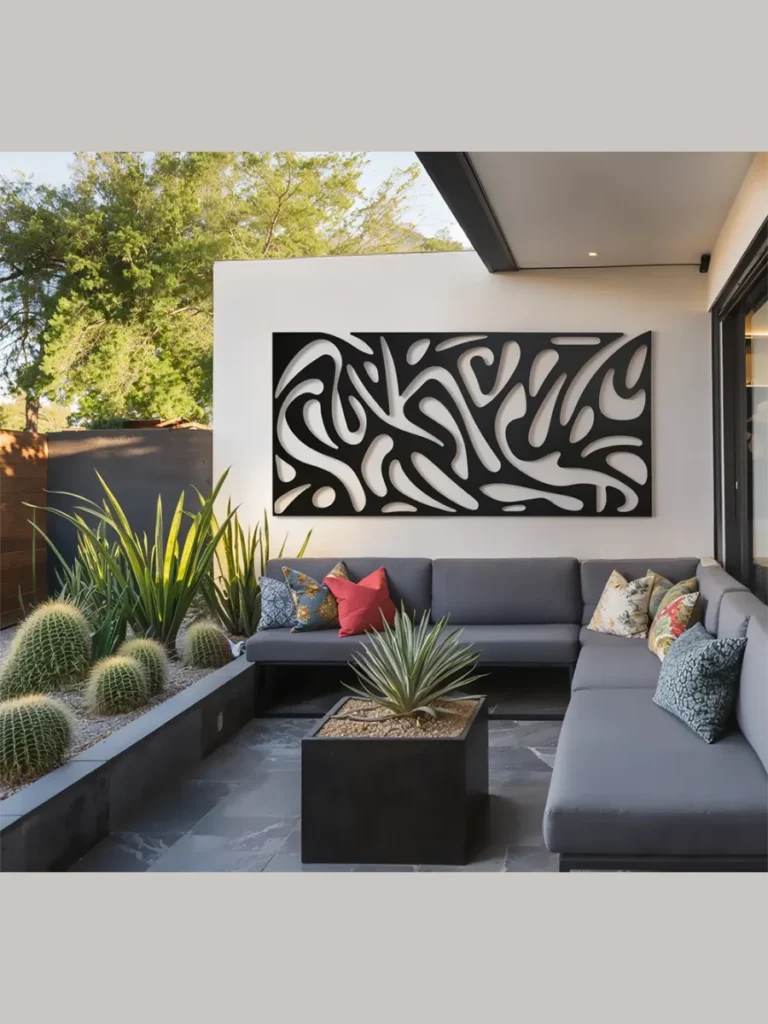
Metal wall art serves as a top choice for durability because it stands up to heavy rain and intense summer sun. I find that iron or aluminum pieces add a sophisticated layer to brick or siding without fading over time.
You should look for powder-coated finishes to prevent rust from streaking down your clean house paint during the winter months. These sturdy pieces usually come with built-in spacers that create beautiful shadows against your wall when the sun hits them.
I like to hang large geometric shapes or nature-inspired silhouettes to fill big empty spaces above a patio sofa or bench. This approach creates a clear focal point that draws the eye toward your seating area rather than the siding.
Installation requires just a few heavy-duty screws or masonry anchors to keep your art secure during high winds or summer storms. You will appreciate how these metal designs require almost zero maintenance aside from an occasional rinse with a garden hose.
2. Rustic Reclaimed Wood Signs for Farmhouse Style
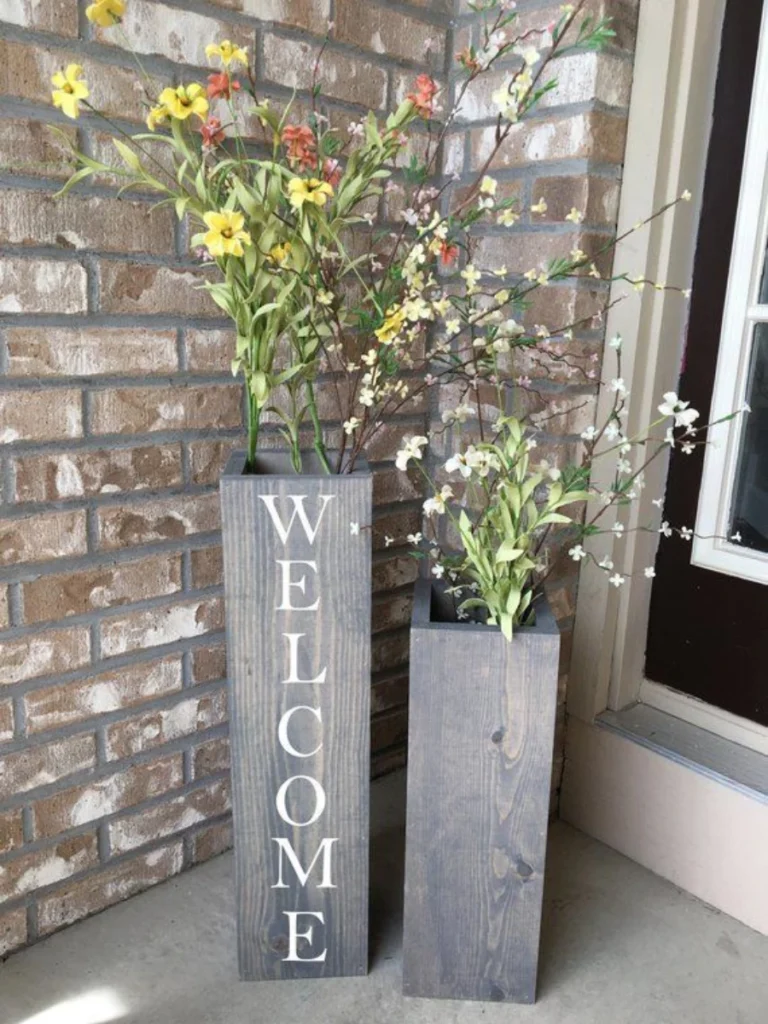
I often use reclaimed wood signs to bring a warm and approachable feeling to a front entry or a screened-in porch. Hand-painted lettering on aged timber adds a custom look that feels much more personal than mass-produced plastic decorations.

Waterproof Door Canopy Awning - Durable Exterior Window Awnings for Patio & Porch - Sunshade Protection for Entrances - Enhance Your Home's Style & Curb Appeal
Waterproof Door Canopy Awning - Durable Exterior Window Awnings for Patio & Porch - Sunshade…
You can find cedar or redwood options that naturally resist rot and insects even if your porch is not fully covered. The natural grain of the wood provides a textured backdrop that complements your outdoor plants and seasonal floral arrangements.
I recommend applying a clear polyurethane sealer every year to keep the paint from peeling off the wood surface during humid weather. This simple step ensures your favorite quotes or family names remain legible and bright for many seasons to come.
Large vertical signs look professional when leaned against the wall next to your front door to fill narrow vertical gaps. This placement allows you to move the art easily whenever you want to change your porch layout for different holidays.
3. Outdoor Canvas Prints with UV-Resistant Coatings
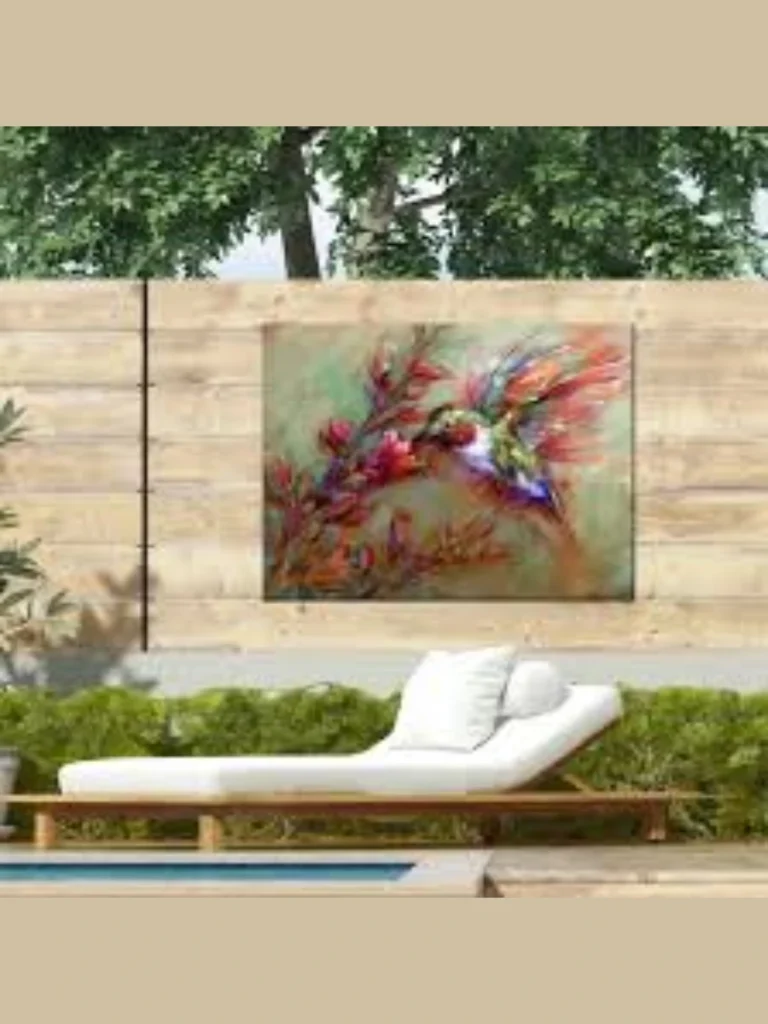
Most people assume canvas belongs in the living room, but specially treated outdoor canvases bring high-end gallery vibes to your patio. These pieces use waterproof inks and synthetic frames that do not warp when exposed to damp morning air.
I love using large landscape prints to create an “outdoor window” effect on solid walls that lack actual glass or views. The vibrant colors stay sharp because the fabric features a heavy UV coating that blocks damaging rays from the sun.
You must ensure the internal frame is made of PVC or treated wood to avoid mold growth behind the fabric during rainy seasons. Stretcher bars made of cheap pine will likely bend, so I always check for marine-grade materials before buying.
Securing these lightweight prints with stainless steel clips prevents them from acting like a sail and flying away during a breezy afternoon. I find that a trio of matching canvases creates a professional look that ties your entire outdoor color scheme together.
4. Vintage Window Frames Used as Architectural Accents
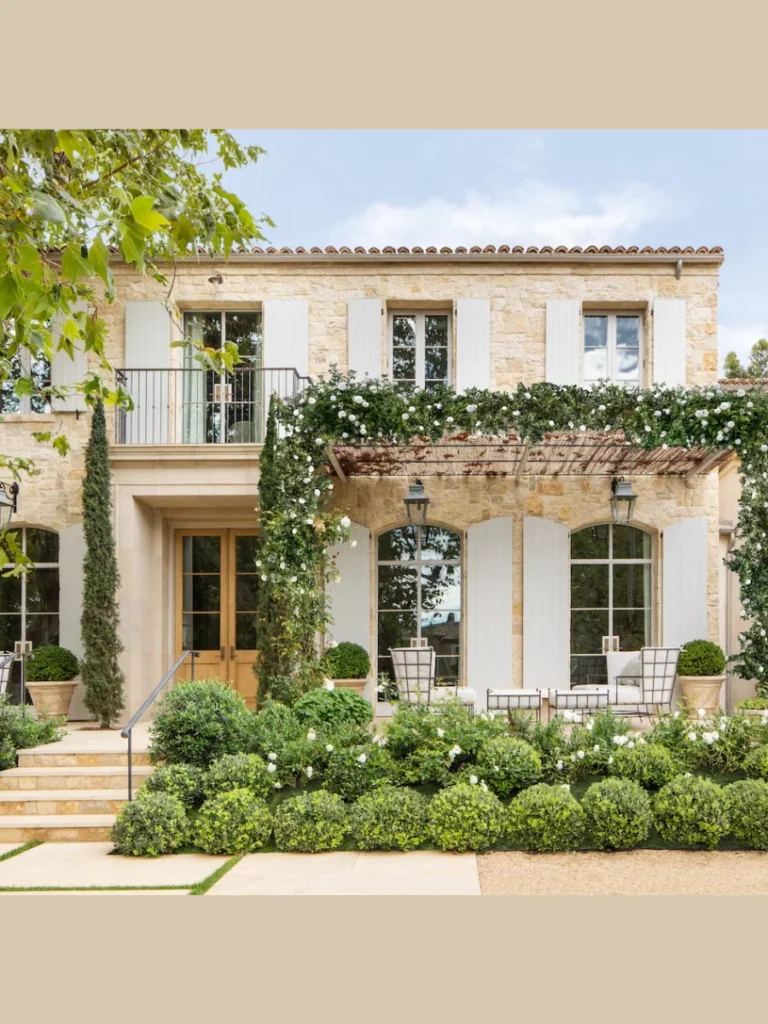
I find that old wooden window frames offer a clever way to add architectural depth to a flat porch wall without spending much money. You can leave the glass in for a reflective quality or remove it to hang small wreaths inside the empty panes.
Searching local flea markets or salvage yards usually yields affordable treasures that carry a sense of history and unique character for your home. I prefer frames with chipped “shabby chic” paint because they hide dust and pollen much better than perfect finishes.
You should secure these heavy frames directly into the wall studs to prevent them from falling and breaking on your porch floor. Adding a few small hooks to the bottom of the frame allows you to hang seasonal items like bells or dried herbs.
I think these frames look best when you layer them behind other decorative items like tall potted plants or ceramic garden stools. This layering technique builds a professional design depth that makes your porch feel like a fully furnished room.
5. Colorful Ceramic Wall Plates for Mediterranean Flair
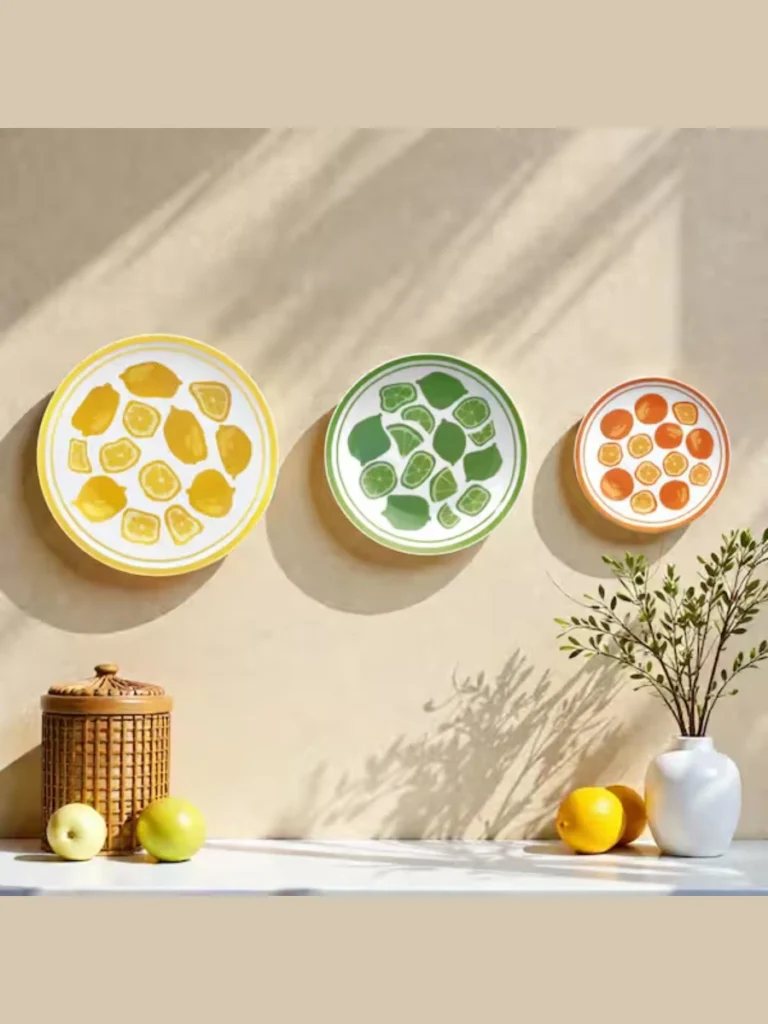
Hanging a collection of ceramic plates adds a splash of Mediterranean color and intricate patterns to your outdoor dining or seating area. I enjoy mixing different sizes and designs to create a curated gallery wall that feels collected over many years of travel.
You need to use specialized outdoor plate hangers that grip the edges tightly to prevent the ceramics from slipping during temperature changes. Ceramic holds its color perfectly in the sun, making it one of the most reliable materials for long-term outdoor display.
I suggest grouping five to seven plates in an organic cluster to create a sense of movement across a wide horizontal wall. Using a variety of bold blues, yellows, and oranges can make a dark or shaded porch feel much brighter and more energetic.
Make sure you bring these pieces inside if you live in an area where the temperature drops below freezing for long periods. Water trapped in the ceramic pores can expand and cause the glaze to crack if the plates are not winterized.
6. Decorative Hanging Privacy Screens as Visual Art
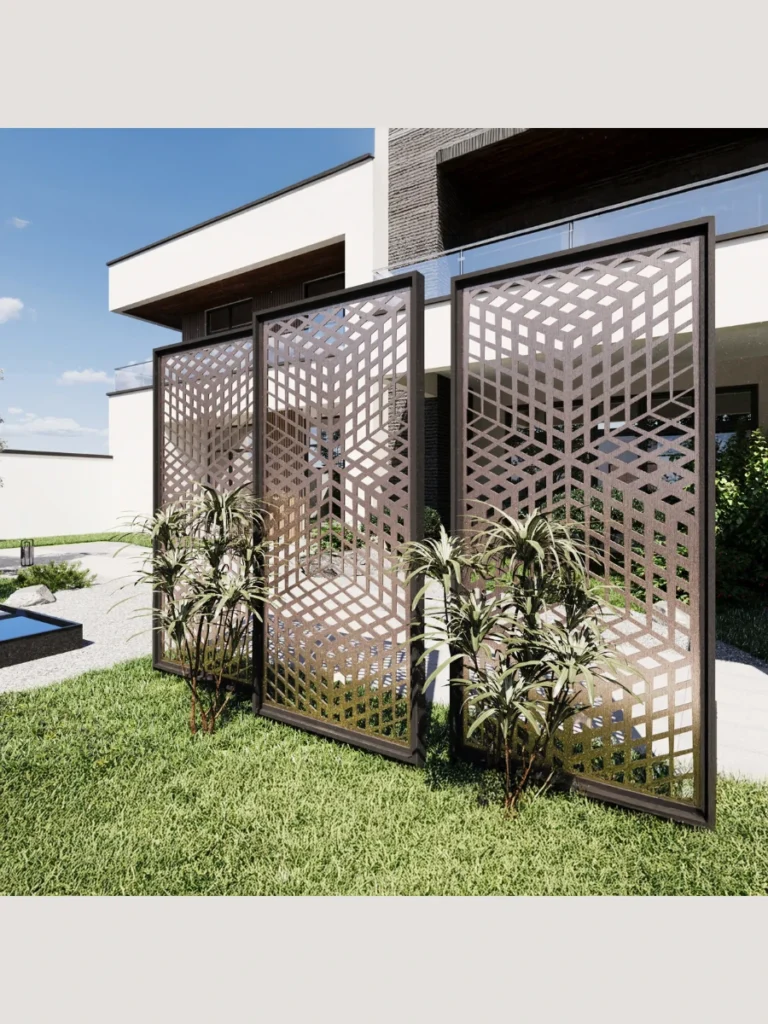
I consider hanging privacy screens to be functional art because they hide the neighbors while providing a beautiful laser-cut pattern to admire. These screens come in various materials like metal or composite wood that stand up to all types of outdoor exposure.
You can hang these from the porch ceiling to define different zones for lounging and eating without building permanent and expensive walls. The intricate patterns cast amazing shadows across your porch floor as the sun moves across the sky during the day.
I recommend choosing dark bronze or black finishes to create a strong silhouette that stands out against a light-colored house exterior. These panels act as a sophisticated backdrop for your outdoor furniture and help your porch feel like a private sanctuary.
Installation is straightforward with a few sturdy chains and ceiling hooks that allow the panels to sway slightly in the wind. This subtle movement adds a relaxing dynamic element to your porch that feels much more high-end than a basic trellis.
7. Hand-Painted Floor Murals for Bold Ground Accents
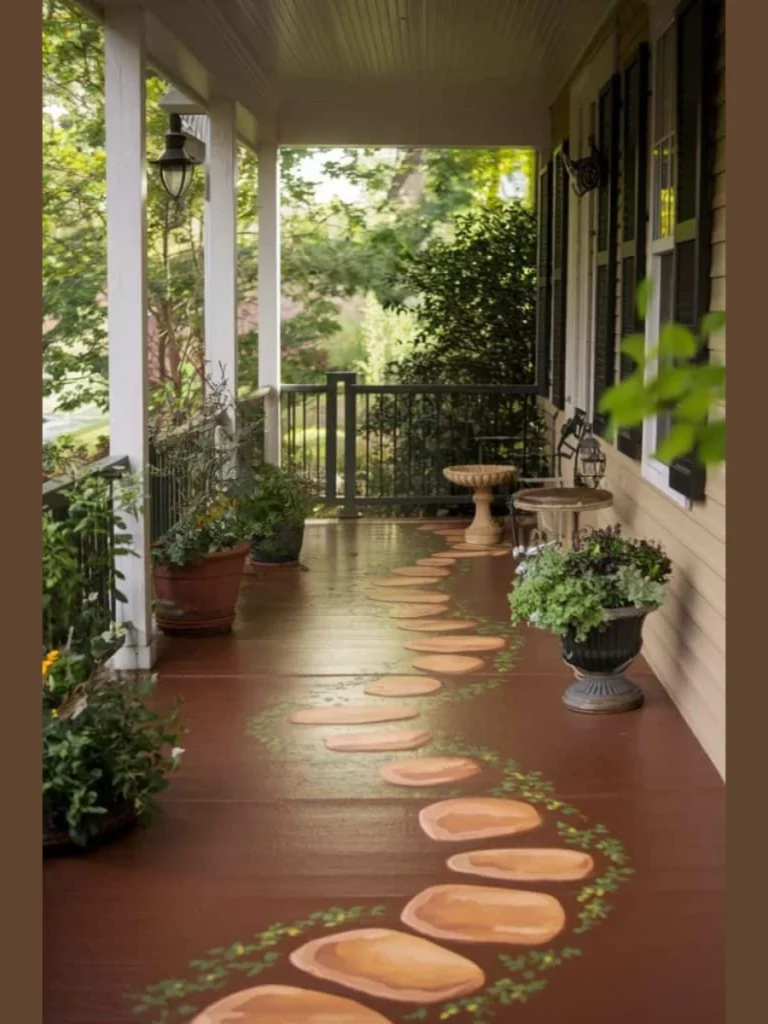
I believe painting a rug pattern or a geometric design directly onto your porch floor serves as a clever way to add art without taking up wall space. Using a stencil allows you to achieve a professional look that transforms boring concrete into a stylish Mediterranean terrace.
You must use heavy-duty porch and floor paint that specifically lists slip resistance to keep your family safe during wet weather. I suggest choosing a color that contrasts with your house siding to make the artistic patterns pop and draw the eye downward.
I find that adding a few layers of clear concrete sealer protects your hard work from heavy foot traffic and furniture scratches over time. This extra step keeps the colors vibrant and prevents the edges of your painted “rug” from chipping away in the sun.
You can easily refresh the look every few years by simply painting over the design with a new color or a different pattern. This flexibility makes floor art a top choice for those who enjoy changing their outdoor decor style with every season.
8. Mirror Installations for Brightening Shaded Porch Corners
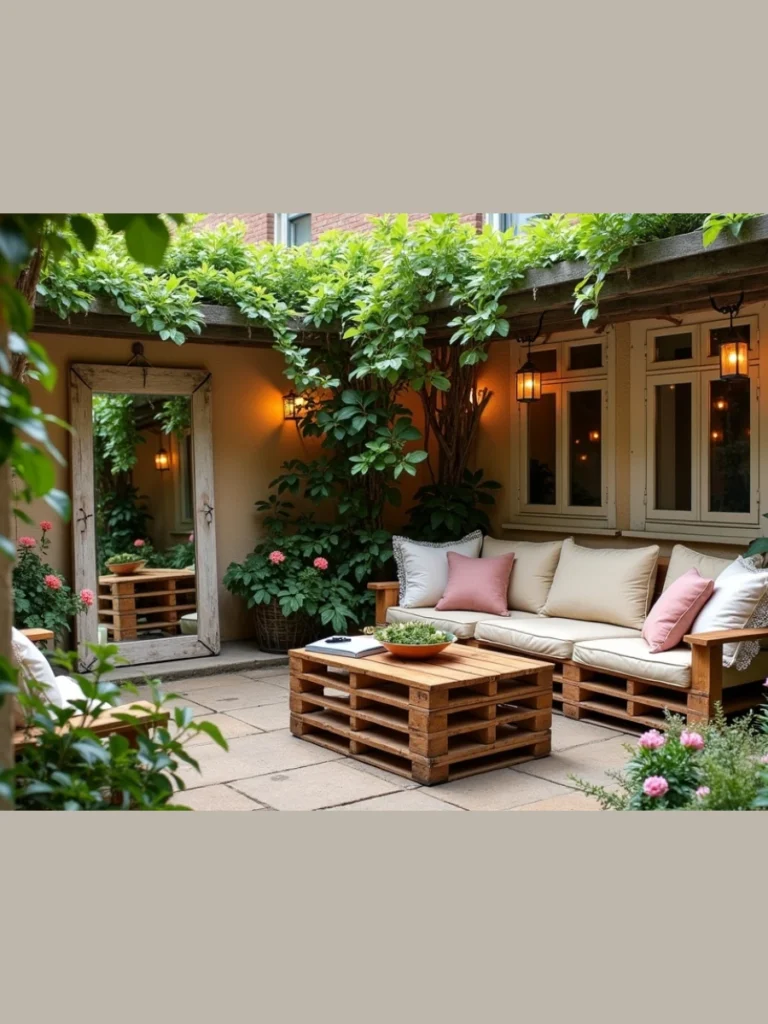
I often hang mirrors on porch walls to bounce natural light into dark corners and make a small seating area feel much larger. A large mirror with a decorative frame acts as a piece of art while reflecting your beautiful garden or backyard landscaping.
You should choose mirrors with plastic or metal frames to avoid the warping and rot issues that common indoor wood frames often face. I recommend checking the back of the mirror to ensure the silvering is thick enough to withstand high humidity levels outside.
I think placing a mirror behind a few potted plants creates a lush and layered look that doubles the visual impact of your greenery. The reflection adds a sense of movement to your porch as birds and clouds pass by in the background of the glass.
Make sure to mount your mirrors securely and slightly tilted downward to avoid reflecting the harsh midday sun directly into your guests’ eyes. You will notice how the porch feels much more open and airy once you add a reflective artistic element to the walls.
9. Kinetic Wind Sculptures for Relaxing Visual Motion
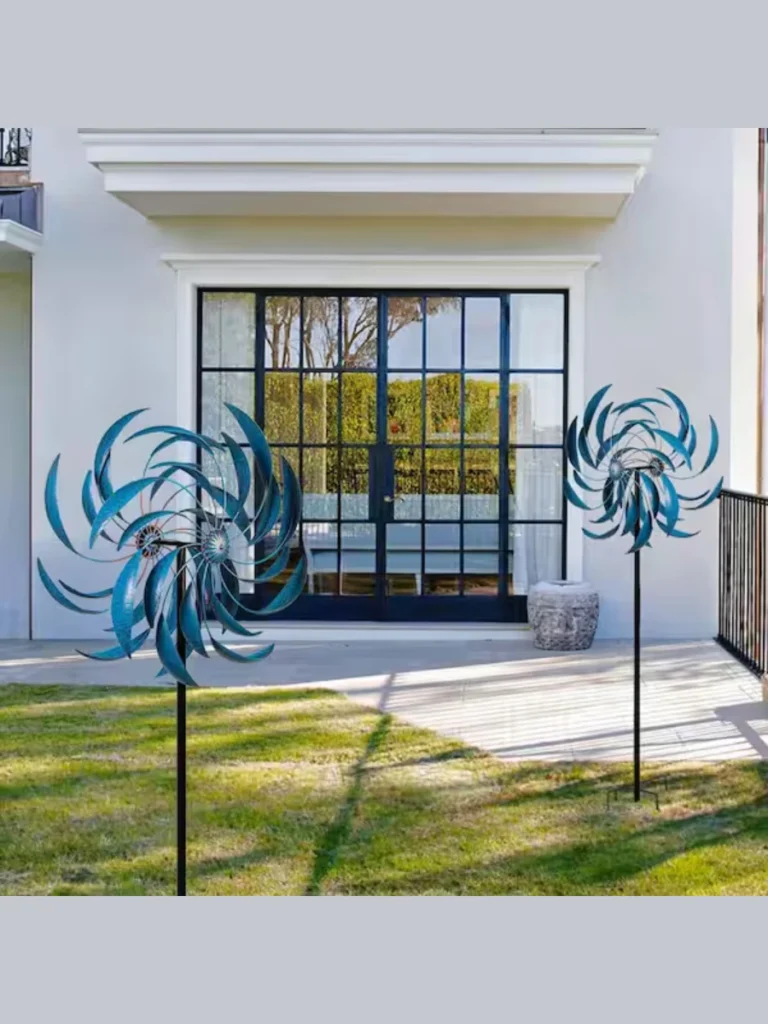
I find that kinetic metal sculptures offer a unique form of art that changes shape and catches the light as the wind blows through. These spinning pieces provide a soothing focal point that helps you relax while you sit outside and enjoy the fresh air.
You should look for high-quality ball bearings that allow the sculpture to move silently without any annoying squeaks or metal grinding sounds. Stainless steel or copper materials develop a beautiful patina over time while remaining strong enough to handle heavy gusts of wind.
I like to place these sculptures at the edge of the porch steps where they can catch the most breeze without hitting any furniture. This placement ensures the art is visible from both inside the house and from the street to improve your home’s curb appeal.
Most of these pieces come with a heavy garden stake, but you can also find hanging versions that attach to your porch rafters. You will enjoy watching the rhythmic motion of the metal petals as they create a mesmerizing display during a breezy afternoon.
10. Vertical Wall Gardens as Living Artistic Displays
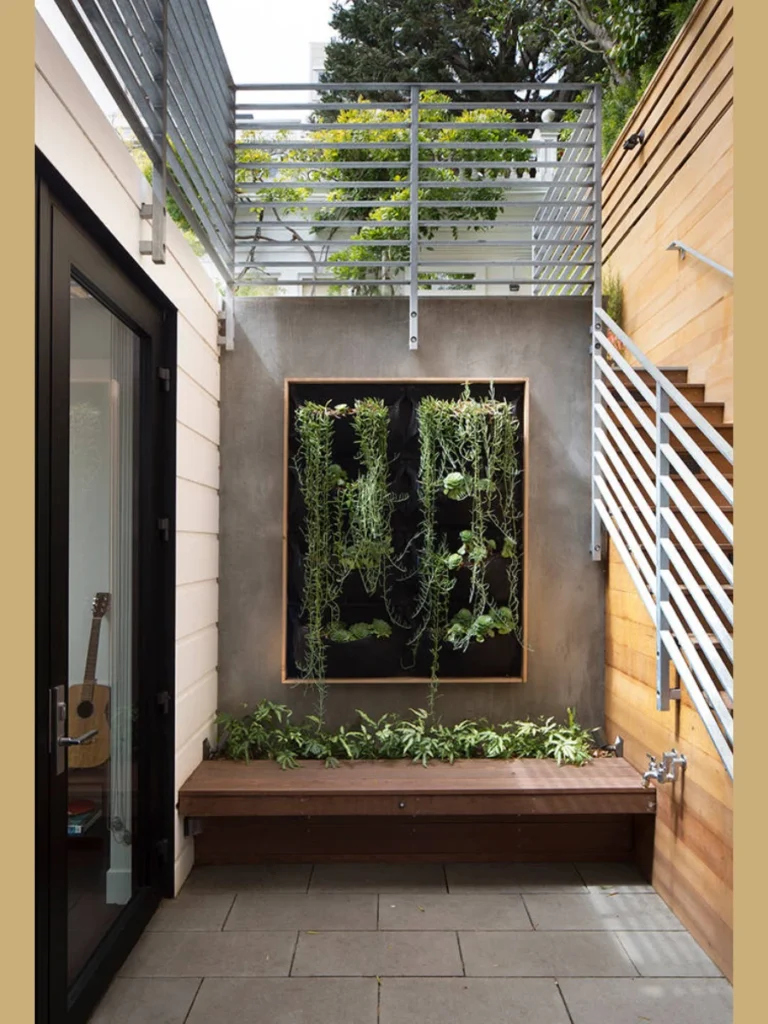
I consider a well-arranged vertical planter to be a form of living art that brings texture and life to a flat exterior wall. You can arrange different shades of green succulents or colorful trailing flowers to create a natural masterpiece that changes every month.
You need to install a moisture barrier between the planter and your house siding to prevent water damage or mold growth on the walls. Using a modular system allows you to swap out individual plants easily if they start to look a bit tired or overgrown.
I recommend choosing a mix of textures like fuzzy silver leaves and smooth dark vines to create a sophisticated and professional plant gallery. This living wall provides a cooling effect for your porch while acting as a lush backdrop for your outdoor lounge chairs.
Drip irrigation systems hidden behind the frames make maintenance simple and ensure your living art stays healthy even during a dry summer. I find that the smell of fresh herbs or flowers adds an extra sensory layer to your porch art that traditional pieces cannot.

Boost Your Brain: The New Art and Science Behind Enhanced Brain Performance
Boost Your Brain: The New Art and Science Behind Enhanced Brain Performance
11. Oversized Nautical Rope Art for Coastal Texture
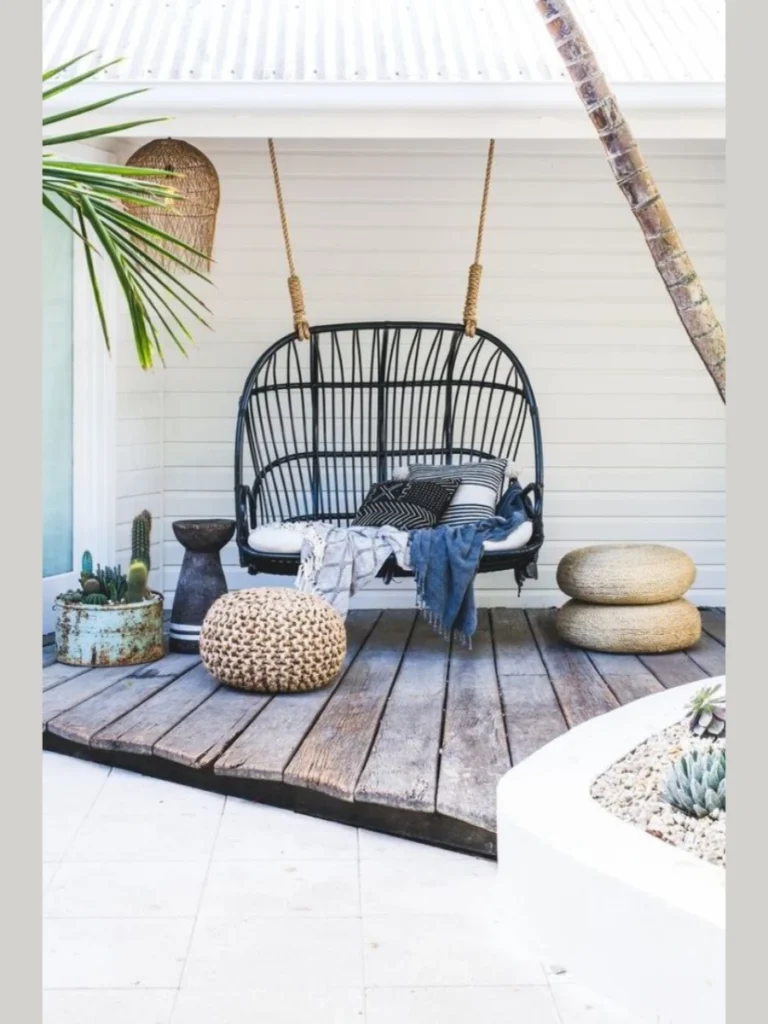
I use thick nautical ropes to create large-scale macramé or knotted wall hangings that add a rugged and coastal texture to the porch. This type of art feels incredibly sturdy and fits perfectly with a relaxed beach house or a modern lakefront cottage style.
You should choose synthetic manila rope because it mimics the look of natural fiber but will not rot or smell when it gets wet. The heavy weight of the rope keeps the art from blowing around too much during storms compared to lighter fabric tapestries.
I find that hanging a single massive knot or a series of parallel ropes creates a clean and minimalist look on a large empty wall. The natural tan color of the rope complements almost any exterior paint color while adding a touch of handmade craftsmanship.
You can add large wooden beads or weathered sea glass into the knots to give the piece more color and a unique personal touch. These rope hangings are very easy to clean with a quick vacuum or a light brush to remove any outdoor dust or cobwebs.
12. Framed Architectural Blueprints for a Sophisticated Look
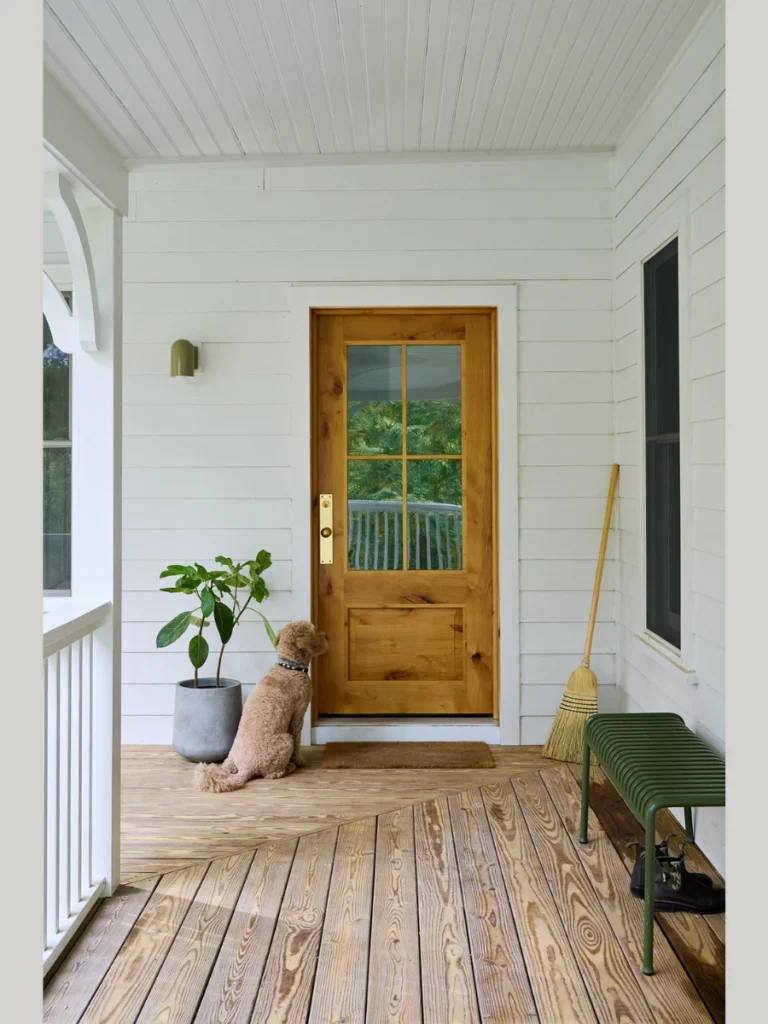
I enjoy using framed blueprints or vintage maps of the local area to give a porch a sophisticated and historical feeling. These technical drawings look professional when mounted in large black frames with wide white mats to make the details stand out.
You must use acrylic or plexiglass instead of real glass to prevent heavy frames from becoming dangerous if they happen to fall. I recommend printing the designs on weather-resistant paper to ensure the ink does not run or fade in the humid outdoor air.
I think these pieces work best in pairs or trios to create a formal gallery look above a long porch bench or a dining table. The black and white color scheme provides a sharp contrast that looks very high-end against a traditional white or gray house.
You should seal the back of the frame with waterproof tape to keep moisture from seeping into the paper and causing unsightly ripples. This simple trick keeps your historical art looking crisp and expensive for several years without needing to replace the prints.
13. Wrought Iron Gate Sections as Vintage Wall Decor
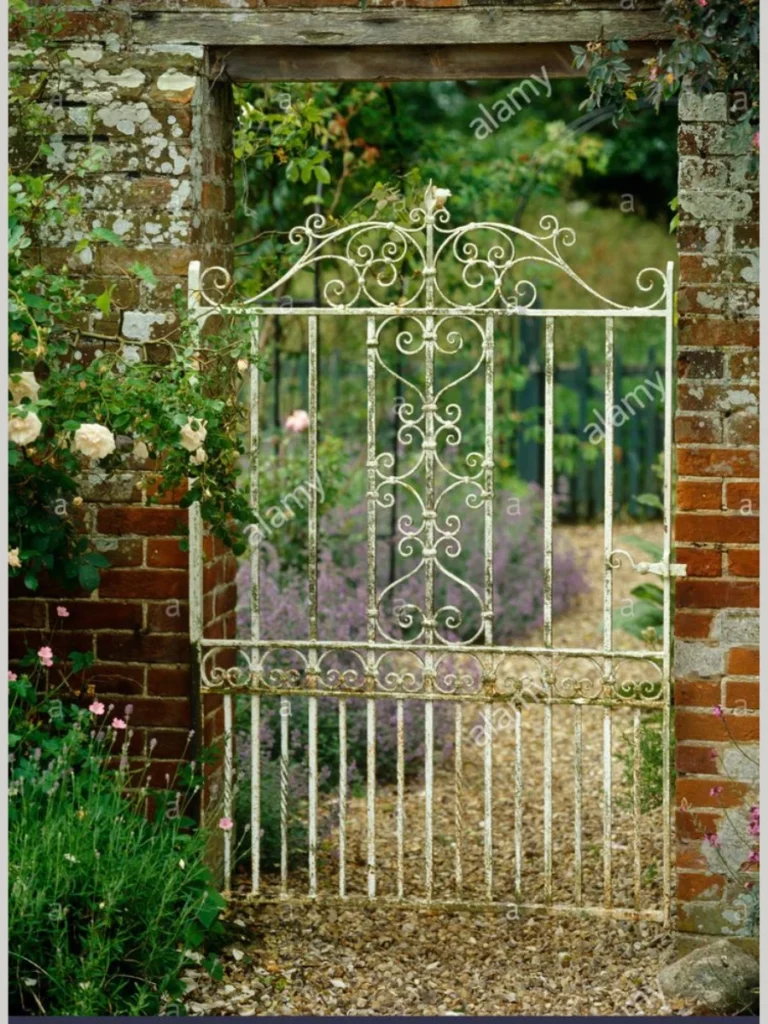
I find that mounting a section of a vintage wrought iron gate provides a massive amount of character and a sense of history to a plain porch wall. These heavy pieces offer incredible structural detail that makes your outdoor space feel like a secret European courtyard or a historic estate.
You should search architectural salvage yards to find authentic pieces that feature unique scrolls and hand-forged patterns not found in modern stores. I prefer leaving a bit of the original rust or chipped paint to maintain that authentic “found object” aesthetic that builds instant trust in your design taste.
You must use heavy-duty masonry bolts to secure these pieces because the weight can easily pull standard nails right out of your siding. I recommend leaving a small gap between the metal and the wall to allow air to flow and prevent moisture from getting trapped behind the iron.
I like to use these gates as a sturdy support for climbing vines like jasmine or ivy to blend the metal art with living greenery. This combination creates a lush and layered look that provides both a visual masterpiece and a wonderful fragrance for your seating area.
Final Professional Guide for Long-Lasting Porch Decor
I believe that the longevity of your porch art depends entirely on how you prepare the surface and the hardware. You should always treat your outdoor walls like a gallery by ensuring every piece is level and securely anchored against the wind.
I find that using the right spacing between your art and the house siding prevents moisture buildup and potential mold growth. Choosing a professional layout before you start drilling will save you time and keep your exterior looking clean and well-maintained.
You must consider how the changing seasons will affect the materials you choose for your front or back porch. I recommend keeping a small kit of touch-up paint and sealant to fix any minor chips before they turn into larger rust or rot problems.
I think your porch will quickly become your favorite place to relax once you add these artistic and personal touches. These final tips ensure that your investment in decor continues to look amazing while increasing the overall value of your property.
Comparison of Installation Hardware for Porch Art
| Hardware Type | Best Surface | Weight Capacity | Removability |
| Stainless Steel Screws | Wood Siding | High | Permanent |
| Masonry Anchors | Brick or Stone | Very High | Permanent |
| Siding Hooks | Vinyl Siding | Medium | Easy / No Damage |
| Adhesive Strips | Smooth Glass | Low | Temporary |
| Ceiling Eye Bolts | Wood Rafters | High | Permanent |
Expert Tips for Organizing Your Outdoor Gallery
- Standardize Your Frames: I suggest using the same color frame for different art types to create a unified and professional look.
- Balance the Weight: You should place heavier items lower on the wall to maintain a sense of visual stability and safety.
- Use Natural Lighting: I find that placing art where the morning sun hits it makes the colors pop without the heat of the afternoon.
- Add Layered Depth: You must try placing some art behind tall plants and some in front to create a high-end designer feel.
- Test the Height: I recommend having a friend hold the art up while you stand at the street to check the curb appeal.
Conclusion
I believe that your home should tell a story from the moment someone walks up to the front door. You should use these art ideas to create a space that feels intentional and reflects your unique personality to the neighborhood.

Boost Your Brain: The New Art and Science Behind Enhanced Brain Performance – Actionable Neuroscience for Memory, Speed, and Smarter Thinking
Boost Your Brain: The New Art and Science Behind Enhanced Brain Performance – Actionable Neuroscience…
I find that the best porches are those that combine comfort with high-quality visual elements that catch the eye. Choosing durable materials and professional mounting techniques will ensure your outdoor gallery remains a source of pride for years.
You must remember that art is subjective, and there are no wrong choices as long as the pieces make you happy. Keeping your porch organized and well-maintained is the key to creating an inviting atmosphere for your family and guests.
I think you are now ready to transform your outdoor area into a beautiful extension of your living room. Your porch is a blank canvas that is just waiting for the right artistic touch to make it truly stand out.
FAQs
I recommend using metal or ceramic art because these materials do not fade as quickly as wood or canvas. You should look for powder-coated finishes that are specifically designed to withstand high UV exposure without losing their original color.
You should apply three coats of clear exterior-grade polyurethane to all sides of the wood, including the edges and the back. This creates a waterproof seal that prevents moisture from soaking into the fibers and causing the wood to soften or decay.
I believe glass can be safe if it is tempered and secured with heavy-duty brackets that prevent it from rattling in the wind. You must ensure it is positioned away from high-traffic areas where it could be accidentally bumped by furniture or guests.
You should use a soft-bristled brush or a can of compressed air to remove debris without scratching the delicate surfaces. I find that a quick rinse with a low-pressure garden hose once a month keeps everything looking professional and fresh.
I only suggest using adhesive hooks on very smooth surfaces like glass or metal doors, as they rarely stick well to textured siding. You will find that specialized siding clips are a much more reliable and professional way to hang art without drilling holes.
Related Posts
- Top 14 Porch Privacy Ideas
- 15 Best Porch Flooring Ideas
- Top 10 Porch Floor Ideas
- 11 Best Porch Skirting Ideas
- Top 12 Porch Flowers Ideas
- 13 Best Porch Curb Appeal Ideas