
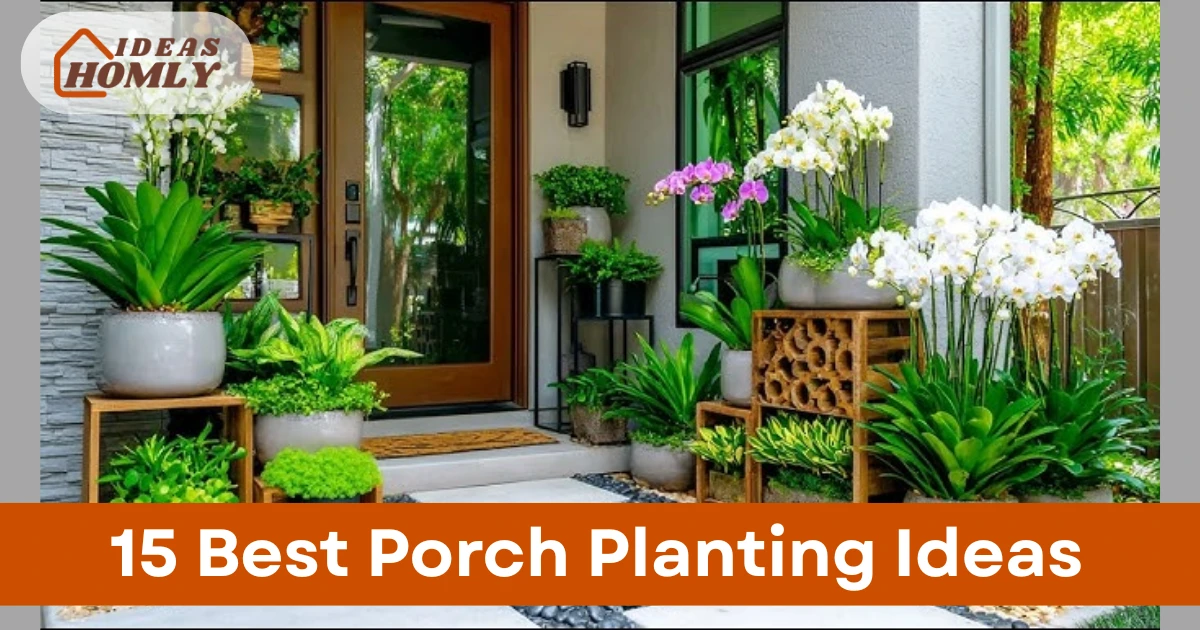

I want to help you turn that boring concrete slab into a lush sanctuary that actually makes your neighbors jealous. You do not need a massive green thumb to create a welcoming entrance that looks professional and stays alive.
How To Choose Low-Maintenance Plants For Your Front Porch
Choosing the right greenery depends entirely on how much sun hits your front door during the hottest parts of the afternoon. I always check the light exposure first because a sun-loving hibiscus will quickly perish in a dark, north-facing corner.
Potting soil quality determines whether your flowers thrive or simply struggle to exist through the first heatwave of the summer. I recommend using a high-quality potting mix that holds moisture but allows excess water to drain away from the roots.
Container size matters more than most people realize when they are picking out cute pots at the local garden center. Small pots dry out in hours during July, so I prefer larger vessels that provide plenty of room for root systems.
Drainage holes are the most important feature of any planter you decide to put on your beautiful wooden porch floor. Without proper drainage, your plants will literally drown in stagnant water, which usually leads to a very smelly and expensive disaster.
1. Traditional Symmetrical Entrance Planters
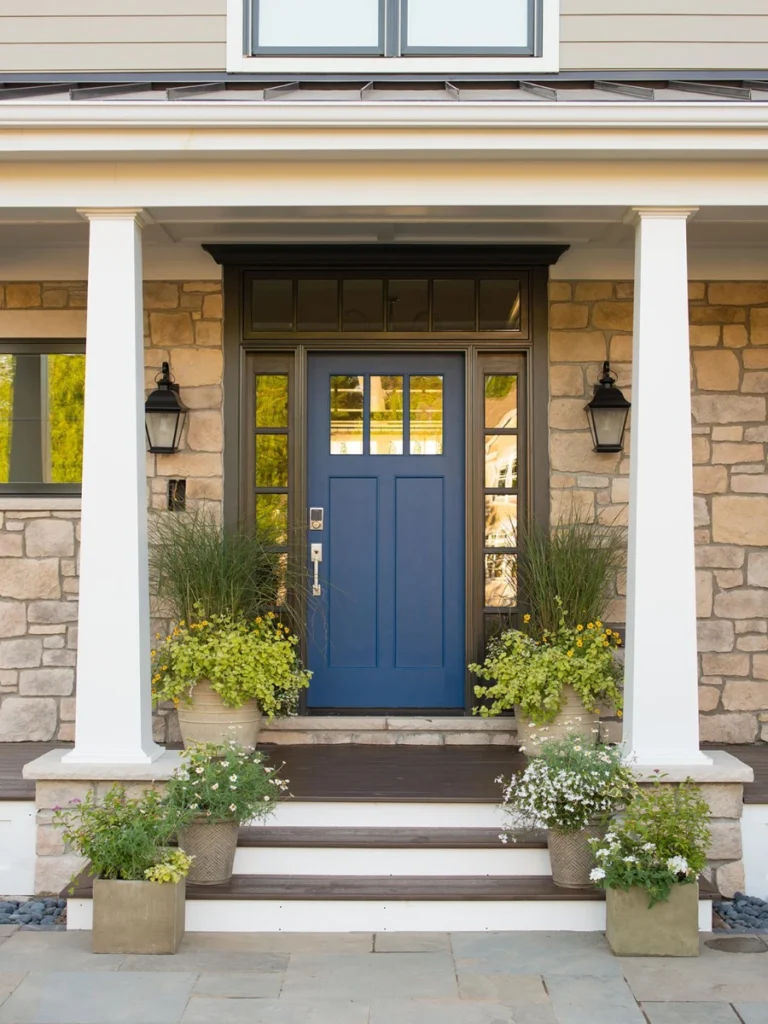
Symmetry creates an immediate sense of order and elegance that makes any home look more expensive and well-maintained from the street. I like placing two tall, identical urns on either side of the front door to frame the entryway with classic style.
Tall evergreen shrubs like boxwoods or cedar trees provide a permanent structure that looks great even when the winter snow starts falling. These plants require very little pruning and maintain their deep green color throughout every season of the year without much fuss.
I usually add trailing ivy or sweet potato vines around the base of the main shrub to soften the edges of the pots. This simple addition creates a professional “thriller and spiller” effect that fills out the space and covers the soil completely.
You can swap out small flowering annuals near the rim of the pot whenever you want a fresh pop of seasonal color. This strategy keeps your porch looking updated without requiring you to replant the entire heavy container every few months or weeks.
2. Colorful Hanging Flower Baskets
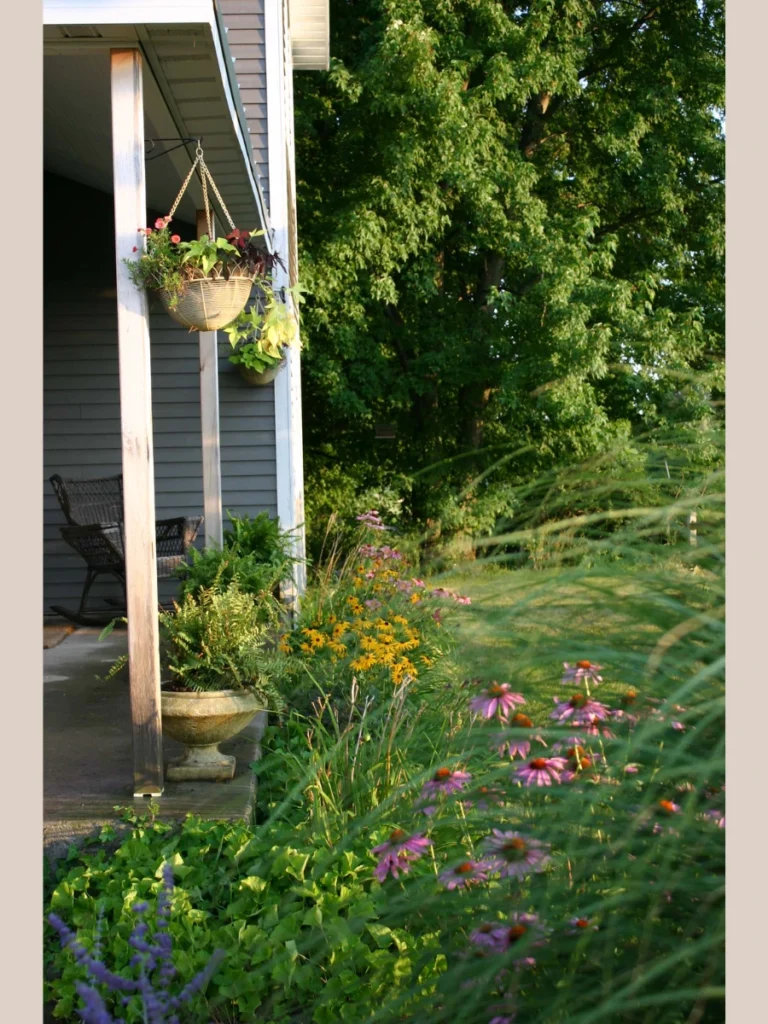
Hanging baskets are the perfect solution for small porches where floor space is limited, but you still want a vertical garden. I find that petunias and fuchsias offer the most dramatic cascades of color that can be seen from all the way down the block.
You must remember to water these hanging displays daily because the wind and elevated position dry them out much faster than ground pots. I often install simple drip irrigation lines hidden along the porch roof to keep them hydrated without needing a tall ladder.
The height of your baskets should allow guests to walk underneath them without getting a face full of wet leaves or damp soil. I generally hang mine at least seven feet high to ensure the porch remains functional for taller visitors and delivery drivers.
Mixing different textures like ferns with bright begonias creates a visual depth that looks much more interesting than a single plant type. I enjoy experimenting with contrasting colors like deep purple leaves against bright yellow flowers to make the display really stand out.
3. Tiered Herb Garden Displays
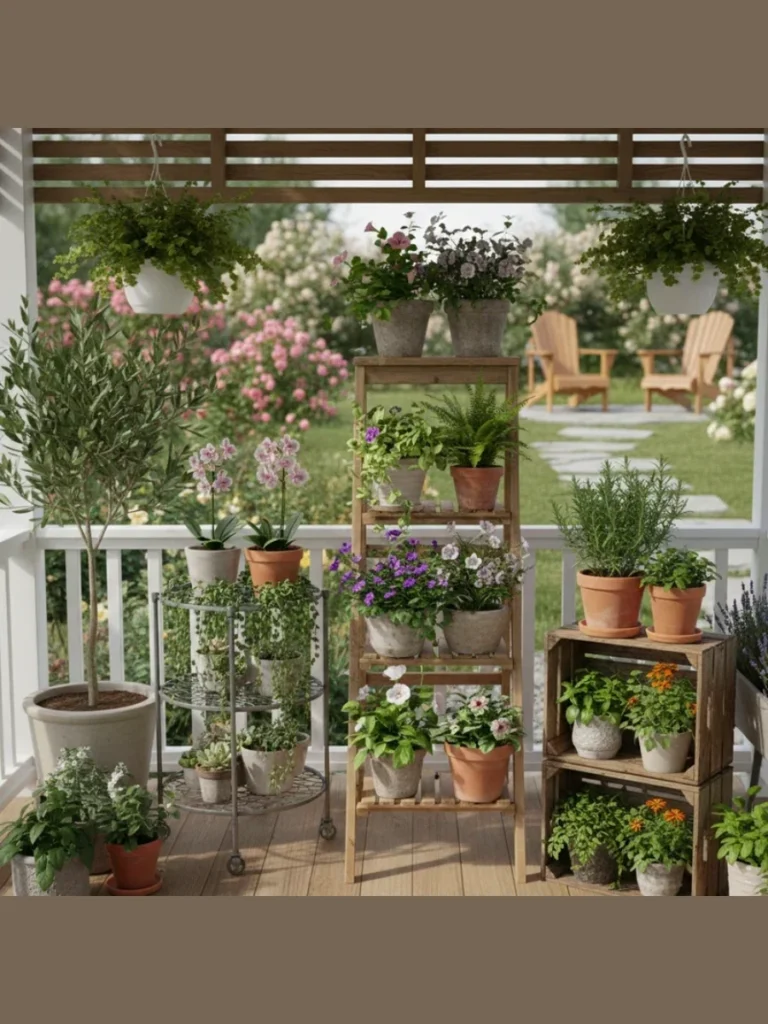
Growing herbs on your porch combines practical kitchen utility with a wonderful fragrance that hits you as soon as you step outside. I keep my basil and rosemary in tiered wooden crates to save space while making it easy to grab leaves.
This setup works best near a kitchen door or a window where you can easily reach out and harvest what you need. Most culinary herbs love the sun, so make sure this tiered display sits in a spot that gets plenty of bright light.
I prefer using terracotta pots for herbs because the porous clay allows the roots to breathe and prevents the soil from staying too soggy. Lavender and thyme particularly enjoy the drier environment that these traditional clay pots provide throughout the growing season of the year.
The scent of fresh mint or lemon balm acts as a natural air freshener for your outdoor seating area while you drink coffee. I also find that having these plants nearby helps deter some common pests that might otherwise bother you during a quiet evening.
4. Modern Minimalist Tall Trough Planters
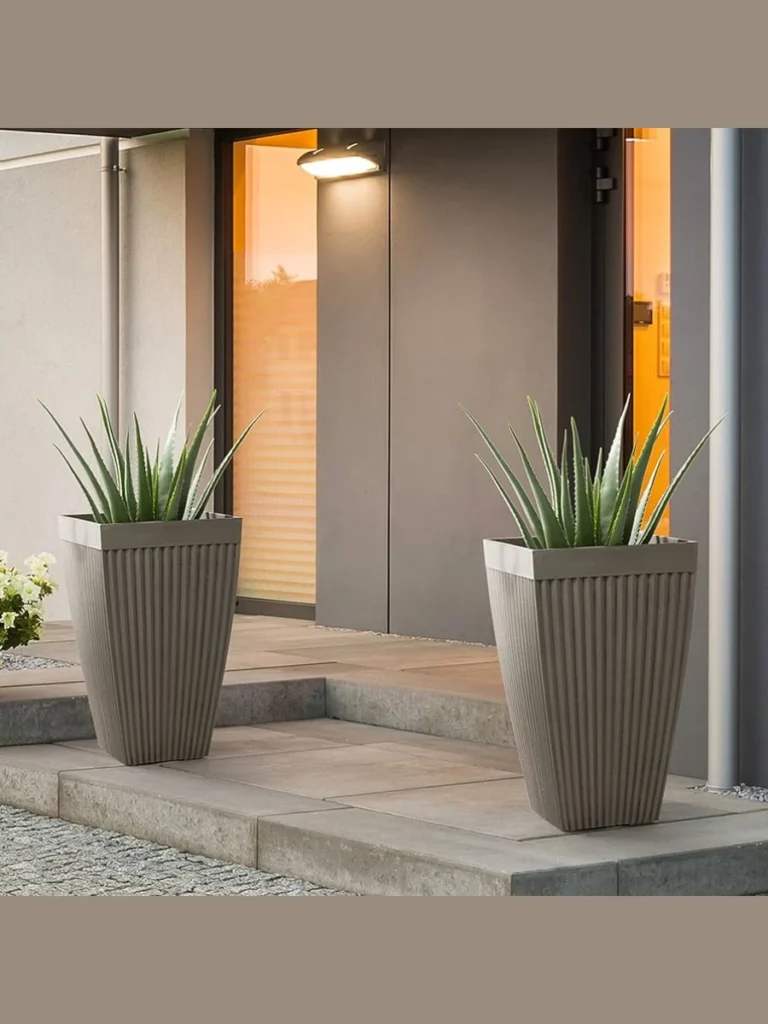
Trough planters offer a sleek and contemporary look that fits perfectly with modern architecture or minimalist home designs with clean lines. I use long rectangular containers to define the edges of my porch without the need for bulky or expensive permanent railings.
VOSAREA 1pc Orange Straw Woven Storage Basket Handle Knitted Flower Container for Planting Stylish Home Decoration for Room and Office Use
VOSAREA 1pc Orange Straw Woven Storage Basket Handle Knitted Flower Container for Planting Stylish Home…
Ornamental grasses like Mexican Feather Grass or Blue Fescue add a soft movement that reacts beautifully to even the slightest summer breeze. These plants don’t drop many leaves, which keeps your porch floor looking clean and tidy with almost zero daily maintenance required.
I stick to a neutral color palette for the containers, such as charcoal grey or matte black, to keep the focus on greenery. This understated approach makes the plants look more vibrant and ensures the planters don’t clash with the color of your front door.
Grouping three troughs of varying heights creates a sophisticated architectural look that fills large empty corners or long walkways with ease. This arrangement provides a sense of privacy from the street without making the porch feel closed off or dark for the residents.
5. Tropical Foliage For Shaded Porches
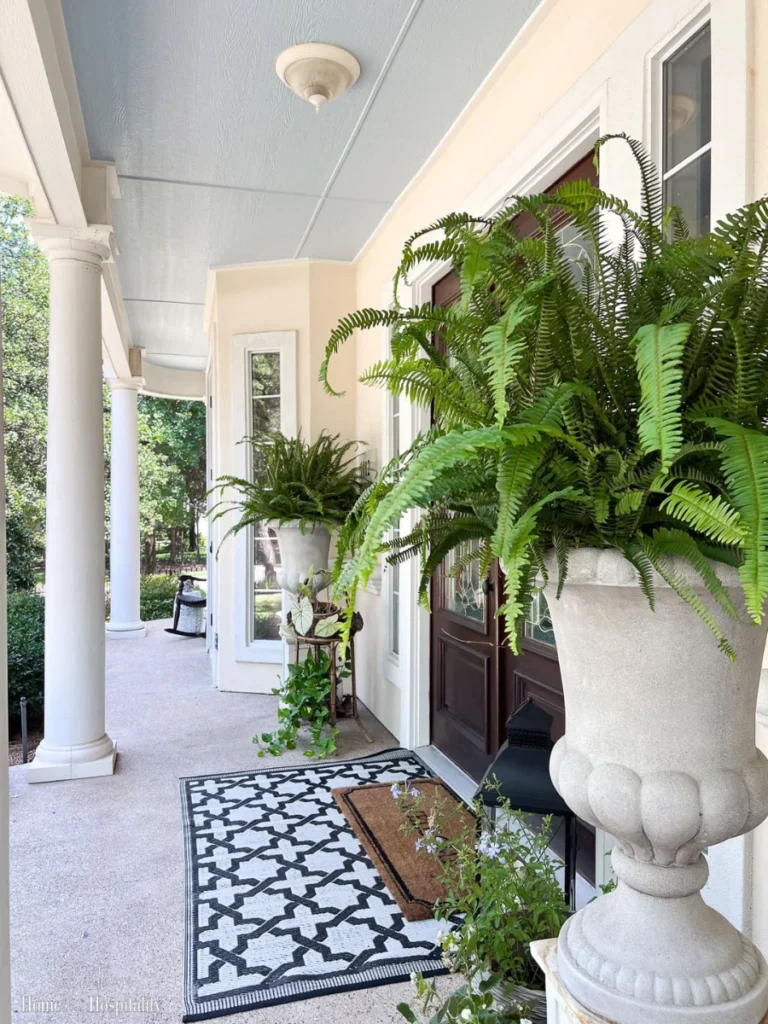
Tropical plants with massive leaves can turn a dark and shaded porch into a lush jungle retreat that feels incredibly private and cool. I rely on Monstera and Bird of Paradise plants to provide a dramatic look that smaller flowers simply cannot achieve alone.
These shade-loving giants thrive in the humid and protected environment that a covered porch provides during the long and hot summer months. You just need to wipe the dust off the large leaves occasionally to keep them looking shiny and healthy for your guests.
I love using large ceramic pots with bold glazes to complement the deep green hues of the tropical foliage in the shaded areas. Bright blue or teal planters create a stunning contrast that brings a bit of vacation energy to your own front steps.
Bringing these plants indoors during the winter is a great way to protect your investment and improve your indoor air quality at home. They transition well to bright indoor corners, allowing you to enjoy your “porch garden” even when the weather turns cold outside.
6. Rustic Wooden Barrel Planters
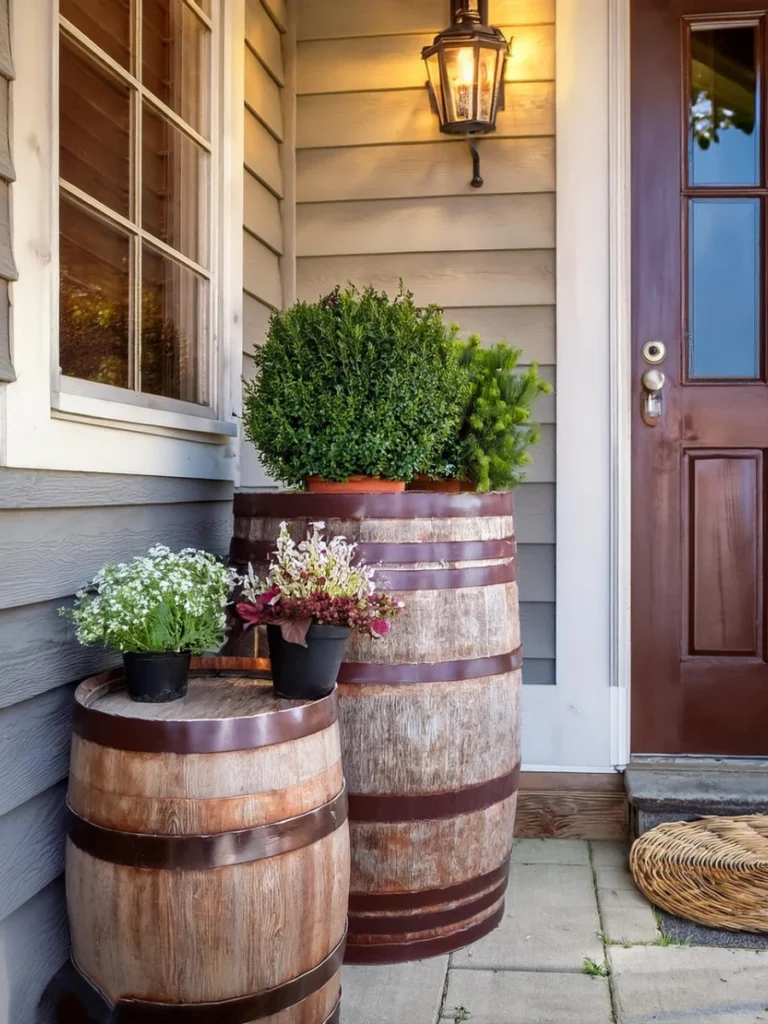
Using reclaimed wooden barrels adds a rugged and grounded charm that instantly makes a farmhouse-style porch feel more authentic and lived-in. I find that these heavy containers are perfect for larger shrubs or dwarf fruit trees because they provide excellent stability against strong winds.
The thick wood walls of a barrel act as a natural insulator that protects sensitive plant roots from extreme temperature swings during the day. I always line the inside with a bit of plastic landscaping fabric to prevent the wood from rotting too quickly over time.
Mixed wildflowers look spectacular when they are spilling over the sides of a weathered oak barrel in a disorganized and natural way. This casual planting style requires very little precision and allows you to enjoy a rotating variety of blooms throughout the entire summer.
I often place these barrels at the base of porch stairs to create a visual anchor that connects the house to the garden. It creates a seamless transition that makes your outdoor living space feel much larger and more integrated with the surrounding natural landscape.
7. Vibrant Window Box Displays
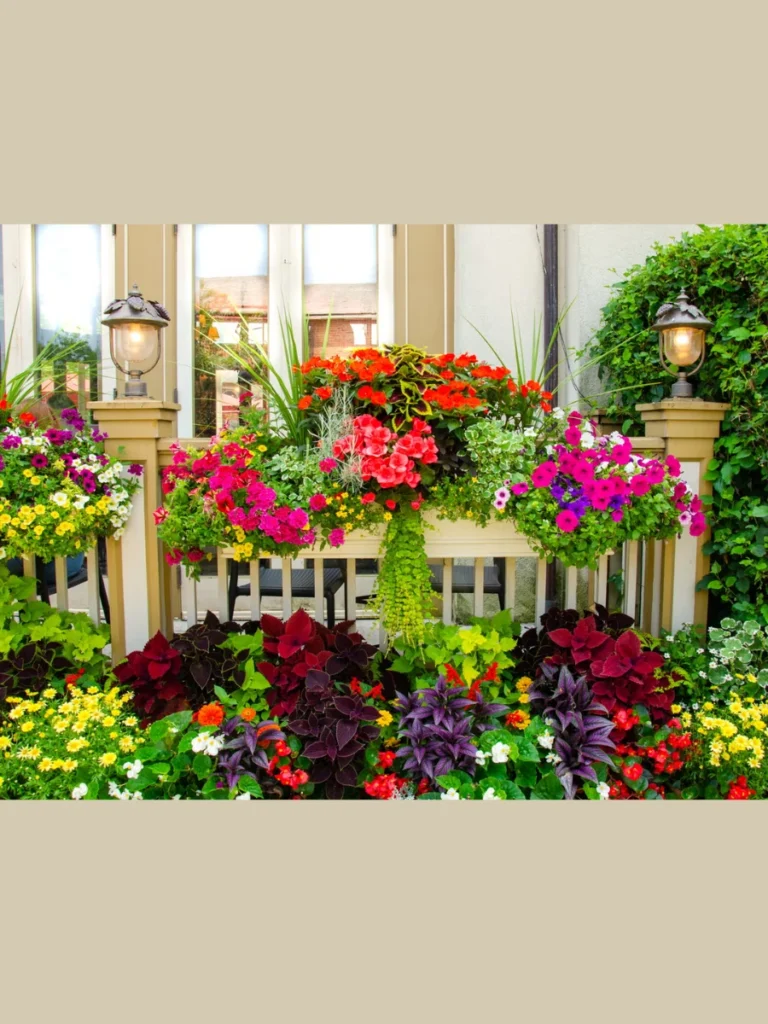
Window boxes attached to your porch railings bring the garden up to eye level and create a stunning view from inside your home. I prefer using lightweight composite materials for these boxes so they don’t put too much physical strain on the porch structure.
Trailing vinca vines and bright red geraniums are my favorite combination for a classic look that never goes out of style for homeowners. These plants are incredibly hardy and can handle the occasional missed watering session without looking sad or dropping all of their petals.
You should ensure your window boxes have a built-in reservoir system to help keep the soil consistently moist during the hottest afternoon hours. This feature is a lifesaver for busy people who want a beautiful porch but cannot always commit to a strict daily gardening schedule.
I like to change the contents of my window boxes to match the changing seasons, using miniature pumpkins in the fall and evergreen boughs. This constant evolution keeps your home looking fresh and shows the neighborhood that you take great pride in your exterior curb appeal.
8. Fragrant Climbing Jasmine Trellis
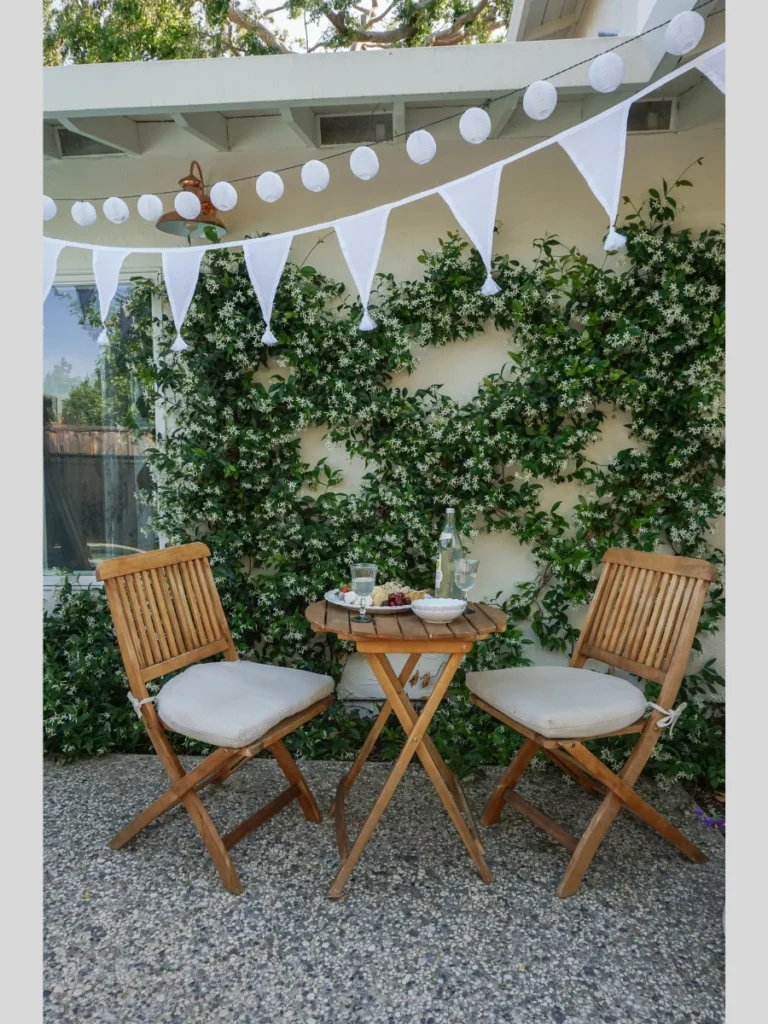
Installing a small trellis against a porch wall allows you to grow climbing plants that fill the evening air with an incredible sweet scent. I personally love Star Jasmine because it grows quickly and produces hundreds of tiny white flowers that look like glowing stars.
Climbing plants take up almost zero floor space, making them the ultimate choice for narrow porches that still need a touch of greenery. You can train the vines to grow around door frames or along railings to create a living architectural feature that is unique.
I find that sitting on the porch is much more relaxing when you are surrounded by the natural perfume of a flowering vine in bloom. It creates a sensory experience that standard potted plants simply cannot match, especially during those warm and quiet summer nights after the sun sets.
You will need to provide a sturdy support system, like a wire grid or a wooden lattice, for the vines to grab onto safely. Regular light pruning will keep the growth under control and prevent the plant from covering your windows or blocking out too much light.
9. Hardy Succulent Rock Gardens
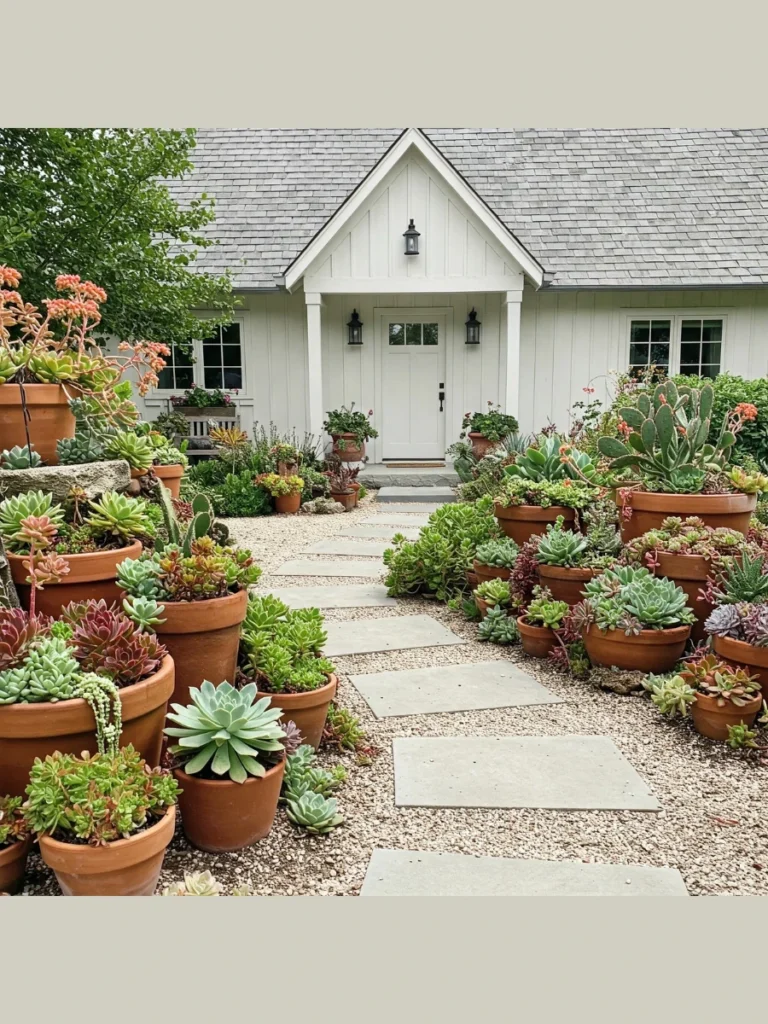
Succulents are the perfect choice for the forgetful gardener who wants a modern and clean look without the constant need for a hose. I arrange different varieties of Echeveria and Sedum in shallow stone bowls to create a miniature desert landscape on my porch tables.
These plants store water in their thick leaves, which means they can survive for weeks without a single drop of rain or tap water. This resilience makes them ideal for south-facing porches that bake in the intense sun for several hours every single day of the week.
I use a mix of colorful gravel and smooth river stones as a top dressing to give the containers a polished and professional finish. The different textures of the rocks highlight the unique shapes of the succulents and keep the soil from splashing out during heavy rain.
Grouping several small succulent pots together creates a focal point that is easy to move around whenever you need more table space. I enjoy the low-profile look of these plants because they don’t block the view of the yard while you are sitting down.
10. Elegant Topiary Trees In Classic Pots
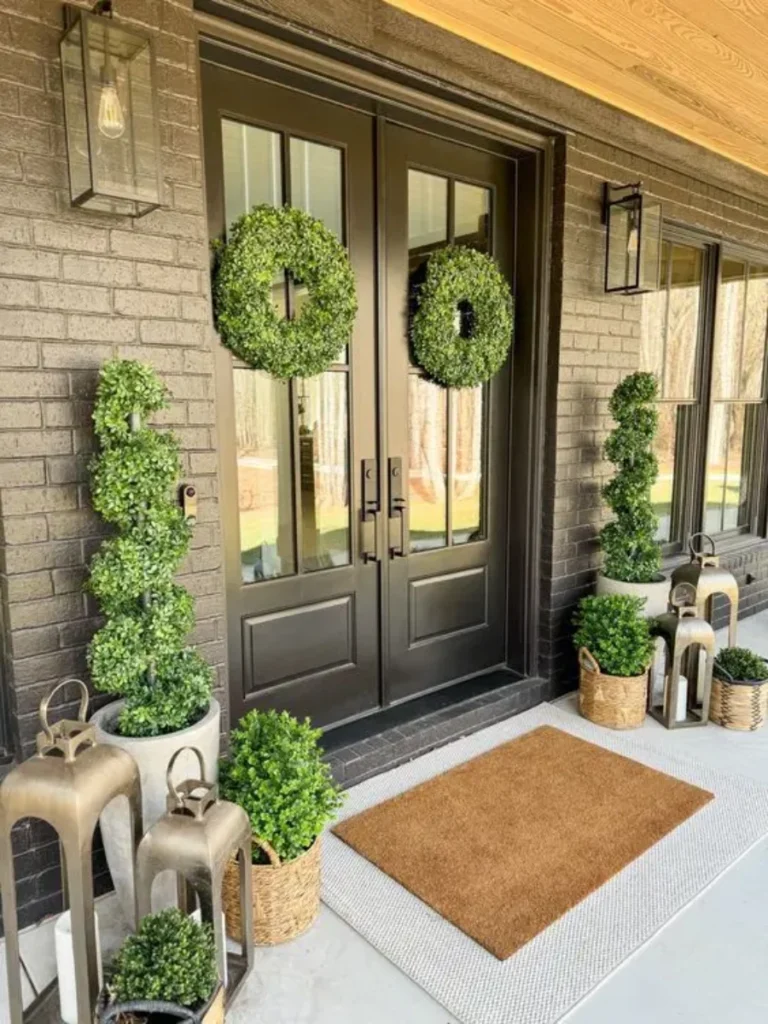
Spiral-cut junipers or ball-shaped hollies bring a sense of formal grandeur to a porch that feels very sophisticated and well-planned for guests. I use these topiaries to add height and structure to corners that would otherwise look empty or neglected during the off-season months.
The clear and defined shapes of topiary trees provide a sharp contrast against the soft and flowing lines of traditional porch furniture and decor. This balance of hard and soft elements is a secret trick that professional landscapers use to create a high-end designer look.
I recommend investing in high-quality resin pots that look like heavy stone but are actually light enough for one person to move. This allows you to reposition your trees easily if you decide to rearrange your porch layout for a party or a special event.
Maintaining the shape only requires a quick trim with garden shears once or twice a year to remove any stray or wild-looking branches. It is a very small price to pay for a plant that provides such a strong and permanent visual impact on your home.
11. Tiered Ladder Stands For Small Spaces
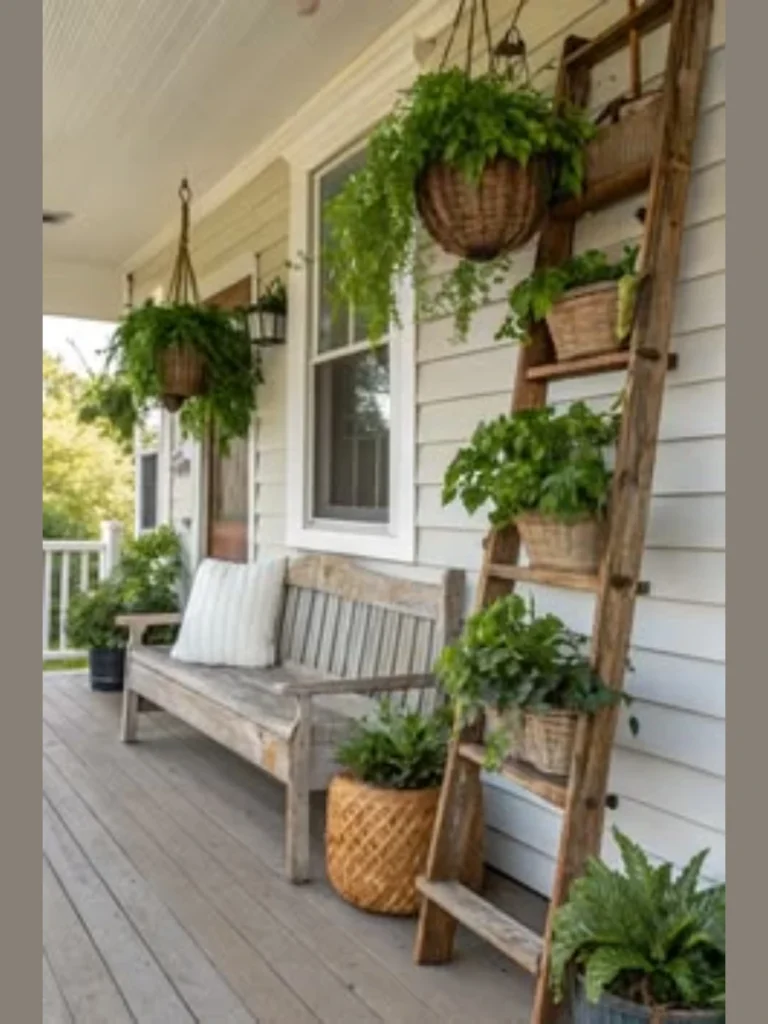
I love using vertical wooden ladders because they allow you to display a dozen different plants without taking up your entire walking path. This setup is a lifesaver for narrow porches where you still want that lush and abundant garden feeling without tripping over heavy pots.
You can organize your plants by height, placing the sun-loving trailers at the very top and the shade-loving ferns on the lower rungs. This creates a natural canopy that helps keep the lower plants cool and hydrated during the most intense parts of the summer day.
I find that using a variety of mismatched vintage pots on the ladder adds a quirky and personal touch to your outdoor decor. It makes the porch feel like a curated collection of your favorite memories rather than a stiff and formal showroom display for strangers.
This vertical arrangement also makes it much easier to water everything at once since the runoff from the top pots helps hydrate the ones below. I suggest choosing a sturdy cedar ladder that can withstand the rain without warping or rotting over the next several years.
12. Fragrant Lavender Rows For Sunny Steps
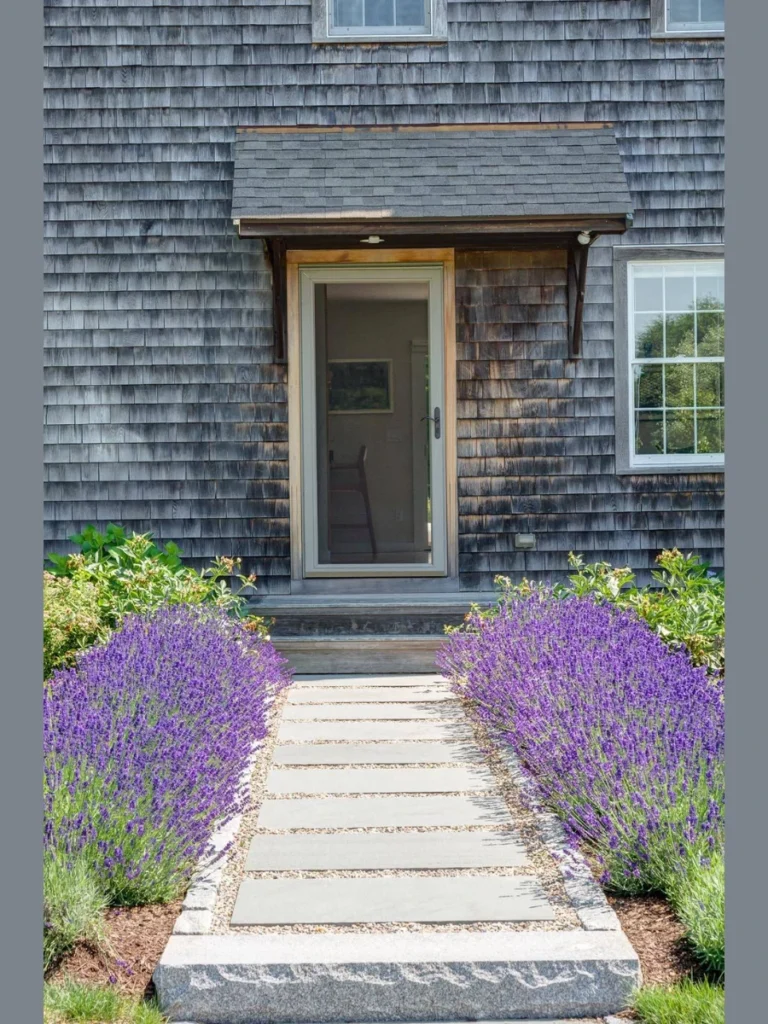
Planting rows of purple lavender along your porch steps creates a wonderful sensory experience every time you walk up to your front door. I enjoy how the light brushing of your clothes against the stems releases a calming scent that instantly lowers my daily stress levels.
Lavender is incredibly tough and actually prefers the reflected heat from concrete or stone steps that would wilt most other delicate flowering plants. You just need to ensure the soil is sandy and drains quickly so the roots stay dry and happy throughout the rainy season.
I stick to a single variety of lavender for the entire row to create a clean and impactful visual line that draws the eye upward. This repetition makes your entrance look much more intentional and gives your home a touch of Mediterranean charm that is very rare.
The silver-green foliage looks beautiful even when the purple blooms have faded, providing a soft and sophisticated color palette for your home exterior. I often harvest a few stems to dry inside, which keeps my house smelling just as good as my beautiful front porch.
13. Statement Citrus Trees In Bright Pots
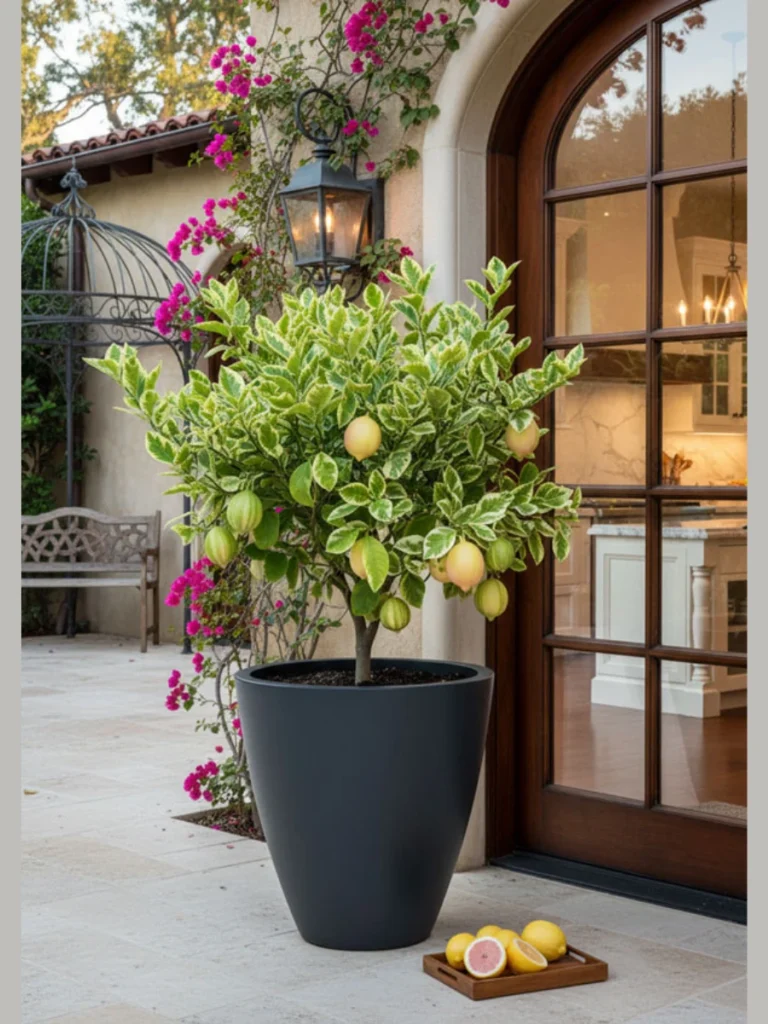
A dwarf lemon or lime tree serves as a magnificent focal point that brings a taste of the sunny tropics right to your own front door. I find that the bright yellow or green fruit looks like natural jewelry against the dark green leaves of the citrus tree.
These trees thrive in the sheltered environment of a porch where they are protected from harsh winds but still get plenty of bright light. I always choose a vibrant cobalt blue or sunny yellow pot to complement the colors of the ripening fruit for a cheerful look.
You will be amazed at how incredible the white blossoms smell during the spring when the tree is preparing to produce its first crop of fruit. It is a much more rewarding experience than a standard ornamental shrub because you eventually get to eat what you have grown.
I recommend using a rolling plant stand for these trees so you can easily move them into the sun or back into the shade. This flexibility ensures your citrus tree stays healthy regardless of how the light shifts across your porch throughout the changing seasons.
14. Modern Ornamental Cabbage For Fall Color
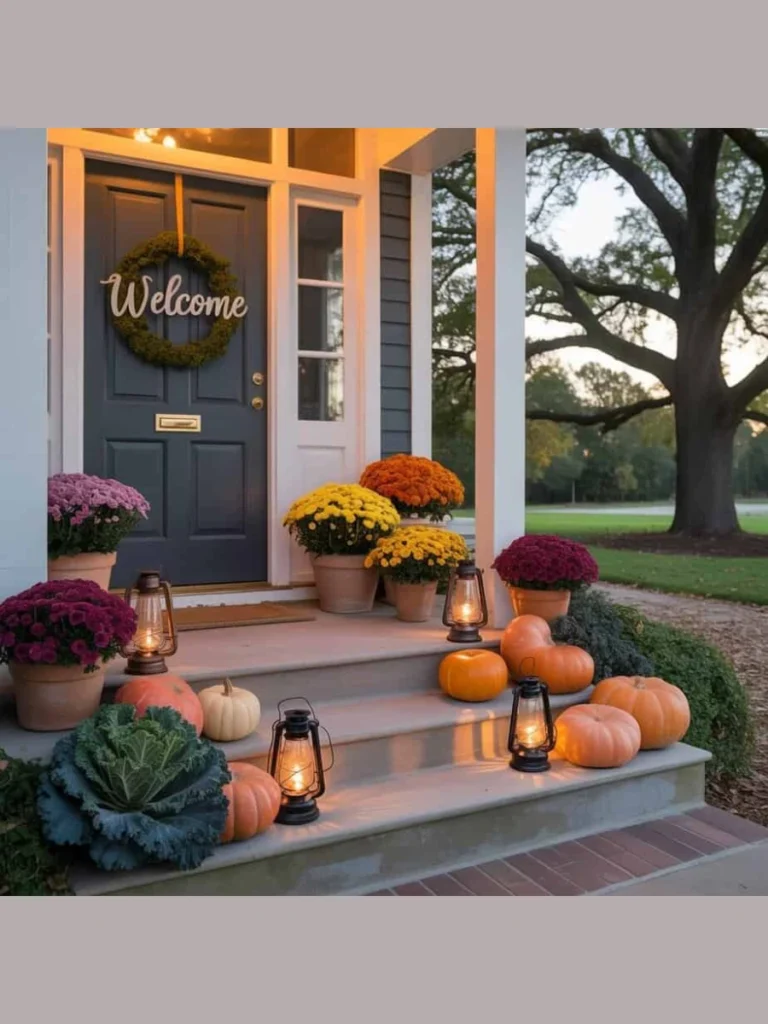
When the summer flowers start to fade, I turn to ornamental cabbage and kale to keep my porch looking vibrant and full of life. These plants actually look better as the temperature drops, with their purple and white centers becoming more intense after a light frost.
The thick and ruffled leaves provide a fantastic texture that contrasts beautifully with the smooth surfaces of modern metal or concrete porch planters. I like to mass them together in tight groups to create a solid carpet of color that lasts well into the winter.
You don’t have to worry about these plants wilting in the cold because they are built to handle the chilly nights that kill off petunias. This makes them the ultimate low-maintenance choice for homeowners who want to keep their curb appeal high during the late autumn months.
I often pair them with small white pumpkins or dried corn stalks to create a complete seasonal display that celebrates the harvest time. It is an affordable way to refresh your porch without needing to buy an entirely new set of expensive permanent outdoor decorations.
15. Architectural Yucca For Low Water Use
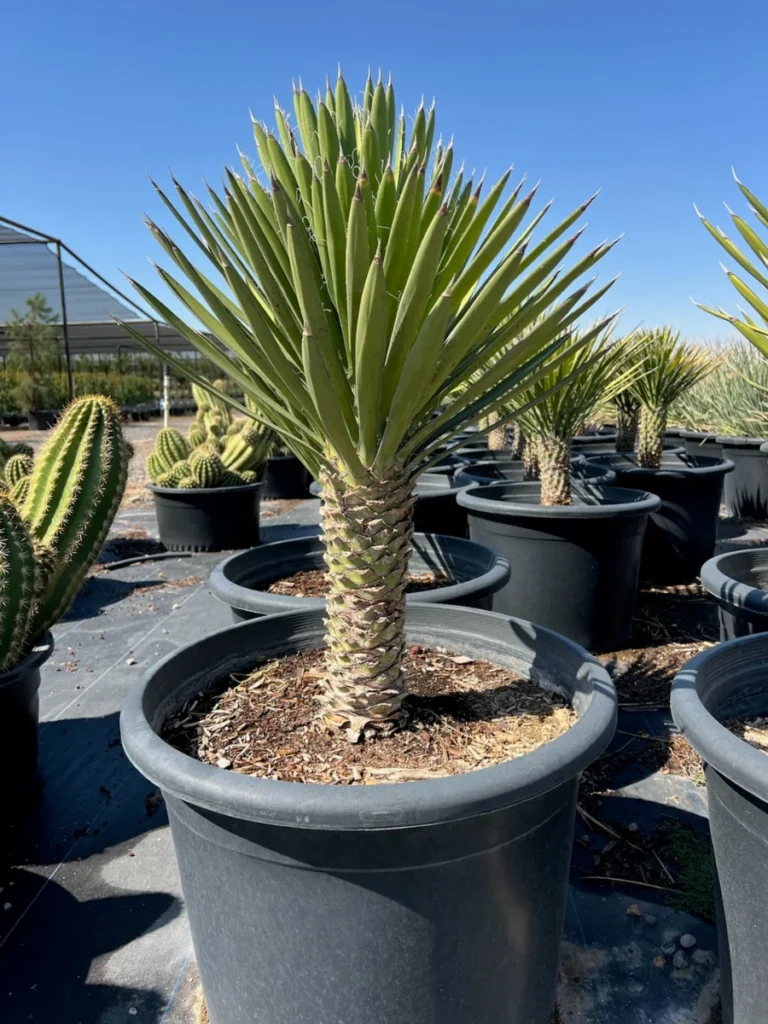
Yucca plants offer a bold and spiked silhouette that looks like a piece of living sculpture on a modern or Southwestern-style front porch. I appreciate how these plants can survive on almost no attention while still looking sharp and professional for years at a time.
Their stiff and upright leaves provide a sense of height and drama that fills vertical space without becoming messy or dropping unwanted debris on your floor. I prefer placing them in tall and slender cylinders to emphasize their clean lines and keep the look very minimal.
You should be careful with the sharp tips of the leaves, so I always place my yucca pots in corners where people won’t accidentally brush against them. This keeps the plant safe from damage and ensures your guests don’t get a surprise poke while they are visiting.
These are the best options for porches that get hit by the afternoon sun and rarely see a watering can from the busy homeowner. I find that a single well-placed yucca can do more for your porch’s style than a dozen smaller and more demanding flower pots.
Professional Tips For Porch Gardening Success
| Task | Frequency | Why It Matters |
| Deadheading | Weekly | Encourages plants to produce more flowers instead of seeds. |
| Fertilizing | Every 2 Weeks | Keeps container plants fed since nutrients wash out of the soil. |
| Rotating Pots | Monthly | Ensures all sides of the plant get equal sunlight for even growth. |
| Grouping | Always | Creates a microclimate that holds humidity and looks better visually. |
Common Mistakes To Avoid With Porch Planting
I see so many people spend a fortune at the garden center only to watch their beautiful porch displays wither away within a single month. Avoiding these frequent blunders will save you a lot of money and the frustration of looking at a graveyard of expensive ceramic pots.

Levemolo 1 Set Gardening Tools Set Scoop for Precise Planting Stylish and Sturdy Design for Easy Use and Cleaning for Indoor and Outdoor Gardening Activities
Levemolo 1 Set Gardening Tools Set Scoop for Precise Planting Stylish and Sturdy Design for…
Choosing plants based on how they look in the store rather than the actual light levels on your porch is the fastest way to fail. I have made the mistake of putting sun-loving hibiscus in a shaded corner, and they simply stopped blooming before eventually turning a sickly shade of yellow.
Using the wrong type of soil is another silent killer that many beginner gardeners overlook when they are rushing to finish their weekend projects. I never use heavy backyard dirt because it packs down too tightly and suffocates the roots, preventing them from getting the oxygen they need to thrive.
Forgetting to check for drainage holes in a decorative pot is a disaster waiting to happen during the first heavy rainstorm of the spring season. Without a place for excess water to escape, your plants will sit in a swamp that rots their roots and creates a very unpleasant smell.
Neglecting the watering needs of hanging baskets is a common oversight since they are often out of sight and exposed to more drying wind. I find that these elevated containers can go from perfectly lush to completely crispy in less than twenty-four hours during a typical July heatwave.
Conclusion
I believe that the best porch starts with a clear plan that balances your personal style with the reality of your local weather. You should start with two or three large containers rather than a dozen small ones to create a more impactful and organized look.
Always prioritize the health of the plants by checking the soil moisture with your finger before you decide to reach for the watering can. Overwatering is the most common mistake I see, and it is much harder to fix a rotted root than a thirsty leaf.
Mixing different heights and textures will give your porch a professional depth that makes the space feel like a true outdoor room for relaxing. Don’t be afraid to try new combinations of colors or foliage types until you find the look that makes you smile every morning.
Your front porch is the first thing people see, so treat it as an extension of your indoor personality and a gift to the neighborhood. With these ideas, you can build a space that is not only beautiful but also manageable for your busy daily lifestyle.
FAQs
I highly recommend Boston ferns, begonias, and hostas because they thrive in low-light conditions and keep their vibrant colors without direct sun. These plants enjoy the cooler temperatures of a covered area and require very little maintenance to stay looking lush and healthy.
Most porch pots need water at least every other day during the summer, but hanging baskets usually require a daily soak to stay hydrated. I always check the top inch of soil; if it feels dry to the touch, it is time to give them a drink.
You can keep hardy evergreens outside, but tropical plants and most flowers will need to be moved indoors before the first frost hits your area. I suggest using heavy pots for winter plants so they don’t blow over during strong winter storms or high winds.
I use a simple mixture of water and organic neem oil to spray the leaves once a month to keep common pests away naturally. Keeping the porch floor clean of fallen leaves and standing water also goes a long way in preventing insects from making a home.
I suggest using pots that are at least 12 to 14 inches in diameter to ensure the roots have enough space to grow and stay cool. Larger pots are better because they hold more moisture and won’t tip over as easily when the plants grow tall and heavy.
Related Posts
- Top 10 Porch Planter Ideas
- 11 Best Porch Plants Ideas
- Top 12 Porch Door Ideas
- 13 Best Backyard Porch Ideas
- Top 14 Outdoor Porch Decor Ideas
- 15 Best Outdoor Porch Ideas