
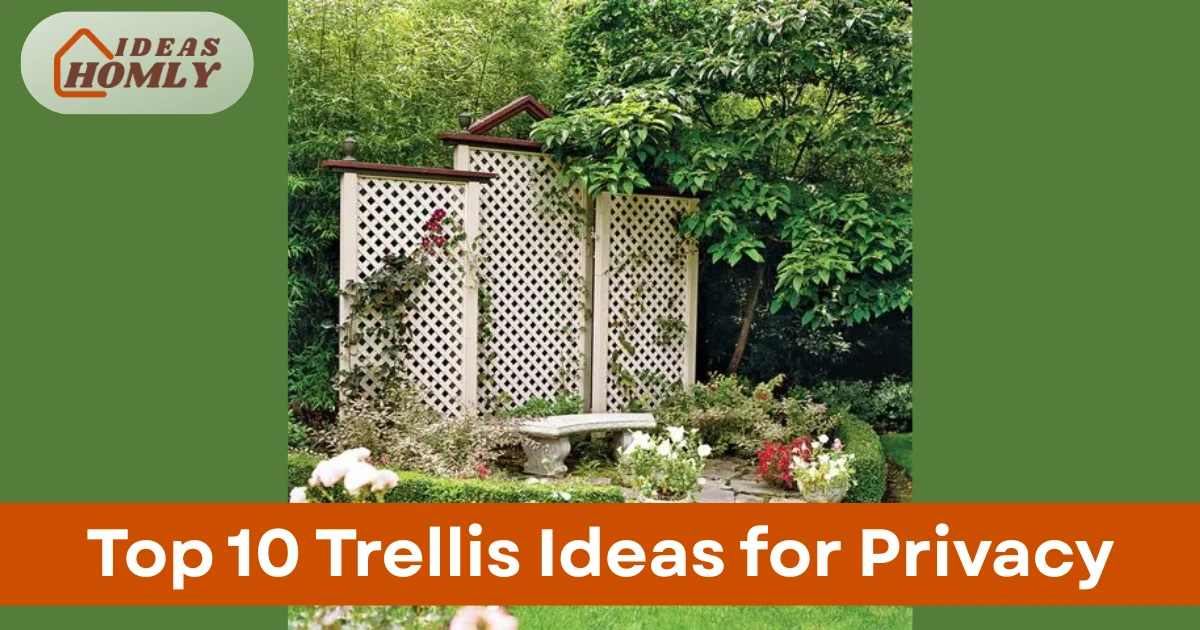

Creating privacy in outdoor spaces matters more than people think, especially when neighbors are close or spaces feel open. I often use trellis ideas because they add privacy without making the area feel closed or heavy. These structures also allow plants to grow and soften the overall look of a garden or balcony.
In this article, I am sharing practical trellis ideas for privacy that I personally find useful for gardens, patios, and small outdoor corners. Every idea focuses on real use, not just decoration. The goal is simple, better privacy with a natural and stylish feel.
How to Install Trellis for Better Outdoor Privacy Control
Proper installation of a trellis decides how well it performs in real outdoor conditions. I always start by checking wind direction, sunlight, and the exact angle of unwanted views before placing anything.
For a wall-mounted trellis, I use strong wall anchors and rust-resistant screws. This keeps the structure stable even when climbing plants get heavier over time. Weak fittings usually fail once plants grow dense.
For freestanding setups, I prefer a wider base or planter support. This adds weight and prevents tipping during wind. Stability matters more than design in open garden areas.
I also leave enough space between the trellis and the main sitting area. This helps plants grow properly and avoids a cramped feeling in the space.
1. Wooden Trellis Panels for Garden Privacy Walls
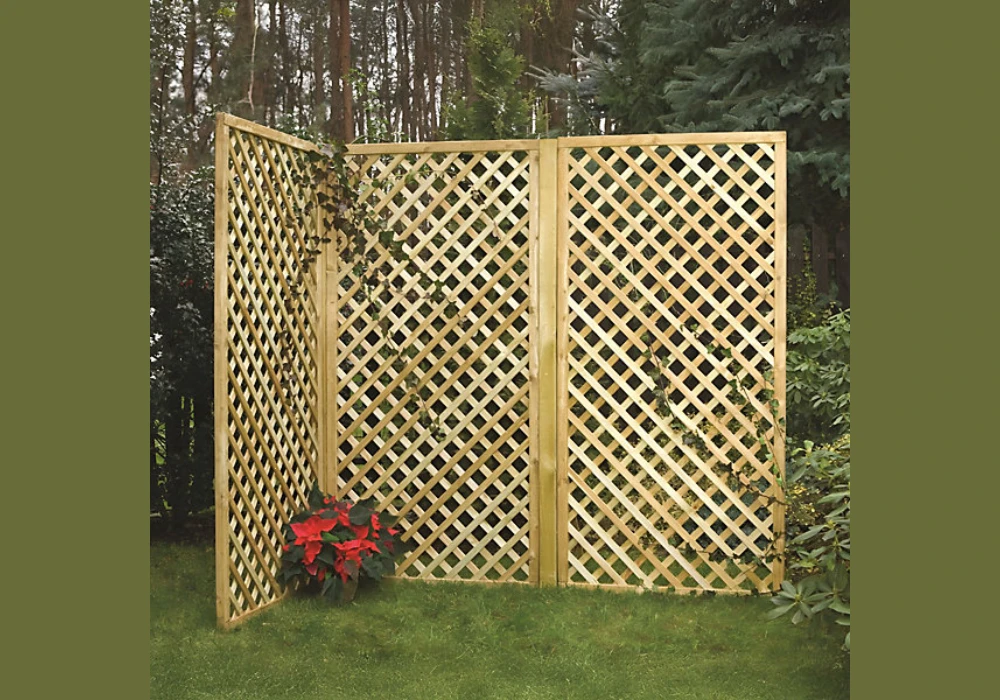
Wooden trellis panels work as a simple way to block unwanted views in a garden. I usually prefer wood because it blends naturally with plants and outdoor furniture. It does not feel artificial and still gives solid coverage when placed correctly.

Sunnibety Metal Planter Box with Trellis Privacy Screen, Raised Garden Bed with Trellis & Wheels, Privacy Planters for Patio, Planter Box with Drainage Holes for Climbing Plants, 73"x 47"x 16", Black
Sunnibety Metal Planter Box with Trellis Privacy Screen, Raised Garden Bed with Trellis & Wheels,…
A vertical wooden trellis can easily be installed along fences or open boundaries. It creates a layered look that blocks direct sightlines. I have seen this work well even in small backyard spaces where privacy is limited.
Another benefit is flexibility in design. You can choose tight lattice patterns for more privacy or wider gaps for partial coverage. This makes the wooden trellis suitable for both full and soft privacy needs.
Maintenance is also manageable if you use treated wood. A quick seasonal coat of protective paint or oil keeps it strong and long-lasting outdoors.
2. Metal Trellis Screens for Modern Privacy Dividers
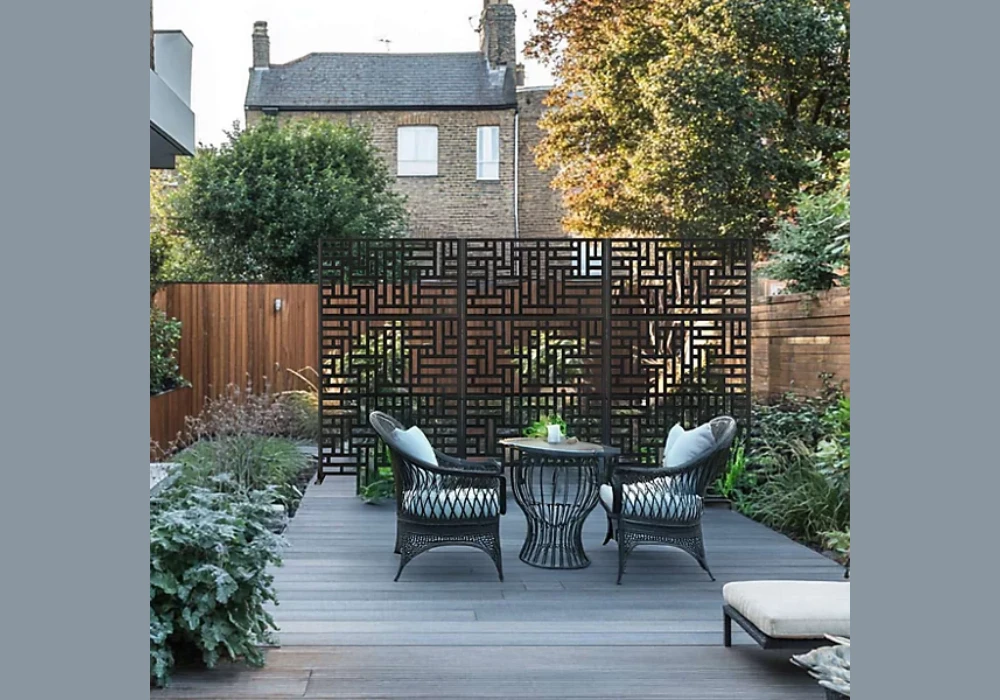
Metal trellis screens are a good option when you want a more modern look. I like using them in patios because they feel clean and structured. They also last longer compared to untreated wood in harsh weather.
These screens can be placed as standalone dividers between seating areas. They create a visual barrier without blocking airflow. This is useful when you want privacy but still want an open, airy space.
Many designs come with geometric or abstract patterns. These patterns add style while still serving the main purpose of privacy. I personally prefer simpler designs because they work better with climbing plants.
Powder-coated metal trellis options also resist rust. This makes them suitable for long-term outdoor use without frequent maintenance.
3. Climbing Plants on Trellis for Natural Privacy Cover
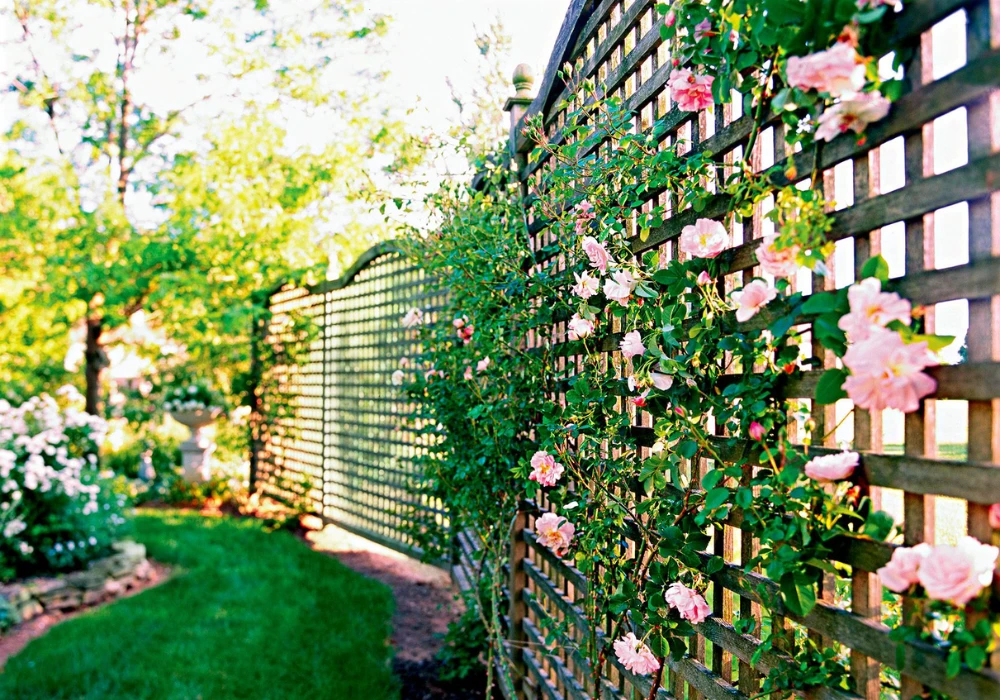
Climbing plants on trellis structures create the most natural form of privacy. I often suggest this because it blends greenery with function. Over time, it forms a living wall that blocks visibility gently.
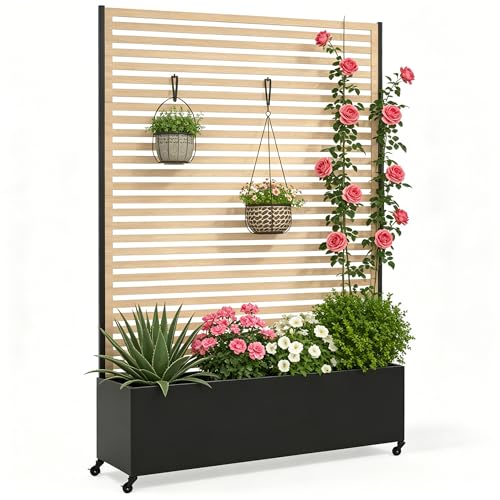
Metal Planter Box with Trellis Privacy Screen, Raised Garden Bed with Trellis & Wheels, Privacy Planters for Patio, Planter Box with Drainage Holes for Climbing Plants, Flower, 73"x 47"x 16", Wood
Metal Planter Box with Trellis Privacy Screen, Raised Garden Bed with Trellis & Wheels, Privacy…
Plants like jasmine, bougainvillea, and ivy are commonly used for this purpose. They grow quickly and spread across the trellis surface. This creates a thick green screen that looks fresh and calming.
The key is choosing plants based on sunlight and climate. Some plants need full sun, while others grow better in partial shade. I always match the plant with the space before installing the trellis.
Watering and trimming are important to maintain shape. Without care, the plants can grow unevenly and reduce the privacy effect.
4. Balcony Trellis Screens for Small Space Privacy
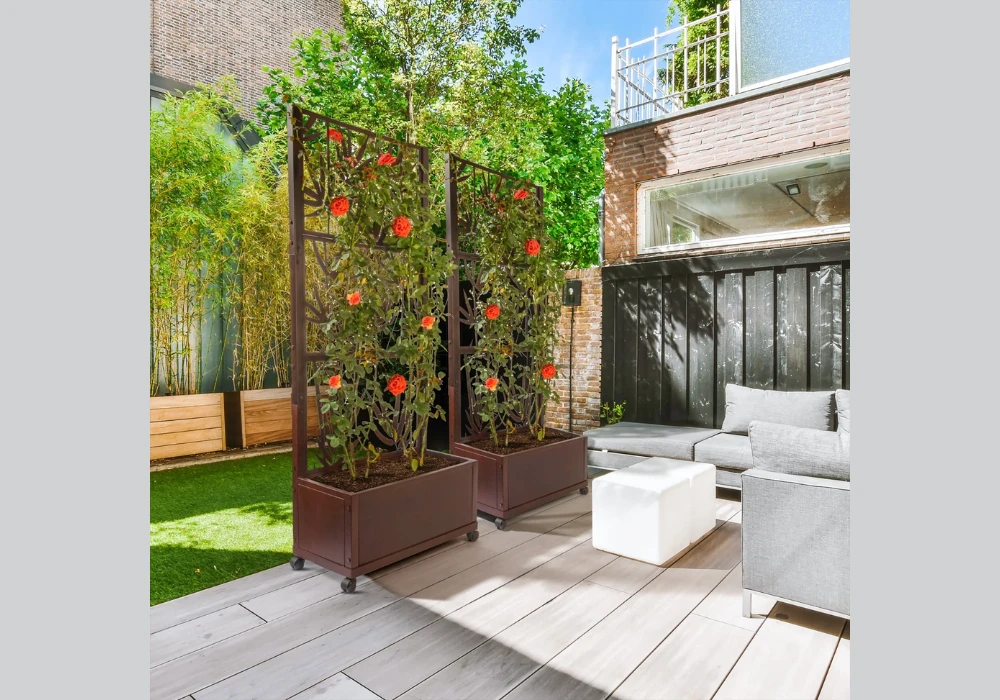
Balcony trellis setups are ideal when space is limited. I often recommend them for apartments where neighbors are very close. They help create a private sitting corner without heavy construction.
Lightweight trellis panels can be attached to balcony railings. This instantly reduces visibility from outside. It also gives space to grow small climbing plants or hanging pots.
Foldable trellis designs are also available. These are useful if you want adjustable privacy depending on the time of day or usage.
The best part is that balcony trellis setups do not block natural light completely. This keeps the space bright while still offering privacy from nearby buildings.
5. Freestanding Trellis Dividers for Flexible Privacy Zones
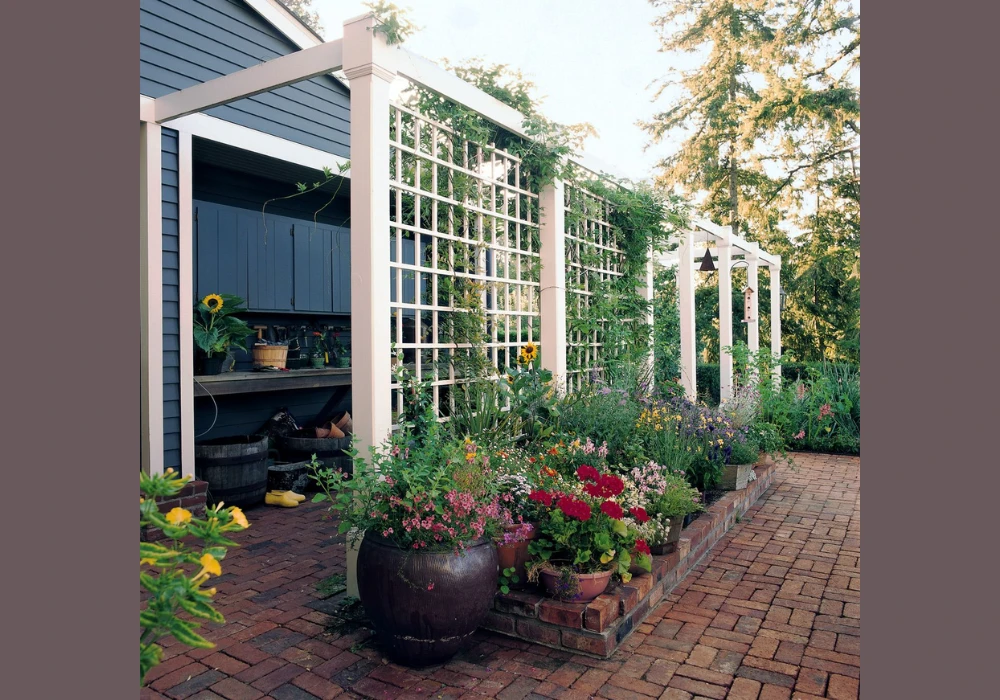
Freestanding trellis dividers are useful when you want movable privacy. I use them in outdoor seating areas because they allow quick space changes. You can shift them whenever needed.
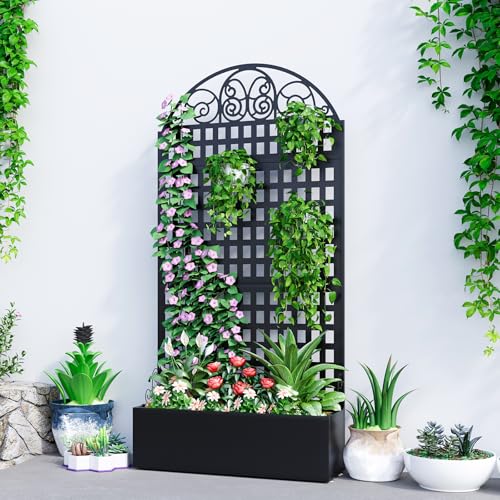
Metal Planter Box with Trellis & Privacy Screen, 79"x40"x11.8", Galvanized
Metal Planter Box with Trellis & Privacy Screen, 79"x40"x11.8", Galvanized
These structures do not need wall support, which makes installation simple. They work well for creating temporary privacy zones during gatherings or family time.
Some designs come with planter bases. This allows you to grow plants while also adding weight and stability to the structure.
I find them especially helpful for rental spaces where permanent changes are not allowed. They provide privacy without any structural modification.
6. Lattice Fence Trellis for Full Boundary Privacy
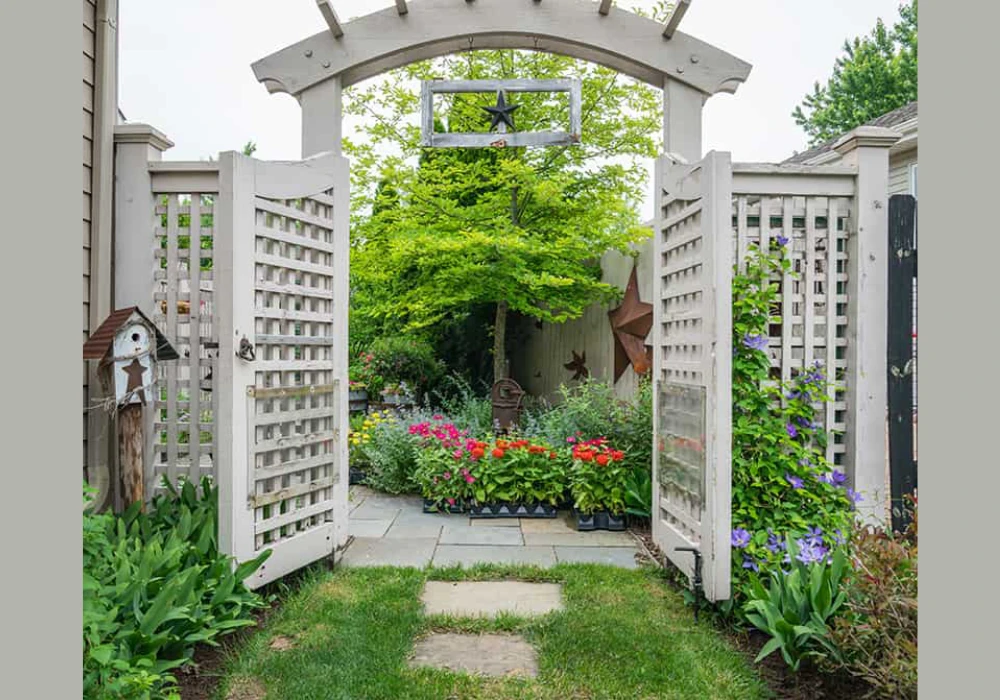
A lattice fence trellis is one of the most practical ways I use to create full boundary privacy in outdoor spaces. It works like a fence but feels lighter and more decorative than solid walls.
I often install lattice panels along property lines to block direct views from neighbors. The crisscross pattern reduces visibility while still allowing airflow and sunlight. This keeps the garden from feeling boxed in, which happens with solid concrete walls.
Another advantage is how easily plants can climb it. Once vines grow over the lattice, it turns into a green privacy wall. This natural coverage increases privacy over time without needing major changes.
I also find it useful for separating different zones in the yard. For example, it can divide a seating area from a play space without making the garden feel smaller.
7. Vertical Garden Trellis for Dense Privacy Screens
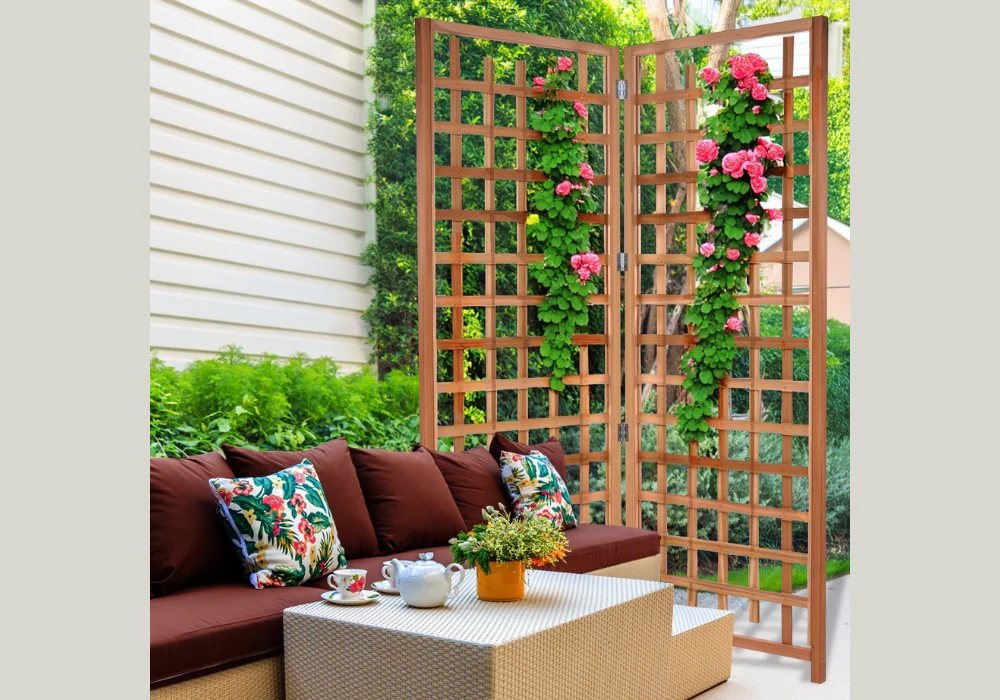
Vertical garden trellis setups are my go-to when I need strong privacy in a small footprint. They use upward space instead of ground area, which makes them ideal for compact gardens or narrow side yards.
I usually combine planter boxes with tall trellis frames. This allows climbing plants to grow densely from the base and spread upward. Over time, it forms a thick natural screen that blocks outside views effectively.

73" Tall Metal Planter Box with Trellis Privacy Screen, 2 Pack, Black
73" Tall Metal Planter Box with Trellis Privacy Screen, 2 Pack, Black
This setup works especially well with fast-growing plants like money plant, morning glory, or star jasmine. These plants fill gaps quickly and create a full green layer.
I also like how vertical trellis systems improve air circulation compared to solid walls. Even when fully covered, the structure still feels light and breathable.
8. Decorative Wooden Arch Trellis for Entry Privacy
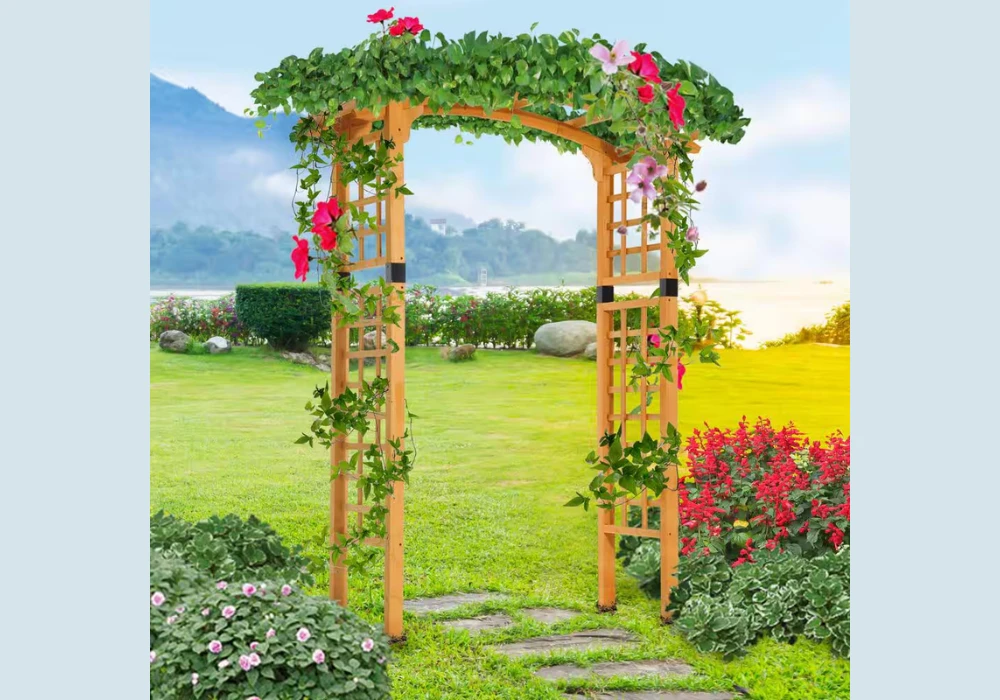
Decorative wooden arch trellis is a smart option when I want privacy at garden entrances. It creates a soft barrier that does not feel like a strict boundary but still controls visibility.
I often place it at the start of pathways leading into the garden. This setup prevents direct sightlines from outside while adding a welcoming feel. It also adds height, which improves privacy naturally.
Climbing roses and flowering vines work very well on arch trellises. They add color while slowly forming a canopy-like cover. This makes the entrance both private and visually attractive.
Another benefit is that it improves the overall garden layout. It gives a defined entry point, which makes the outdoor space feel more organized.
9. Sliding Trellis Panels for Adjustable Privacy Control
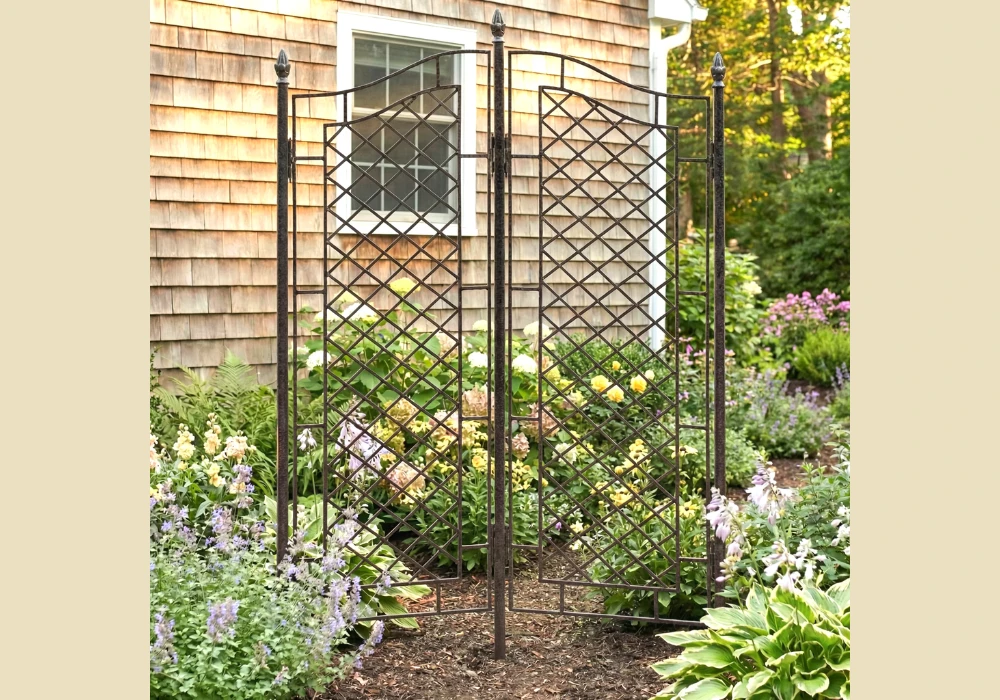
Sliding trellis panels are useful when privacy needs change throughout the day. I personally like this option for patios because I can adjust coverage based on sunlight or activity.
These panels move along a track system, allowing flexible positioning. I can slide them open for airflow or close them for full privacy. This makes them practical for multi-use outdoor areas.
Wood and metal both work for sliding designs, but I prefer lightweight materials for easier movement. Adding climbing plants makes them more effective over time.
They also work well for renters who cannot install permanent structures. Since they are movable, they do not require major installation changes.
10. Corner Trellis Setup for Small Space Privacy Boost
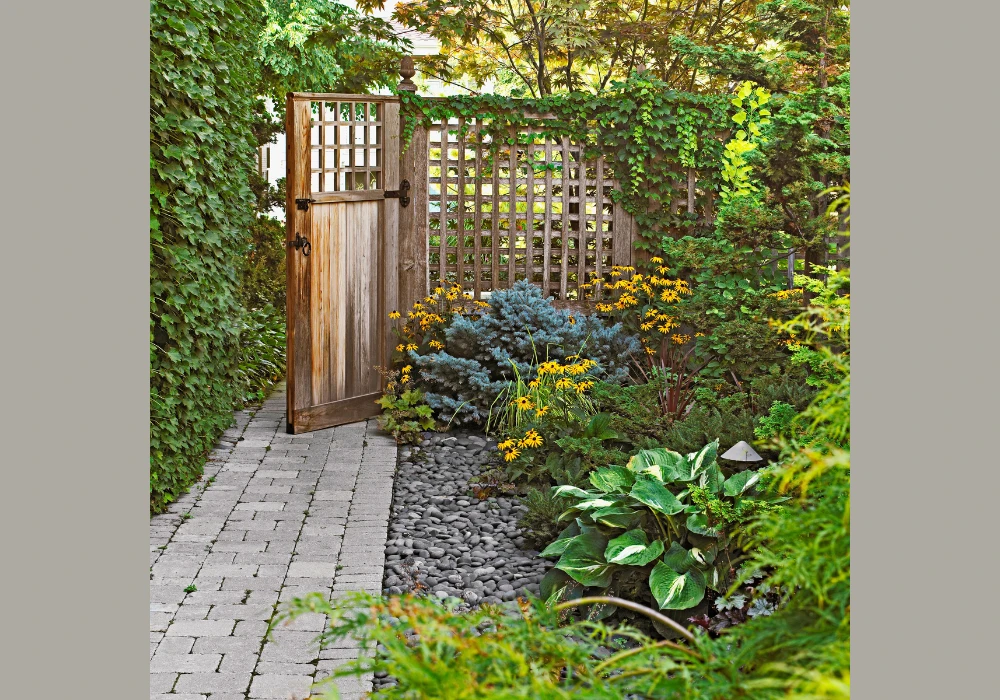
Corner trellis setups are one of the most overlooked but useful privacy solutions I use. They make use of unused corners in gardens, patios, or balconies.
I usually place two trellis panels at an angle to form a partial enclosure. This blocks side views and creates a cozy seating or resting area. It feels more private without closing the space completely.
Climbing plants help strengthen the privacy effect. Even light coverage makes a big difference in corner areas because of the angled structure.
This setup is also budget-friendly since it uses minimal material but still gives strong visual separation.
Simple Comparison of Trellis Privacy Options
| Trellis Type | Best Use Area | Privacy Level | Maintenance |
|---|---|---|---|
| Wooden Panels | Gardens, fences | High | Medium |
| Metal Screens | Patios, modern homes | Medium | Low |
| Plant Trellis | All outdoor areas | Very High (over time) | High |
| Balcony Trellis | Apartments | Medium | Low |
| Freestanding Dividers | Flexible spaces | Medium | Low |
Quick Notes on Choosing Trellis for Privacy
- I always check the space size before selecting a trellis style
- Plant choice affects how fast privacy develops
- Strong wind areas need sturdier materials
- Small spaces work better with vertical designs
- Mixing wood and plants gives a natural balance
Common Mistakes in Trellis Privacy Setup I Avoid
One common mistake I often see is choosing the wrong plant for the trellis. Fast-growing plants are great, but they must match sunlight and climate conditions to work properly.
Another issue is installing trellis panels too far apart. This leaves gaps that reduce privacy and make the setup ineffective. I always check spacing before fixing anything permanently.
People also ignore maintenance needs. Without trimming and support, climbing plants can grow unevenly and reduce the privacy effect over time.
Finally, many users select designs only for looks and forget function. I always balance both because privacy depends on structural strength as much as appearance.
Conclusion
Trellis ideas for privacy work best when design and nature are combined properly. I have seen how simple structures can completely change outdoor comfort when planned correctly.
Wood, metal, plants, and flexible panels all serve different privacy needs. The right choice depends on space size, budget, and how much coverage you want.
I personally prefer plant-based trellis setups because they improve over time and feel more natural. They also add shade and softness to outdoor areas.
At the end, privacy does not need heavy walls. A well-planned trellis setup can do the job in a cleaner, greener, and more stylish way.
FAQs
Wooden and plant-covered trellises work best because they provide strong coverage and a natural appearance over time.
Most fast-growing plants take 3 to 6 months to start forming visible coverage, depending on care and climate.
Yes, lightweight trellis panels work very well on balconies and can be attached to railings or walls easily.
Jasmine, bougainvillea, ivy, and morning glory are commonly used because they grow fast and cover spaces well.
They reduce wind speed but do not fully block it, which helps keep outdoor areas comfortable.
Metal lasts longer with less maintenance, while wood gives a more natural look. Choice depends on style preference.
Related Post Ideas
- 11 Best Trellis Garden Ideas
- Top 12 Trellis Ideas
- 13 Best Summer Kitchen Renovation Ideas
- Top 14 Summer Kitchen Remodeling Ideas
- 15 Best Summer Kitchen Styling Ideas
- Top 10 Summer Bathroom Tile Ideas