
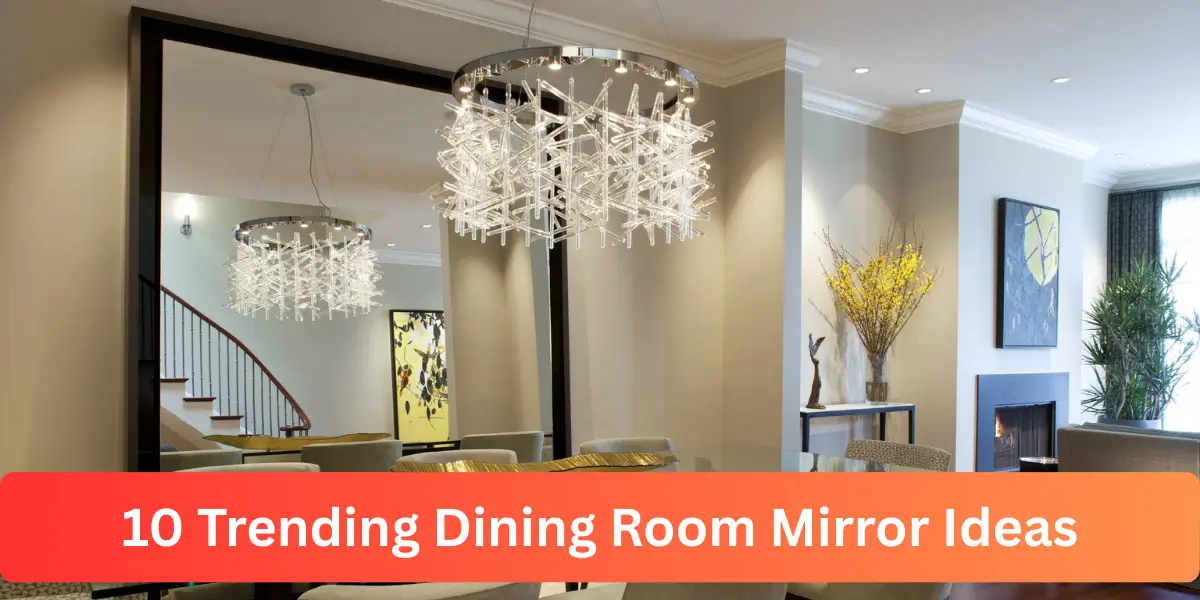

Dining room mirror ideas can dramatically change how a space feels without altering the layout. I have often used mirrors to enhance light, create depth, and introduce subtle elegance into dining areas that felt flat or confined.
The right mirror does more than decorate a wall; it reshapes perception and highlights architectural details.
When placed thoughtfully, it reflects natural light and strengthens the overall design balance.
With careful proportion and positioning, a mirror can transform an ordinary dining room into a brighter, more refined gathering space.
How Mirrors Redefine Dining Room Design
Mirrors do more than fill empty wall space. I use them strategically to amplify light, create visual symmetry, and enhance architectural depth. When positioned correctly, a mirror can transform a confined dining area into one that feels open and balanced.
I always evaluate what the mirror will reflect before installing it. A well placed mirror should capture natural light, artwork, or a chandelier rather than clutter. Thoughtful placement ensures the design feels intentional and refined.
1. Oversized Statement Mirror
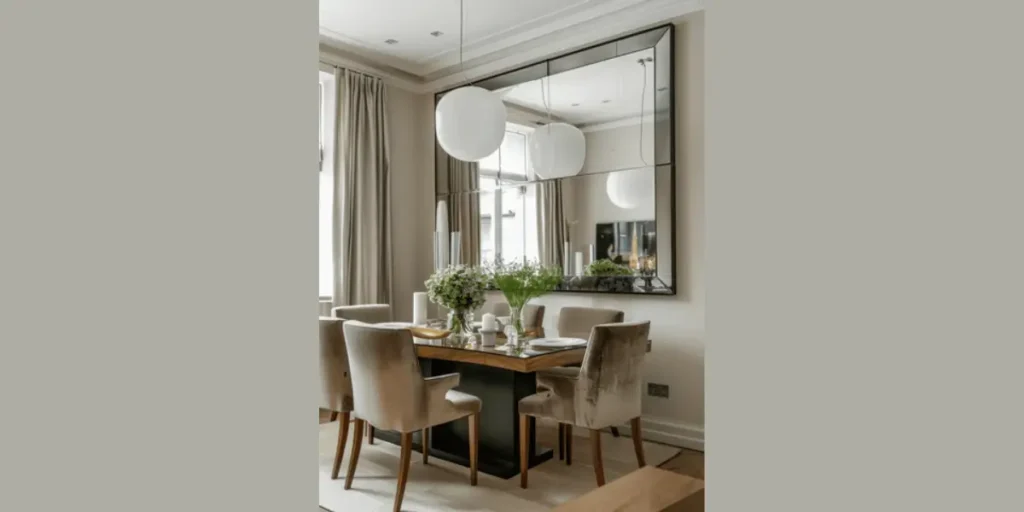
An oversized mirror instantly becomes the focal point of a dining room. I often install one large mirror on a central wall to maximize light reflection and visual expansion. Its scale adds drama without additional décor.
Large mirrors work particularly well in compact spaces. They reflect surrounding elements and double the perceived depth of the room. I maintain simple framing to avoid overwhelming the layout.
Proper proportion remains essential. I align the mirror with the dining table to create symmetry and a cohesive design flow.
2. Round Mirror Above Buffet
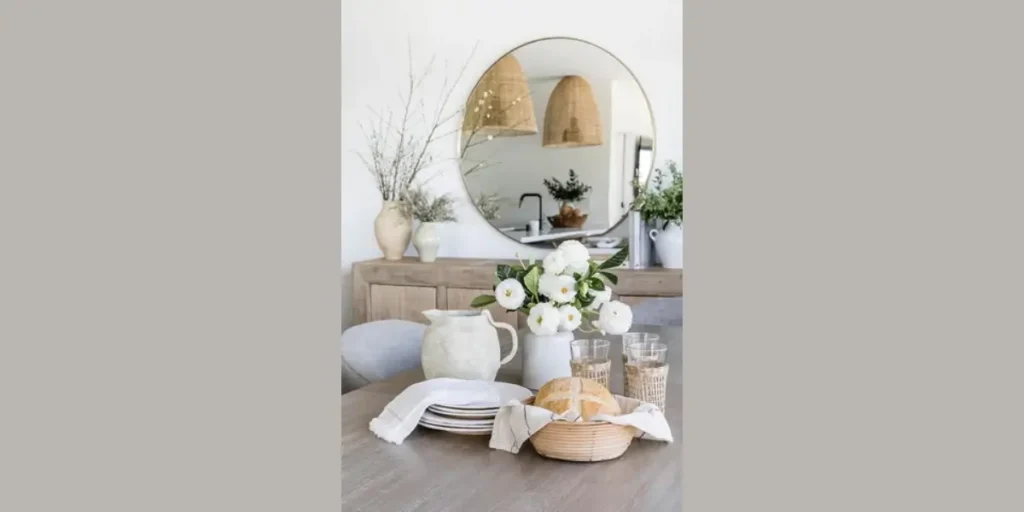
A round mirror softens the strong horizontal lines of a buffet or sideboard. I frequently place it above storage furniture to create balance and visual interest. The curved shape introduces subtle contrast.
This arrangement enhances symmetry when centered carefully. I ensure the mirror width relates proportionally to the furniture below.
By reflecting lighting fixtures or artwork, the round mirror adds depth without appearing excessive. It maintains elegance while supporting the room’s structure.
3. Mirror Wall Panels
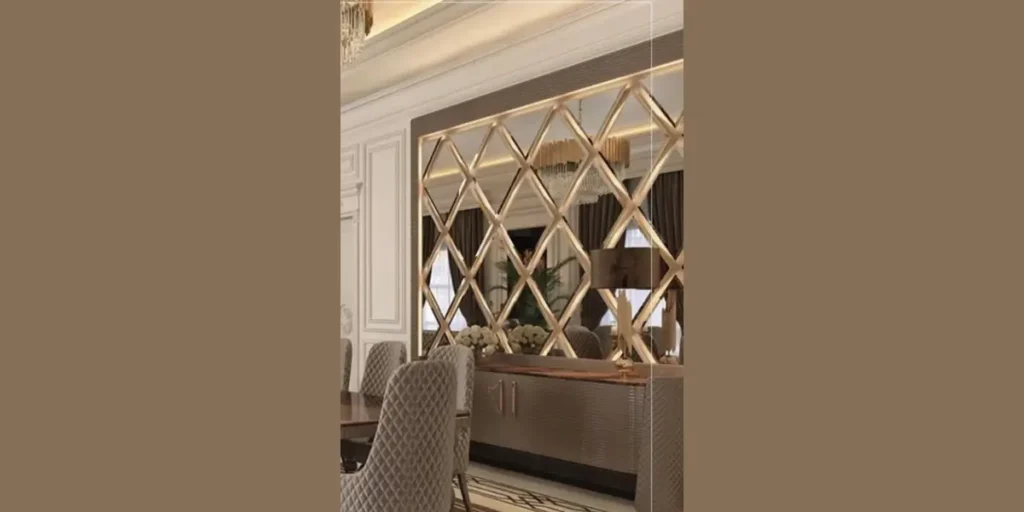
Mirror wall panels create a dramatic and contemporary effect. I use them to build a feature wall that visually expands the dining area. The segmented design adds texture and architectural rhythm.
Panels reflect light from multiple angles, enhancing brightness. I often pair them with minimalist furniture to maintain balance.
When executed precisely, this idea transforms the dining room into a sophisticated and visually layered space. It feels modern yet intentional.
4. Antique Framed Mirror
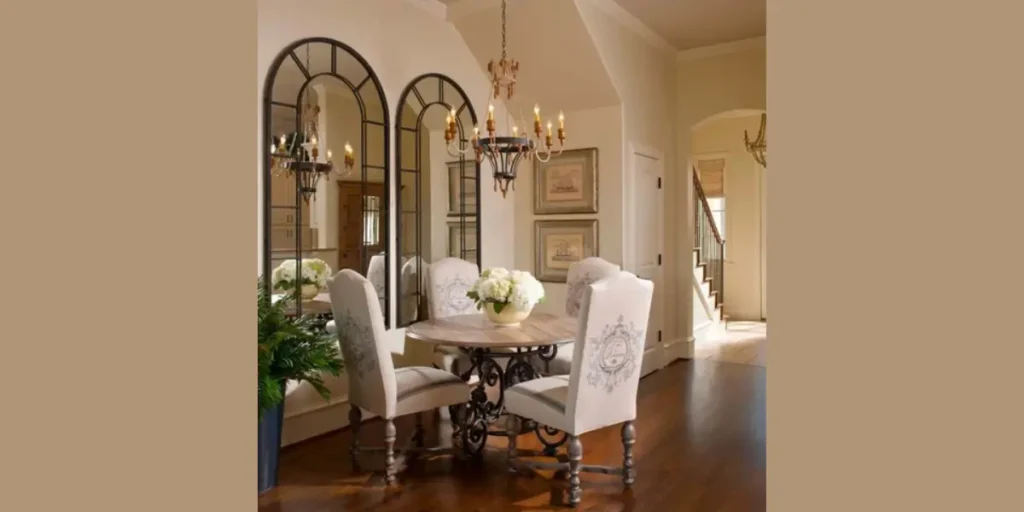
An antique framed mirror introduces timeless character. I choose ornate or aged frames to add warmth and personality. This style works particularly well in traditional dining rooms.
The reflective surface enhances light while the frame provides decorative presence. I keep surrounding décor restrained to let the mirror stand out.
This approach blends elegance with functionality. It creates a refined atmosphere without requiring major structural changes.
5. Floor Length Leaning Mirror
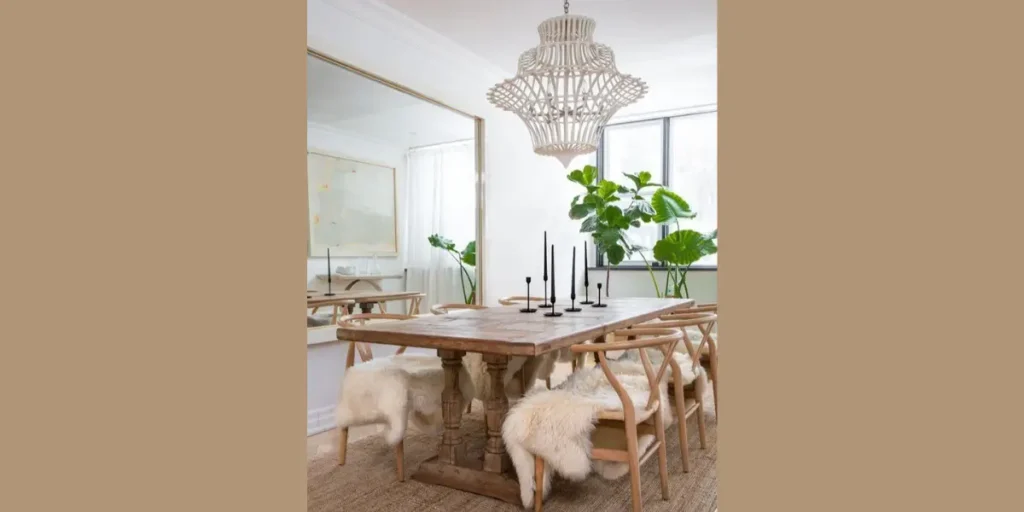
A floor length leaning mirror adds vertical emphasis to the dining room. I place it against a wall to create the illusion of higher ceilings. The elongated shape enhances spatial perception.
Leaning placement offers flexibility and avoids permanent installation. It suits modern and transitional interiors alike.
By reflecting natural light and adjacent décor, the mirror increases openness. It delivers impact while maintaining simplicity.
6. Sunburst Mirror Accent
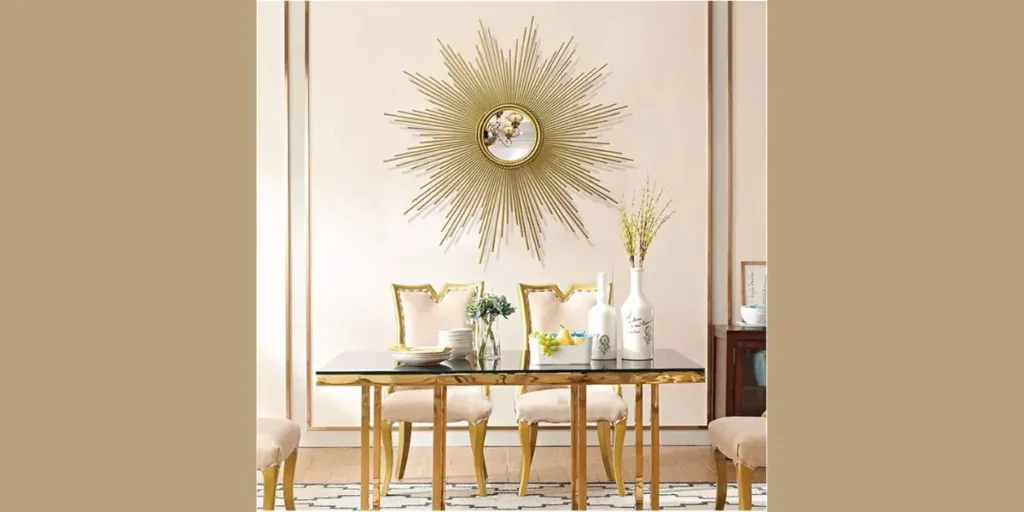
A sunburst mirror functions as decorative art while reflecting light. I use this design when I want to add a sculptural focal point. Its radial shape energizes the space subtly.
Positioned above a console or on a central wall, it draws attention upward. The metallic detailing enhances brightness.
When balanced carefully with neutral surroundings, the sunburst mirror adds personality without overpowering the dining area.
7. Mirror Gallery Arrangement
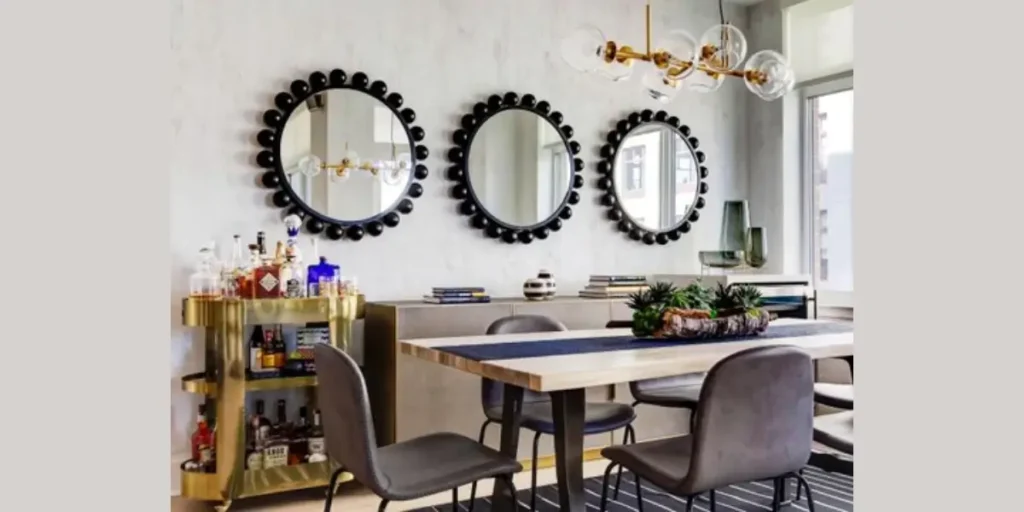
A gallery arrangement of smaller mirrors introduces layered visual interest. I arrange varying shapes and sizes to create texture and depth. This approach feels curated rather than conventional.
I maintain consistent spacing to avoid clutter. Symmetry or intentional asymmetry strengthens the design impact.
The reflective surfaces enhance light distribution across the wall. When styled thoughtfully, a mirror gallery becomes both art and functional décor.
8. Frameless Modern Mirror
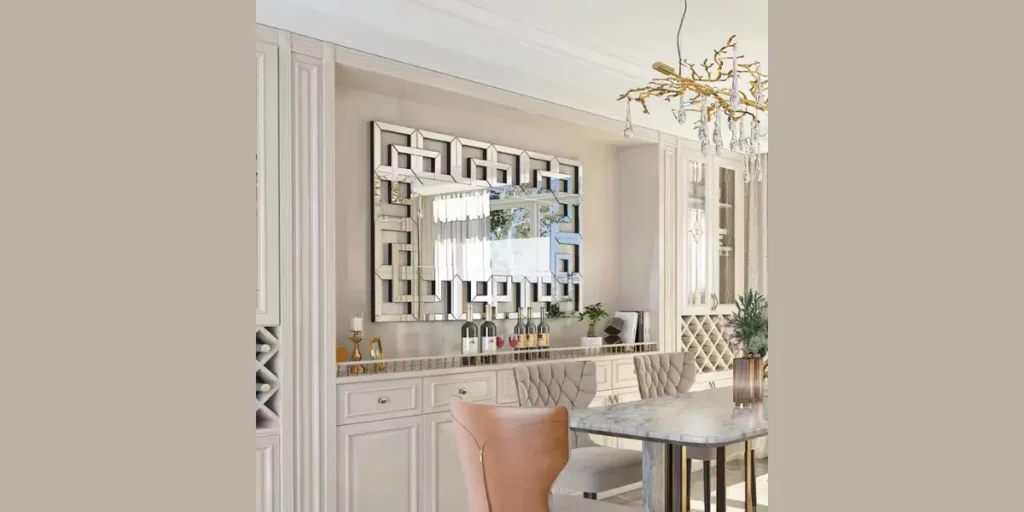
A frameless mirror reinforces clean lines in contemporary interiors. I prefer this style for minimalist dining rooms where simplicity matters. The absence of a frame keeps the look sleek.
Its reflective surface blends seamlessly into the wall. I often choose large rectangular designs for maximum visual clarity.
Frameless mirrors amplify light without distracting from other architectural features. They enhance openness while preserving modern restraint.
9. Arched Mirror Design
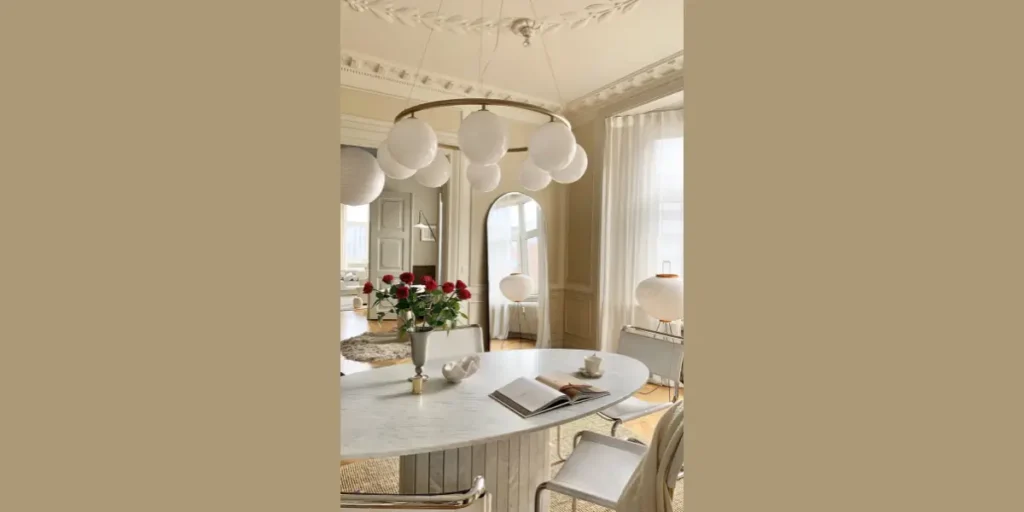
An arched mirror introduces architectural softness. I use this shape to contrast sharp angles within modern dining rooms. The curved top adds elegance.
When positioned centrally, it creates balance and refined symmetry. I ensure the scale complements the wall dimensions.
This design elevates the space subtly. It enhances vertical emphasis and introduces a graceful focal point.
10. Mirrored Cabinet or Console
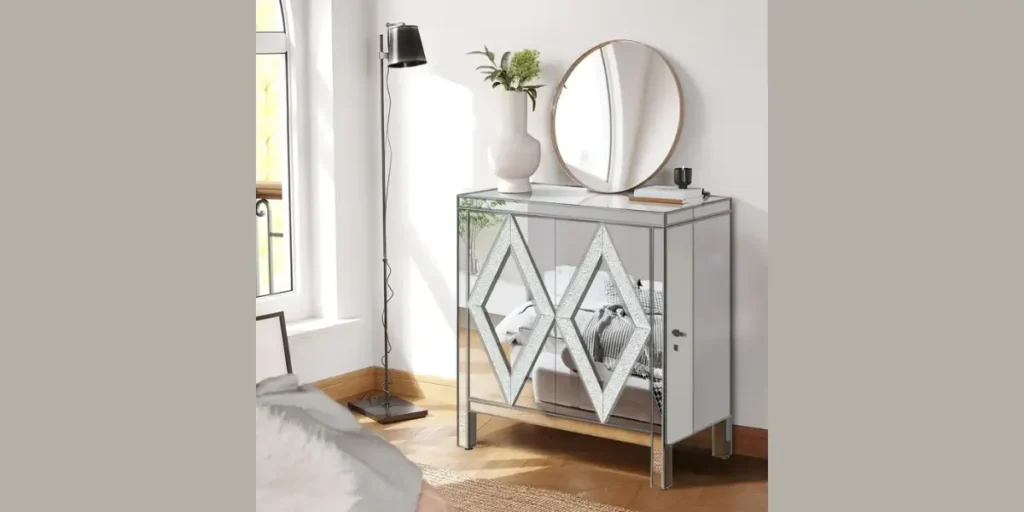
A mirrored cabinet combines reflection with storage. I integrate this piece when I want both functionality and visual expansion. The reflective surfaces brighten the room.
Mirrored furniture also adds a touch of glam sophistication. I balance it with neutral tones to avoid excessive shine.
When proportioned correctly, this idea enhances light while maintaining practicality. It supports both aesthetics and everyday use.
How to Choose the Right Mirror for Your Dining Room
Selecting the right mirror requires more than choosing a shape you like. I always evaluate wall size, ceiling height, and what the mirror will reflect before making a decision. The goal is to enhance light and proportion, not create visual distraction.
A mirror should feel integrated into the dining room design. When scale, placement, and frame style align with the overall décor, the result feels intentional and refined rather than decorative.
Match Mirror Size to Wall Dimensions
I measure the available wall space carefully before selecting a mirror. A piece that is too small looks disconnected, while an oversized one can dominate the room. Proportion keeps the layout balanced and visually cohesive.
Reflect Light Sources Intentionally
I position mirrors where they can reflect natural light or a statement chandelier. This increases brightness and depth throughout the dining area. Avoid reflecting clutter or blank walls that add no visual value.
Align Mirror With Dining Table Center
Centering the mirror above the dining table or buffet strengthens symmetry. I always align it with the main furniture piece to create structure and visual harmony. Balanced placement improves overall composition.
Choose Frame Style According to Décor
Frame style influences the dining room’s personality. I select sleek frames for modern spaces and ornate finishes for traditional interiors. The frame should complement existing materials rather than compete with them.
Avoid Cluttered Reflections
Before final installation, I stand back and observe what appears in the reflection. A mirror should highlight attractive elements such as lighting or artwork. Clean reflections maintain sophistication and clarity.
FAQs
A mirror works best on a wall that reflects natural light or a decorative focal point such as a chandelier. I usually position it above a buffet or opposite a window to maximize brightness. Proper placement enhances both function and design balance.
The mirror should relate proportionally to the wall and the furniture beneath it. I often choose a mirror that spans about two thirds of the buffet or console width. Proper scale ensures the mirror feels integrated rather than isolated.
Yes, mirrors visually expand compact spaces by reflecting light and surrounding elements. I use large mirrors strategically in smaller dining rooms to create depth. When placed thoughtfully, they reduce the feeling of confinement.
In modern interiors, I prefer slim metal frames or frameless designs. These options maintain clean lines and simplicity. The frame should support the aesthetic without overwhelming the overall design.
Conclusion
Mirrors remain one of the most effective design tools in a dining room. I have seen how a thoughtfully chosen mirror can brighten dark corners, enhance symmetry, and completely shift the perception of space.
The key is not simply adding reflection, but placing it with purpose. Scale, alignment, and what the mirror captures all influence the final result.
When selected carefully, a mirror becomes more than décor. It strengthens architecture, amplifies light, and adds depth without cluttering the room.
By focusing on proportion and intentional placement, you can create a dining space that feels larger, brighter, and far more refined.