


A well chosen carpet can completely change how a dining room feels. I have often noticed that even the most beautiful table looks unfinished without the right foundation beneath it.
Texture, proportion, and durability all influence how comfortable and cohesive the space becomes. The key is selecting a carpet that supports chair movement while enhancing the overall design.
In this guide, I will share practical and stylish dining table carpet ideas that help you create a balanced, inviting setting without sacrificing functionality or elegance.
Why the Right Carpet Changes the Dining Experience
A dining carpet does more than decorate the floor. I always see it as a functional layer that protects flooring, absorbs sound, and visually defines the eating area.
The correct size ensures chairs move smoothly without catching edges. Material and pile height directly affect durability and daily comfort.
Now let me share ten dining table carpet ideas that combine practicality with strong visual character.
1. Oversized Neutral Carpet
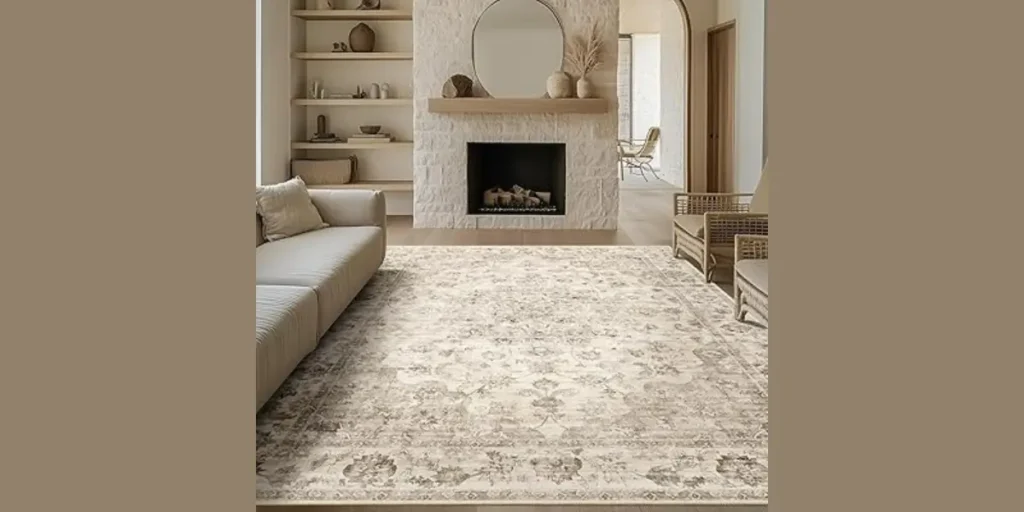
An oversized neutral carpet creates a calm and balanced foundation. I often recommend warm beige, soft gray, or ivory tones because they complement almost any dining furniture. Neutral shades allow the table and chairs to remain the visual focus.
Proper dimensions matter more than color. I make sure the carpet extends at least 24 inches beyond the table so chairs stay fully supported when pulled out.
This option works beautifully in modern and transitional interiors. It delivers versatility, durability, and timeless appeal without overwhelming the space.
2. Traditional Persian Carpet
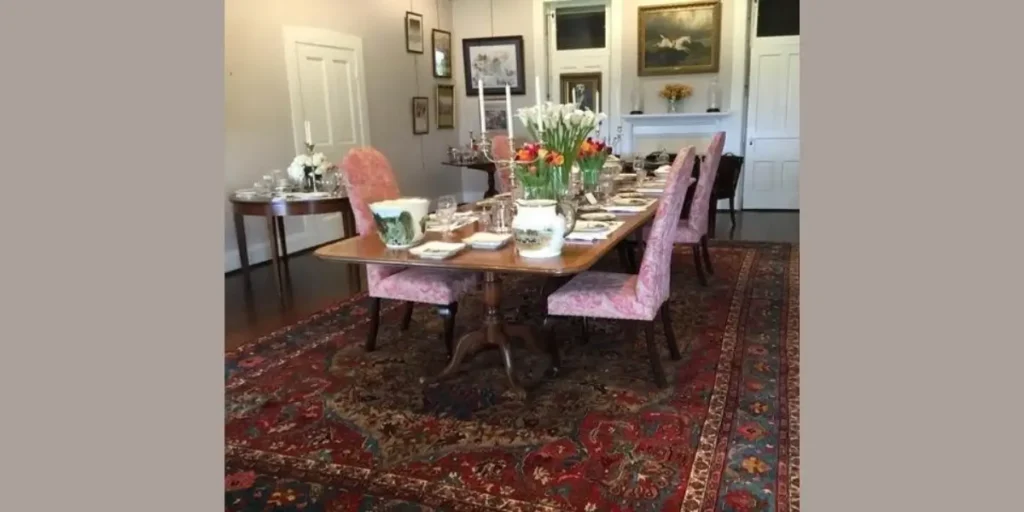
A Persian style carpet adds richness and detailed craftsmanship. I appreciate how layered patterns introduce depth and warmth beneath the dining table.
The intricate design helps conceal minor stains or crumbs, which makes it practical for frequent use. I still recommend choosing durable materials for long term wear.
This carpet style enhances classic or formal dining rooms. It anchors the space with elegance while maintaining functional support for daily gatherings.
3. Modern Geometric Carpet
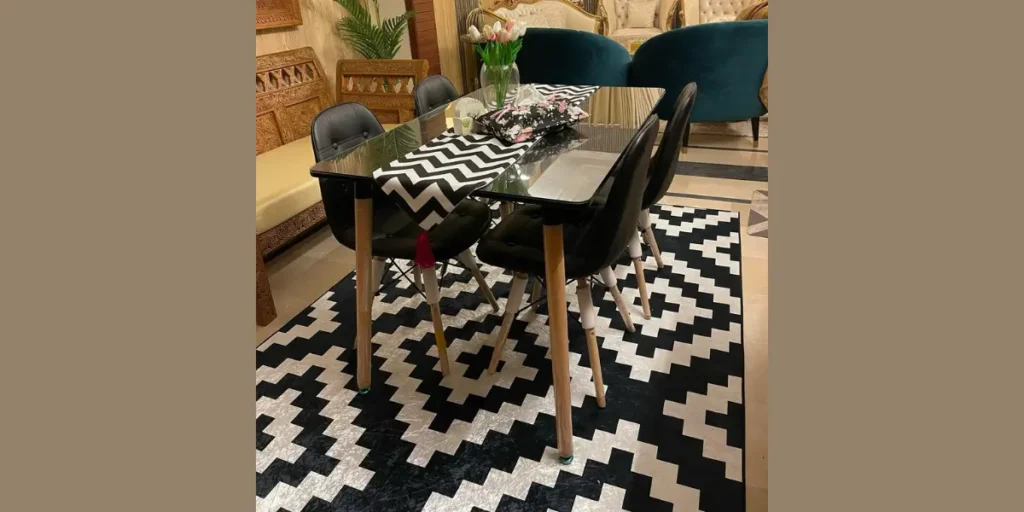
A geometric carpet brings structure and contemporary energy. I use bold lines and repeating patterns to create a dynamic base under simple dining furniture.
Black and white or muted geometric prints maintain sophistication. I avoid overly busy combinations to keep the room balanced.
This choice suits modern interiors. It defines the dining zone clearly while introducing visual movement and subtle personality.
4. Round Carpet Under Round Table
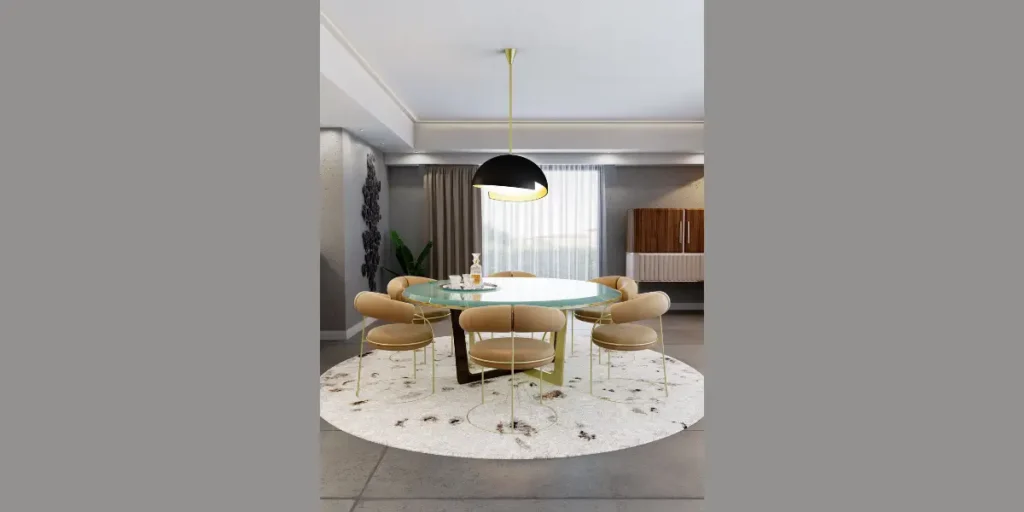
Pairing a round carpet with a round table strengthens symmetry. I always ensure the diameter provides enough clearance for chairs.
The circular shape softens angular room layouts and improves flow. It creates a cohesive and intentional look.
This combination works especially well in compact dining areas. It enhances proportion and keeps the overall design harmonious.
5. Natural Fiber Jute Carpet
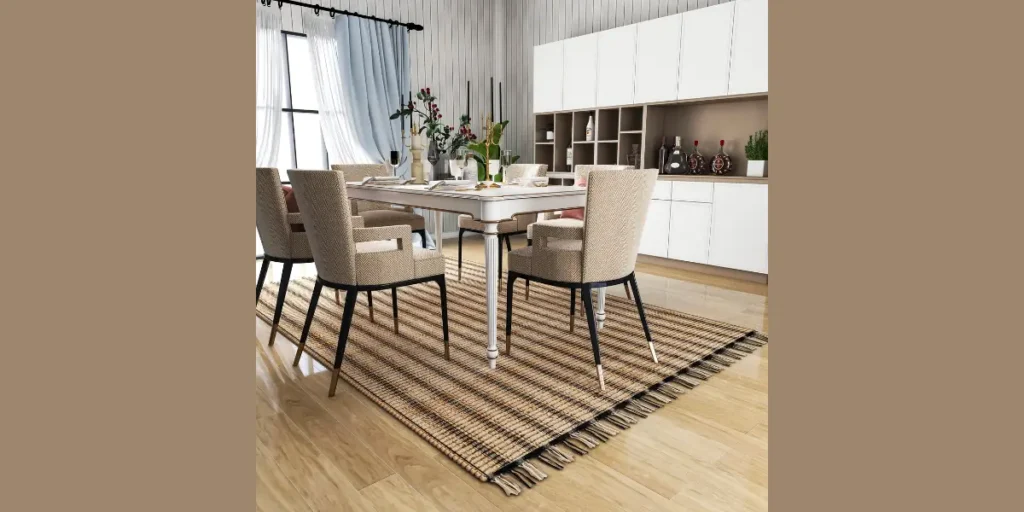
A jute carpet introduces organic texture and warmth. I often choose this option when creating a relaxed, earthy dining atmosphere.
Natural fibers handle moderate traffic well, though I recommend prompt spot cleaning for spills. Low pile makes chair movement easier.
This carpet style suits coastal, farmhouse, and bohemian interiors. It adds character without overpowering the furniture.
6. Washable Dining Carpet
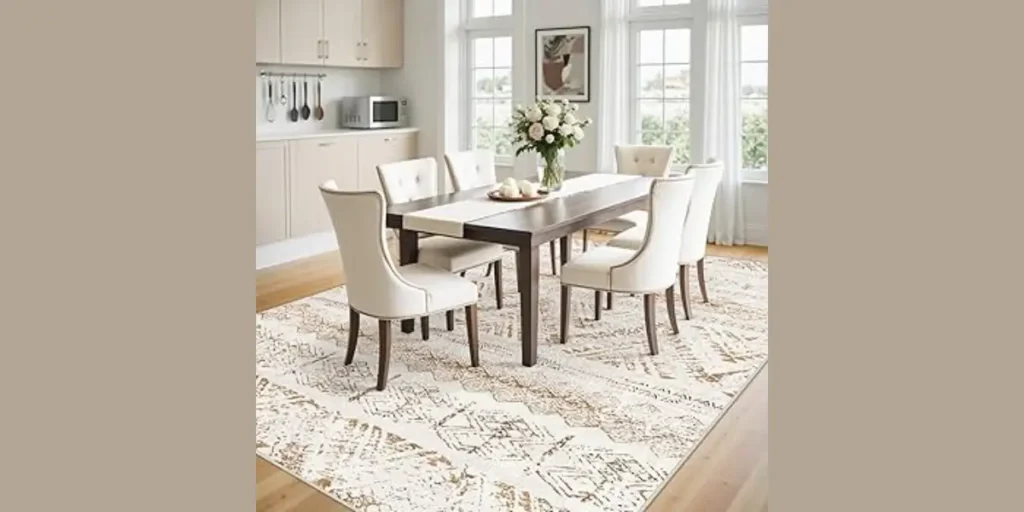
A washable carpet offers practical advantages for busy homes. I frequently suggest this option for families who entertain often.
Modern washable designs look refined while remaining easy to clean. I ensure the backing prevents slipping.
This solution balances style and convenience. It supports daily dining while maintaining a polished appearance.
7. High Contrast Black and White Carpet
A black and white carpet creates strong visual impact. I use this option to introduce contrast beneath minimalist dining tables.
The bold pattern grounds the furniture and sharpens the overall design. Balanced lighting prevents the space from feeling stark.
This style complements modern and industrial interiors. It delivers drama without excessive decorative elements.
8. Textured Wool Carpet
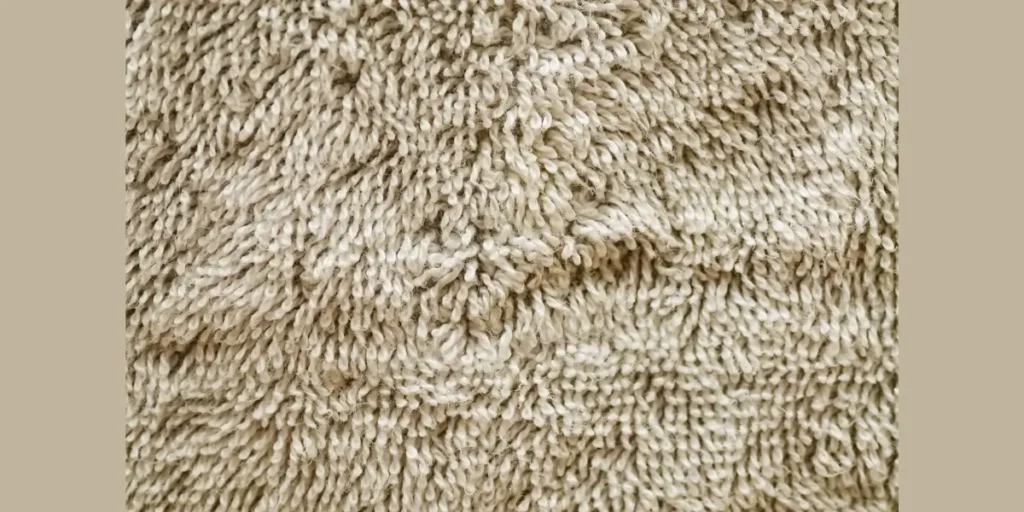
A wool carpet provides softness and sound absorption. I value its durability and natural resilience in dining spaces.
Low to medium pile allows chairs to slide smoothly. Wool also resists crushing over time.
This option enhances comfort and warmth. It creates a refined atmosphere while maintaining long term performance.
9. Striped Carpet Design
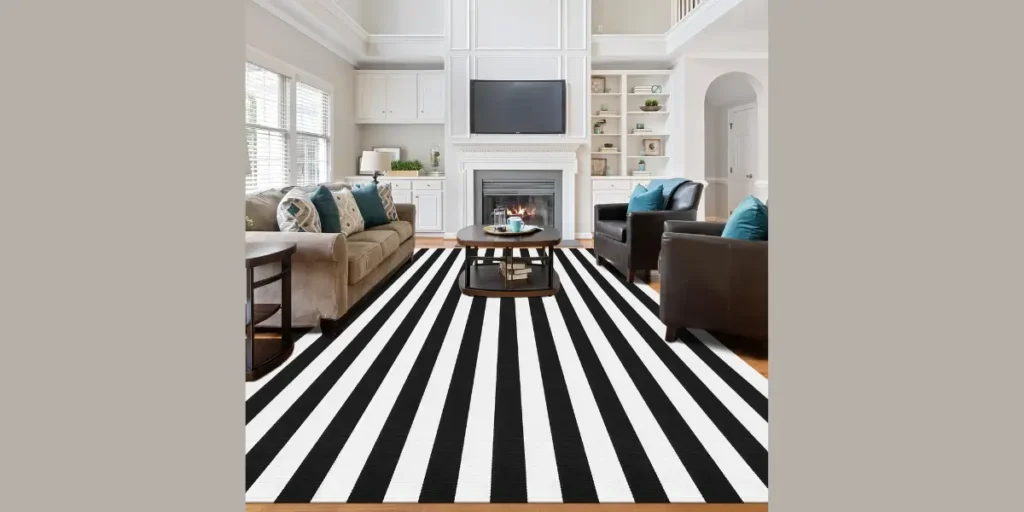
Striped carpets visually reshape the dining room. I use horizontal stripes to widen narrow spaces and vertical stripes to elongate layouts.
Neutral striped patterns keep the look elegant and subtle. I coordinate tones with existing décor for cohesion.
This design works particularly well in contemporary or coastal interiors. It adds rhythm and structure without overwhelming the room.
10. Abstract Artistic Carpet
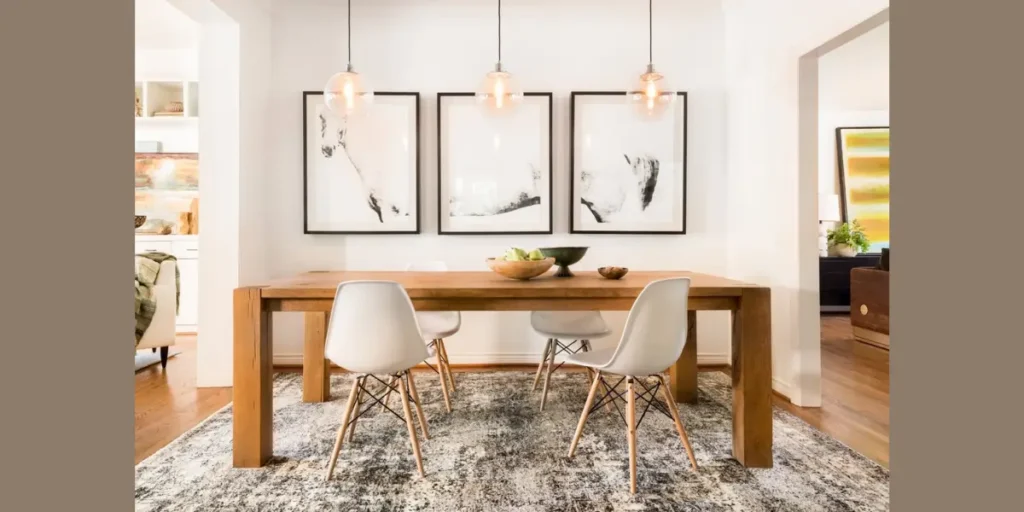
An abstract carpet introduces creativity and personality. I often choose fluid or painterly designs when I want the floor to become a focal point.
Muted abstracts maintain sophistication, while bold color blends energize the space. I ensure the design complements the table rather than competing with it.
This carpet style suits contemporary dining areas. It anchors the room visually and adds expressive character with balanced functionality.
Carpet Sizing and Material Selection Guide
Choosing the right carpet for a dining table requires careful attention to proportion and performance. I always begin by measuring the table and ensuring the carpet extends at least 24 to 30 inches beyond all sides.
This extra space allows chairs to remain fully on the carpet when pulled out, preventing imbalance and edge catching. A properly sized carpet visually anchors the dining area and keeps the layout cohesive.
Material choice directly affects durability and maintenance. I prefer low to medium pile carpets in dining spaces because they allow smoother chair movement and are easier to clean.
Dense wool, flatweave cotton blends, or high quality synthetic fibers handle spills and frequent use more effectively than delicate, high pile materials. Selecting the right fiber ensures the carpet maintains its appearance even with daily wear.
Key Considerations
Rug dimensions should match the table size rather than the room size alone. Proper clearance improves comfort and preserves visual balance.
Chair movement must remain smooth and unrestricted. I always test how easily chairs slide before finalizing placement.
Pile height plays a crucial role in practicality. Lower pile carpets prevent instability and simplify cleaning.
Ease of cleaning matters in dining areas where spills are inevitable. Washable or stain resistant options offer long term convenience.
Compatibility with interior style ensures cohesion. The carpet should complement furniture without competing visually.
Recommended Carpet Sizes
| Table Type | Suggested Carpet Size | Chair Clearance |
|---|---|---|
| 4–6 Seats | 8×10 ft | 24 inches |
| 6–8 Seats | 9×12 ft | 24–30 inches |
| Round 4–6 | 8 ft round | 24 inches |
| Large 8+ | 10×14 ft | 30 inches |
Ensuring chairs remain fully on the carpet when pulled out maintains stability and preserves the overall design balance.
Conclusion
A dining table carpet quietly shapes the comfort and structure of your entire dining space. I always view it as the layer that brings proportion, warmth, and functionality together.
The right size ensures chairs move effortlessly, while the right material handles daily wear without losing its appeal.
Whether you choose a neutral base, a bold pattern, or a textured natural fiber, thoughtful selection makes the difference between a disconnected layout and a cohesive design.
When proportion, durability, and style align, your dining area feels intentional, inviting, and ready to support everyday meals as well as special gatherings.
FAQs
The carpet should extend at least 24 to 30 inches beyond the table on all sides. This allows chairs to stay fully supported when pulled out and keeps the dining area visually grounded.
High pile carpets can make chair movement difficult and trap food debris. I recommend low to medium pile options for easier cleaning and improved functionality.
Yes, washable carpets are highly practical, especially in family homes. They allow easy maintenance while still offering stylish design options that look refined.
You can, but proportion is essential. In most cases, matching the carpet shape to the table shape creates stronger visual symmetry and balance.